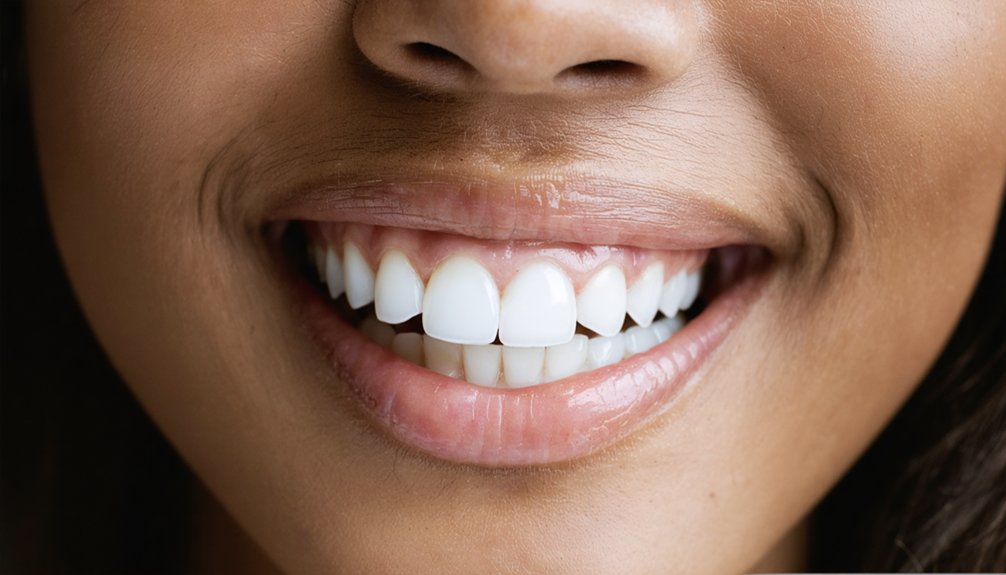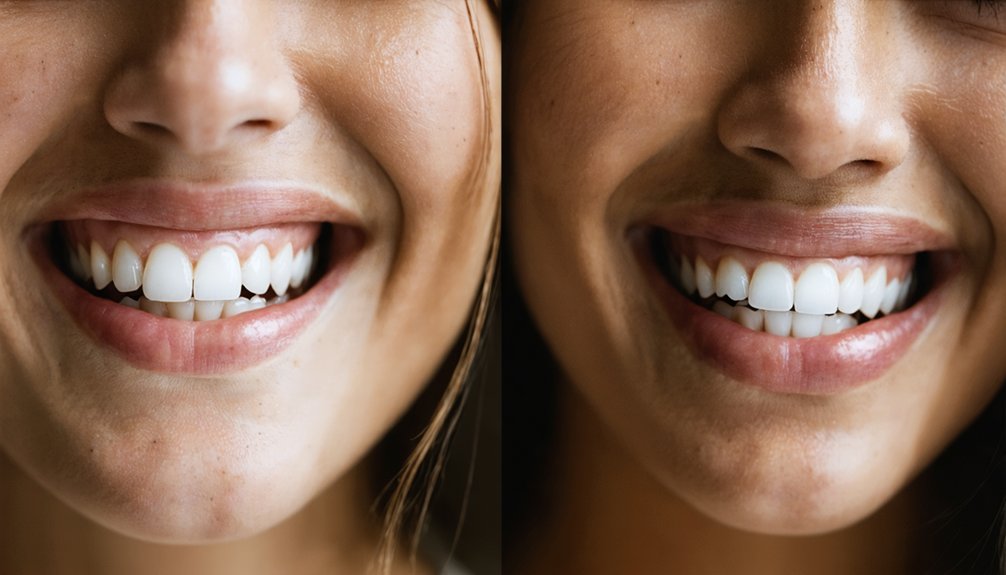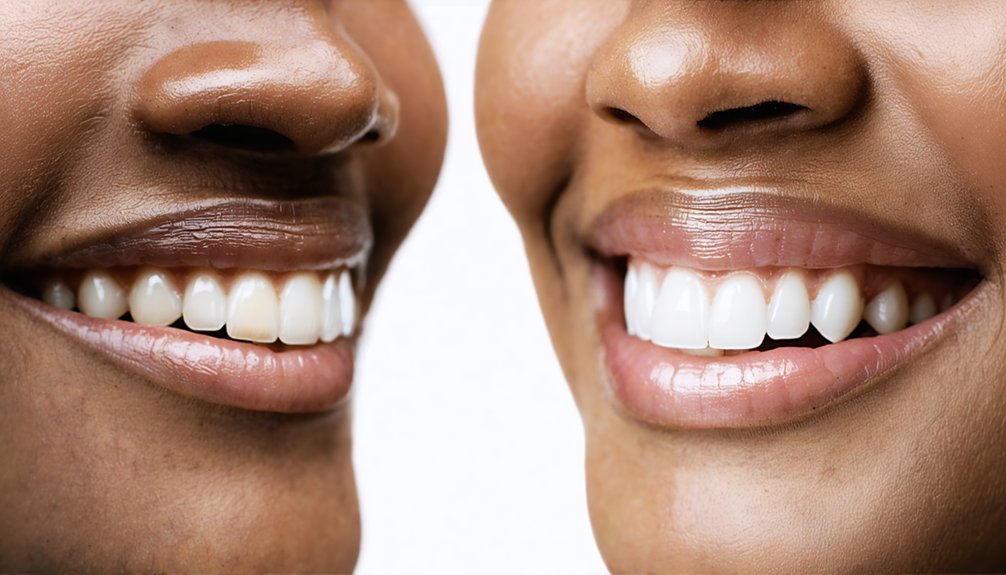
You can safely brighten your smile by several shades without damaging your enamel when you follow proper treatment guidelines. Professional in-office whitening delivers the most dramatic results—up to 10 shades lighter—while over-the-counter options offer modest 2–4 shade improvements for mild staining. Temporary sensitivity typically resolves within 24–48 hours, and results can last up to three years with good habits. Keep exploring to discover everything you need to know before, during, and after your whitening treatment.
Key Takeaways
- Professional whitening can lighten teeth by 5–10 shades, while over-the-counter strips typically achieve 2–4 shades improvement.
- When used correctly, whitening agents penetrate enamel safely without causing erosion or long-term damage.
- Temporary sensitivity after whitening usually resolves within 24–48 hours; potassium nitrate toothpaste helps minimize discomfort.
- Results last 6 months to 3 years depending on diet, habits, and oral hygiene practices.
- Following a white diet for 48 hours post-treatment helps preserve and maximize whitening results.
What Teeth Whitening Does to Your Enamel
Teeth whitening works by lifting stains from your enamel‘s surface and breaking down discoloration within the tooth structure itself. Whitening agents like hydrogen peroxide temporarily increase tooth permeability, allowing the active ingredients to reach deeper stains beneath the enamel.
Whitening agents penetrate beyond the surface, breaking down deep discoloration where ordinary cleaning cannot reach.
This process doesn’t cause enamel erosion when you follow recommended guidelines and use clinically approved products. Your enamel stays intact, and any temporary sensitivity you feel typically resolves within 24 to 48 hours.
Common culprits behind dullness include coffee, tobacco, and aging—all of which respond well to whitening treatment.
Whether you choose professional care or an at-home kit, understanding how whitening interacts with your enamel helps you make informed decisions and maintain control over your results throughout the process.
Why Your Teeth Stain and Yellow Over Time
Understanding why stains form in the first place gives you a clearer picture of what whitening is actually correcting. Your teeth yellow through two main pathways: extrinsic staining on the enamel surface and intrinsic discoloration within the tooth structure itself.
Coffee, tea, red wine, and tobacco deposit pigmented compounds directly onto enamel. Over time, aging naturally thins enamel, exposing the darker dentin beneath. Both processes work against you gradually, which is why dental stain prevention matters long before you consider treatment.
Enamel strengthening through fluoride use and consistent oral hygiene slows this progression by keeping the surface more resistant to pigment absorption. Knowing which type of discoloration you’re dealing with also helps set realistic expectations for how much whitening can actually achieve.
Teeth Whitening Before and After: How Many Shades Can You Gain?
Once you’ve identified the type of staining you’re dealing with, realistic shade expectations become much easier to set. Dental shade guides help your dentist measure your starting point and track measurable progress after treatment.
One of the most persistent teeth whitening myths is that every method delivers the same results. That’s simply not true. Whitening toothpaste typically lightens teeth by one to two shades. At-home strips and kits commonly reach two to four shades.
Professional in-office treatment can achieve up to five to ten shades of improvement, with one documented case showing a seven-shade gain after a single session on heavily coffee-stained teeth.
Your results depend on stain severity, enamel condition, and whether discoloration is surface-level or deeper within the tooth structure.
Which Teeth Whitening Method Is Right for You?
Choosing the right whitening method depends on how quickly you want results, your sensitivity history, and your budget.
If you’re looking for the fastest, most dramatic improvement, professional in-office treatment is your best option.
While dentist-guided custom trays offer a strong middle ground for at-home use.
Over-the-counter strips, gels, and toothpastes can work well for mild discoloration.
But if you’ve experienced sensitivity before, you’ll want to factor that into your decision before starting any treatment.
Professional Versus At-Home
Whether you want fast, dramatic results or a flexible routine you can manage at home, the method you choose shapes both your outcome and your experience.
Professional in-office whitening delivers the most significant shade improvement — up to 5–10 shades in a single session — under direct dental supervision. Since it falls under cosmetic dentistry, dental insurance typically won’t cover it, so factor that into your decision.
At-home options, including dentist-guided custom trays or over-the-counter strips, commonly lighten teeth 2–4 shades at a lower cost and on your own schedule.
Both approaches are safe when used correctly.
Your stain severity, enamel condition, and budget all influence which route makes the most sense for you.
Over-the-Counter Whitening Options
Over-the-counter whitening products give you an accessible, budget-friendly starting point if professional care isn’t your immediate priority. Whitening toothpaste typically lifts teeth by one to two shades, while strips and kits commonly deliver two to four shades of improvement with consistent use.
These options work best on surface-level, extrinsic stains caused by coffee, tea, or tobacco.
You may also encounter natural remedies and alternative treatments—such as activated charcoal or oil pulling—marketed as whitening solutions. Current evidence doesn’t strongly support their effectiveness, and some may carry abrasion risks.
When choosing any over-the-counter product, follow instructions carefully and watch for sensitivity. If discomfort persists beyond 48 hours, pause use and consult your dentist before continuing your whitening routine.
Choosing Based On Sensitivity
Sensitivity plays a defining role in which whitening method works best for you. If your tooth enamel is reactive, start with a lower-concentration option, like whitening toothpaste or strips, rather than jumping straight to in-office treatment.
Using a potassium nitrate or stannous fluoride toothpaste for seven days before treatment can reduce discomfort considerably.
For persistent sensitivity, dentist-guided custom trays let you control application time and gel strength, giving you a safer path to brighter results. Professional supervision also helps identify any enamel vulnerabilities before treatment begins.
Regardless of the method you choose, stain prevention remains essential afterward. A 48-hour white diet protects your investment while your enamel stabilizes.
Choosing the right method from the start means fewer setbacks and more consistent, lasting results.
How to Prep Your Teeth Before Whitening
Before you whiten, schedule a dental exam so your dentist can identify any cavities or gum issues that need attention first.
If you’ve experienced sensitivity in the past, start using a potassium nitrate or stannous fluoride toothpaste about seven days before your treatment.
Taking these steps upfront helps guarantee a safer, more comfortable whitening experience.
Schedule a Dental Exam
Scheduling a dental exam before whitening is one of the smartest steps you can take to protect your results. Your dentist will check for cavities, gum issues, and enamel concerns that could interfere with treatment or worsen sensitivity.
Whitening over untreated decay or inflammation isn’t safe and won’t produce even results.
Use this visit to review your oral hygiene routine and ask which whitening method suits your specific needs. Your dentist can also confirm whether your dental insurance covers a pre-whitening cleaning, which removes surface buildup and gives whitening agents better contact with enamel.
Going in with a clean, healthy mouth means you’re starting from the strongest possible baseline—giving you more control over your outcome and helping your results last longer.
Manage Sensitivity Beforehand
If you tend to experience tooth sensitivity, starting a desensitizing toothpaste about seven days before your whitening treatment can make a real difference. Look for formulas containing potassium nitrate or stannous fluoride, as both support enamel protection and help calm nerve responses before whitening begins.
Teeth sensitivity after whitening typically lasts 24 to 48 hours, but prepping your enamel in advance can reduce that window significantly. You can also ask your dentist about a fluoride rinse or remineralizing gel to strengthen enamel before your appointment.
Taking these steps puts you in control of your comfort and helps your enamel handle the whitening process more effectively.
A little preparation beforehand leads to a smoother experience and a more confident start to your results.
What Happens During Your Whitening Appointment
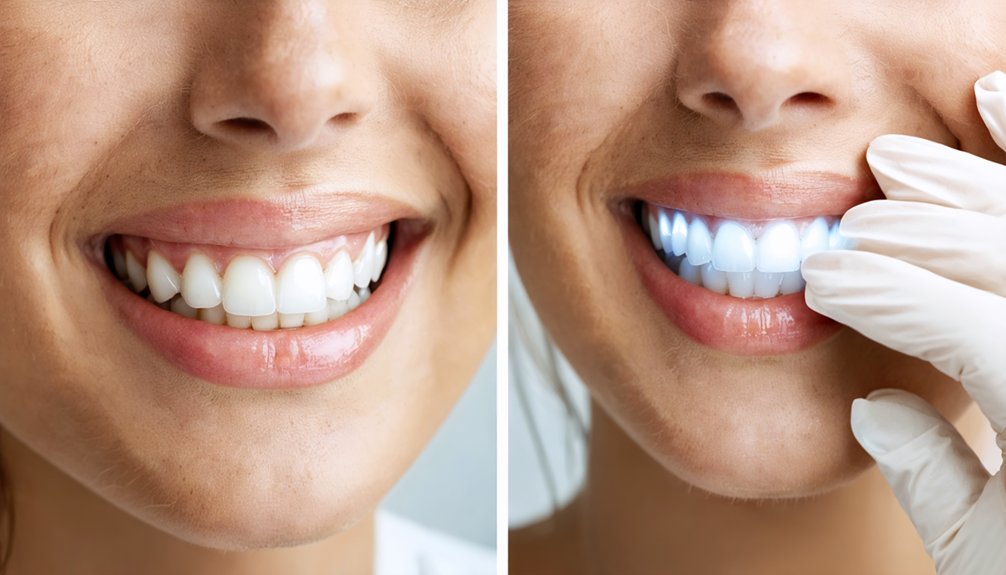
Knowing what to expect can make your whitening appointment far less intimidating. Your dentist begins with a quick exam to confirm your teeth and gums are healthy enough for treatment.
Next, they’ll apply a protective barrier to your gums before placing the whitening gel directly on your enamel. This controlled dental stain removal process typically runs 60 to 90 minutes, often using a light or laser to activate the gel.
Throughout the session, your dentist monitors concentration levels and exposure time to protect your enamel.
Many offices finish with an enamel strengthening treatment, such as a fluoride or remineralizing gel, to support tooth structure post-procedure.
You’ll leave with noticeably brighter results and clear aftercare instructions to help you maintain them effectively.
How to Handle Sensitivity After Teeth Whitening
Tooth sensitivity after whitening is common, but it typically fades within 24 to 48 hours. The stain removal process temporarily opens pores in your tooth enamel, which can heighten nerve response.
You can manage this effectively with a few targeted steps.
Start using a potassium nitrate or stannous fluoride toothpaste about seven days before your treatment. This pre-conditions your enamel and reduces the intensity of post-whitening sensitivity.
After your session, apply a remineralizing gel or fluoride rinse to support enamel recovery.
Avoid extremely hot or cold foods and beverages during the sensitivity window.
If discomfort persists beyond 48 hours or feels severe, contact your dentist.
You’re in control of your comfort—taking these precautions makes the process noticeably smoother.
How Long Do Teeth Whitening Results Last?
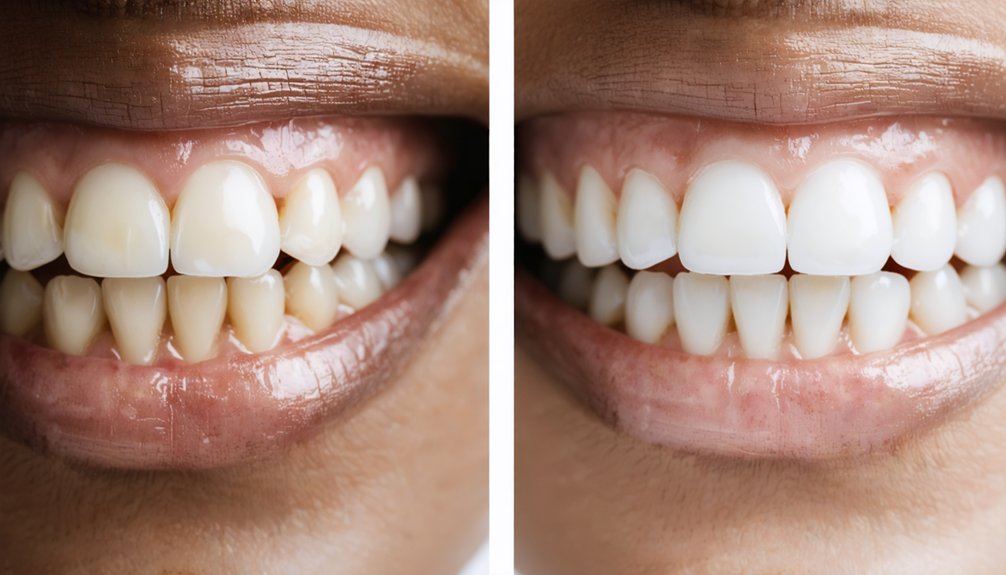
Once you’ve completed your whitening treatment, results typically last anywhere from six months to three years, depending on your habits, lifestyle, and the method used. Dismissing teeth whitening myths about permanent results helps you stay realistic and proactive. Enamel protection and consistent aftercare are what extend your investment.
Whitening results last six months to three years—your habits, lifestyle, and aftercare determine how long your investment holds.
Here’s what keeps results lasting longer:
- Limit staining foods like coffee, red wine, and dark sauces.
- Brush twice daily with fluoride toothpaste to support enamel protection.
- Rinse with water after consuming staining beverages.
- Schedule touch-up treatments every six to eighteen months based on your dentist’s recommendation.
You control how long your results last—consistent habits make the biggest difference.
What to Eat After Teeth Whitening
What you eat in the first 48 hours after whitening plays a significant role in how well your results hold. During this window, your enamel is more porous and vulnerable to restaining, so following a white diet gives you direct control over the outcome.
Choose foods like chicken, white fish, rice, cauliflower, bananas, and plain yogurt.
Drink water instead of coffee, tea, red wine, or dark sodas.
Avoiding acidic foods also supports dental hygiene and reduces the risk of tooth decay during this sensitive period.
After 48 hours, you can gradually reintroduce other foods.
Rinsing with water after staining beverages and brushing twice daily with fluoride toothpaste will help you protect your investment long-term.
Frequently Asked Questions
Can Teeth Whitening Fix Discoloration Caused by Antibiotics or Fluorosis?
Standard whitening often can’t fully correct antibiotic stains or fluorosis discoloration since they’re intrinsic. You’ll likely need alternatives like veneers or bonding. Consult your dentist to explore which option gives you the best control over your results.
Is Teeth Whitening Safe During Pregnancy or While Breastfeeding?
Like Sleeping Beauty awaiting the right moment, you should pause whitening treatments now. Pregnancy safety and breastfeeding considerations matter most—dental experts recommend waiting until after you’ve finished nursing before pursuing any whitening procedure.
How Does Whitening Affect Dental Crowns, Veneers, or Bonded Teeth?
Whitening won’t change your crowns, veneers, or bonded teeth due to dental material compatibility limits. You’ll want to think about tooth shade durability by matching restorations to your newly whitened natural teeth for consistent, lasting results.
At What Age Is Teeth Whitening Considered Appropriate for Younger Patients?
Like a door opening at the right moment, whitening’s generally appropriate around 16, once permanent teeth fully develop. You’ll support teen dental care and youth oral health best by consulting your dentist before starting any treatment.
Can Whitening Treatments Interact With Any Medications or Health Conditions?
Yes, some medications can increase dental sensitivity or affect your results. You should always disclose your full medication list to your dentist before whitening, as certain medication side effects may intensify dental sensitivity or interfere with treatment outcomes.
References
- https://eurekaridgedentistry.com/the-dentist-approved-secret-to-a-brighter-smile-how-to-whiten-safely-and-effectively/
- https://dph.illinois.gov/topics-services/prevention-wellness/oral-health/fast-facts-oral-health/how-brighten-smile.html
- https://leedervilledental.com.au/teeth-whitening-before-and-after/
- https://health.clevelandclinic.org/how-to-whiten-teeth
- https://www.webmd.com/oral-health/ss/slideshow-bright-smile
- https://www.webmd.com/oral-health/features/whiten-your-teeth-at-home
- https://casadental.com.sg/teeth-whitening-guide/
- https://www.dentaly.org/en/teeth-whitening/before-and-after/
- https://www.youtube.com/watch?v=i8yqDgT0tCE
- https://www.dentalwellnesslondon.co.uk/dentistry/before-after-teeth-whitening