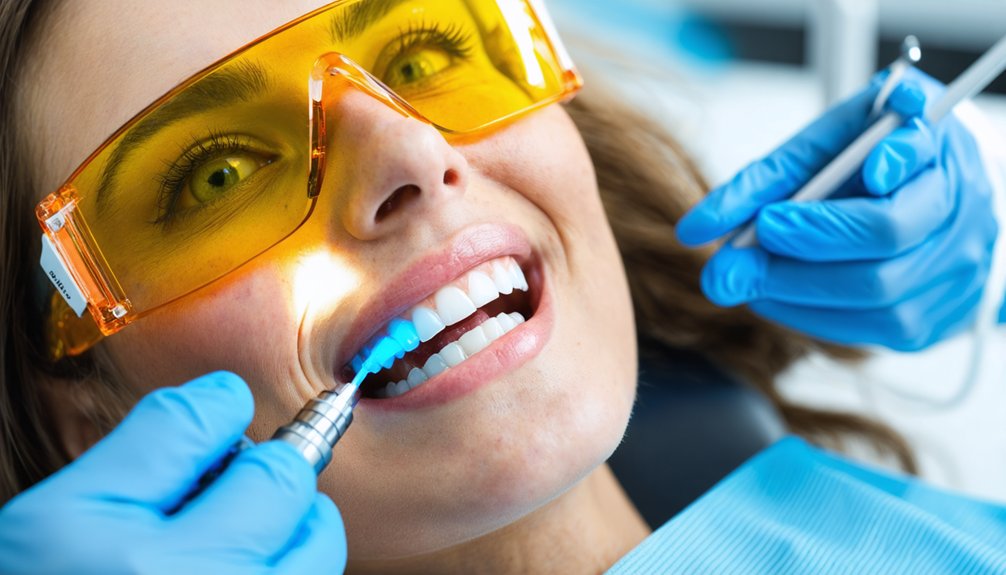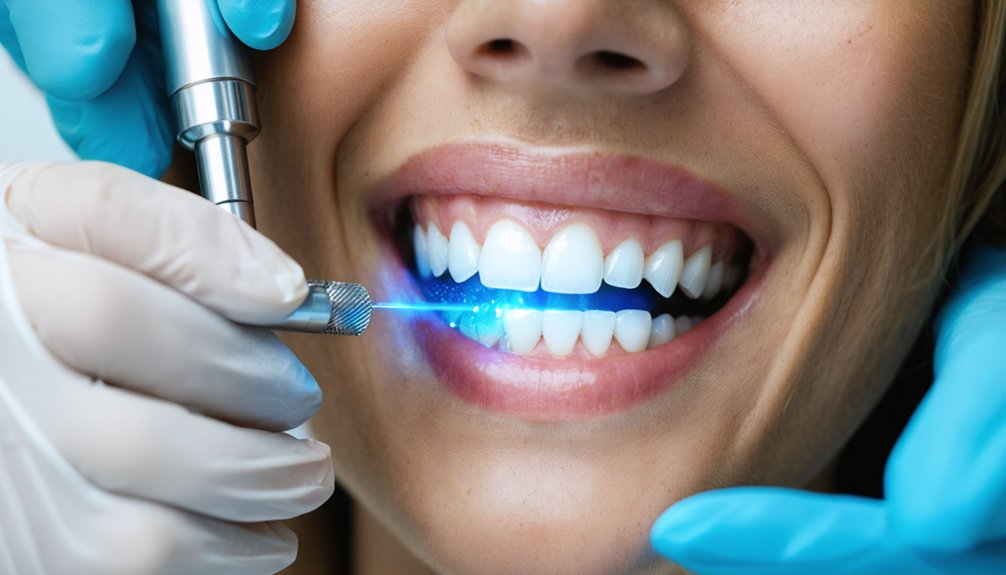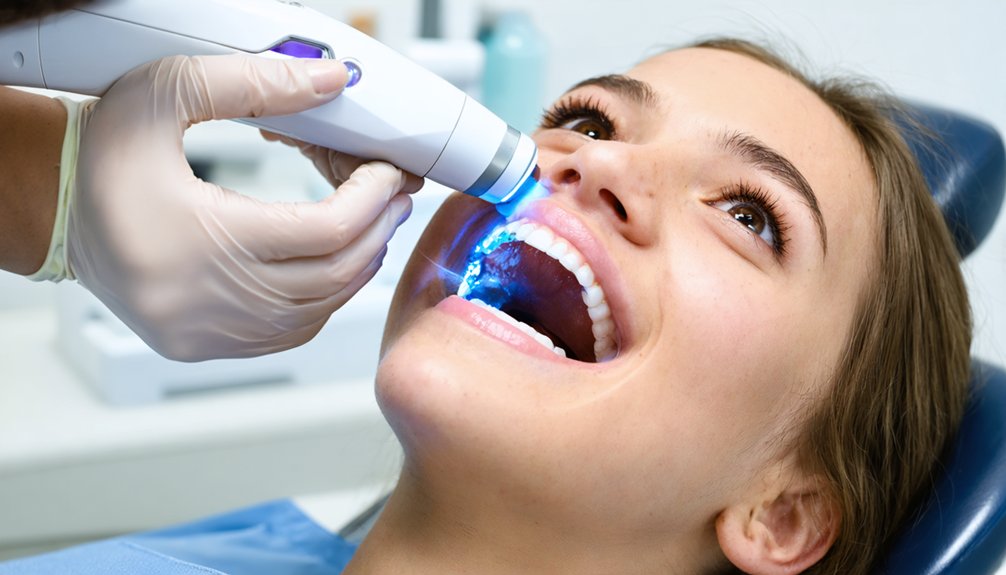
Laser teeth whitening works by applying a whitening gel directly to your teen’s enamel, then using a laser to activate it and speed up the bleaching process. The dentist protects your teen’s gums, lips, and cheeks throughout the session to keep everything safe. It’s a controlled, fast treatment that’s designed to work gently on developing teeth. Keep exploring to discover everything you need to know before booking your teen’s first session.
Key Takeaways
- A whitening gel is applied to the enamel, and a laser activates it to accelerate bleaching, lifting stains faster than at-home methods.
- The dentist controls gel strength and treatment duration, ensuring the process is safe for teens’ developing enamel.
- Gums, lips, and cheeks are covered during treatment to protect soft tissues from the whitening gel and laser.
- Teens should have all permanent teeth erupted, healthy gums, and no untreated cavities before undergoing laser whitening.
- One session typically whitens teeth by 6 to 12 shades, with surface stains responding better than deep discoloration.
What Is Laser Teeth Whitening for Teens?
Laser teeth whitening is a professional treatment where a dentist applies a whitening gel to your teeth and uses laser energy to activate it, making the bleaching process faster than at-home options. The laser technology speeds up the chemical reaction in the gel, which lifts stains from your tooth enamel without changing the underlying tooth structure.
The laser speeds up the chemical reaction in the gel, lifting stains from enamel faster than at-home options ever could.
This isn’t a procedure you do on your own. A dentist controls every step, from the gel strength to the treatment time, so you’re not guessing about what’s going on.
That level of oversight matters, especially for teens, because your enamel needs to be treated carefully during this stage of dental development.
You stay in control by knowing exactly what’s happening and why.
Is Your Teen a Good Candidate for Laser Whitening?
Not every teen is ready for laser whitening, and that’s completely okay. Your teen is likely a good candidate if they’ve all their permanent teeth, healthy gums, and no untreated cavities.
Knowing when to wait is just as important as knowing when to move forward, so a dental consultation helps you make the right call.
Ideal Candidate Checklist
Before your teen sits in the whitening chair, a dentist will check whether they’re actually a good candidate for the procedure. This step keeps results even and reduces risk. Your teen’s dentist will typically confirm:
- All permanent teeth have fully erupted — incomplete development means whitening gets deferred.
- Gums are healthy and no cavities are untreated — existing dental issues must be resolved first.
- No active orthodontic hardware covers the teeth — braces cause uneven whitening results.
If your teen doesn’t qualify yet, the dentist will discuss alternative treatments or a better timeline.
Cost considerations also shift depending on which option fits best.
Knowing the checklist upfront puts you in control of the decision before any appointment is scheduled.
When To Wait
Even though laser teeth whitening is safe under the right conditions, your teen may need to wait before qualifying for treatment. Youth dental health develops on its own timeline, and rushing whitening before all permanent teeth have fully erupted can cause uneven results or sensitivity.
Most dentists recommend waiting until around age 14 to 16, depending on your teen’s development. Active braces are another reason to pause, since whitening during orthodontic treatment causes uneven coloring.
If your teen is younger or still developing, a dentist will advise delaying treatment until conditions are right. Some offices also require parental consent before moving forward.
Waiting isn’t a setback — it protects your teen’s enamel and sets them up for better, longer-lasting results when the timing is correct.
What Happens During a Teen Laser Whitening Session
When you sit down for a laser whitening session, your dentist takes charge of every step to keep the process safe and effective. They’ll first assess your dental stain types to confirm whitening will actually work for you.
Then the session follows a clear sequence:
- Protect – Your gums, lips, and cheeks get covered so the gel only touches your teeth.
- Apply – Whitening gel goes onto your enamel, targeting stains directly.
- Activate – Laser safety protocols guide controlled light energy onto the gel, speeding up the bleaching reaction.
After the session, your dentist gives you specific instructions to protect your results.
You stay informed and in control throughout the entire appointment.
Laser Whitening Side Effects Every Teen Should Know About
Knowing what to expect after laser whitening helps you feel confident rather than caught off guard. The most common side effects are temporary tooth sensitivity and mild gum irritation. About one in every two to three patients experiences these effects, but they typically fade within a day or two.
Temporary tooth sensitivity and mild gum irritation are common after laser whitening but typically fade within a day or two.
To protect your tooth enamel, concerns are minimal when treatment is supervised by a dentist who controls gel strength and timing.
Following laser safety tips like avoiding hot or cold foods right after your session reduces discomfort.
Skipping stain-causing drinks such as coffee, soda, and dark juices also helps your results last longer.
Overtreatment is the real risk, so never push for extra sessions beyond what your dentist recommends. Proper guidance keeps your enamel safe.
How Many Shades Whiter Can Teens Actually Get?
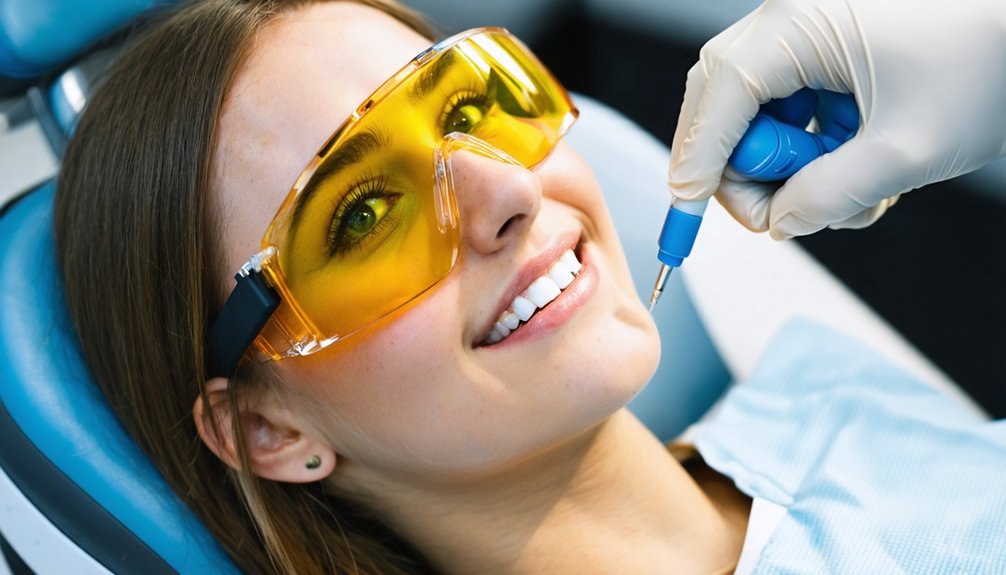
After one laser whitening session, you can get anywhere from 6 to 12 shades whiter, though your results depend on the type of staining you have and your enamel’s current condition.
Factors like drinking coffee, tea, or dark sodas regularly can slow your progress and cause re-staining faster than you’d expect.
To keep your smile bright, you’ll want to brush and floss daily, rinse after dark drinks, and avoid stain-causing foods as much as possible.
Typical Shade Change Range
How much whiter can your teeth actually get from a single laser whitening session? Results vary, but here’s what you can realistically expect:
- Typical range: Most teens see 6 to 12 shades lighter after one professional session.
- What affects your results: Your tooth enamel’s current condition and the type of staining you have directly impact dental aesthetics outcomes.
- Your control factors: Avoiding coffee, tea, dark berries, and soda after treatment helps you preserve those results longer.
Not every teen gets the same outcome. Surface stains from food and drinks respond better than deeper discoloration. Your dentist will assess your enamel before treatment so you’ll know what kind of change is realistic for your specific situation.
Factors Affecting Results
While the 6 to 12 shade range gives you a general idea, your actual results depend on a few key factors that are specific to you. The type and depth of your staining matters most — surface stains from food and drinks respond better than stains from medication or enamel development issues.
Your current enamel condition also plays a role, which is why your dentist assesses it beforehand. Understanding these factors helps you weigh cost considerations accurately, since deeper staining may require follow-up sessions.
If laser whitening isn’t the right fit yet, your dentist can suggest alternative whitening options matched to your age and enamel readiness.
Knowing what shapes your results puts you in control of realistic expectations before you commit to any treatment.
Maintaining Whitening Results
Once your whitening session is done, keeping those results comes down to a few simple daily habits. Compared to alternative whitening methods like strips or trays, laser whitening gives you a strong starting point, but your daily choices protect that investment and reduce future cost considerations.
Here’s what puts you in control:
- Brush and floss daily to prevent surface stains from setting into your enamel.
- Avoid dark drinks and foods like coffee, tea, soda, and dark berries, especially in the first 48 hours post-treatment.
- Rinse your mouth with water after consuming anything that could stain.
These three habits are simple, effective, and keep you from needing touch-ups sooner than necessary.
Foods and Habits That Keep Teeth Whiter Longer
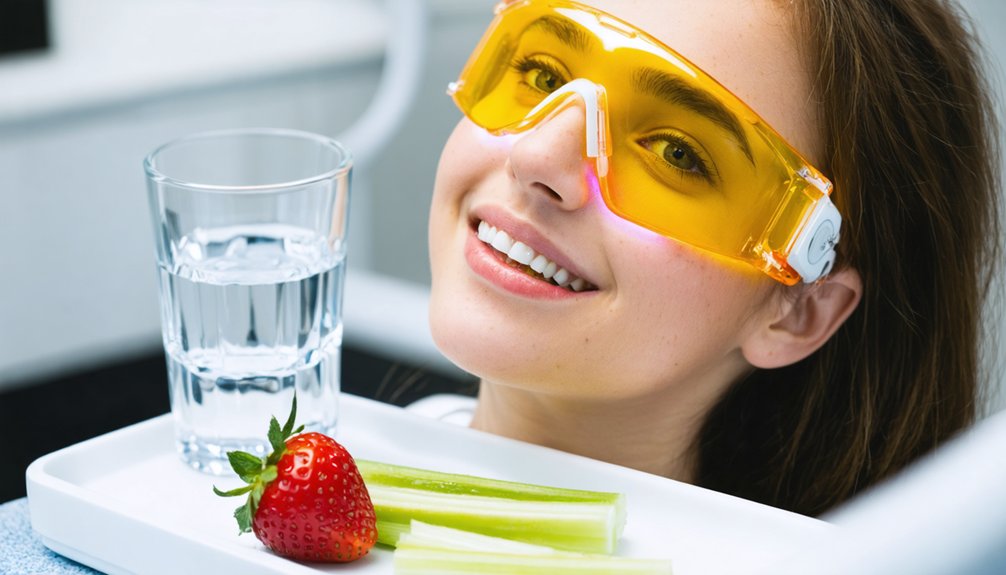
After getting your teeth whitened, the habits you build every day are what keep that bright smile lasting longer. You’re in control of how long your results last through simple diet modifications and consistent oral hygiene.
Avoid coffee, tea, soda, dark berries, and red sauces, especially in the days right after treatment when teeth absorb stains more easily. Rinse your mouth with water after eating or drinking anything dark.
Brush twice daily, floss every day, and don’t skip those steps. They remove surface buildup before it settles into staining.
Drinking through a straw limits contact between dark beverages and your enamel. Small, consistent choices like these add up quickly and help you hold onto your whitening results much longer.
Frequently Asked Questions
How Much Does Laser Teeth Whitening Typically Cost for Teenagers?
You’ll need a small fortune—just kidding! Costs typically range from $300–$1,000. Explore cost considerations carefully, and don’t forget financial assistance options like dental payment plans that’ll make your laser whitening journey totally manageable!
Can Teens Whiten Teeth Again if Results Fade After Several Months?
Yes, you can re-whiten when results fade! Your dentist will guide you on timing. Practice teeth stain prevention daily, and they may suggest alternative whitening methods to safely maintain your bright, confident smile between sessions.
Does Laser Whitening Work on Dental Crowns, Veneers, or Fillings?
Here’s the truth — laser whitening won’t change crowns, veneers, or fillings. Dental crown durability and veneer stain resistance mean they resist bleaching too. You’ll want matching shades discussed with your dentist before whitening your natural teeth.
How Long Does a Single Laser Whitening Appointment Usually Take?
Your appointment typically takes about 60–90 minutes. The dentist’ll protect your gums, apply gel, then activate it safely—laser safety keeps it controlled. You might notice some tooth sensitivity afterward, but it’s temporary and manageable.
Will Dental Insurance Cover Laser Whitening Treatments for Teenagers?
Most insurance policies don’t cover laser whitening since it’s cosmetic. With common coverage restrictions, you’ll likely pay out-of-pocket. About 1 in 2-3 teens experience sensitivity, so verifying candidacy first guarantees you’re making a worthwhile investment!
References
- https://www.parkavepd.com/2024/01/02/what-are-my-teeth-whitening-options-for-my-teenager/
- https://www.familysmilespa.com/2025/08/25/tooth-whitening-for-teens-how-and-when-to-do-it-safely/
- https://lonestarkidsdds.com/teeth-whitening-in-teenagers/
- https://www.redrocksfamilydentistry.com/best-teeth-whitening-options-for-teenagers-and-young-adults/
- https://www.littleteeth-htx.com/post/is-it-safe-for-teenagers-to-professionally-whiten-their-teeth
- https://www.nationwidechildrens.org/family-resources-education/700childrens/2024/02/tooth-whitening-for-teens
- https://www.aapd.org/globalassets/media/publications/archives/lee-27-5.pdf
- https://www.pediatricdenticare.com/laser-teeth-whitening.html
- https://elitedentalanddenture.com/teens-and-teeth-whitening-is-it-safe/
- https://www.aapd.org/media/policies_guidelines/p_bleaching.pdf