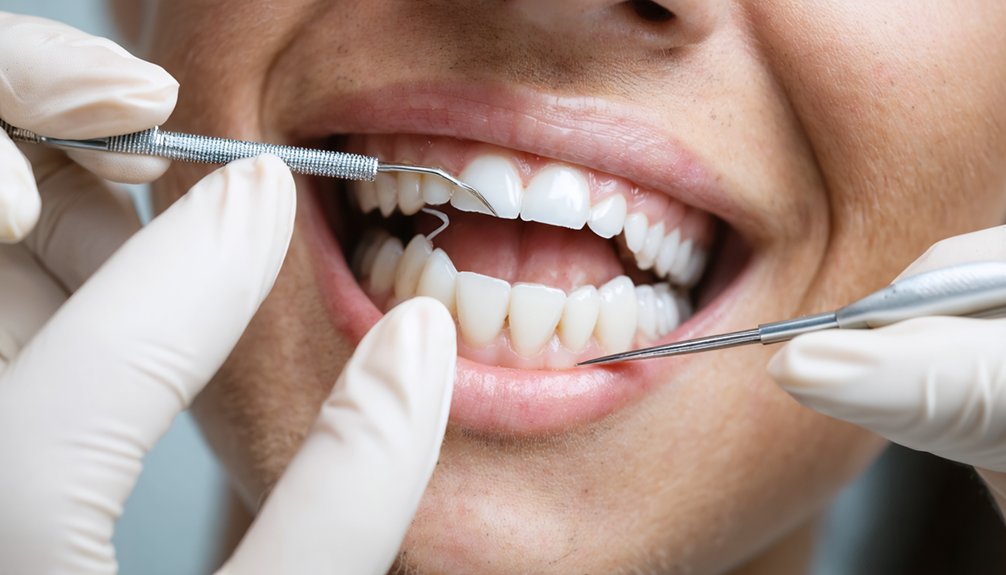
The latest teeth whitening trends are shifting toward lower peroxide concentrations (15–25%) that match high-dose results while reducing sensitivity, LED-activated and PAP+ dual-light systems that deliver measurable whitening in as little as 15 minutes, and AI-powered scanners that generate personalized treatment protocols based on your enamel condition. Nano-hydroxyapatite and potassium nitrate desensitizers are now integrated directly into whitening gels. Each of these innovations carries clinical nuances worth understanding before you choose a protocol.
Key Takeaways
- Lower-concentration peroxide formulas (15–25%) with built-in desensitizers now deliver results comparable to traditional high-dose treatments.
- LED-activated and dual-light PAP+ systems achieve effective whitening in as little as 15 minutes.
- AI-powered scanners and customization engines are enabling fully personalized whitening protocols based on individual enamel conditions.
- Nano-technology strips and fast-dissolving delivery systems are emerging as convenient, rinsing-free whitening alternatives.
- The teeth whitening market is booming, heavily influenced by celebrity endorsements and rising demand among Generation Z consumers.
Lower Peroxide Formulas Now Match High-Concentration Whitening Results
For decades, high-concentration peroxide gels dominated clinical whitening protocols, but that advantage is eroding fast. A 2026 umbrella review confirmed that 25–35% hydrogen peroxide concentrations produce markedly less post-treatment sensitivity than higher doses, while delivering comparable color outcomes.
Peroxide efficacy at moderate concentrations—15–25%—now matches 35–40% formulas when desensitizer innovations are integrated into the gel matrix. Specifically, protocols combining 5% potassium nitrate and 10% nano-hydroxyapatite achieve equivalent whitening within the same treatment window.
Moderate-concentration peroxide now rivals high-dose formulas—when the right desensitizers are built directly into the gel.
These additions strengthen enamel and reduce dentinal hypersensitivity simultaneously. The clinical case for high-concentration peroxide as the only viable whitening pathway is weakening.
You now have access to lower-dose protocols that don’t force you to trade sensitivity management for results—precision formulation has closed that gap entirely.
Which LED and Fast-Dissolving Technologies Actually Deliver
Reformulation alone doesn’t complete the picture—delivery systems matter just as much as what’s inside the gel. LED-activated whitening gels now deliver measurable results in 15 minutes by triggering light-sensitive brightening agents.
While PAP+ kits with dual-light technology—blue and red wavelengths—are projected to lead 2026 sales by combining efficacy with patient comfort and enamel remineralization support.
Fast-dissolving strips using nano-technology break down stains rapidly without rinsing. Though the evidence is clear: hydrogen peroxide-containing strips produce statistically significant whitening, while peroxide-free alternatives fail to generate measurable color change.
Multi-functional LED devices that integrate gum care alongside whitening are gaining traction in professional settings.
You should evaluate delivery systems by their clinical evidence, not just their speed claims.
How AI-Powered Devices Are Personalizing Teeth Whitening
Beyond hardware and chemistry, artificial intelligence is now reshaping how whitening treatments are tailored to individual patients. Smart scanners analyze your enamel condition and discoloration levels, feeding that data into AI customization engines that generate personalized protocols matched to your specific tooth structure and sensitivity profile.
AI now analyzes your enamel and discoloration levels to build whitening protocols matched to your exact tooth structure.
AI-powered toothbrushes simultaneously monitor brushing pressure, coverage, and duration, adjusting motor output in real time to prevent enamel wear before it occurs.
On the formulation side, AI-driven gel systems modify active ingredient concentrations based on your collected user data, optimizing brightness outcomes while minimizing post-treatment sensitivity.
You’re no longer receiving a standardized whitening formula designed for an average patient. You’re receiving a treatment architecture built around your measurable clinical variables, giving you precise control over both the process and the outcome.
What the Latest Safety Research Says About Whitening Trends
As whitening technologies accelerate, the safety research behind them has kept pace, giving you a clearer picture of what’s actually at risk and what isn’t. Over 20 years of clinical data confirm no significant systemic health risks when you use 10% carbamide peroxide under professional guidance.
OTC strip peroxide penetration into the pulp chamber stays within conservative ranges when you follow directions precisely. Enamel preservation remains achievable through lower-concentration protocols combined with potassium nitrate at 5% and nano-hydroxyapatite at 10%.
Where real risk exists, it’s localized: high-concentration gels without adequate gingival protection cause mucosal damage. Sensitivity and gingival irritation remain the most common side effects, but both are typically mild, transient, and reversible, giving you a manageable risk profile.
The Teeth Whitening Market Forces Shaping Consumer Choices in 2026
Safety research gives you the foundation, but market forces determine what actually reaches your chair or your bathroom shelf. The global teeth whitening market hit $8.52 billion in 2024 and it’s projected to reach $12.77 billion by 2032, which means manufacturers are competing aggressively for your spending.
The global teeth whitening market is projected to reach $12.77 billion by 2032 — manufacturers are competing aggressively for your spending.
Luxury branding and celebrity endorsements are accelerating consumer demand, particularly among Generation Z, where whitening directly influences psychosocial status. You’re seeing that pressure reflected in product positioning, not just clinical claims.
With 70% of consumers choosing in-office treatments for dramatic results and 90% of orthodontic patients requesting whitening, providers are responding with faster protocols and premium formulations.
Understanding these market forces helps you distinguish evidence-backed innovations from commercially driven trends designed to capture attention rather than deliver results.
Frequently Asked Questions
Can Teenagers Safely Use the Latest Whitening Treatments Available Today?
Teenagers can safely use whitening treatments, but you must follow teen safety guidelines and treatment regulations carefully. Patients aged 14–16 achieve the best results, so consult your dentist before choosing any protocol.
Which New Desensitizing Ingredients Are Entering Mainstream Whitening Formulas in 2026?
These innovative desensitizers are revolutionizing everything you’ve ever known about sensitivity-free whitening. In 2026, you’ll find strontium-fluorapatite, potassium nitrate (5%), and nano-hydroxyapatite (10%)—powerful natural whitening agents—entering mainstream formulas to maximize your brightness while actively protecting enamel.
Is Pap+ a Reliable Alternative for People Avoiding Peroxide-Based Whitening?
PAP+ is a reliable peroxide-free option you can trust. Unlike natural remedies, it’s projected to dominate in 2026, and its long-term effects on enamel safety make it a technically sound, evidence-backed alternative.
How Does Strontium-Fluorapatite Differ From Nano-Hydroxyapatite in Whitening Formulas?
Strontium-fluorapatite wraps your enamel in a crystalline shield built for mineral stability, while nano-hydroxyapatite drives deeper enamel remineralization. You’ll find Sr-FAp targets sensitivity-prone users, whereas nano-hydroxyapatite actively rebuilds enamel structure during whitening treatment.
Do Peroxide-Free Whitening Strips Produce Measurable Results Compared to Peroxide Versions?
You won’t get measurable results from peroxide-free strips—evidence confirms they fail to produce statistically significant color improvement. If you’re weighing natural remedies against professional treatments, hydrogen peroxide-containing strips remain your only strip-based option delivering verified whitening outcomes.
References
- https://whiteningbright.com/ar/articles/2026-teeth-whitening-trends-new-tech-and-clean-formulas
- https://snyclinic.com/en/teeth-whitening-in-2026-the-latest-and-most-advanced-solutions-7877
- https://mainstreetdentalnewark.com/latest-teeth-whitening-technologies/
- https://www.ivismilepro.com/blog/2026-teeth-whitening-trends/
- https://foramen.es/en/hygiene-tips/current-trends-in-teeth-whitening-treatments/
- https://www.accio.com/business/teeth-whitening
- https://www.smilesbyfayth.com/post/would-you-try-this-the-latest-teeth-whitening-trends-in-2025
- https://www.vogue.co.uk/beauty/article/teeth-trends
- https://dimensionsofdentalhygiene.com/article/current-trends-in-tooth-whitening/
- https://www.thedentalroots.com/blog/teeth-whitening-trends-in-2025-what-works-and-whats-just-hype