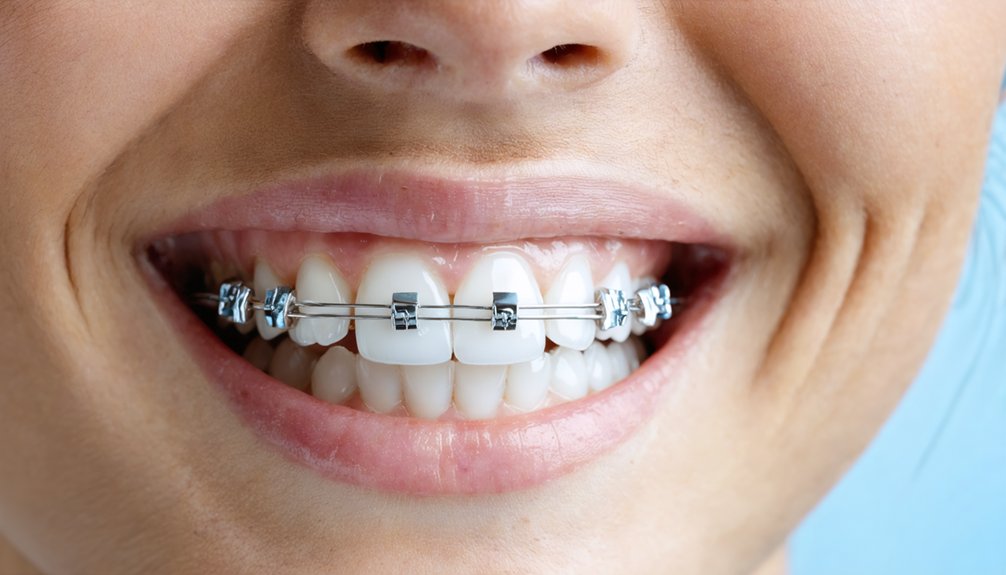
Teeth whitening won’t change the color of your veneers—porcelain and composite materials are non-porous, so hydrogen peroxide can’t penetrate their surface. If you whiten your natural teeth after veneers are placed, you’ll likely end up with a visible color mismatch that’s costly to correct. The right approach is whitening first, waiting 10–14 days for color stabilization, then matching your veneer shade. There’s a lot more to protecting your smile and your investment.
Key Takeaways
- Whitening treatments do not change veneer color, as porcelain and composite materials are non-porous and resist hydrogen peroxide penetration.
- Always complete whitening treatments before veneer placement, waiting 10-14 days for color stabilization before selecting veneer shade.
- Whitening natural teeth after veneer placement creates visible color mismatches, potentially requiring costly veneer replacements for aesthetic harmony.
- Maintain veneers with non-abrasive polish, avoid dark foods, and schedule professional cleanings every six months to preserve appearance.
- Veneers typically need replacement around 10 years; lithium disilicate offers superior durability and color stability as a replacement material.
Can Teeth Whitening Actually Change Veneer Color?
Teeth whitening treatments won’t change the color of your veneers, regardless of the method you use. Both porcelain and composite resin resist whitening agents due to their non-porous dental material properties, which prevent hydrogen peroxide from penetrating the surface.
Whitening agents cannot alter veneer color — porcelain and composite resin are simply too non-porous to absorb them.
Whether you’re using professional-grade bleaching, LED kits, or whitening strips, none of these methods will alter your veneer’s shade.
This resistance is actually central to veneer longevity — the color you select at placement remains fixed permanently. However, that permanence creates a critical challenge: your natural teeth will lighten during treatment while your veneers stay the same.
The result is a visible color mismatch that undermines your smile’s uniformity. Understanding this distinction gives you the control needed to plan whitening treatments strategically around your existing restorations.
Why Bleaching Agents Work on Teeth but Not Veneers
Because natural enamel is porous, whitening agents like hydrogen peroxide penetrate the tooth’s surface and release oxygen molecules that break apart internal stains at a molecular level. This process also temporarily increases tooth sensitivity as the chemical interacts with dentin beneath the enamel.
Veneers, however, are engineered from non-porous porcelain or composite resin, materials selected specifically for veneer durability and resistance to chemical absorption. Whitening agents can’t penetrate these dense surfaces, so no oxidation reaction occurs.
The bleaching gel simply sits on top of the veneer without altering its shade.
This structural difference explains why your natural teeth brighten while bonded veneers remain unchanged. Understanding this chemistry helps you make precise, informed decisions about sequencing whitening treatments before veneer placement rather than after.
The Color Mismatch Nobody Warns You About
When you whiten your natural teeth without accounting for your existing veneers, you’ll likely end up with an uneven smile that’s difficult and costly to correct.
Despite veneer durability and staining resistance, whitening agents don’t alter their fixed shade, while your natural teeth brighten noticeably.
This creates a visible contrast between your restorations and surrounding teeth:
- Whitened natural teeth appear several shades lighter than your unchanged veneers
- The color gap widens the more aggressively you whiten
- Correcting the mismatch typically requires replacing veneers entirely to match your new tooth shade
You’re now managing two different color timelines simultaneously.
Controlling this outcome means whitening natural teeth first, stabilizing the shade, then selecting your veneer color to match that brightened baseline precisely.
Choose Your Veneer Shade After Whitening, Not Before
Selecting your veneer shade before whitening your natural teeth is one of the most common and costly sequencing mistakes patients make. Once your veneers are bonded, their shade is permanent. If your natural teeth brighten significantly afterward, you’ve created an irreversible mismatch that compromises shade matching and forces costly replacements.
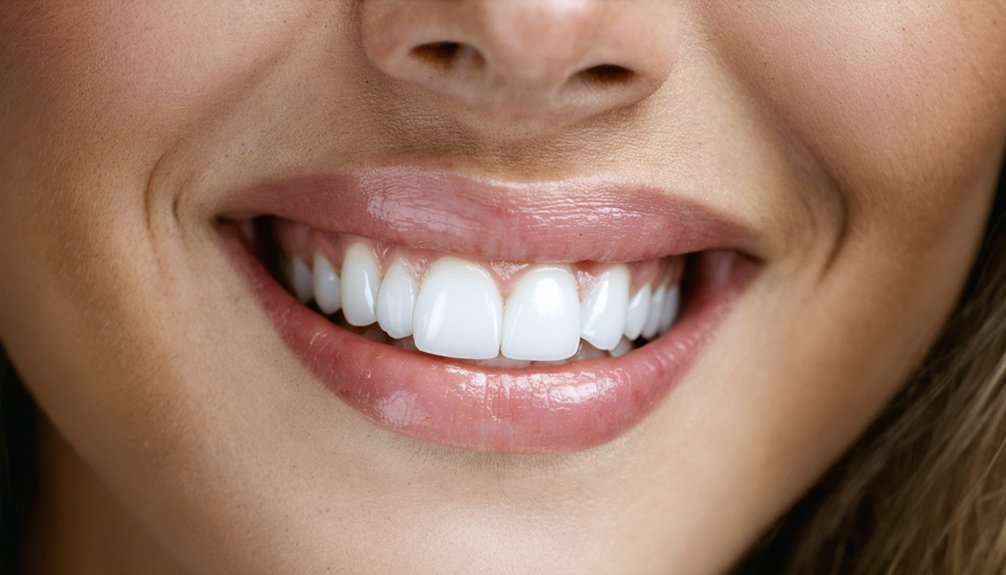
The correct protocol is straightforward: complete your whitening treatment first, then wait 10 to 14 days for your natural teeth’s color to fully stabilize. Only then should you select your veneer shade. This sequencing ensures your restorations blend seamlessly with your brightened smile.
Proper veneer maintenance also depends on this initial decision. Starting with a calibrated, post-whitening shade baseline gives you a harmonious foundation that’s far easier to preserve long-term.
How to Whiten Natural Teeth Without Touching Your Veneers
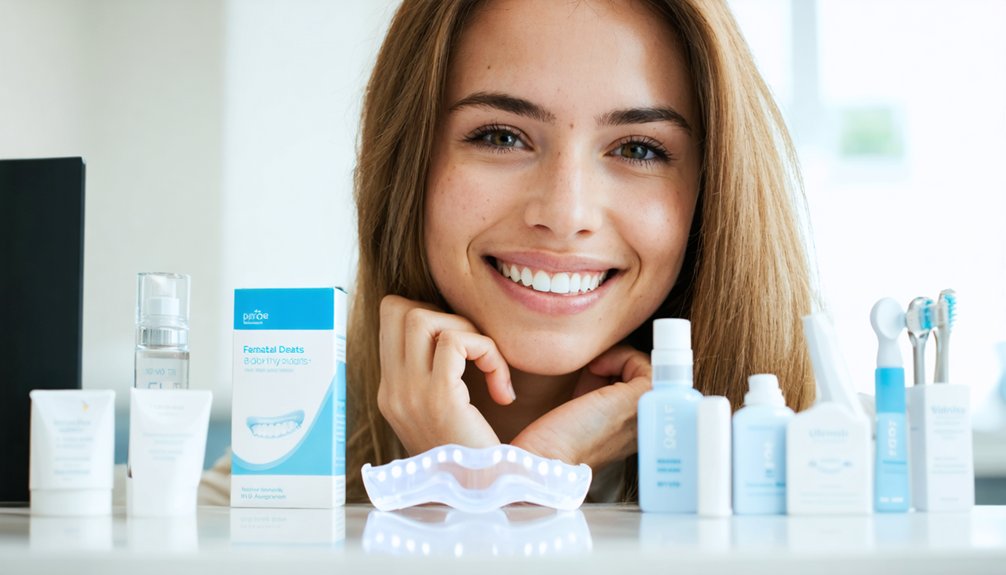
Protecting your veneers during a whitening treatment comes down to precision application and the right product selection. Custom-fitted whitening trays isolate gel exclusively on natural teeth, preventing overflow onto veneer surfaces.
Dentist-approved carbamide peroxide formulas between 10 and 16 percent deliver effective results without compromising restoration integrity.
Prioritize these protective measures:
- Use custom trays, not generic strips, to control gel placement with accuracy
- Practice dental flossing before each session to clear debris that traps whitening agents near veneer margins
- Wear mouthguards designed specifically around your restoration boundaries if advised by your dentist
In-office treatments performed exclusively on untreated natural teeth eliminate chemical exposure to your restorations entirely.
You stay in control of both the whitening outcome and your veneer’s long-term appearance.
Polishing, Cleaning, and Habits That Keep Veneers Bright
Keeping veneers bright requires consistent cleaning habits and professional maintenance rather than whitening treatments. Your oral hygiene routine should include non-abrasive polishing toothpaste, which removes surface stains around veneer edges without compromising the glaze.
Avoid stiff-bristled brushes that scratch the restoration’s finish over time.
Schedule professional dental cleanings every six months. Your dentist removes built-up plaque and performs in-office veneer polishing that restores the glossy surface you can’t replicate at home.
Diet tips matter equally. Limit coffee, tea, red wine, and dark sauces, as these accelerate surface discoloration.
When consuming staining beverages, use a straw and rinse with water immediately afterward to minimize contact with the veneer surface. These combined strategies preserve color integrity without chemical intervention.
When Replacing Old Veneers Is the Only Fix
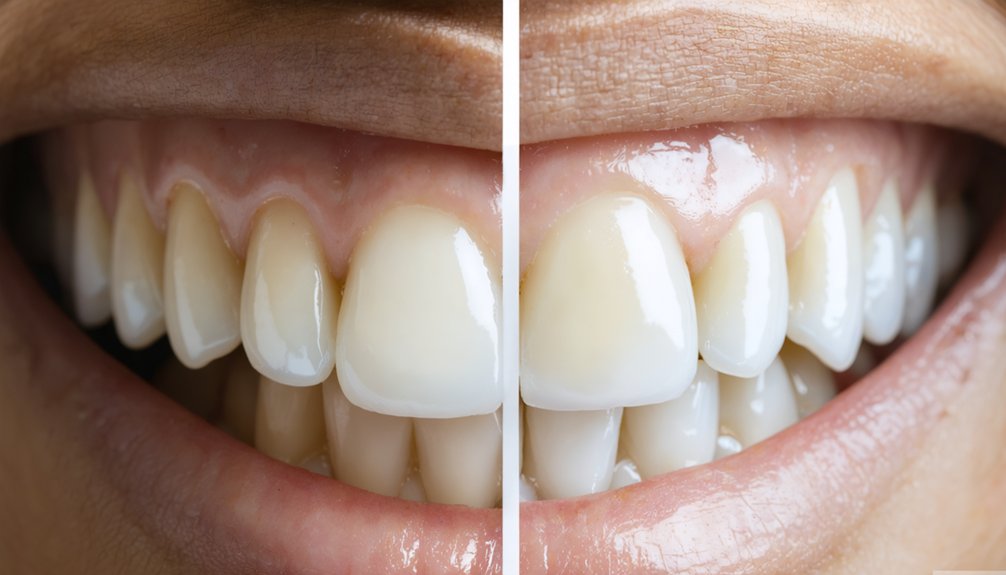
When your veneers show visible discoloration, chipping, surface crazing, or a dull finish that professional polishing can’t restore, replacement becomes the only viable solution.
You’ll typically reach this point around the 10-year mark, when material degradation compromises both aesthetics and structural integrity.
At that stage, whitening your natural teeth first and then selecting a new veneer shade guarantees color harmony across your entire smile.
Signs of Aging Veneers
Even the most well-maintained veneers eventually show signs of wear that no whitening treatment or polishing procedure can correct. Veneer durability typically spans 10 years before degradation becomes visible.
You’ll notice these warning signs indicating replacement is necessary:
- Chipping or cracking along the veneer edges that compromises structural integrity
- Discoloration at the margins where the veneer meets natural tooth structure, creating visible dark lines
- Increased tooth sensitivity beneath the veneer, signaling bond failure or enamel exposure
Once these signs appear, no cosmetic workaround restores the original appearance. The bond between the veneer and tooth weakens over time, allowing bacteria infiltration and further deterioration.
Consulting your dentist promptly ensures timely replacement before underlying tooth damage escalates.
Replacement Timing Considerations
Once those aging signs appear, replacement timing becomes the determining factor in preserving both aesthetics and oral health. Veneer longevity typically spans 10 to 15 years, depending on material durability and maintenance consistency.
When your natural teeth have been whitened to a brighter shade, older veneers often no longer match, creating visible color discrepancies that polishing alone can’t correct.
You’ll want to schedule replacement after completing your whitening regimen and allowing 10 to 14 days for color stabilization. This sequencing ensures your dental professional selects a veneer shade that accurately matches your brightened natural teeth.
Lithium disilicate and modern composite materials offer superior color stability over traditional porcelain, giving you longer-lasting harmony between restorations and natural teeth.
Proactive replacement prevents compounding aesthetic mismatches and structural complications.
What Veneer Replacement and Professional Whitening Actually Cost
When budgeting for veneer replacement, you’ll typically pay around $650 per session for professional in-office whitening.
Over-the-counter alternatives cost under $50 but deliver noticeably weaker results.
Replacing older veneers, generally recommended at the 10-year mark, adds a significant separate expense that you must factor into your total cosmetic dental budget.
Newer materials like lithium disilicate carry higher upfront costs but offer superior color stability, making them a more cost-effective long-term investment when matched against freshly whitened natural teeth.
Veneer Replacement Cost Breakdown
Understanding the financial side of veneer replacement and professional whitening helps you plan your dental care without unexpected surprises.
Veneer durability typically spans 10 years before replacement becomes necessary to maintain color harmony with whitened natural teeth.
Whitening gel treatments average $650 per in-office session, while veneer replacement costs vary by material and provider.
Key cost factors to contemplate:
- Porcelain veneer replacement runs considerably higher than composite alternatives but delivers superior color stability
- Lithium disilicate veneers offer better long-term harmony with whitened teeth, justifying the premium investment
- Over-the-counter whitening gel costs under $50 but produces minimal, short-lived results compared to professional treatments
Knowing these figures lets you prioritize treatments strategically, ensuring your natural teeth and veneers maintain a consistent, balanced appearance over time.
Professional Whitening Pricing Overview
Budgeting for professional whitening and veneer replacement requires knowing two key figures: in-office whitening sessions average $650 per treatment, while over-the-counter alternatives cost under $50 but deliver noticeably weaker, shorter-lasting results.
Dental insurance rarely covers cosmetic procedures, meaning you’ll likely pay entirely out of pocket for both whitening and veneer replacement.
When comparing options, professional whitening gels containing 10 to 16 percent carbamide peroxide deliver measurably superior outcomes compared to store-bought strips.
Veneer replacement around the 10-year mark adds another significant expense, particularly when newer materials like lithium disilicate command premium pricing.
Prioritizing professional-grade whitening gels before veneer placement reduces long-term costs by ensuring your restorations match a stabilized, brightened baseline, minimizing the likelihood of premature replacement due to color mismatch.
Frequently Asked Questions
Can Veneers Be Temporarily Removed to Whiten Teeth Underneath Them?
Temporary removal of veneers is virtually impossible—they’re permanently bonded. Beneath whitening isn’t achievable this way. You can’t access the underlying enamel without destroying the restoration, making pre-placement whitening your only effective strategy.
Do Veneers on Back Teeth Behave Differently Than Front Veneers?
Your back and front veneers don’t differ chemically—whitening agents won’t alter either. However, veneer longevity and color matching become more critical for front veneers since they’re most visible, directly impacting your smile’s overall aesthetic harmony.
Is Teeth Sensitivity Affected When Whitening Alongside Existing Veneers?
Yes, you’ll experience dental sensitivity on natural tooth enamel during whitening, but your veneers won’t contribute to it. Whitening agents target exposed enamel only, so sensitivity concentrates around untreated areas, leaving veneer-covered surfaces unaffected.
Can a Dentist Tint or Reglaze Veneers to Match Whitened Teeth?
Your dentist can’t reglaze or tint existing veneers to match whitened teeth. Instead, you’ll need replacement restorations using veneer customization and color matching techniques to align with your newly brightened, stabilized natural tooth shade.
Do Veneers Stain Faster Than Natural Teeth Over Time?
At the 10-year mark, you’ll likely need veneer replacement. Your veneers’ non-porous surface resists staining better than natural enamel, boosting veneer durability. Practice stain prevention by avoiding coffee and tea to maintain color harmony.
References
- https://www.crescentsmiles.com/can-dental-veneers-be-whitened/
- https://www.dentistinthepark.com.au/articles/teeth-whitening-veneers-or-bonding-which-option-is-right-for-your-smile
- https://www.youtube.com/watch?v=kgRNihp5iBM
- https://www.yourdentistryguide.com/whitening-vs-veneers/
- https://www.medfordsmiles.com/2021/08/3-ways-you-can-whiten-porcelain-veneers/
- https://www.smilecreators.com/how-to-whiten-teeth-without-damaging-your-veneers
- https://www.ranchobernardodentistry.com/blog/revive-your-smile-top-tips-and-techniques-to-whiten-yellowing-porcelain-veneers
- https://www.colgate.com/en-us/oral-health/veneers/can-you-whiten-veneers
- https://www.dentaris.com.mx/blog/does-teeth-whitening-work-on-veneers-and-crowns-understanding-the-effectiveness
- https://my.clevelandclinic.org/health/treatments/23522-dental-veneers