You can whiten your teeth and protect your enamel without overspending. Whitening toothpaste with fluoride runs under $10 and buffs away surface stains daily. Strips cost $15–$45 and deliver concentrated bleaching across your full arch. Paint-on pens offer targeted touch-ups between cycles, while whitening mouthwash combines fluoride with low peroxide for gradual results. Each option balances cost, safety, and visible improvement — and the details behind each choice are worth exploring.
Key Takeaways
- Whitening strips cost $15–$45 and pair well with fluoride toothpaste to protect enamel while delivering noticeable results within 10–20 days.
- Budget whitening kits range from $11–$32 and include trays, gel, and LED components, offering more tools per dollar spent.
- Fluoride whitening toothpaste uses mild abrasives like hydrated silica to remove surface stains from coffee, tea, and tobacco affordably.
- Whitening mouthwash combines fluoride with low hydrogen peroxide concentrations, making it a low-cost option requiring 3–6 weeks of consistent use.
- Paint-on whitening pens provide targeted, budget-friendly touch-ups between whitening cycles while limiting overall peroxide exposure.
How Fluoride Keeps Your Enamel Safe During Budget Whitening
When you use budget whitening products, fluoride works as your enamel’s first line of defense against the sensitivity and mineral loss that peroxide exposure can trigger.
Peroxide-based formulas break down stain compounds effectively, but they can also weaken enamel’s mineral structure during repeated use. Fluoride’s benefits include remineralizing those vulnerable areas by restoring calcium and phosphate bonds that whitening agents temporarily disrupt.
Peroxide whitens effectively, but repeated use disrupts enamel minerals — fluoride restores what whitening temporarily takes away.
Pairing fluoride toothpaste with strips, gels, or at-home kits gives you active enamel protection without adding cost. You’re reinforcing your enamel daily while still progressing toward a brighter result.
Low-abrasive fluoride formulas reduce the compounding wear that aggressive whitening routines can cause. This combination keeps your whitening strategy both cost-efficient and structurally sound, giving you precise control over your results and your enamel’s long-term health.
Does Whitening Toothpaste Actually Remove Stains?
Whitening toothpaste works by combining mild abrasives like hydrated silica or baking soda with fluoride to physically buff away surface stains from coffee, tea, wine, and tobacco.
Some formulas also include hydrogen peroxide, which breaks down stain compounds at a chemical level for slightly stronger results over time.
You won’t see dramatic overnight changes, but consistent daily brushing does prevent new stains from setting in while gradually brightening your enamel.
How Whitening Toothpaste Works
Scrubbing away coffee rings and tea tints every morning sounds simple, but understanding how whitening toothpaste actually does this helps you choose the right product.
Most formulas rely on two core toothpaste ingredients: mild abrasives like hydrated silica or baking soda, and fluoride. The abrasives physically buff surface stains from enamel during daily brushing, while fluoride strengthens enamel to resist future discoloration.
Some formulas add low concentrations of hydrogen peroxide, which chemically breaks down stain compounds for slightly brighter results over time. You won’t see dramatic overnight changes, but consistent use gradually lifts extrinsic stains from coffee, tea, wine, and tobacco.
Choosing a low-abrasive formula protects enamel integrity while still delivering visible improvement, giving you precise, daily control over your smile’s appearance.
Stain Removal Effectiveness Explained
Knowing how whitening toothpaste works raises a fair follow-up question: does it actually remove stains, or does it just slow new ones from forming? The honest answer depends on stain types.
Extrinsic stains from coffee, tea, and tobacco sit on your enamel’s surface, making them genuinely responsive to abrasive and peroxide-based formulas. Intrinsic stains, however, originate deeper within the tooth structure, and no toothpaste will meaningfully address those.
Your whitening frequency also shapes results. Daily brushing with a low-abrasive whitening formula gradually lifts surface deposits before they bond firmly to enamel.
You won’t see dramatic change overnight, but consistent use does produce measurable improvement over weeks. Think of it as precision maintenance rather than a dramatic transformation.
Do Whitening Strips Give the Best Bang for Your Buck?
When it comes to at-home stain removal, whitening strips tend to offer the strongest balance of cost and visible results. Priced between $15–$45, strips effectiveness consistently outperforms toothpaste alone, thanks to direct hydrogen peroxide contact with enamel surfaces.
Budget comparisons show strips deliver noticeable change within 10–20 days — a timeline that paint-on pens and mouthwashes simply can’t match at similar price points.
You’re getting concentrated bleaching action across your full arch, which maximizes value per treatment. To protect your enamel during this process, pair strips with a fluoride toothpaste.
That combination addresses both whitening and cavity prevention without requiring professional-grade costs. If you want visible control over your results without overspending, whitening strips remain the most strategically sound over-the-counter investment.
Are Gels, Pens, and Whitening Mouthwash Under $20 Worth It?
If you’re looking to stretch your whitening budget, gels, pens, and mouthwashes all fall under $20 and offer targeted or supplemental stain removal through peroxide-based formulas.
Gels and paint-on pens work best for touch-ups rather than full-arch whitening, since shorter contact time limits their overall effectiveness compared to strips or trays.
Whitening mouthwash delivers the slowest results—often taking 3–6 weeks of daily use—making it most valuable as an add-on to your existing routine rather than a stand-alone solution.
Gels and Pens Effectiveness
Three budget whitening options—gels, paint-on pens, and whitening mouthwash—each cost under $20, but their effectiveness varies depending on how you use them and what results you’re expecting.
Gel application delivers peroxide directly to enamel, while pen convenience makes targeted touch-ups practical between whitening cycles. Results typically appear within one to two weeks of consistent use.
- Gels use peroxide concentrations that break down stain compounds on contact.
- Pen convenience allows precise application on individual teeth without full-arch coverage.
- Gel application requires consistent daily use to maintain visible results.
- Both options work best on extrinsic stains from coffee, tea, or wine.
- Shorter contact time limits their whitening depth compared to strips or trays.
Use these tools strategically—not as primary solutions, but as controlled, targeted additions to your routine.
Mouthwash Whitening Results
Whitening mouthwash is the slowest-acting option in this category, but it still earns a place in a budget routine when you use it correctly. Priced between $7 and $20, it delivers mouthwash benefits beyond freshness — most formulas combine fluoride with low concentrations of hydrogen peroxide to support enamel while targeting surface stains.
The whitening duration typically runs 3–6 weeks of daily use before you’ll notice visible change, so patience is non-negotiable. Swish for the full 60 seconds before brushing to maximize contact time with stained surfaces.
It won’t replace strips or trays for meaningful results, but when you layer it into an existing routine, it reinforces progress without adding significant cost or effort to your regimen.
Best Value Under $20
For under $20, you’ve got three realistic options — whitening gels, paint-on pens, and whitening mouthwash — and each one occupies a specific role rather than serving as an all-encompassing whitening solution.
Understanding their budget benefits helps you build a smarter routine alongside fluoride toothpaste ingredients that protect enamel.
- Gels and pens ($10–$20): peroxide-based, ideal for targeted touch-ups between whitening cycles
- Mouthwash ($7–$20): fluoride plus low-dose hydrogen peroxide; supports brushing rather than replacing it
- Results timeline: gels and pens show change in 1–2 weeks; mouthwash takes 3–6 weeks
- Sensitivity risk: peroxide overuse can compromise enamel — pair every option with low-abrasive toothpaste
- Best strategy: combine two methods for layered, controlled stain removal without exceeding budget
Can Budget At-Home Kits Whiten as Well as Strips?
When comparing budget at-home whitening kits to strips, the answer depends largely on formulation and contact time. Kits vs strips often comes down to how long the peroxide stays on your enamel. Strips typically maintain consistent contact, while kit trays can shift, reducing effectiveness.
That said, cost effectiveness favors kits when they include trays, gel, and LED components ranging from $11–$32. You’re getting more tools per dollar.
However, strips at $15–$45 often deliver more predictable results because their adhesion guarantees better peroxide penetration.
If you prioritize control and customization, kits give you flexibility in concentration and application time. For straightforward, proven results, strips remain the stronger performer.
Pairing either option with fluoride toothpaste protects enamel while maximizing your whitening investment.
Which Budget Option Whitens Without Wrecking Your Enamel?
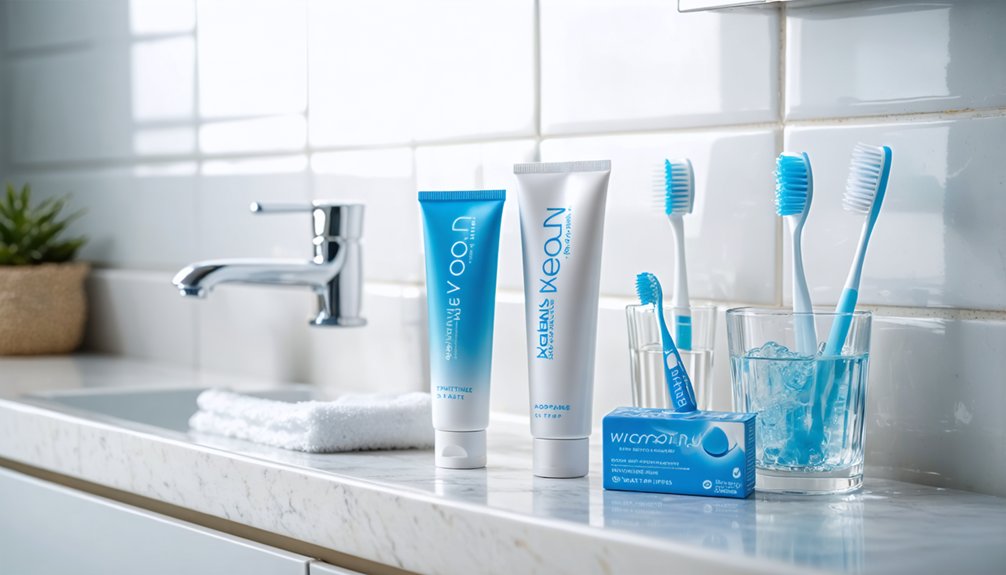
Protecting your enamel while whitening on a budget isn’t a contradiction—it’s a matter of choosing the right formulation and using it correctly. Affordable whitening works best when you prioritize enamel protection through low-abrasive, fluoride-supported options.
Choose based on your sensitivity tolerance and whitening goals:
- Whitening toothpaste with hydrated silica offers gentle daily stain removal without aggressive peroxide exposure.
- Fluoride toothpaste used alongside strips reduces sensitivity and supports enamel remineralization.
- Whitening strips with controlled peroxide concentrations deliver visible results without excessive enamel contact time.
- Paint-on pens limit peroxide exposure to targeted areas, reducing overall enamel stress.
- Whitening mouthwash containing fluoride adds gentle support without abrasive contact.
Avoid overusing any peroxide product—frequency and concentration matter more than aggressive application.
Frequently Asked Questions
Can Children Safely Use Budget Fluoride Whitening Products at Home?
You shouldn’t use budget fluoride whitening products on children without consulting a dentist first. Child safety requires professional guidance, as peroxide-based formulas may harm developing enamel. Fluoride effectiveness for kids depends on age-appropriate, dentist-recommended products only.
How Long Do Whitening Results Last Before Stains Return?
Like a freshly cleaned canvas, your whitening durability spans 3–6 months before stains return. You’ll extend results through consistent stain prevention—daily fluoride toothpaste and avoiding coffee, tea, and wine keep your smile protected longer.
Should I Whiten Teeth Before or After Dental Fillings?
Whiten your teeth before any dental procedure, as fillings don’t respond to bleaching agents. Proper whitening timing guarantees your new filling matches your brighter shade, giving you full control over a consistent, aesthetically cohesive result.
Can Whitening Products Interact With Prescription Medications I Take?
Whitening ingredients safety can be affected by your medications. Some prescription drugs increase sensitivity or photosensitivity, amplifying medication side effects when combined with peroxide. You should always consult your prescribing doctor before starting any whitening routine.
Is Professional Whitening Ever Covered by Dental Insurance Plans?
Like chasing the Holy Grail, you’ll rarely find insurance coverage for professional whitening—most dental policy plans classify it as cosmetic. You’re better off taking control with budget-friendly OTC fluoride options instead.
References
- https://caseydental.com/wallet-friendly-whiteness-10-budget-teeth-whitening-solutions-for-a-dazzling-smile/
- https://www.forbes.com/sites/forbes-personal-shopper/article/best-teeth-whitening-kit/
- https://www.goodhousekeeping.com/health-products/g28723133/best-at-home-teeth-whitening-products/
- https://www.goodrx.com/conditions/dental-care/is-teeth-whitening-safe
- https://www.rejuv-health.com/cosmetic-dentistry/teeth-whitening-cost/
- https://www.nbcnews.com/news/ncna1253852
- https://nhdentistrybeverlyhills.com/press/6-of-the-best-teeth-whitening-kits-in-the-drugstore/
- https://www.youtube.com/watch?v=HvpjIR-qrsc
- https://nymag.com/strategist/article/best-teeth-whitening-products.html
- https://shopremi.com/blogs/night-mouth-guard-blog/over-the-counter-teeth-whitening