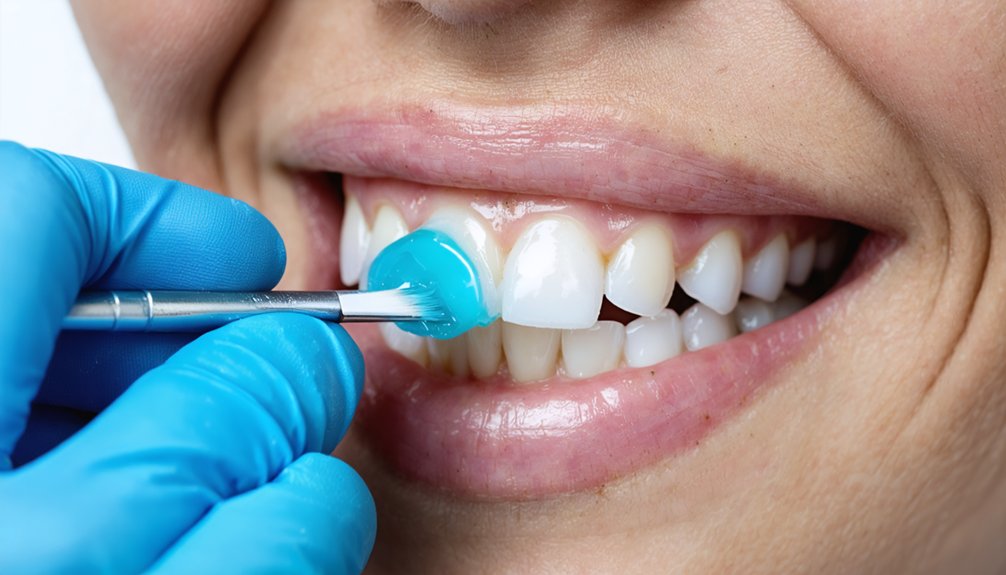
Teeth whitening can cause tooth sensitivity, gum irritation, and enamel damage when peroxide penetrates beyond the outer tooth surface. You’re at greater risk if you have existing cavities, cracked enamel, or gum disease, since bleaching agents can reach nerve tissue more easily. Overusing at-home kits compounds these effects, potentially causing pulp inflammation and uneven results. Understanding each risk factor in detail will help you make safer, more informed decisions about your whitening treatment.
Key Takeaways
- Tooth sensitivity and gum irritation are common side effects, often linked to peroxide concentration, application duration, and individual treatment technique.
- Pre-existing conditions like cavities, gum disease, or cracked enamel significantly increase the risk of pain, irritation, and structural damage.
- Repeated bleaching raises enamel permeability, potentially weakening structure and increasing vulnerability to decay over time.
- Bleaching agents can penetrate the pulp through existing cracks or cavities, causing nerve inflammation and severe discomfort.
- At-home whitening kits risk uneven results, excessive enamel erosion, and gum damage without professional supervision and guidance.
The Most Common Side Effects of Teeth Whitening
Teeth whitening is generally safe when used correctly, but it does carry a real risk of side effects that you should understand before starting treatment.
The most frequently reported reactions include tooth sensitivity and gum irritation. Sensitivity typically appears during the first one or two sessions and stems from peroxide penetrating the enamel and mildly inflaming the pulp.
Tooth sensitivity is among the most common side effects, often emerging within the first couple of whitening sessions.
Gum irritation occurs when the bleaching gel contacts soft tissue, causing redness, burning, or swelling. Both side effects correlate directly with peroxide concentration, whitening techniques used, and treatment duration. Higher concentrations applied over longer periods increase your risk.
These reactions are usually temporary, but you should monitor them closely. Persistent or worsening symptoms warrant professional evaluation before you continue any whitening regimen.
Who Faces the Highest Risk From Teeth Whitening
Your oral health profile before treatment begins plays a central role in determining how your teeth and gums respond to whitening agents.
If you have existing cavities, cracked enamel, gum disease, or exposed root surfaces, you face a notably higher risk of pain, irritation, and tissue damage.
Conditions that compromise tooth structure or periodontal integrity allow peroxide to penetrate more deeply, increasing the likelihood of pulp irritation and soft-tissue injury.
Vulnerable Dental Health Profiles
While whitening treatments are broadly available, certain dental health profiles carry a measurably higher risk of adverse outcomes.
If you have thin or compromised enamel, active decay, exposed dentin, or existing restorations, standard whitening protocols may accelerate structural damage rather than improve aesthetics.
Cracks and cavities allow peroxide to penetrate deeper into tooth structure, increasing pulp irritation and complicating sensitivity management.
Gum recession exposes cementum, which responds more aggressively to bleaching agents than intact enamel.
If you’ve had multiple restorations or prior bleaching cycles, enamel preservation becomes a clinical priority, not a secondary concern.
Proceeding without a professional assessment when you fall into these categories means accepting risks you could otherwise quantify and control with proper screening and modified treatment protocols.
Pre-Existing Oral Conditions
Beyond structural vulnerability, specific pre-existing oral conditions place certain patients at substantially higher risk when undergoing whitening treatment.
If you have active cavities, periodontal disease, or exposed root surfaces, bleaching agents penetrate more deeply, increasing irritation risk to the pulp and surrounding tissue.
Gum recession creates direct peroxide contact with vulnerable cementum, amplifying both sensitivity and soft-tissue injury.
Untreated decay allows chemical agents to bypass enamel entirely, reaching nerve tissue prematurely.
Your oral health baseline directly determines whether whitening is appropriate or contraindicated.
Pre-existing conditions like dry mouth reduce saliva’s buffering capacity, prolonging acid and peroxide exposure.
Before proceeding with any whitening protocol, a clinical evaluation confirms whether your current oral condition supports safe treatment or requires prior intervention.
Tooth Sensitivity After Whitening Treatments
Tooth sensitivity ranks as the most common side effect of whitening treatments, and it’s one you’re likely to encounter during your first one or two sessions.
Peroxide penetrates enamel and temporarily inflames the pulp, triggering sharp or lingering discomfort. Higher peroxide concentrations amplify this response, so the product strength you choose directly influences your sensitivity risk.
Effective sensitivity management includes using desensitizing toothpaste containing potassium nitrate or fluoride before and after treatment.
You can also reduce session frequency or shorten application time to limit peroxide exposure. If sensitivity persists or intensifies, consult your dentist promptly to rule out underlying enamel damage or pulp irritation.
When standard protocols prove too aggressive, treatment alternatives such as lower-concentration formulas or professionally monitored custom trays offer more controlled outcomes.
Gum Irritation and Chemical Burns From Bleaching Gels
Bleaching gels can irritate your gums and soft tissue when peroxide contacts unprotected oral mucosa, producing redness, swelling, burning, or frank discomfort. Concentrated agents can cause outright chemical burns when misapplied, particularly with high-percentage hydrogen peroxide formulations.
Your gum health is directly affected by the duration and intensity of chemical exposure, so limiting contact time matters.
At-home kits carry elevated risk when you don’t follow instructions precisely, since ill-fitting trays allow gel migration onto sensitive tissue. Custom-fitted trays from a dentist reduce this exposure by containing the bleaching agent against tooth surfaces only.
Protective barriers applied to gingival margins offer additional defense. If you experience persistent burning or visible tissue changes, discontinue use and seek professional evaluation promptly.
Does Teeth Whitening Damage Your Enamel?
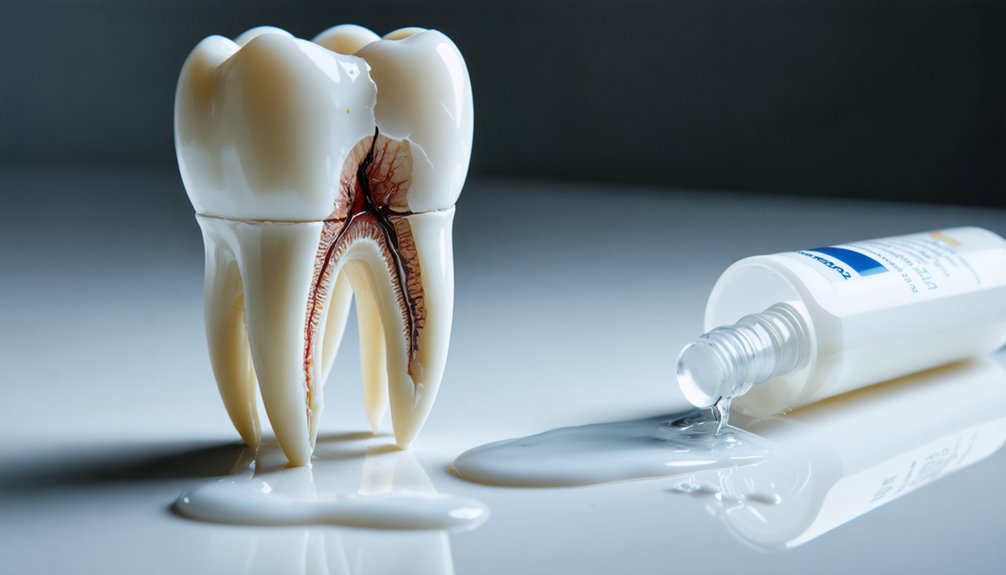
When you repeatedly apply bleaching agents, you increase enamel permeability, allowing chemicals to penetrate the tooth surface more deeply with each session.
Overuse accelerates structural weakening, making your enamel more vulnerable to erosion and decay over time.
You may also notice white spots or a chalky appearance, both signs that aggressive whitening has begun to compromise your enamel’s integrity.
Enamel Permeability And Bleaching
Enamel is a hard but porous structure, and repeated bleaching can increase its permeability over time. As permeability rises, your enamel becomes more vulnerable to mineral loss, sensitivity, and decay.
Research on bleaching effects confirms that aggressive or frequent whitening sessions alter tooth microstructure, even when visible damage isn’t immediately apparent.
Protecting your enamel health means respecting treatment intervals and avoiding overuse. Higher peroxide concentrations accelerate these structural changes, so stronger doesn’t always mean better. If you’re whitening repeatedly without allowing adequate recovery time, you’re compounding the risk with each session.
You can reduce permeability concerns by using remineralizing products containing fluoride or hydroxyapatite between treatments. These compounds help restore mineral density and partially counteract the structural disruption that bleaching introduces into enamel.
Overuse And Structural Weakening
Repeated whitening sessions without adequate recovery intervals can structurally weaken enamel over time.
When you exceed recommended whitening frequency, peroxide penetrates demineralized zones before enamel restoration can occur, compounding microstructural damage with each cycle.
Laboratory evidence confirms that aggressive bleaching alters enamel’s crystalline architecture, increasing porosity and reducing hardness.
Over-bleached teeth may appear chalky, develop white spots, or take on a translucent quality near the edges.
These aren’t cosmetic inconveniences—they’re indicators of structural compromise.
You’re also raising your cavity risk, since weakened enamel provides less protection against acid and bacterial activity.
Managing session intervals, using remineralizing products between treatments, and staying within clinically appropriate peroxide concentrations gives your enamel time to recover and preserves long-term tooth integrity.
White Spots And Erosion
Structural weakening doesn’t always announce itself through pain or fracture—sometimes it shows up as white spots or a chalky surface texture that wasn’t there before.
These white spots signal localized demineralization—areas where enamel erosion has compromised mineral density unevenly.
Bleaching agents increase enamel permeability, and repeated exposure accelerates mineral loss in susceptible zones.
Laboratory evidence confirms microstructural changes following aggressive whitening cycles.
Once enamel erodes, it doesn’t regenerate. You’re left with surfaces that are more porous, more reactive to temperature and acids, and more vulnerable to decay.
If you’re noticing chalky patches or dull discoloration after whitening, stop treatment and consult a dentist.
Continuing without evaluation risks compounding the damage rather than correcting the cosmetic issue you started with.
Uneven and Patchy Results From Whitening
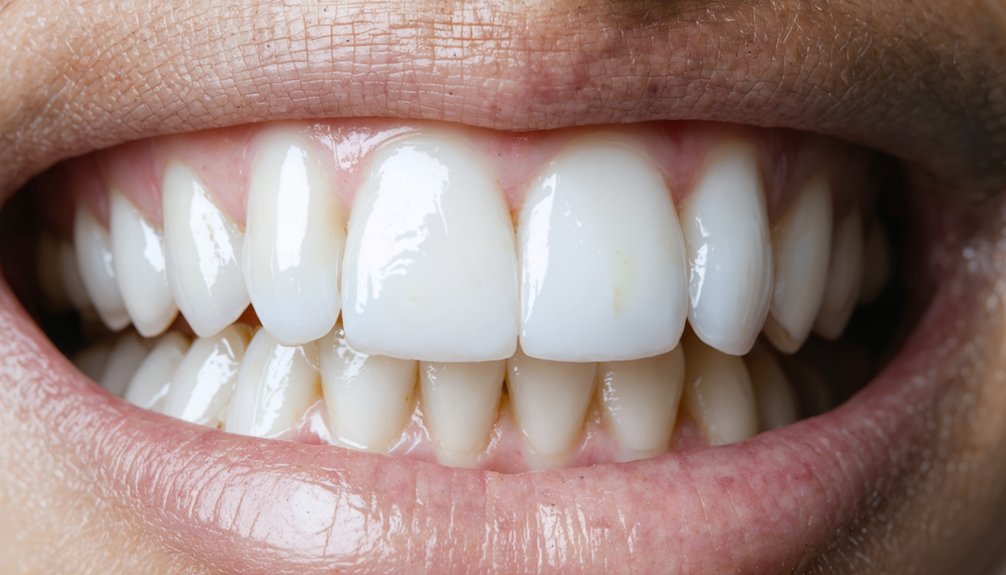
Whitening treatments don’t always produce uniform results across every tooth or every patient. Uneven results and patchy whitening occur when certain factors interfere with consistent bleaching.
Key variables that drive inconsistent outcomes include:
- Dental restorations — Crowns, veneers, fillings, and sealants don’t respond to peroxide, creating visible color mismatches alongside natural teeth.
- Discoloration type — Intrinsic stains from medication or trauma respond poorly or unpredictably to bleaching agents.
- Over-bleaching — Excessive treatment can make teeth appear translucent rather than naturally white.
- Uneven gel contact — Ill-fitting trays distribute product inconsistently, leaving patchy whitening across tooth surfaces.
You should consult a dental professional before treatment to identify existing restorations and set realistic expectations for your outcome.
Nerve and Pulp Risks From Teeth Whitening
Bleaching agents can penetrate beyond the enamel and dentin into the pulp, where they trigger inflammation and nerve irritation.
This risk intensifies when you have existing cracks, cavities, or worn enamel, as these conditions create direct pathways for peroxide to reach vulnerable tissue.
Repeated whitening sessions with insufficient recovery time compound the problem, limiting your pulp’s ability to recover between treatments.
Pulp inflammation may present as sharp, spontaneous pain rather than typical sensitivity.
If you’re experiencing severe or persistent discomfort, that’s a clinical signal requiring professional evaluation, not another whitening session.
Higher peroxide concentrations amplify nerve irritation risk, making professional oversight essential.
Matching treatment strength to your current oral health status helps you avoid irreversible pulp damage.
What Happens When You Overuse At-Home Whitening Kits
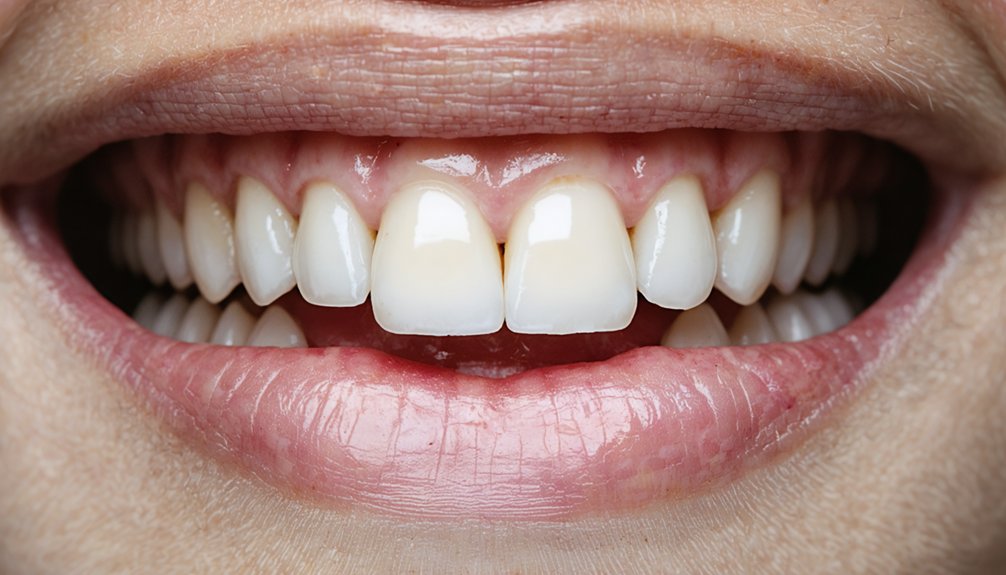
When you overuse at-home whitening kits, the cumulative chemical exposure drives a range of compounding problems that move well beyond temporary sensitivity.
Controlling whitening frequency and product selection directly determines whether outcomes stay safe or become clinically damaging.
Exceeding recommended usage produces measurable harm:
- Enamel erosion increases permeability, weakening structural integrity and accelerating decay risk.
- Pulp irritation intensifies with repeated peroxide penetration, especially through compromised enamel.
- Gum tissue damage compounds when gel contacts soft tissue across multiple unsupervised sessions.
- Cosmetic distortion develops as over-bleached teeth appear translucent or chalky rather than white.
Each risk compounds the next. Mismanaged whitening frequency strips enamel before tissue recovers.
Poor product selection amplifies chemical concentration beyond what your oral tissues can safely tolerate between treatments.
How Dentists Reduce the Risks Before You Whiten
Before a dentist recommends any whitening treatment, they evaluate your oral health to identify conditions that raise your risk. This pre-treatment evaluation screens for cavities, gum disease, enamel erosion, cracked teeth, and exposed roots—each of which increases the likelihood of sensitivity, pulp irritation, or soft-tissue injury.
If restorations like crowns or veneers are present, your dentist flags potential color mismatches before treatment begins. They also assess your baseline sensitivity and prior whitening history to select an appropriate peroxide concentration and exposure time.
When your oral health status makes standard bleaching unsuitable, your dentist may discuss whitening alternatives such as microabrasion or cosmetic bonding.
This structured process guarantees treatment decisions are based on your specific clinical profile, not guesswork.
Frequently Asked Questions
Can Teeth Whitening Treatments Affect Existing Dental Implants or Bridges?
whitening won’t change implant sensitivity or bridge discoloration since these materials don’t respond to peroxide. You’ll risk uneven color mismatches between your natural teeth and restorations instead.
Is Teeth Whitening Safe to Use During Pregnancy or Breastfeeding?
You should avoid teeth whitening during pregnancy or breastfeeding due to unresolved safety concerns around peroxide absorption. Instead, explore alternative methods like proper brushing and professional cleaning until you’ve finished breastfeeding.
How Long Do Teeth Whitening Results Typically Last After Treatment?
Results typically last 6–24 months—professional treatments outlasting home remedies by up to a year. Your habits, diet, and compliance directly control longevity. Maintenance sessions help you sustain ideal whitening outcomes effectively.
Can Children or Teenagers Safely Undergo Teeth Whitening Procedures?
You shouldn’t pursue teeth whitening for children or teenagers without professional guidance. Age considerations matter considerably, as developing teeth face heightened teeth sensitivity risks, enamel vulnerabilities, and pulp complications that can cause lasting damage during critical dental development stages.
Does Diet or Smoking Affect How Long Whitening Results Last?
Yes, diet impact and smoking effects greatly shorten your whitening results. You’ll accelerate staining by consuming coffee, tea, or wine, while tobacco deposits surface pigments rapidly, undermining treatment longevity and requiring more frequent whitening sessions to maintain desired outcomes.
References
- https://www.dentistryofwestbend.com/teeth-whitening-risks-and-side-effects/
- https://www.cornerstonedentistryvan.com/the-hidden-dangers-of-teeth-whitening-treatments/
- https://www.healthline.com/health/is-teeth-whitening-safe
- https://adanews.ada.org/huddles/risks-of-frequent-teeth-whitening/
- https://health.clevelandclinic.org/is-teeth-whitening-safe
- https://www.inspireddoc.com/side-effects-of-teeth-whitening/
- https://www.ada.org/resources/ada-library/oral-health-topics/whitening
- https://shreveportbossierdental.com/what-are-the-risks-of-teeth-whitening-treatment/
- https://drjosephmurray.com/blog/are-teeth-whitening-treatments-safe-cip119/
- https://serenedentalspa.com/when-teeth-whitening-isnt-for-you-risks-alternatives-safe-choices/