You can fade dark spots using brightening serums with vitamin C or niacinamide, chemical peels, and laser or IPL treatments that break down pigment deposits. For teeth, in-office peroxide whitening, custom trays, and whitening strips effectively lift staining through targeted oxidation. Daily sunscreen and consistent oral hygiene protect both results long-term. Each method works best when matched to your specific skin tone, stain type, and treatment history—details that matter more than most people realize.
Key Takeaways
- Brightening serums with vitamin C, niacinamide, or kojic acid effectively fade dark spots when applied consistently alongside daily broad-spectrum sunscreen.
- Chemical peels using glycolic, lactic, or salicylic acid dissolve pigmented cells, with professional application ensuring safer, more controlled results.
- Laser and IPL treatments target various pigment depths, with pico lasers offering improved precision and minimal heat damage.
- Professional teeth whitening uses 25–40% peroxide concentrations, delivering significant results within one to three in-office sessions.
- At-home whitening strips and custom trays provide gradual stain removal, though consistent daily use over weeks is required for noticeable effects.
Brightening Serums and Creams That Fade Dark Spots
Brightening serums and creams are among the most accessible first-line options for fading dark spots, and their effectiveness depends largely on which active ingredients they contain.
The right brightening serum can fade dark spots — but only if you know which ingredients actually work.
When choosing targeted treatments, prioritize formulas containing clinically supported brightening ingredients like vitamin C, niacinamide, kojic acid, alpha arbutin, or licorice extract. These compounds work by interrupting melanin synthesis at different biological stages, making their combination often more effective than single-ingredient approaches.
For more resistant pigmentation, prescription retinoids or hydroquinone deliver stronger results by accelerating cell turnover and directly suppressing melanin production.
Consistency is non-negotiable — most topicals require weeks to months of daily application before visible fading occurs. You’ll also need to pair any brightening regimen with daily broad-spectrum sunscreen, or you’ll undermine your progress.
Chemical Peels That Clear Stubborn Hyperpigmentation
Chemical peels work by applying acids like glycolic, lactic, salicylic, or TCA to dissolve pigmented surface cells and accelerate skin turnover.
Each acid targets hyperpigmentation differently, with superficial acids addressing mild post-inflammatory marks and stronger TCA formulations reaching deeper discoloration.
You’ll find that professional peels deliver more controlled, consistent results than at-home options, which use lower concentrations to reduce the risk of irritation or rebound pigmentation.
How Chemical Peels Work
A chemical peel works by applying an acid solution to the skin’s surface, which deliberately disrupts the outer layers to accelerate cell turnover and clear accumulated pigment. Acids such as glycolic, lactic, salicylic, mandelic, or TCA penetrate at varying depths depending on concentration and formulation.
Superficial peels target epidermal discoloration, while medium-depth options reach the upper dermis for more persistent hyperpigmentation.
Chemical peel benefits include improved tone, reduced post-inflammatory marks, and enhanced absorption of brightening actives afterward.
However, following peel safety guidelines is non-negotiable. Improper application, skipped patch tests, or excessive frequency increases your risk of irritation and post-inflammatory hyperpigmentation, particularly in deeper skin tones.
A professional evaluation guarantees the selected acid type and strength align precisely with your pigmentation depth and skin profile.
Best Acids For Hyperpigmentation
Selecting the right acid for stubborn hyperpigmentation directly determines how effectively a peel clears accumulated pigment without triggering further discoloration.
Glycolic acid penetrates deeply, accelerating cell turnover and breaking down melanin clusters. Lactic acid offers a gentler alternative, making it suitable for sensitive or reactive skin.
Salicylic acid targets inflammation-driven pigmentation, particularly post-acne marks. Mandelic acid works well for darker complexions due to its slower absorption rate, which reduces post-inflammatory hyperpigmentation risk.
Acid combinations, such as glycolic paired with salicylic, can address multiple pigmentation mechanisms simultaneously, though they require careful professional oversight.
Best practices include starting at lower concentrations, monitoring skin response between sessions, and maintaining strict sun protection throughout treatment to prevent rebound discoloration and preserve results.
Professional Versus At-Home Peels
When choosing between professional and at-home chemical peels, the concentration of active acids is the most critical differentiating factor.
Professional peel benefits include higher acid concentrations, controlled application, and reduced risk of adverse reactions. At-home peel effectiveness depends on consistent use of lower-concentration formulas.
Key distinctions to guide your decision:
- Professional peels use TCA or higher-strength glycolic acid, targeting deeper pigmentation layers.
- At-home formulas typically contain 5–10% acids, addressing superficial discoloration only.
- Professionals apply protective barriers, minimizing chemical burns and post-inflammatory hyperpigmentation.
- At-home peels require strict patch testing and adherence to timing guidelines.
- Stubborn or deep hyperpigmentation responds more reliably to supervised clinical treatments.
Match your choice to your pigmentation severity, skin sensitivity, and tolerance for downtime.
Which Lasers and IPL Devices Actually Target Dark Spots
Not all laser and light-based devices work the same way, and choosing the right one depends on your pigment type, skin tone, and spot depth.
Q-switched Nd:YAG lasers target deeper pigment effectively, making them a reliable option for age spots and stubborn hyperpigmentation.
Pico lasers deliver ultra-short pulses, reducing heat damage while improving pigment depth accuracy.
IPL effectiveness is strongest for surface-level sun damage and extrinsic discoloration, though it carries higher risk in darker complexions.
Treatment safety requires careful skin tone assessment before any session.
Results timeline varies from two to six weeks post-treatment, depending on device choice and pigment severity.
Post-treatment care—daily broad-spectrum sunscreen and gentle brightening actives—is non-negotiable for preserving laser outcomes and preventing recurrence.
Daily Habits That Stop Dark Spots From Returning
Laser and light-based treatments can clear existing pigmentation, but without consistent daily habits, dark spots often return.
Sun protection and targeted lifestyle changes are your strongest defenses against recurrence.
Sun protection and smart daily habits are the real barrier between you and recurring dark spots.
Build these non-negotiable habits into your daily routine:
- Apply broad-spectrum SPF 30 or higher every morning, regardless of weather or indoor plans.
- Reapply sunscreen every two hours during prolonged sun exposure.
- Use a gentle brightening ingredient like niacinamide or vitamin C to maintain results.
- Avoid picking or irritating active breakouts, which trigger post-inflammatory hyperpigmentation.
- Rinse or cleanse after heavy sweating, which can increase photosensitivity when combined with certain topicals.
Consistency separates temporary clearance from lasting results.
You control whether the progress you’ve made holds.
In-Office Teeth Whitening: Speed, Cost, and Results
When you choose in-office whitening, your dentist applies a high-concentration peroxide gel directly to your teeth, often paired with a light-activated system to accelerate the bleaching process.
You’ll typically see measurable results within a single appointment, making it the fastest available option for extrinsic stains from coffee, tea, wine, or tobacco.
The trade-off is cost, as professional treatment runs considerably higher than at-home alternatives, but you’re paying for both speed and clinical oversight that reduces risks like gum irritation and uneven results.
How In-Office Whitening Works
In-office whitening works by applying a high-concentration peroxide-based gel directly to the tooth surface, where it penetrates enamel and breaks down the molecular bonds of extrinsic stain compounds.
Dentists control whitening techniques and dosage precisely, reducing guesswork. Key safety considerations and procedural elements include:
- Peroxide concentrations typically range from 25% to 40%
- Protective barriers shield gum tissue from chemical exposure
- Light-activated systems may accelerate the oxidation process
- Treatment typically completes within one to three sessions
- Pre-treatment evaluation screens for enamel wear, cavities, and sensitivity
You’re getting clinically supervised results that over-the-counter products can’t replicate.
The controlled environment lets your dentist adjust application time and concentration based on your specific tooth condition and sensitivity threshold.
Cost Versus Results Compared
Whether in-office whitening justifies its price depends on what you’re comparing it against. In a direct cost analysis, professional treatments typically run $300–$1,000 per session, while peroxide-based strips or trays cost $20–$100.
However, this treatment comparison shifts when you factor in speed and concentration. In-office protocols use higher peroxide levels, delivering measurable results in one to two visits rather than weeks.
At-home options work, but they require consistent daily use and produce more gradual change. If you’re managing time-sensitive results or significant extrinsic staining from coffee, wine, or tobacco, professional whitening offers a stronger return on investment.
For mild discoloration, at-home products remain a cost-effective starting point. Your choice should reflect the severity of staining and your timeline for results.
Whitening Strips and Trays That Remove Surface Stains
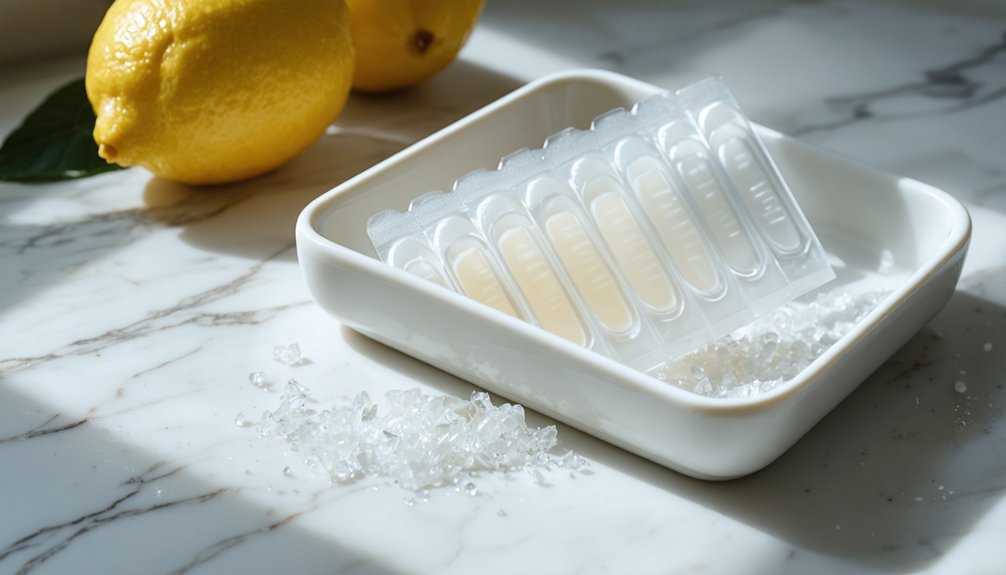
At-home whitening strips and trays use peroxide-based formulas to break down extrinsic stains caused by coffee, tea, wine, and tobacco. Consistent application over several days to weeks delivers measurable whitening effectiveness for surface discoloration.
Key factors that influence your results:
- Peroxide concentration determines how quickly stains lift; higher percentages work faster but may increase sensitivity.
- Contact time matters—follow manufacturer instructions precisely to avoid enamel or gum irritation.
- Stain prevention requires limiting staining beverages and rinsing with water after consumption.
- Tray fit affects gel distribution; custom trays from a dentist outperform generic strips in coverage.
- Maintenance frequency sustains brightness; periodic retreatment prevents gradual stain accumulation.
You’ll maintain control over your results by pairing consistent whitening sessions with deliberate dietary habits and regular professional cleanings.
How to Keep Skin and Teeth Brighter Between Treatments
Strips and trays do the heavy lifting during active treatment, but what you do between sessions determines how long those results last.
For dark spot prevention, apply broad-spectrum sunscreen daily and avoid picking at acne or irritated skin. Sun exposure actively darkens existing hyperpigmentation, slowing your progress.
Sun exposure doesn’t pause hyperpigmentation—it worsens it. Sunscreen daily isn’t optional; it’s maintenance.
Between professional treatments, maintain results with vitamin C, niacinamide, or alpha arbutin serums used consistently.
For teeth maintenance, rinse with water immediately after coffee, tea, red wine, or soda. Brush and floss regularly, and limit prolonged exposure to staining beverages. Whitening toothpaste can manage surface buildup between active whitening cycles.
Both skin and teeth respond predictably to disciplined habits. Skipping maintenance doesn’t pause your results—it reverses them.
Frequently Asked Questions
Can Dark Spots and Tooth Discoloration Signal Underlying Health Conditions?
Yes, they can. Dark spots may indicate liver health issues or vitamin deficiencies, while tooth discoloration can reflect poor dental hygiene or systemic skin conditions. You should consult a specialist for accurate diagnosis.
Are Dark Spot and Teeth Whitening Treatments Safe During Pregnancy?
Imagine you’re 20 weeks pregnant—you should avoid hydroquinone and peroxide-based whiteners. For pregnancy skincare, stick to vitamin C or niacinamide. For dental safety, opt for professional cleanings only. Always consult your OB first.
Do Dark Spot Treatments or Whitening Products Interact With Medications?
Yes, some dark spot treatments and whitening products can affect medication interactions and product effectiveness. Retinoids, hydroquinone, and peroxide may interact with certain topical or systemic medications, so you should always consult your prescribing physician beforehand.
At What Age Should Someone Start Preventive Dark Spot or Whitening Treatments?
There’s no single perfect age, but you can start preventive skincare in your mid-20s. Age recommendations typically suggest daily sunscreen and brightening basics early, since consistent protection actively delays pigmentation and reduces future whitening needs.
Can Hormonal Changes Cause Both Skin Dark Spots and Tooth Discoloration?
Yes, hormonal fluctuations can trigger both conditions. They stimulate excess melanin, darkening your skin, while altering your oral environment, affecting enamel integrity. Prioritizing skin health and dental monitoring helps you maintain control during these biological changes.
References
- https://rohtoaohalclinic.com.vn/en/top-7-best-treatment-for-dark-spots-on-face-that-actually-work.html
- https://doralhw.org/dermatologist-approved-treatment-dark-spots/
- https://smytten.com/blogs/skincare/7-proven-tips-to-effectively-remove-dark-spots-on-face
- https://dc-dermdocs.com/7-simple-ways-to-get-rid-of-dark-spots/
- https://www.westlakedermatology.com/blog/dark-spots/
- https://www.aerolase.com/blogs/8-dark-spot-treatments-really-work-according-dermatologists
- https://slmdskincare.com/blogs/learn/7-ingredients-dermatologists-use-to-treat-dark-spots
- https://www.today.com/shop/dark-spot-correction-skin-treatments-t229567
- https://health.ucdavis.edu/blog/cultivating-health/want-to-get-rid-of-age-spots-tips-to-prevent-and-reduce-dark-spots/2024/06
- https://www.byrdie.com/how-to-treat-dark-spots-4686898