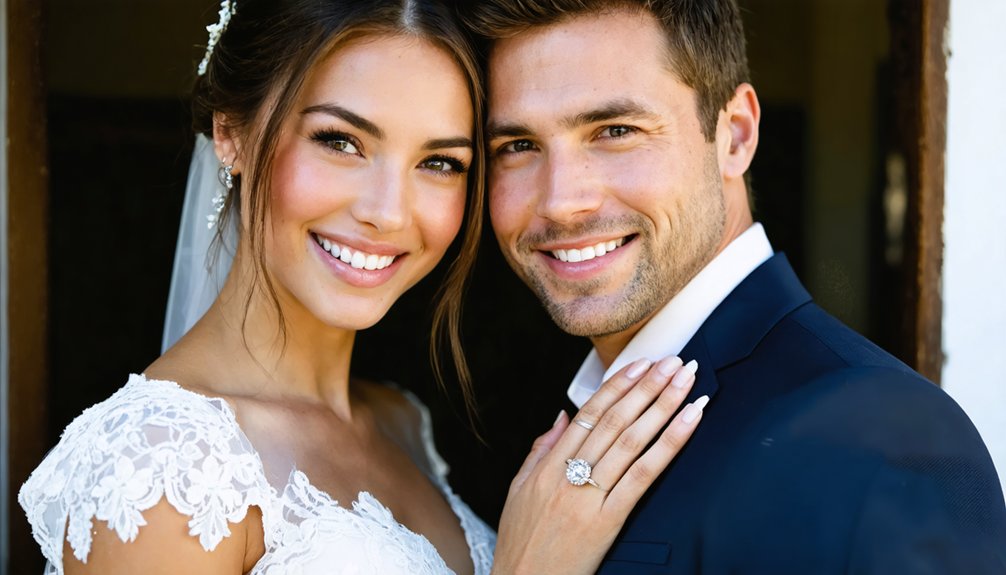
For the best wedding day results, you’ll want to start your whitening plan at least 6–8 weeks before the ceremony. Schedule in-office treatments 4–6 weeks out, complete touch-ups 48–72 hours prior, and avoid stain-causing foods like coffee, red wine, and berries throughout the process. Manage sensitivity with potassium nitrate toothpaste and lower-concentration formulas. Every step of your bridal whitening timeline—done right—builds toward a smile worth capturing from every angle.
Key Takeaways
- Start whitening consultations 2–6 months before the wedding to assess enamel health and choose the best treatment plan.
- In-office whitening, scheduled 4–6 weeks before the ceremony, delivers dramatic results within 30–90 minutes.
- Avoid coffee, tea, red wine, and berries for 24–48 hours after whitening to prevent staining.
- Manage sensitivity by using potassium nitrate toothpaste and alternating whitening gel with desensitizing gel during treatment.
- Follow a strict white diet 48 hours before the wedding and complete a final touch-up 48–72 hours prior.
How Far in Advance Should You Whiten Your Teeth Before a Wedding?
Timing your teeth whitening correctly can mean the difference between a radiant smile and walking down the aisle with sensitive, irritated teeth.
Begin your dentist consultation two to six months before your wedding to assess your enamel and debunk common whitening myths, such as the belief that faster treatments always deliver safer results.
Schedule in-office whitening four to six weeks out for dramatic, controlled results.
If you’re using take-home trays, start six to eight weeks prior. Over-the-counter strips require at least two weeks of consistent use.
To manage teeth sensitivity effectively, use potassium nitrate toothpaste one to two weeks before treatment begins.
Complete your final touch-up 48 to 72 hours before the ceremony, allowing sensitivity to fully subside before photographs begin.
The Best Whitening Timeline for Brides
Having a clear whitening schedule gives you a structured path from your first consultation to your wedding morning.
Begin bridal dental consultations 2–6 months out to assess enamel health and receive whitening product recommendations suited to your specific needs.
Schedule in-office whitening 4–6 weeks before the wedding for maximum shade change and enamel stabilization time.
If you’re using dentist-supplied take-home trays, start 6–8 weeks prior, wearing them consistently for 1–2 weeks.
Over-the-counter strips require at least 2 weeks of disciplined use.
Reserve a light touch-up session 48–72 hours before the ceremony to refresh brightness without triggering peak sensitivity on your wedding day.
Following this structured timeline keeps results predictable, minimizes complications, and guarantees your smile performs exactly as planned.
In-Office vs. At-Home Whitening: Which Is Right for You?
Choosing between in-office and at-home whitening comes down to your timeline, budget, and sensitivity tolerance.
In-office treatments deliver dramatic results in one 30–90 minute session, making them ideal if you’re short on time. Professional recommendations consistently favor scheduling this 4–6 weeks before your wedding to allow enamel care and stabilization.
At-home options—custom trays or ADA-approved strips—cost less but demand consistency over 1–2 weeks.
Don’t fall for whitening myths suggesting home remedies like baking soda deliver comparable results; they risk enamel erosion without predictable whitening.
Treatment costs vary considerably: in-office sessions run higher, while at-home kits offer budget-friendly flexibility.
Whichever method you choose, follow maintenance tips like sensitivity toothpaste use and a post-whitening white diet to protect and extend your results.
Foods and Drinks to Avoid Before Your Wedding
Once you’ve selected your whitening method, protecting those results through careful dietary choices becomes your next priority.
In the 24–48 hours post-whitening, your enamel is most porous and vulnerable. Eliminate stain-causing foods immediately — coffee, tea, red wine, cola, tomato-based sauces, curry, and berries are primary offenders.
Your enamel is most vulnerable in the 24–48 hours post-whitening — avoid coffee, wine, and berries immediately.
Extend that restriction 1–2 weeks before your wedding for maximum protection.
Your beverage choices carry equal weight. Substitute coffee and dark teas with water, clear sodas, or white wine in the final days.
When you do consume pigmented drinks, use a straw to minimize front-tooth contact, then rinse with water immediately after.
Discipline in your diet directly controls how long your whitening results last through the ceremony and photographs.
How to Deal With Sensitivity While Whitening
Sensitivity is a common side effect of whitening treatments, particularly when high-concentration gels or extended wear times are involved.
Effective sensitivity management starts before treatment begins. A dental consultation helps you determine the appropriate whitening frequency and concentration for your enamel type.
Key comfort techniques and temporary solutions include:
- Desensitizing products: Use potassium nitrate toothpaste 1–2 weeks before and during treatment for proactive pain relief.
- Alternating application days: Rotate whitening gel with desensitizing gel placed directly in your trays.
- Gradual whitening: Opt for lower-concentration formulas over longer periods to reduce nerve irritation.
- Soft-bristled brushing: Minimize enamel abrasion by avoiding firm bristles during active whitening phases.
Never push through significant discomfort.
Adjust your whitening frequency or pause treatment until sensitivity subsides.
How to Protect Your Whitening Results the Final 48 Hours
The final 48 hours before your wedding are the most critical window for preserving your whitening results. Avoid all whitening touch-ups during this period — enamel remains porous and vulnerable, and additional treatment increases sensitivity without improving shade.
Instead, shift your focus entirely to protection.
Follow a strict white diet: water, clear beverages, white proteins, and light-colored foods only. Use effective rinsing with water immediately after every meal to dilute pigment contact before it sets. Skip coffee, tea, red wine, and dark sauces entirely.
Brush gently with a soft-bristled brush and sensitivity toothpaste — avoid abrasive whitening formulas. Don’t use any at-home LED devices or gel trays.
Lipstick Shades and Wedding Day Tricks That Make Teeth Look Whiter
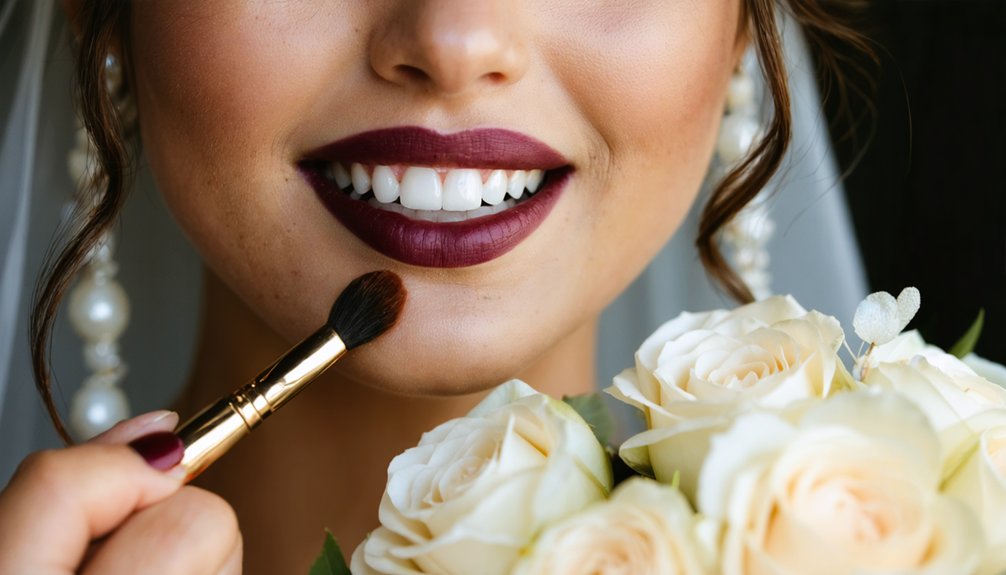
Beyond whitening treatments, how you frame your smile on your wedding day can dramatically affect how bright your teeth appear in person and in photographs.
Strategic makeup tricks and photo tips give you additional control over your smile enhancement without risking last-minute sensitivity.
Use these lipstick contrast and styling strategies:
- Choose red, coral, or pink lipstick to create strong lipstick contrast that makes teeth appear several shades brighter.
- Opt for matte formulas over glossy finishes, as matte shades enhance optical contrast in photos.
- Stay hydrated with water throughout the day to support saliva production and reduce surface staining.
- Carry floss and sugarless ADA-approved gum in your bridal kit to address food particles between photos.
These targeted adjustments guarantee your smile photographs cleanly and confidently.
Brushing, Flossing, and Habits That Keep Whitening Results Lasting Longer
Once you’ve achieved your desired shade, maintaining those results depends on consistent daily habits that protect enamel and minimize stain accumulation.
Brush twice daily using a whitening-compatible or sensitivity toothpaste, and floss once daily to eliminate plaque before it hardens into stain-trapping deposits. An electric toothbrush delivers more consistent plaque removal than manual brushing, making it a practical investment for long-term teeth maintenance.
Avoid frequent baking soda scrubs, as overuse erodes enamel and increases sensitivity over time.
Limit stain-causing foods and beverages—coffee, tea, red wine, and berries—and rinse with water immediately after consuming them.
Schedule professional cleanings every six months to remove surface buildup.
Disciplined oral hygiene isn’t optional post-whitening; it’s the primary mechanism that determines how long your results actually hold.
Frequently Asked Questions
Can Teeth Whitening Affect Dental Veneers, Crowns, or Bonding Work?
Whitening agents don’t lighten veneers, crowns, or bonding—they only affect natural enamel. You’ll risk uneven color contrast. Prioritize veneer maintenance and crown longevity by consulting your dentist before whitening to guarantee a seamlessly matched, controlled result.
Is Teeth Whitening Safe for Brides Who Are Pregnant or Breastfeeding?
Like a medieval alchemist’s caution, you shouldn’t pursue whitening while pregnant or breastfeeding due to safety considerations around chemical absorption. Instead, you’ll want to explore alternative options like professional cleanings and whitening toothpastes approved by your dentist.
How Many Shades Whiter Can I Realistically Expect My Teeth to Get?
With in-office treatments, you can realistically achieve several shades whiter within one session. For best teeth whitening effectiveness, follow your ideal whitening timeline, starting 4–6 weeks pre-wedding to control and maximize your results predictably.
Does Whitening Toothpaste Alone Produce Noticeable Results for Brides?
Whitening toothpaste effectiveness is limited—it removes surface stains but won’t dramatically brighten your smile. For serious bridal dental care, you’ll need professional or strip-based treatments to achieve results that actually show in photos.
Can Whitening Treatments Damage Existing Dental Work or Fillings Over Time?
Whitening treatments don’t damage fillings, but they won’t whiten them either, creating uneven tone. You’ll want to address whitening sensitivity concerns early and consider treatment longevity effects on existing restorations by consulting your dentist beforehand.
References
- https://crest.com/en-us/oral-care-tips/teeth-whitening/wedding-teeth-whitening-guide
- https://www.cosmopolitan.com/uk/beauty-hair/bodycare/a26616/white-teeth-tricks-for-weddings/
- https://www.youtube.com/watch?v=FduqvCV4R1s
- https://www.brides.com/story/wedding-teeth-whitening-ideas
- https://www.espiredental.com/blog/your-guide-to-whiter-teeth-for-your-wedding-day
- https://www.mouthhealthy.org/life-stages/adults/adults-under-40/teeth-whitening-tips-for-weddings
- https://parkdentalcentres.com/teeth-whitening-for-wedding/
- https://chicagoaestheticdentistry.com/blog/teeth-whitening-before-a-wedding-a-chicago-cosmetic-dentists-8-week-plan
- https://thesurreydentist.co.uk/teeth-whitening-surrey/take-home-teeth-whitening-before-your-wedding-a-guide-for-surrey-brides/
- https://wedbook.in/health-fitness/teeth-whitening-guide-for-brides/