Stubborn tooth stains require a layered approach to treat effectively. You’ll need to start with a professional cleaning, then progress through whitening toothpaste, OTC strips, and custom trays depending on stain severity. Extrinsic stains respond well to peroxide-based treatments, while intrinsic discoloration may require cosmetic solutions like veneers or bonding. Choosing the wrong technique risks enamel damage without results. The techniques and shifts covered ahead will help you target your specific stain type with precision.
Key Takeaways
- Professional cleaning before whitening removes surface deposits, ensuring even penetration of whitening agents and more predictable results on stubborn stains.
- OTC whitening strips effectively treat mild-to-moderate extrinsic stains but cannot penetrate intrinsic or deep discoloration within enamel or dentin.
- Custom whitening trays with professional-grade peroxide gels provide deeper, more controlled whitening when OTC strips fail to deliver desired results.
- Veneers and dental bonding effectively mask intrinsic stains unresponsive to bleaching, offering durable, long-term cosmetic solutions for stubborn discoloration.
- Limiting pigmented foods, avoiding tobacco, and brushing with ADA-approved whitening toothpaste helps maintain results and prevent rapid re-staining after treatment.
Why Some Tooth Stains Are So Hard to Remove
Not all tooth stains respond the same way to whitening, and understanding why starts with knowing where the discoloration actually lives. Extrinsic stains sit on enamel surfaces and typically respond to cleaning or peroxide-based products.
Intrinsic stains penetrate the tooth structure itself, making them far more resistant to standard OTC treatments.
Enamel porosity plays a significant role in how deeply pigments embed. More porous enamel absorbs staining compounds faster and holds them longer.
Saliva effects also matter—saliva can partially buffer acidic staining agents, but it can’t reverse pigment that’s already bonded within enamel or dentin.
Age-related discoloration compounds the problem by combining surface buildup with internal yellowing.
Identifying your stain type accurately determines which whitening strategy will actually work.
Start With a Professional Cleaning Before Anything Else
Once you’ve identified your stain type, the next practical step is a professional dental cleaning before starting any whitening protocol. Plaque, tartar, and surface deposits physically block whitening gels from contacting enamel, reducing treatment effectiveness before it begins.
A cleaning removes that barrier and gives you a more accurate baseline for enamel health. Your dentist can also identify areas of concern—like early erosion or existing dental sensitivity—that could worsen with peroxide exposure if left unaddressed.
Starting whitening on unclean teeth isn’t just inefficient; it can be counterproductive. Once your teeth are professionally cleaned, whitening agents penetrate more evenly and produce more predictable results.
Think of it as optimizing your surface before applying any active treatment—a disciplined, evidence-based approach that puts you in control of the outcome.
What Whitening Toothpaste Actually Does to Your Teeth
Whitening toothpaste works through two distinct mechanisms: physical abrasion and chemical action. Abrasive particles scrub dental plaque and surface pigments off enamel, while chemical agents like hydrogen peroxide or blue covarine alter stain appearance. It won’t bleach intrinsic discoloration, but it effectively controls extrinsic buildup.
Whitening toothpaste scrubs surface stains through abrasion while chemical agents tackle discoloration — but intrinsic stains remain out of reach.
Key facts you need to know:
- ADA-approved formulas balance abrasion with safety to minimize enamel erosion risk
- Overuse of highly abrasive toothpastes can damage enamel permanently
- Chemical whitening agents work on contact time, so brushing two minutes matters
- Whitening toothpaste maintains results after professional treatment but won’t replace it
- Baking soda variants remove surface stains through mild abrasion without bleaching
Use it as a maintenance tool, not a primary whitening solution for stubborn stains.
Best OTC Whitening Strips for Stubborn Stains
Over-the-counter whitening strips rank among the most accessible options for addressing mild-to-moderate extrinsic stains, but they’re not equally effective across all stain types. Most strips use hydrogen peroxide or carbamide peroxide to penetrate enamel and break up surface discoloration.
You’ll see the best results when you apply them consistently according to the manufacturer’s instructions over several weeks.
However, you need to monitor for enamel erosion, particularly if you use strips frequently or combine them with acidic foods that disrupt pH balance. Overuse can weaken enamel structure and increase sensitivity.
Strips also won’t address intrinsic or deep stains effectively. If you’ve completed a full strip regimen without satisfactory results, professional intervention becomes the more appropriate next step rather than extending OTC use further.
When to Move Up to Custom Whitening Trays
When OTC strips fail to produce satisfactory results after a full regimen, custom whitening trays become the more appropriate next step. Your dentist fabricates trays precisely fitted to your arch, ensuring consistent gel contact and reducing unnecessary exposure to soft tissue.
Consider upgrading when you experience:
- Uneven whitening results after completing OTC treatment
- Persistent moderate-to-severe staining unresponsive to strips
- Dental sensitivity that requires controlled peroxide concentration adjustments
- Concerns about enamel erosion from ill-fitting strip applications
- Stains classified as intrinsic, requiring deeper peroxide penetration over time
Custom trays use professional-grade carbamide or hydrogen peroxide gels worn across one to four weeks. This extended, controlled exposure allows you to target stubborn discoloration more precisely than any standardized OTC format permits.
In-Office Whitening: The Fastest Fix for Deep Stains
For stubborn intrinsic stains that custom trays and OTC products can’t fully resolve, in-office whitening delivers the strongest available bleaching results in a single appointment. Your dentist applies high-concentration peroxide gel directly to your enamel, producing noticeable change in roughly 45 to 60 minutes.
This level of controlled precision lets you address deep discoloration without weeks of uncertainty.
Following treatment, your dentist may recommend enamel remineralization protocols to reduce post-bleaching sensitivity and strengthen enamel structure. If dental sealants are present, your provider will account for them during treatment planning since sealants don’t respond to bleaching agents.
Many clinicians follow in-office sessions with take-home trays to stabilize and extend results. You’re getting the most aggressive mainstream whitening option available when OTC methods have clearly reached their limit.
How to Use In-Office and Tray Whitening Together
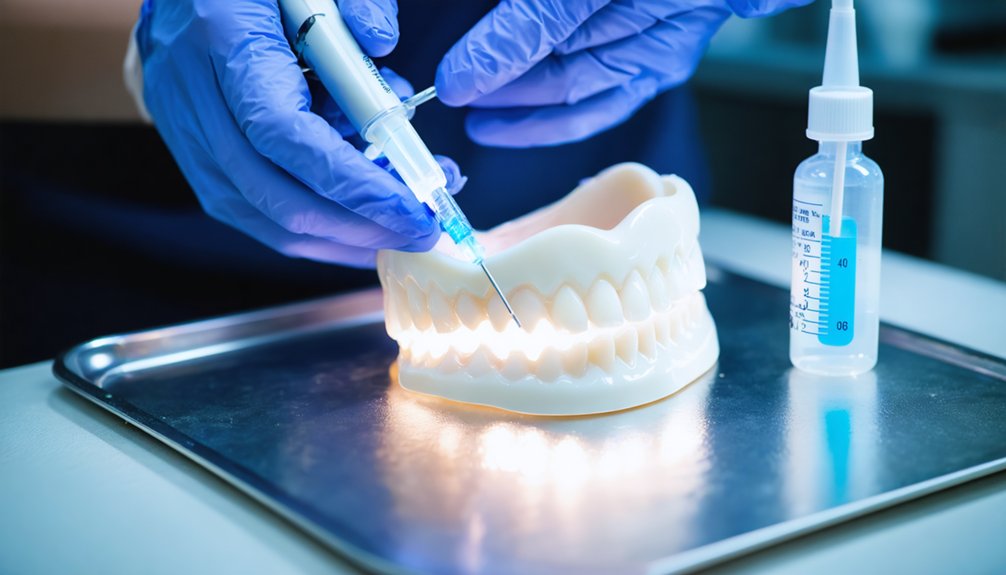
Combining in-office and take-home tray whitening produces stronger, longer-lasting results than either approach alone. Your dentist applies a high-concentration bleaching agent in-office, then you use custom trays at home to deepen and stabilize the outcome. Unlike home remedies, this protocol delivers measurable, controlled results.
Follow this structured approach:
- Start with in-office treatment to achieve rapid initial whitening in one 45–60 minute session.
- Begin tray whitening within days to extend bleaching into deeper enamel layers.
- Wear trays consistently for one to four weeks per your dentist’s protocol.
- Monitor dental sensitivity and reduce wear time if discomfort develops.
- Avoid staining foods and beverages immediately after sessions when enamel is most porous.
This combined strategy gives you maximum control over your whitening outcome.
What to Do When Bleaching Stops Working
When bleaching stops producing noticeable improvement, you’ve likely hit a whitening plateau—a point where peroxide can no longer reach or break down the remaining discoloration.
At that stage, you can explore alternatives such as microabrasion for surface-level resistant stains or professionally applied bonding agents that mask deeper discoloration.
If those options fall short, veneers offer the most thorough cosmetic correction by covering the tooth surface entirely, making them the standard recommendation for severe intrinsic staining that bleaching can’t resolve.
Recognizing Bleaching Plateau Signs
There are several signs that indicate bleaching has reached its limit, and recognizing them early helps you avoid overuse and shift to more appropriate options. When whitening efficiency stalls despite consistent product use, your dental enamel may no longer respond to standard peroxide concentrations.
Watch for these specific plateau indicators:
- No visible shade change after two or more complete treatment cycles
- Persistent gray or brown tones that resist both OTC and professional-strength bleaching
- Increased sensitivity without corresponding whitening improvement
- Uneven results where some teeth lighten while others remain discolored
- Rapid re-staining occurring within days of completing a whitening course
These signs suggest intrinsic discoloration or structural changes that bleaching can’t fully address, making alternative interventions like veneers or bonding clinically appropriate next steps.
Exploring Alternative Whitening Options
Once bleaching stops producing measurable improvement, alternative restorative and cosmetic interventions become the clinically appropriate path forward. At this stage, alternative remedies and natural whitening approaches lack sufficient evidence to address intrinsic discoloration that has resisted peroxide-based treatment.
Your dentist will likely present three structured options.
Veneers are porcelain or composite shells bonded over the tooth surface, effectively masking deep stains that bleaching can’t reach.
Dental bonding applies tooth-colored resin directly to discolored enamel, offering a less invasive correction.
Microabrasion removes a thin enamel layer to eliminate superficial intrinsic staining through controlled mechanical and chemical action.
Each option carries distinct cost, durability, and maintenance considerations. Discussing your specific stain etiology and treatment history with your dentist allows you to select the most clinically justified intervention.
Veneers And Bonding Solutions
If bleaching has reached its clinical limit, veneers and bonding offer two of the most reliable restorative paths for persistent discoloration. Both treatments mask intrinsic stains that peroxide can’t penetrate, giving you lasting color control beyond what whitening achieves.
- Porcelain veneers deliver superior veneer durability, lasting 10–20 years with proper care.
- Composite dental bonding costs less and requires minimal enamel removal.
- Veneers resist future staining better than natural enamel or bonding resin.
- Dental bonding suits smaller stained areas or patients avoiding irreversible procedures.
- Both options require a dentist’s evaluation to confirm candidacy and shade matching.
Your dentist will help you weigh longevity, cost, and enamel preservation before committing to either solution.
Staining Foods and Habits to Avoid After Whitening
After whitening, your teeth enter a temporarily porous state that makes them more vulnerable to re-staining from pigment-rich foods and drinks.
You should limit or avoid coffee, tea, red wine, soda, and berries, and rinse with water immediately after consuming them to reduce discoloration risk.
Tobacco use poses the greatest threat to whitening longevity and can rapidly reverse results regardless of which whitening method you used.
Common Stain-Causing Foods
Several foods and drinks are well-known for accelerating tooth discoloration, and avoiding them after whitening is especially important. Your enamel is temporarily more porous post-treatment, increasing susceptibility to staining and dental sensitivity.
Prioritizing avoidance of these items protects your results:
- Coffee and tea – contain tannins that bind to enamel and cause rapid discoloration
- Red wine – combines tannins and chromogens, making it one of the strongest staining agents
- Berries – blueberries, blackberries, and pomegranates deposit deep pigments into enamel
- Soda and dark juices – contribute to both staining and enamel erosion due to acidity
- Tomato-based sauces – highly pigmented and acidic, compounding surface stain risk
Rinsing with water immediately after consuming these items reduces their contact time with your teeth.
Habits That Reverse Whitening
Beyond staining foods, certain daily habits can profoundly undermine your whitening results and cause discoloration to return faster than expected. Tobacco use is among the most damaging, introducing tar and nicotine compounds that penetrate enamel and resist standard bleaching.
Acidic beverages like soda also contribute to enamel erosion, weakening your tooth surface and making it more vulnerable to pigment absorption. Frequent consumption of dark liquids without rinsing afterward accelerates re-staining significantly.
Following whitening, your enamel remains temporarily porous, heightening dental sensitivity and increasing susceptibility to discoloration. Skipping daily brushing and flossing allows plaque to accumulate, embedding new stains quickly.
You’ll protect your results most effectively by eliminating tobacco, limiting acidic drinks, rinsing after staining beverages, and maintaining consistent oral hygiene.
How to Keep Teeth White After Treatment
Keeping your teeth white after treatment requires consistent daily habits and a few dietary adjustments. Dental hygiene and stain prevention are your strongest tools for maintaining results long-term.
- Brush twice daily with an ADA-approved whitening toothpaste to control surface stain buildup
- Floss once daily to remove plaque before it embeds into enamel margins
- Rinse with water immediately after consuming coffee, tea, red wine, or dark berries
- Avoid tobacco, which rapidly reverses whitening and causes deep, stubborn discoloration
- Schedule regular professional cleanings to eliminate accumulated deposits before they become embedded
Your teeth remain more porous shortly after whitening, making early stain exposure especially damaging. Strict adherence to these protocols directly controls how long your results last.
Frequently Asked Questions
Can Whitening Treatments Cause Long-Term Damage to Tooth Enamel?
When used correctly, whitening treatments won’t cause long-term enamel erosion. You may experience temporary tooth sensitivity, but evidence confirms that ADA-approved peroxide-based products are safe when you follow recommended concentrations and application guidelines consistently.
Are Whitening Results Covered by Dental Insurance Plans?
While it seems unfair, insurance coverage options typically exclude whitening since plans classify it as cosmetic. You’ll need to weigh treatment cost considerations carefully, but professional whitening’s long-term effectiveness often justifies the out-of-pocket investment.
Is Tooth Whitening Safe During Pregnancy or While Breastfeeding?
You should avoid whitening treatments during pregnancy due to limited safety data. While breastfeeding considerations are less strict, it’s best to wait. Pregnancy safe options include postponing whitening until after you’ve finished breastfeeding entirely.
Can Whitening Products Irritate Existing Gum Disease or Receding Gums?
Whitening promises brightness, yet it can worsen gum sensitivity and irritate receding gums. If you have active gum disease, you should consult your dentist before using peroxide-based products to avoid aggravating compromised tissue.
Do Whitening Treatments Work on Dental Crowns, Veneers, or Fillings?
Whitening treatments don’t alter dental crown whitening outcomes or veneer stain removal—restorations won’t respond to peroxide. You’ll need replacement or bonding to match newly whitened natural teeth, so consult your dentist before starting any whitening regimen.
References
- https://www.colgate.com/en-us/oral-health/teeth-whitening/teeth-stain-removal-types
- https://www.designerforsmiles.com/cosmetic-dentistry/how-can-i-treat-deep-stains-on-my-teeth/
- https://mypenndentist.org/dental-tips/2024/02/13/how-to-remove-stains-from-teeth/
- https://www.youtube.com/watch?v=Wd-5CZQEeCE
- https://www.waterpik.com/edu/whitening/best-way-to-whiten-teeth/
- https://www.lpsdental.com/teeth-whitening-solutions-for-stubborn-stains/
- https://dentistofplanotexas.com/blog/professional-teeth-whitening-for-deep-stains/
- https://www.medicalnewstoday.com/articles/322421
- https://www.cdhp.org/can-you-fix-badly-stained-teeth/
- https://envydental.net/best-professional-teeth-whitening-treatment-for-stubborn-stains/