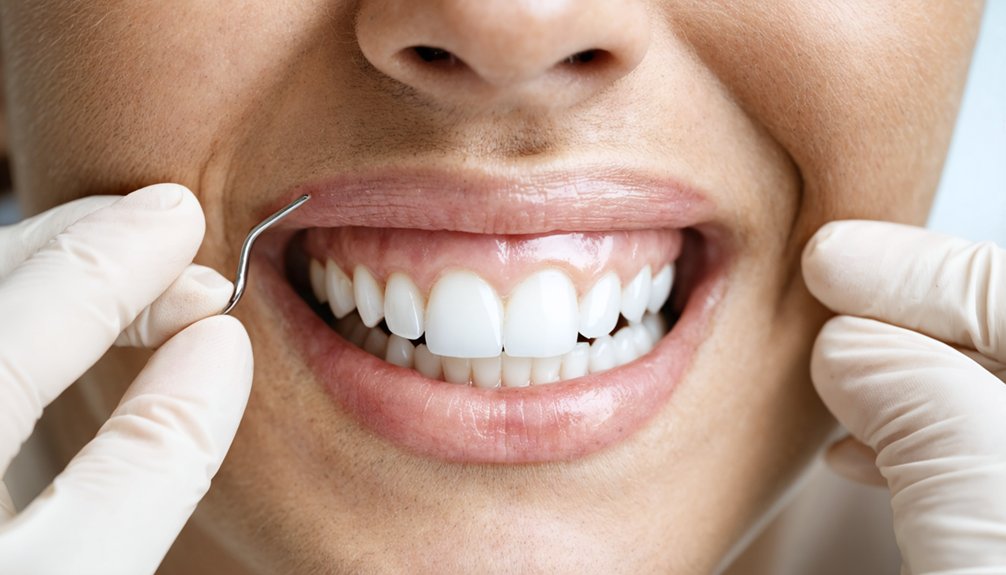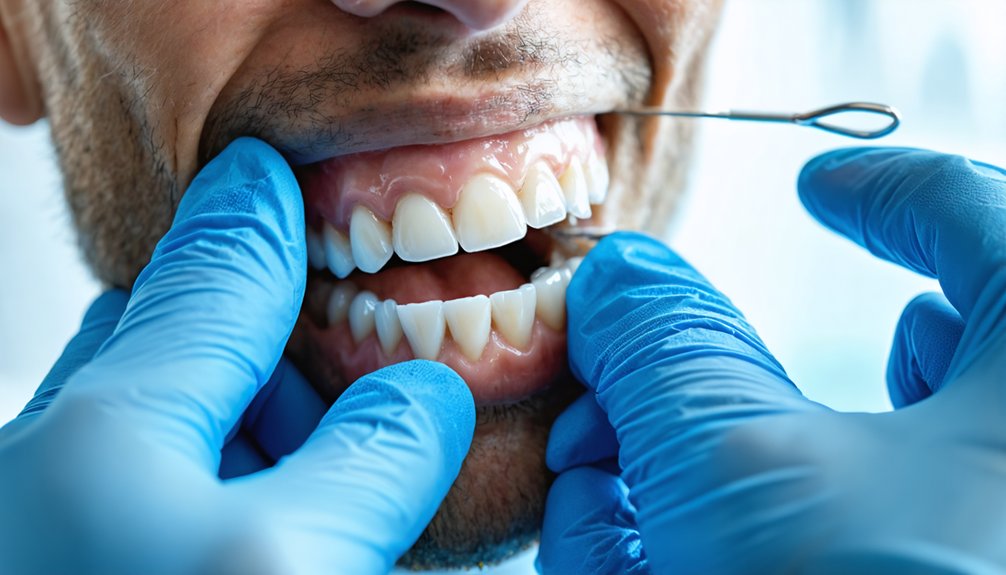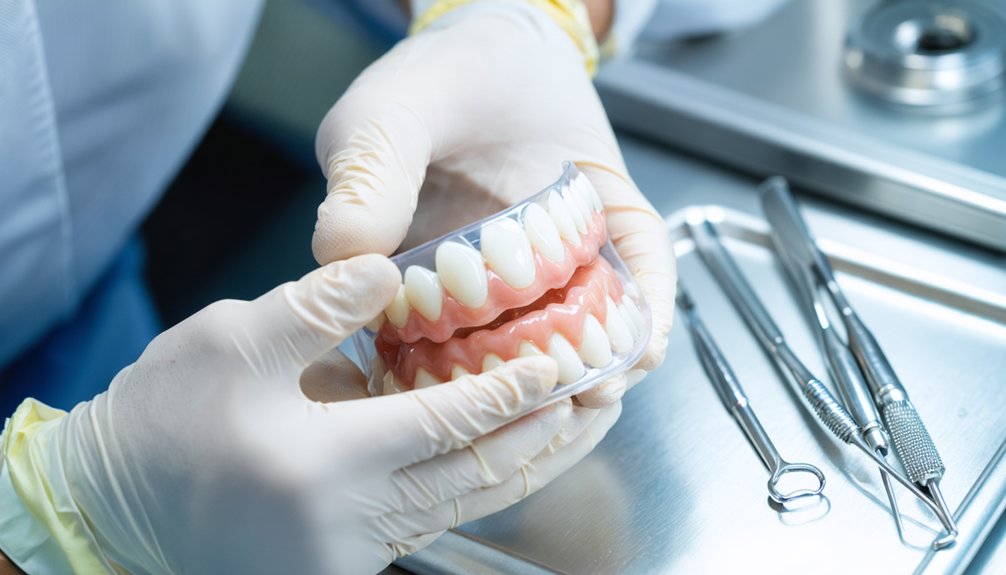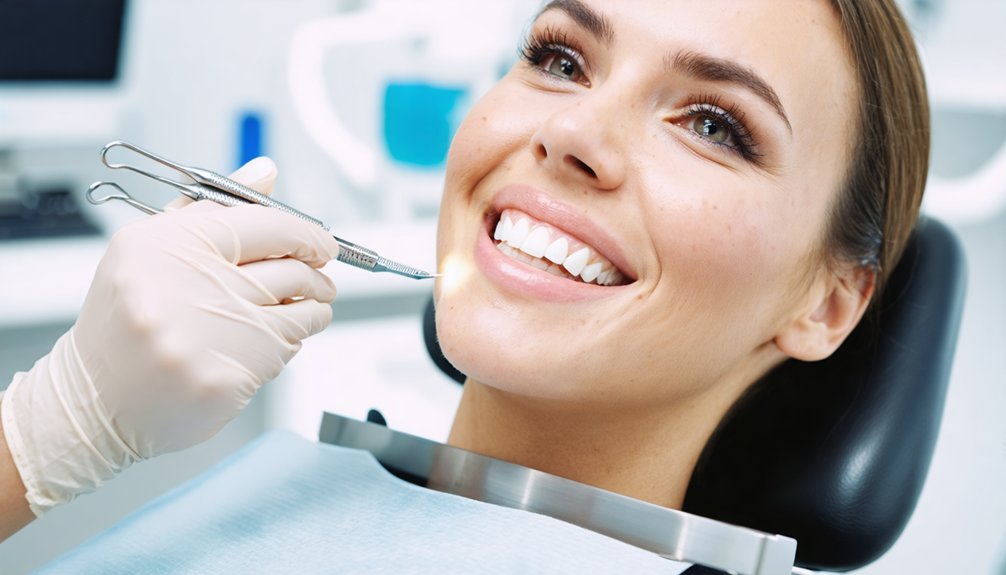
The best professional teeth whitening services include laser whitening, Zoom, and dentist-supervised take-home kits using systems like Opalescence. In-office treatments use clinical-strength peroxide gels to lighten teeth up to 8 shades in a single appointment — something OTC products can’t replicate. Your ideal option depends on your budget, stain severity, and sensitivity levels. Each method varies considerably in cost, speed, and longevity, and understanding those differences helps you make the right clinical decision.
Key Takeaways
- Laser whitening and Zoom are top in-office options, delivering same-day results within one appointment using high-concentration gels.
- Zoom whitening averages around $400, while laser whitening costs between $350–$1,800 depending on location and provider.
- Opalescence is the best professional option for sensitive teeth, containing potassium nitrate and fluoride to minimize nerve irritation.
- Dentist-supervised take-home kits offer a cost-effective alternative with custom trays, providing gradual, controlled whitening results.
- Professional in-office treatments last 1–2 years, significantly outperforming OTC products in longevity and outcome predictability.
Professional vs. OTC Whitening: What’s Actually Different
When comparing professional whitening to over-the-counter options, the core difference comes down to concentration and control. OTC products use low-percentage peroxide formulas that produce slow, inconsistent results.
Professional treatments apply clinical-strength gels under dentist supervision, allowing precise color matching to your target shade while minimizing uneven application.
You also gain access to protocols that support enamel strengthening, reducing sensitivity risks that standard whitening strips frequently trigger. Dentists calibrate treatment duration and gel concentration to your specific enamel condition, stain depth, and tolerance threshold. OTC kits offer no such customization.
If you want predictable outcomes and measurable shade progression, professional whitening gives you the structural oversight that consumer products can’t replicate. The clinical environment isn’t a luxury—it’s a functional advantage.
The Best Professional Teeth Whitening Services Ranked
Once you move past the OTC versus professional divide, the next decision is identifying which professional service best matches your clinical needs. Cost comparison and treatment customization are the two variables that should anchor your selection.
- Laser whitening – fastest results; single appointment; $350–$1,800 depending on market
- Zoom whitening – popular in-office system; comparable speed; averages ~$400
- Opalescence – best for sensitive teeth; adaptable protocols; in-office and take-home formats
- Dentist-supervised take-home kits – gradual whitening; custom trays; lower cost with professional-grade materials
- Promotional in-office sessions – budget entry point; Chicago averages ~$90; verify treatment scope before committing
Match your timeline, sensitivity threshold, and budget to the appropriate system. Faster results cost more; greater customization typically requires more clinical involvement.
Laser Whitening vs. Zoom: Which Works Faster?
Both laser whitening and Zoom whitening deliver same-day results, but they achieve that speed through different mechanisms. Laser precision allows targeted energy delivery to activate high-concentration bleaching gel, accelerating the chemical breakdown of deep enamel stains in a single session.
Zoom whitening uses UV light activation with a comparable protocol, producing similarly fast outcomes in roughly 45 to 60 minutes.
In a direct speed comparison, laser whitening edges ahead for severe or stubborn staining due to its concentrated energy output. Zoom performs competitively for moderate discoloration and remains widely accessible across dental practices.
If you’re prioritizing the fastest measurable shade change with maximum clinical control, laser whitening is your stronger option. If availability and cost matter, Zoom delivers reliable same-day improvement without significant compromise.
Best Professional Teeth Whitening for Sensitive Teeth
If you experience tooth sensitivity, your whitening options narrow considerably, since high-concentration peroxide applied too aggressively can intensify nerve irritation and discomfort.
Opalescence is a clinically recognized choice for sensitive teeth, as its formulations allow your dentist to adjust concentration and contact time to reduce adverse responses.
Dentist-supervised take-home kits also offer a controlled alternative, letting you manage treatment frequency and gel strength across multiple sessions rather than absorbing a full peroxide dose in one appointment.
Why Sensitivity Matters
Tooth sensitivity can make whitening treatments uncomfortable or even painful, which is why selecting the right system matters as much as the results it delivers. Teeth discoloration varies in severity, and aggressive treatment protocols can trigger whitening side effects like nerve irritation or enamel stress.
Knowing your sensitivity profile lets you choose a system that whitens effectively without compromising comfort.
- High-concentration gels increase sensitivity risk in vulnerable enamel
- Shorter contact times reduce nerve exposure during treatment
- Custom trays distribute gel evenly, minimizing gum irritation
- Gradual whitening protocols give enamel time to recover between sessions
- Dentist-supervised treatment allows real-time adjustments based on your response
Matching treatment intensity to your tolerance keeps you in control of both the process and the outcome.
Opalescence For Sensitive Teeth
Opalescence stands out among professional whitening systems because it’s specifically designed to accommodate sensitive teeth without sacrificing treatment effectiveness. Unlike natural remedies or alternative treatments that offer inconsistent results, Opalescence uses a clinically controlled formulation that you and your dentist can adjust to match your sensitivity threshold.
The system’s potassium nitrate and fluoride components actively reduce nerve sensitivity during treatment, giving you measurable whitening progress without unnecessary discomfort. You can choose between in-office and take-home formats, allowing direct control over application timing and gel concentration.
This adaptability makes Opalescence particularly effective when other whitening protocols have previously caused pain or enamel irritation. If sensitivity has historically limited your whitening options, Opalescence delivers a structured, dentist-supervised pathway to a noticeably brighter smile.
Take-Home Kits Explained
Dentist-supervised take-home kits give you professional-grade whitening on a schedule that accommodates sensitivity thresholds standard in-office sessions can’t always match. Recent whitening advancements have made custom-tray systems a precise, clinician-directed path toward a complete smile makeover without single-appointment intensity.
- Custom trays ensure controlled gel distribution, minimizing uneven application
- Professional-strength formulas exceed over-the-counter concentrations while remaining manageable
- Gradual exposure lets you adjust treatment frequency based on sensitivity response
- Multi-day protocols allow enamel recovery between whitening sessions
- Dentist oversight ensures gel selection aligns with your specific stain severity
You control the pace, the timing, and the intensity. That level of precision makes take-home kits a clinically sound option when sensitivity management is your primary treatment variable.
How Long Do Professional Whitening Results Last?
Professional teeth whitening results typically last anywhere from six months to three years, depending on the method used and your oral habits.
Factors like diet, tobacco use, oral hygiene practices, and the original concentration of whitening gel all influence how quickly your teeth re-stain.
To extend your results, you’ll want to limit staining foods and beverages, maintain consistent brushing habits, and consider periodic touch-up treatments with dentist-supervised take-home kits.
Typical Results Duration Range
When maintained properly, professional teeth whitening results typically last anywhere from six months to two years, depending on the treatment method, your dietary habits, and your oral hygiene routine. Advanced whitening technology and effective teeth stain removal directly influence how long your results hold.
Key factors controlling results duration:
- In-office laser whitening: Results last 1–2 years with proper maintenance
- Zoom whitening: Expect 12–18 months before noticeable shade regression
- Take-home dentist kits: Gradual results last 6–12 months, extendable with touch-ups
- Dietary habits: Coffee, wine, and tobacco accelerate stain redeposition
- Oral hygiene consistency: Daily brushing and flossing directly preserve whitening outcomes
Scheduling periodic professional touch-ups every 6–12 months lets you maintain your target shade with precision.
Factors Affecting Whitening Longevity
Knowing how long your results last is only part of the picture — understanding what shortens or extends that window gives you direct control over your outcome. Your whitening technique directly influences baseline durability. Laser and Zoom treatments penetrate deeper enamel layers, supporting longer-lasting teeth stain removal compared to surface-level over-the-counter methods.
Beyond technique, your habits drive the timeline. Tobacco use, daily coffee or wine consumption, and poor brushing frequency accelerate re-staining considerably. Enamel porosity also matters — more porous surfaces absorb chromogens faster, shortening results regardless of treatment quality.
pH exposure from acidic foods weakens enamel, increasing stain susceptibility. Maintenance protocols, including dentist-prescribed touch-up trays and periodic professional cleanings, appreciably extend your results. You control the variables that matter most.
Maintaining Your Whitening Results
Sustaining your whitening results depends as much on post-treatment behavior as it does on the procedure itself. You’ll extend outcomes considerably by adopting disciplined habits and utilizing innovative techniques recommended by your provider.
- Avoid chromogenic foods and beverages—coffee, red wine, and berries—especially within 48 hours post-treatment.
- Use dentist-prescribed touch-up trays as alternative methods to maintain shade between professional sessions.
- Brush with whitening toothpaste twice daily to minimize surface stain accumulation.
- Schedule periodic professional cleanings to remove extrinsic staining before it penetrates enamel.
- Limit tobacco use, which accelerates discoloration and undermines whitening durability.
Your compliance directly determines how long results hold. Most professional whitening outcomes last six months to two years, contingent on dietary habits, oral hygiene consistency, and your enamel’s baseline porosity.
How Much Does Professional Teeth Whitening Cost?
Professional teeth whitening costs vary depending on the type of treatment you choose. In-office laser whitening typically runs $350 to $1,800, while Zoom whitening averages around $400.
Dentist-supervised take-home kits cost less, offering professional-strength results at a lower price point. Promotional pricing strategies can reduce your initial investment, though treatment scope may differ from full professional sessions.
In Chicago specifically, costs range from approximately $90 for promotional sessions to $400 or more for in-office laser treatments. Understanding these pricing strategies helps you allocate your budget effectively and select a treatment aligned with your goals.
Note that insurance coverage rarely applies to cosmetic whitening procedures. You’ll likely pay out-of-pocket, making it essential to compare providers, evaluate treatment tiers, and prioritize value over cost alone.
How to Choose the Right Professional Whitening Treatment
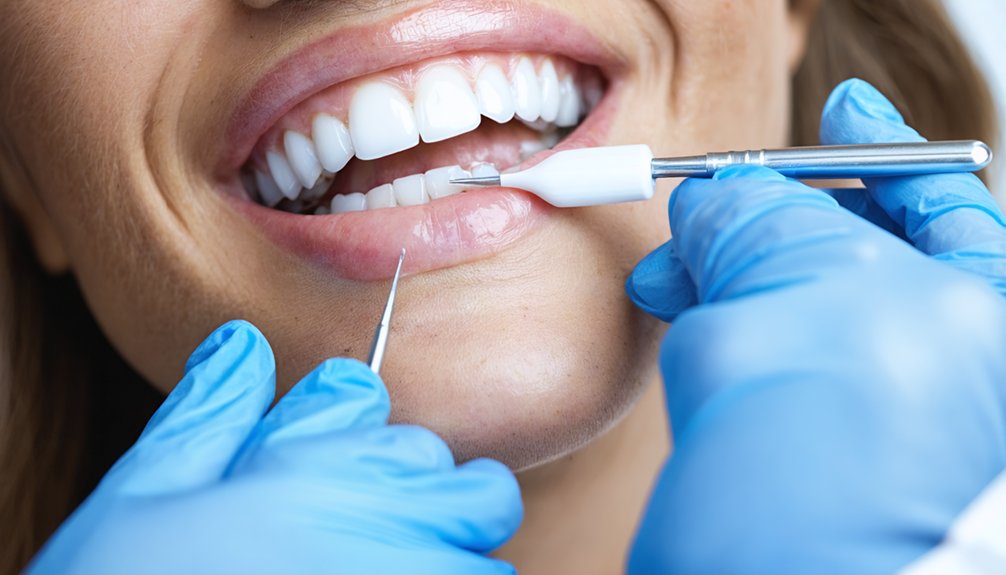
Once you’ve mapped out your budget, the next step is matching that budget to the treatment type that fits your clinical needs. Skip alternative whitening methods and home remedies — they lack the concentration and supervision required for reliable results.
Budget mapped. Now match it to the treatment your clinical needs actually demand — not convenience.
Use these parameters to guide your selection:
- Fastest outcome: Laser or Zoom whitening delivers same-day shade improvement.
- Sensitivity management: Opalescence or supervised take-home kits allow controlled exposure and pacing.
- Budget priority: Promotional in-office sessions or take-home trays reduce cost without losing professional oversight.
- Stain severity: Deep or set-in stains respond better to high-concentration in-office treatments.
- Schedule flexibility: Custom tray kits let you execute treatment across days or weeks on your timeline.
Align your choice with your clinical profile, not convenience alone.
Frequently Asked Questions
Can Professional Teeth Whitening Damage Existing Dental Crowns or Veneers?
Imagine gleaming restorations standing unchanged while surrounding enamel brightens—that’s your reality. Whitening gels won’t alter dental crown compatibility or veneer color matching, but they can create visible shade mismatches between your natural teeth and existing restorations.
How Soon After Whitening Can You Eat or Drink Normally?
You’ll want to wait 48 hours before consuming staining foods or drinks. This protects whitening durability and minimizes dental sensitivity. Avoid coffee, wine, and acidic foods during this critical window to maintain ideal results.
Is Professional Whitening Safe During Pregnancy or While Breastfeeding?
You should avoid professional whitening during pregnancy due to unverified pregnancy safety data. Breastfeeding considerations also warrant caution, as peroxide absorption risks remain understudied. Consult your dentist and OB-GYN before proceeding with any whitening protocol.
How Many Whitening Sessions Are Typically Needed for Severe Staining?
Picture deep, shadowed enamel transforming session by session. For severe dental stain causes, you’ll typically need 3–6 sessions to maximize whitening effectiveness. Your dentist tailors frequency based on stain depth and your response to treatment.
Does Dental Insurance Ever Cover Professional Teeth Whitening Treatments?
Dental coverage typically won’t include professional teeth whitening, as insurers classify it as cosmetic. You’ll need to manage treatment costs out-of-pocket, so factor whitening expenses into your budget when selecting your preferred professional whitening system.
References
- https://thechicagodentalstudio.com/teeth-whitening-service-chicago/
- https://smileobsession.com/dental-services/zoom-teeth-whitening-in-chicago-lakeview/
- https://www.smiletheorymp.com/teeth-whitening
- https://www.groupon.com/local/chicago/teeth-whitening
- https://www.dentaly.org/us/teeth-whitening/professional-teeth-whitening/
- https://gorgeoussmilesdental.com/blog/best-teeth-whitening-treatments-recommended-by-dentists/
- https://michaelsdental.com/learn/best-teeth-whitening-options/
- https://wewhiten.com/
- https://thewhiteningexperts.com/