Teeth whitening trays work best for deep-set stains because they hold concentrated peroxide gel in sustained, direct contact with your teeth. This prolonged exposure allows the peroxide to diffuse through enamel and into superficial dentin, where intrinsic stains actually form. Surface treatments like rinses and strips can’t achieve this depth. Custom-fit trays also eliminate gaps, maximizing gel coverage. If your stains run deep, there’s much more you’ll want to know.
Key Takeaways
- Whitening trays hold peroxide gel in sustained contact with teeth, allowing it to penetrate through enamel into superficial dentin where deep stains reside.
- Extended daily wear gradually breaks down embedded chromogens that single, brief applications from strips or rinses cannot effectively reach.
- Custom-fit trays ensure complete, gap-free coverage, maximizing gel contact and eliminating the uneven results common with poorly fitted alternatives.
- Professional trays use higher peroxide concentrations than over-the-counter products, making them significantly more effective against stubborn intrinsic discoloration.
- Prolonged overnight use is especially effective, as consistent peroxide exposure progressively lightens deep stains that surface-level treatments cannot address.
Why Deep-Set Stains Resist Surface Whitening Treatments
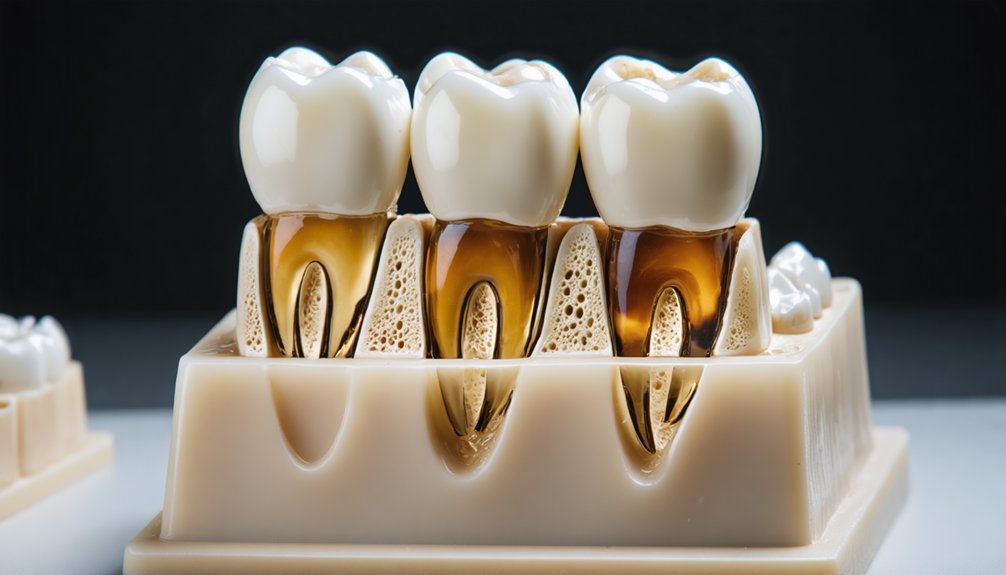
Standard rinses, whitening toothpastes, and brief-contact strips rely on surface penetration alone.
When discoloration originates deeper than the enamel surface, these methods address the symptom rather than the source.
You’re fundamentally treating the outside of a problem that exists further in.
When the problem lives beneath the surface, treating what’s visible only masks what isn’t.
Over-the-counter products compound this limitation by delivering lower peroxide concentrations for shorter durations.
For intrinsic discoloration, that combination rarely produces meaningful results.
Addressing deep stains requires a method that sustains direct bleaching contact long enough to work below the surface layer.
How Whitening Trays Deliver Bleaching Gel Below the Enamel
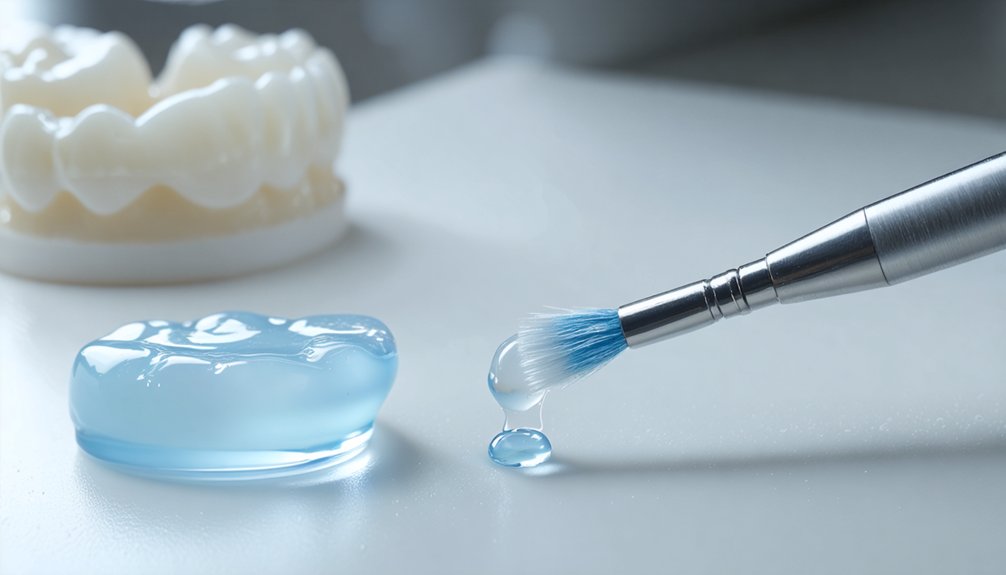
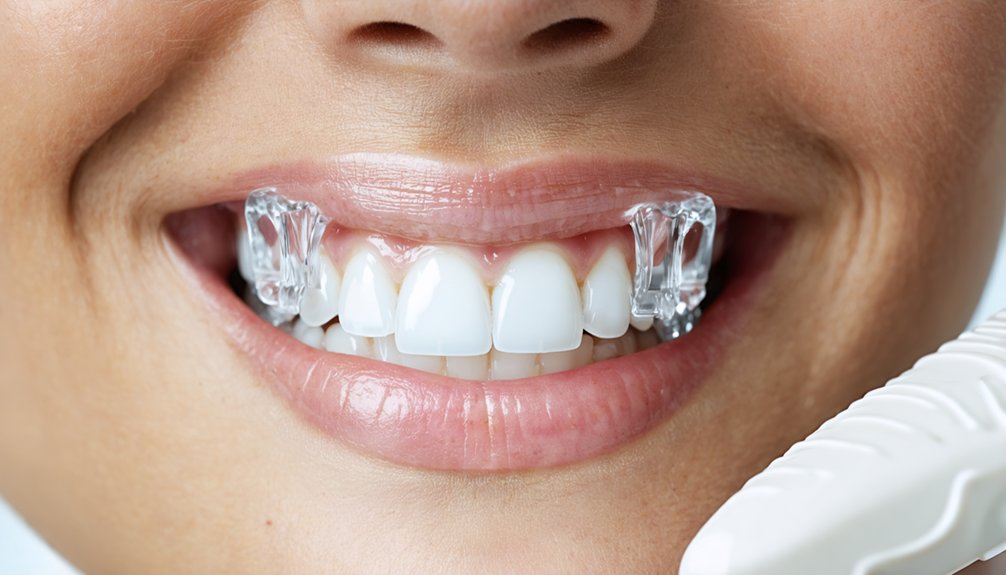
Whitening trays work by holding peroxide-based gel in sustained, direct contact with the tooth surface—something brief-contact methods can’t replicate. Surface absorption of peroxide initiates a diffusion process that drives the active agent through enamel into superficial dentin, targeting discoloration that external factors like brushing or rinses simply can’t reach.
Custom-fitted trays optimize this mechanism through three key advantages:
- Consistent coverage — precise fit eliminates gaps, ensuring uniform gel distribution across every surface.
- Extended contact time — prolonged exposure allows deeper peroxide penetration than strip or rinse-based alternatives.
- Controlled concentration — gel strength stays stable throughout wear, maximizing efficacy without unnecessary tissue exposure.
You’re not just whitening the surface—you’re systematically addressing discoloration within the tooth’s structure itself.
Why Extended Wear Time Makes Whitening Trays More Effective for Deep Stains
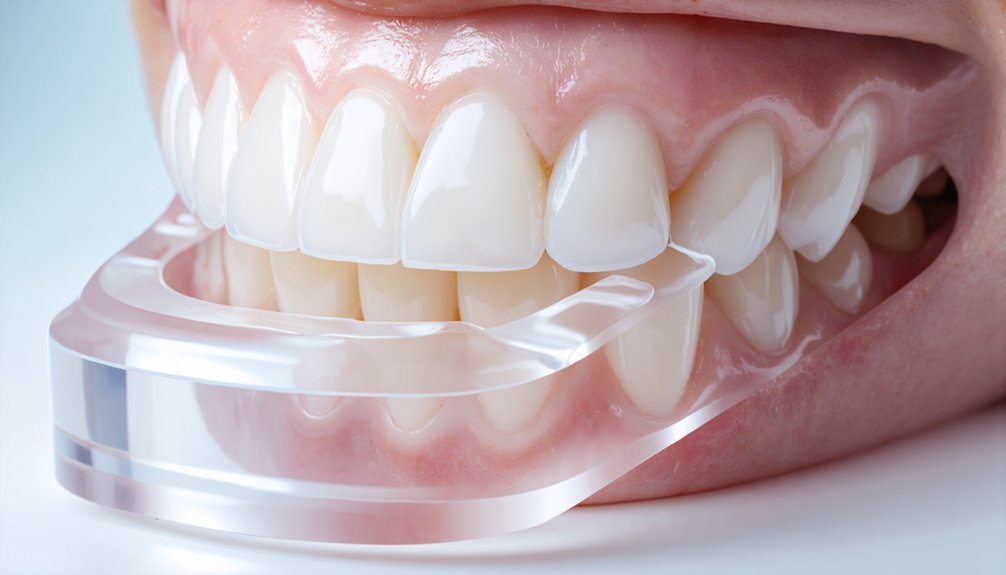
Because deep stains form within the tooth structure rather than on its surface, a single brief application rarely delivers enough peroxide to produce meaningful change. Enamel permeability varies across teeth, meaning stain penetration depth differs, and overcoming that resistance requires sustained gel contact over multiple sessions.
Whitening trays address this by holding bleaching gel against enamel for controlled, extended periods—daily wear accumulates peroxide diffusion that gradual breaks down deeply embedded chromogens. Research supports overnight tray use as particularly effective, reducing total treatment days while increasing penetration.
For stubborn discoloration, consistent application over weeks allows progressive lightening that a brief rinse or strip can’t replicate. You’re ultimately leveraging cumulative exposure to drive meaningful change where surface-only methods consistently fall short.
Professional Whitening Trays vs. Store-Bought Kits for Stubborn Discoloration
When stubborn discoloration doesn’t respond to surface-level treatment, the distinction between professional and store-bought tray systems becomes clinically significant. Custom-fitted trays outperform generic kits for deep stain removal in three measurable ways:
- Gel concentration — Professional systems use higher peroxide levels, targeting intrinsic staining more aggressively than OTC formulations permit.
- Precision fit — Custom trays minimize gel overflow, reducing dental sensitivity while maximizing consistent enamel contact.
- Supervised protocol — Clinician oversight allows you to adjust wear time and concentration based on your specific stain type and oral condition.
Store-bought kits suit mild discoloration, but for tetracycline-related or age-induced staining, their imprecise fit and weaker formulations often produce insufficient results.
Professional tray systems give you measurable control over your whitening outcome.
What to Expect From Tray Whitening When Stains Run Deep
Choosing professional trays over store-bought kits sets you up for better results, but it’s equally important to understand what those results will actually look like over time. Deep intrinsic stains respond more slowly than surface discoloration—you’ll likely notice initial lightening within days, but meaningful improvement often requires weeks of consistent use.
Tetracycline and trauma-related staining may only partially resolve even after extended treatment. Patient comfort matters throughout this process; properly fitted trays minimize gel overflow, reducing sensitivity and gum irritation.
Your dental health determines how aggressively you can treat—higher peroxide concentrations yield faster results but require closer monitoring. Expect gradual, cumulative improvement rather than immediate transformation.
Tracking changes weekly helps you stay objective and adjust wear time or gel strength with your dentist’s guidance.
Frequently Asked Questions
Can Whitening Trays Be Used Alongside Other Dental Cosmetic Treatments?
Yes, you can combine whitening trays with in-office treatments for enhanced results. They’ll complement procedures like bonding or veneers, though natural remedies offer minimal support for deep stains requiring controlled, professional-grade intervention.
How Should Whitening Gel Be Stored to Maintain Its Effectiveness?
Because nothing ruins your whitening goals like warm, degraded gel—store it refrigerated for secure gel storage and effectiveness maintenance. You’ll preserve peroxide potency, extend shelf life, and ensure consistent bleaching performance every application.
Are Whitening Trays Safe for People With Dental Restorations or Crowns?
Whitening trays won’t damage restorations, but you should know they don’t alter crown discoloration due to dental material compatibility limits. Natural teeth whiten; crowns don’t. Consult your dentist to manage potential shade mismatches effectively.
Can Children or Teenagers Safely Use Professional Whitening Tray Systems?
You shouldn’t use professional whitening tray systems for children’s safety concerns, as developing teeth are vulnerable. Teenagers whitening should only begin once permanent teeth fully erupt, ideally under strict professional supervision to control gel strength and exposure duration.
How Often Should Whitening Trays Be Replaced for Optimal Results?
Like a gardener replacing worn gloves, you should replace your whitening trays every 6–12 months. Degraded tray fit compromises gel longevity and even coverage, reducing treatment effectiveness. Replace them sooner if warping or damage occurs.
References
- https://www.colgate.com/en-us/oral-health/teeth-whitening/teeth-stain-removal-types
- https://www.designerforsmiles.com/cosmetic-dentistry/how-can-i-treat-deep-stains-on-my-teeth/
- https://www.reddit.com/r/beauty/comments/10w15e7/in_relation_to_teeth_whitening_what_is_best_to/
- https://elegantdentistry.net/teeth-whitening-trays-guide-for-a-brighter-smile-elegant-dentistry/
- https://rileydental.net/blog/can-professional-teeth-whitening-get-rid-of-deep-tooth-stains
- https://www.bamatis.com/docs/tray_whitening.pdf
- https://pmc.ncbi.nlm.nih.gov/articles/PMC4058574/
- https://willerbydentalcare.co.uk/blogs/can-teeth-whitening-remove-deep-stains
- https://www.whiteandbright.com.au/post/do-teeth-whitening-trays-really-work-pros-and-cons
- https://www.ada.org/resources/ada-library/oral-health-topics/whitening