For sensitive teeth, you don’t have to sacrifice comfort for a whiter smile. The top sensitivity-free options include Crest 3D Whitestrips Sensitive, Hismile PAP+, Auraglow Sensitive, Lumineux, and Spotlight Oral Care Gentle Routine. These formulas use either low-concentration hydrogen peroxide (5.25%–6%) or peroxide-free alternatives like PAP+ to minimize nerve irritation. Look for ADA-approved products with desensitizing agents for the safest results. Keep exploring to find the right formula and technique for your specific needs.
Key Takeaways
- Hismile PAP+ strips use aramino-phenyl-phosphonic acid instead of peroxide, delivering pain-free whitening without nerve irritation.
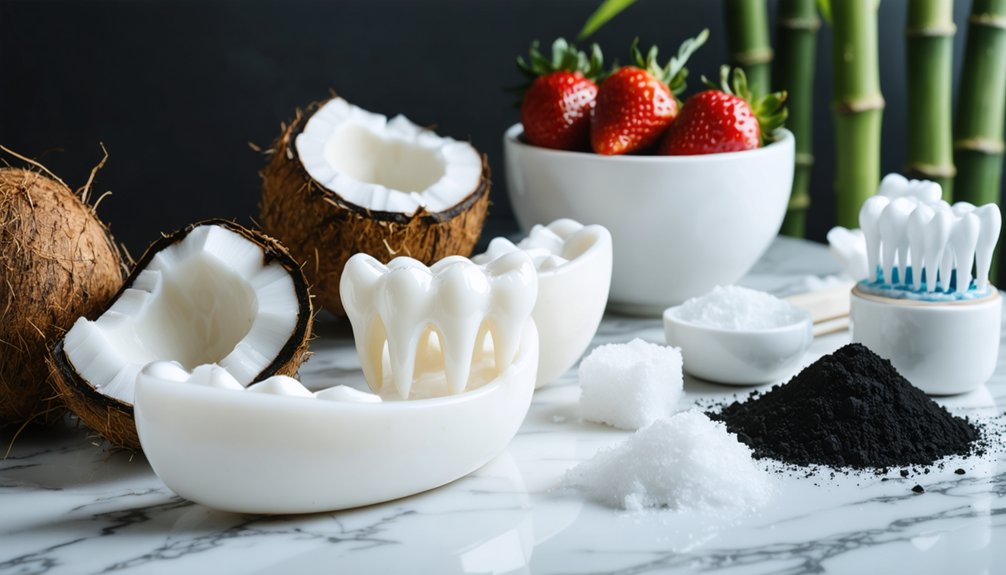
- Lumineux strips rely on coconut oil and lemon peel oil as peroxide-free alternatives for sensitivity-free whitening.
- PAP+ gel formulas eliminate peroxide entirely, offering comparable whitening results without causing nerve discomfort.
- Gels with potassium nitrate desensitizing agents provide targeted application while minimizing gum contact and sensitivity.
- Auraglow Sensitive uses 6% hydrogen peroxide with a soothing gel buffer, reducing discomfort during whitening treatment.
What Makes Whitening Strips Safe for Sensitive Teeth?
When choosing whitening strips for sensitive teeth, the active ingredient and its concentration matter most. You’ll want formulations containing hydrogen peroxide between 5.25% and 6%, or carbamide peroxide at 18%, as both deliver effective stain removal while minimizing nerve irritation.
Non-peroxide active ingredients like PAP+ offer a completely pain-free alternative with clinically comparable results.
Safety standards set by the FDA and the American Dental Association provide a reliable benchmark for evaluating product quality. Look for the ADA seal, which confirms a product meets established efficacy and sensitivity guidelines.
Desensitizing agents like potassium nitrate and hydroxyapatite nanoparticles further protect enamel and block nerve signals during treatment. Understanding these formulation factors gives you direct control over your whitening outcomes without compromising your dental comfort.
The 5 Best Whitening Strips for Sensitive Teeth
Selecting the right whitening strips requires matching formulation strength to your sensitivity threshold, and five products stand out for consistently delivering both efficacy and comfort.
Choosing the right whitening strips means balancing formula strength against your sensitivity threshold for both results and comfort.
An ingredient comparison reveals distinct approaches to sensitivity reduction across these options:
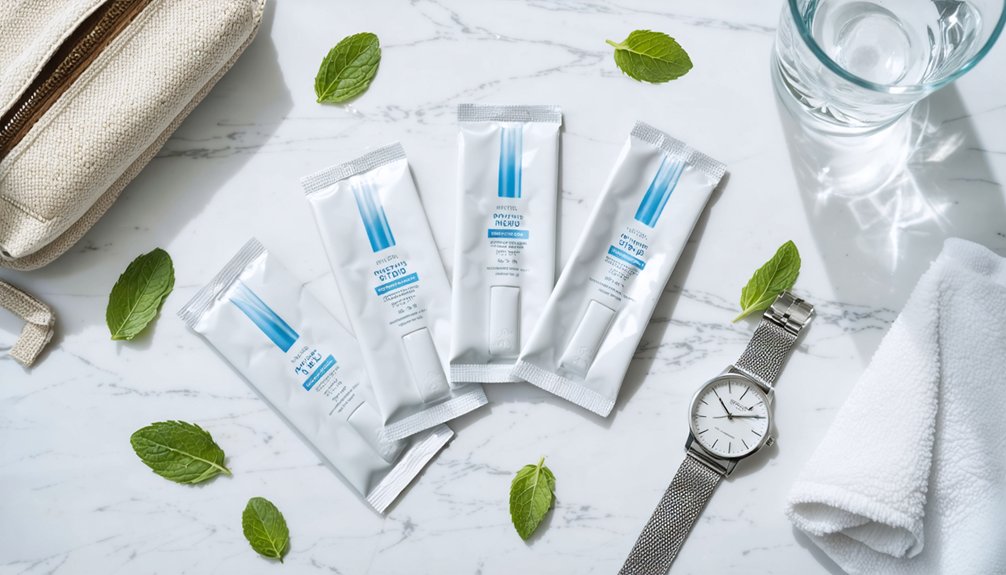
- Crest 3D Whitestrips Sensitive uses 5.25% hydrogen peroxide for controlled stain removal.
- Hismile PAP+ eliminates peroxide entirely, targeting pain-free whitening through aramino-phenyl-phosphonic acid.
- Auraglow Sensitive delivers 6% hydrogen peroxide alongside a soothing gel buffer.
Rounding out the list, Lumineux relies on coconut oil and lemon peel oil as peroxide-free alternatives, while Spotlight Oral Care Gentle Routine combines 6% peroxide with vitamin E for added gum protection.
Your sensitivity profile should directly determine which formulation you select.
How to Use Whitening Strips Safely With Sensitive Teeth
Proper application technique determines whether whitening strips deliver results without triggering discomfort, so following a structured protocol matters as much as choosing the right formulation.
For effective whitening strip application, brush your teeth 30 minutes before applying strips, allowing saliva to naturally remineralize enamel beforehand. Dry your teeth completely to maximize adhesion and active ingredient penetration. Position strips exclusively on tooth surfaces, keeping edges away from gum tissue to prevent irritation.
Implement sensitivity reduction techniques by starting with 5–10 minute sessions rather than full recommended durations, then gradually extending wear time as tolerance builds.
Never exceed manufacturer guidelines, as overexposure risks enamel compromise. If sensitivity persists, space sessions further apart or switch to PAP+ or carbamide peroxide formulations, which deliver comparable whitening with reduced nerve stimulation.
Whitening Gels and Pens vs. Strips: Which Is Better for Sensitivity?
Beyond application technique, the format of your whitening product itself shapes how much sensitivity you’ll experience. Gels effectiveness stems from their customizable dosing and precise placement, while strips convenience makes consistent use more achievable.
Each format carries distinct sensitivity implications:
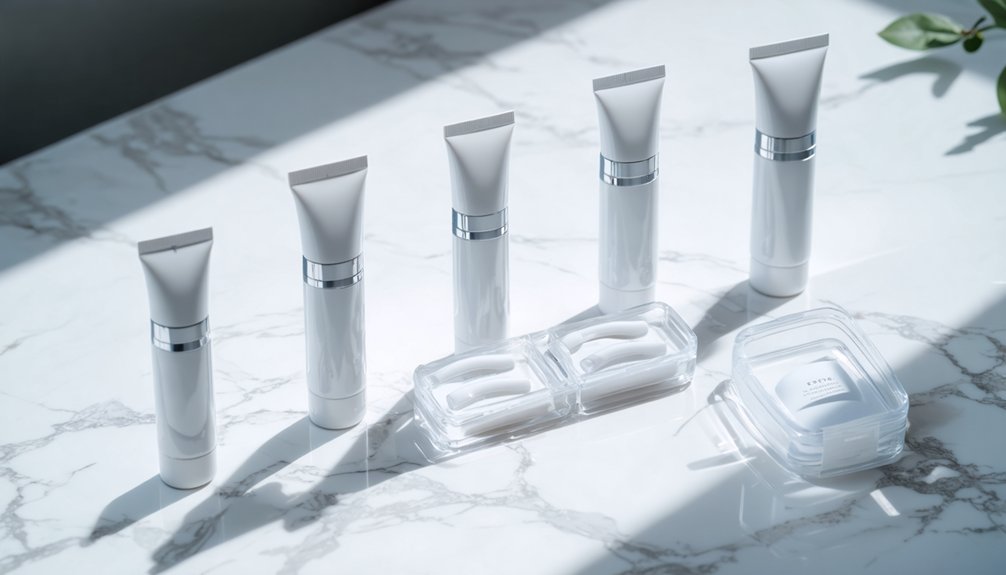
- Whitening pens and gels allow targeted application, reducing gum contact and letting you control concentration exposure directly.
- Whitening strips deliver uniform peroxide contact across all tooth surfaces simultaneously, which can accelerate sensitivity in compromised enamel.
- PAP+ gel formulas like Hismile eliminate peroxide entirely, offering clinically comparable results without nerve irritation.
If you have significant sensitivity, gels with desensitizing agents like potassium nitrate give you greater control over treatment intensity.
Strips remain effective but require stricter adherence to shortened wear times to minimize discomfort.
What Dentists Say About Whitening Strips for Sensitive Teeth
While over-the-counter marketing often overpromises results, dentists like Dr. Wagner and Dr. Sachar cut through sensitivity misconceptions by emphasizing formulation over branding. Their dentist recommendations consistently favor products containing 5.25%–6% hydrogen peroxide or PAP+ alternatives, both clinically validated for effective stain removal without triggering excessive nerve response.
You should understand that sensitivity during whitening isn’t inevitable—it’s often the result of misuse. Exceeding recommended wear times, applying strips to unclean teeth, or choosing concentrations too high for your enamel condition are controllable variables.
Dentists stress that you select ADA-approved formulations and follow application protocols precisely.
If you experience persistent discomfort, a dentist can assess your enamel thickness and recommend a concentration that balances whitening efficacy with your sensitivity threshold.
Frequently Asked Questions
Can Whitening Strips Be Used While Wearing Dental Braces Safely?
You shouldn’t use whitening strips with braces, as they’ll cause uneven whitening effectiveness, leaving unbleached patches under brackets. Prioritize proper braces maintenance first, then pursue whitening post-removal for clinically consistent, controlled results.
How Long Do Whitening Strip Results Last Before Retreatment Is Needed?
Your whitening duration typically lasts three to six months before retreatment’s needed. You’ll notice fading along the effectiveness timeline based on diet and habits, so you should schedule touch-up sessions accordingly to maintain consistent, clinically ideal results.
Are Whitening Strips Safe to Use During Pregnancy or Breastfeeding?
Like uncharted waters, pregnancy safety with whitening strips remains unclear. You should avoid them during pregnancy or breastfeeding, as insufficient evidence exists to confirm oral health safety for you or your baby.
Can Children or Teenagers Safely Use Sensitivity-Free Whitening Strips?
You shouldn’t let children use whitening strips without consulting a dentist first. Safety guidelines recommend following strict age recommendations, as developing enamel remains vulnerable. Teenagers should seek professional advice before starting any sensitivity-free whitening regimen.
Do Whitening Strips Interact Negatively With Prescription Dental Medications?
Whitening strips can interact with prescription dental medications, potentially affecting whitening effectiveness and dental health. You should consult your dentist before use, as certain medications may alter enamel permeability or amplify sensitivity responses unpredictably.
References
- https://www.nbcnews.com/select/shopping/best-teeth-whitening-strips-rcna201114
- https://www.dentalroundup.com/best/best-whitening-strips-sensitive-teeth/
- https://www.cnet.com/health/personal-care/best-teeth-whitening-strips/
- https://www.valleydentalplainfield.com/blog/best-whitening-strips-for-sensitive-teeth-revealed/
- https://acmacoustics.com/article/we-found-6-whitening-products-that-will-brighten-your-smile-without-the-tooth-sensitivity
- https://www.reddit.com/r/beauty/comments/1s2uujg/best_teeth_whitening_strips_that_dont_wreck_your/
- https://www.youtube.com/watch?v=RgFMOMzrjpA
- https://www.reddit.com/r/BestBeautyDupes/comments/1quhsen/need_recommendations_for_whitening_strips_that/
- https://teethcare360.co.uk/peroxide-free-whitening-strips/
- https://www.forbes.com/sites/forbes-personal-shopper/article/best-whitening-product-for-sensitive-teeth/