To sustain a bright white smile, you’ll need to brush twice daily with fluoride toothpaste, floss consistently, and rinse with antibacterial mouthwash. Avoid staining culprits like coffee, red wine, and dark sodas, and rinse with water immediately after consuming them. Strengthen your enamel with calcium and phosphorus-rich foods. Pair these habits with whitening toothpaste or at-home kits for surface stain removal. There’s much more to uncover about protecting and restoring your smile’s brilliance.
Key Takeaways
- Brush twice daily with fluoride toothpaste, floss regularly, and use antibacterial mouthwash to prevent plaque buildup and maintain whiteness.
- Limit coffee, tea, red wine, and dark sodas, as their tannins and acids accelerate enamel staining and erosion.
- Rinse with water immediately after consuming staining foods or drinks to neutralize acids and minimize discoloration effects.
- Eat enamel-strengthening foods like apples, carrots, dairy, and phosphorus-rich foods to mechanically clean and remineralize teeth naturally.
- Consult a dentist for professional whitening treatments if persistent discoloration, deep intrinsic stains, or sensitivity hinder at-home care.
Why Your Smile Loses Its Brightness Over Time
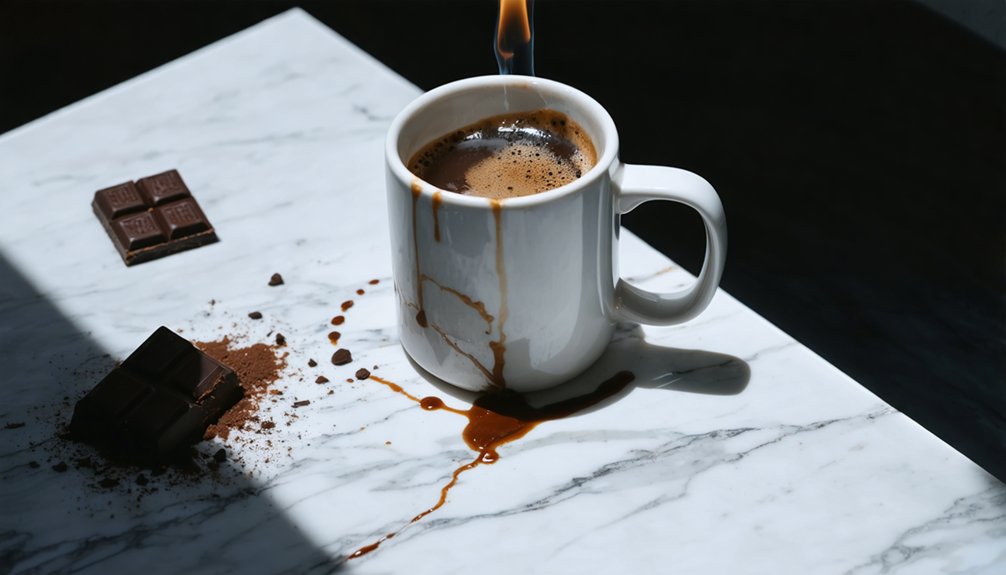
Several factors work against your smile’s natural brightness as you age. Smile aging occurs naturally as enamel thins, exposing the darker dentin layer beneath. Daily habits accelerate this process considerably.
Enamel erosion results from acidic foods, sugary beverages, and aggressive brushing, permanently weakening your teeth’s protective outer layer. Once enamel wears away, it doesn’t regenerate, making prevention critical.
Staining compounds from coffee, tea, red wine, and tobacco penetrate microscopic enamel pores, gradually darkening your teeth’s appearance. Poor oral hygiene allows plaque and tartar to accumulate, further dulling your smile’s natural whiteness.
Understanding these mechanisms gives you the control needed to counteract them effectively. Identifying your specific contributing factors allows you to implement targeted strategies that address the root causes of discoloration directly.
Build a Daily Oral Routine That Preserves Tooth Whiteness
Knowing what damages your smile puts you in a stronger position to protect it daily. Start with daily brushing twice using fluoride toothpaste for two minutes minimum.
Don’t neglect tongue cleaning, as bacteria there accelerate staining and odor. Master flossing techniques to eliminate plaque between teeth where brushes can’t reach.
Add mouthwash benefits by incorporating an antibacterial rinse to suppress buildup. Prioritize enamel care by choosing non-abrasive toothpaste that whitens without eroding protective layers.
Apply hydration tips consistently—water neutralizes acids and rinses pigments before they settle. Replace processed snacks with healthy snacks like apples and carrots, which naturally scrub enamel.
Finally, dismiss whitening myths; consistency in your daily routine outperforms any shortcut product.
The Worst Foods and Drinks for Tooth Staining
What you eat and drink directly shapes the color of your teeth, making dietary awareness a cornerstone of any whitening strategy.
Certain staining beverages and staining foods aggressively compromise enamel brightness, and identifying them gives you actionable control.
Primary culprits to limit or avoid:
- Coffee and tea – Contain tannins that bind to enamel, accelerating discoloration.
- Red wine – Combines acidity with deep pigments, penetrating enamel rapidly.
- Colas and dark sodas – Deliver both chromogens and erosive acids simultaneously.
- Berries and tomato-based sauces – Rich in pigment, settling into enamel micro-crevices quickly.
After consuming these items, rinse immediately with water to neutralize acids and displace pigment before it adheres permanently.
Eat These Foods to Protect Your Teeth From Staining
While limiting staining culprits matters, the foods you actively choose can work just as hard in your favor. Certain tooth friendly snacks mechanically scrub enamel surfaces while you chew. Apples, carrots, and celery increase saliva production, neutralizing acids and dislodging surface pigments before they settle.
These natural whitening foods function like low-grade abrasives, clearing residue without damaging enamel. Calcium-rich options like dairy products, sardines, and leafy greens actively reinforce enamel density, making teeth more resistant to discoloration.
Phosphorus-rich foods — eggs, fish, nuts, and beans — support enamel remineralization at the structural level. Scheduling these foods after consuming staining beverages or meals adds a strategic layer of protection, letting your diet actively defend your smile rather than simply threatening it.
Which Whitening Products Are Worth Using at Home
Diet builds a strong foundation, but when you want faster or more visible results, home whitening products can close the gap. Choosing the right products maximizes efficiency without compromising enamel integrity.
Proven options worth your investment:
- Whitening toothpaste — Whitening toothpaste benefits include hydrogen peroxide or baking soda formulas that remove surface stains during your regular brushing routine.
- At-home kits — At home kits using peroxide-based gel trays deliver deeper penetration than toothpaste alone; always follow dosage instructions.
- Whitening strips — Thin, flexible strips with low-concentration peroxide adhere directly to enamel for targeted treatment.
- Baking soda brushing — Used once weekly, it safely lifts stains without excessive abrasion.
Select non-abrasive formulas to protect enamel while pursuing visible results.
Daily Habits That Are Slowly Staining Your Teeth
Certain everyday habits quietly erode your smile’s brightness before you notice the damage. Coffee, tea, red wine, and colas are primary staining culprits, depositing pigments directly onto enamel with repeated exposure.
Everyday habits silently sabotage your smile—coffee, tea, and red wine deposit stubborn pigments onto enamel before you notice.
Smoking accelerates yellowing through tobacco chemicals that penetrate deeply into tooth structure. Sugary foods feed bacteria that dull your enamel’s natural appearance over time.
You can counter these staining habits by drinking pigmented beverages through a straw, rinsing with water immediately after consuming them, and eating detergent foods like apples or celery to neutralize residual acids.
Consistent oral hygiene—brushing twice daily, flossing, and using antibacterial mouthwash—removes surface deposits before they set permanently.
Recognizing which behaviors compromise your results gives you the control needed to protect your investment in a whiter smile.
How Water Rinses and Saliva Fight Tooth Staining
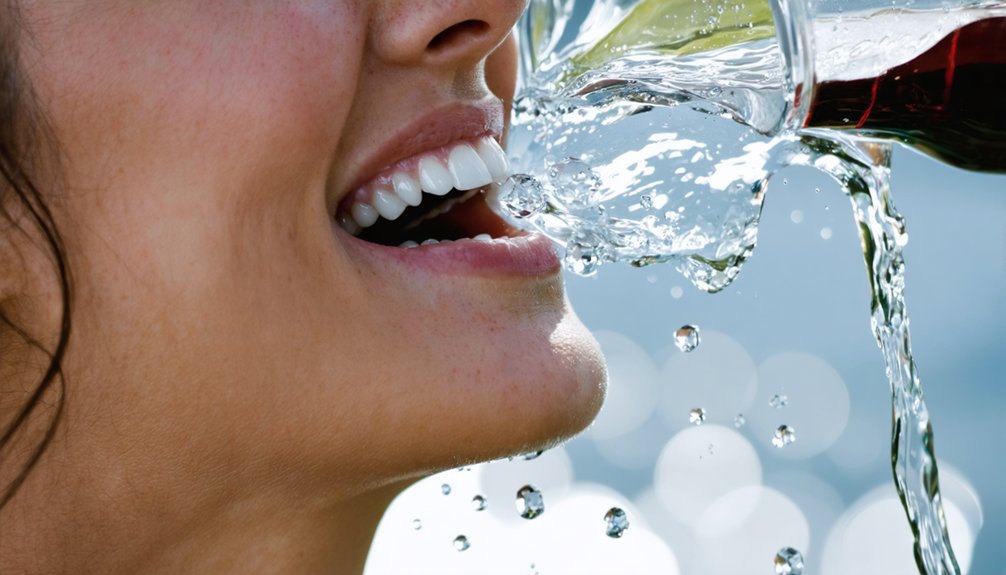
After consuming staining foods or beverages, rinsing your mouth with water immediately washes away pigment-laden particles before they settle onto enamel.
Staying hydrated throughout the day also stimulates saliva production, your mouth’s built-in defense mechanism that continuously neutralizes acids and flushes bacteria from tooth surfaces.
Water Rinses Prevent Staining
Rinsing your mouth with water after consuming staining foods or beverages is one of the simplest yet most effective habits you can adopt to preserve enamel whiteness. The water benefits extend beyond basic hydration—water actively dislodges pigments before they settle into enamel.
Master these rinse techniques for maximum protection:
- Rinse immediately after coffee, tea, wine, or berries
- Swish vigorously for 30 seconds to dislodge surface pigments
- Repeat after acidic foods to neutralize enamel-eroding compounds
- Combine rinsing with hydration throughout the day to sustain a clean oral environment
You don’t need expensive products to maintain results—consistent water rinsing interrupts the staining cycle before discoloration becomes embedded, keeping your whitening efforts effective long-term.
Saliva’s Natural Cleansing Power
While water rinsing actively removes surface pigments, your body produces its own powerful cleansing agent—saliva. Understanding saliva benefits empowers you to leverage this biological defense strategically. Saliva neutralizes acids, remineralizes enamel, and continuously flushes bacteria and food debris from tooth surfaces. It contains antimicrobial proteins that actively combat stain-causing microorganisms before they settle.
You can optimize saliva production by staying consistently hydrated throughout the day. Dehydration reduces salivary flow, leaving teeth vulnerable to pigment adhesion and bacterial buildup.
Eating fibrous foods like apples and carrots also stimulates saliva release, creating a natural cleansing cycle after meals.
Recognizing saliva as a functional tool—not merely a passive bodily fluid—lets you actively incorporate hydration and dietary choices that maintain your smile’s brightness between professional cleanings.
When to See a Dentist for Professional Whitening Care
If your teeth show persistent discoloration despite consistent at-home care, it’s time to consult a dentist for professional whitening.
Signs that warrant a professional evaluation include deep intrinsic stains, uneven discoloration, or sensitivity that prevents effective use of over-the-counter products.
Your dentist can recommend in-office treatments like Zoom whitening, which deliver faster, more controlled results than anything available on store shelves.
Signs Requiring Professional Whitening
Sometimes, at-home whitening efforts simply aren’t enough, and that’s when professional dental care becomes necessary. Certain discoloration causes—like intrinsic staining, medication effects, or enamel damage—don’t respond to over-the-counter products.
Don’t let whitening myths convince you that stronger store-bought formulas will solve deep staining; they won’t.
Consult your dentist when you notice:
- Persistent yellowing that remains despite consistent at-home whitening routines
- Gray or brown discoloration caused by tetracycline antibiotics or fluorosis
- Uneven whitening results that create noticeable patches across your teeth
- Sensitivity or pain during or after whitening product application
Professional treatments like Zoom whitening deliver controlled, targeted results that at-home methods can’t replicate.
Schedule your consultation and take decisive action toward lasting whiteness.
In-Office Treatment Options
When at-home methods fail to deliver the results you need, in-office treatments offer a clinically controlled solution that outperforms anything available over the counter.
Dentists apply high-concentration bleaching agents, typically hydrogen peroxide ranging from 25% to 40%, directly to your enamel under precise conditions.
Procedures like Zoom whitening use activating light technology to accelerate the bleaching process, producing measurable results in a single session.
Your dentist also customizes whitening procedures to address your specific discoloration type, whether extrinsic surface staining or deeper intrinsic discoloration.
Professional application minimizes sensitivity risks through controlled exposure times and protective barriers shielding your gums.
Scheduling a consultation lets you assess candidacy, set realistic outcome expectations, and establish a maintenance protocol that preserves your investment long-term.
Frequently Asked Questions
Can Stress or Hormonal Changes Affect the Whiteness of Your Teeth?
Yes, stress impact and hormonal fluctuations can affect your teeth’s whiteness. They’re known to reduce saliva production, heighten inflammation, and accelerate enamel erosion, ultimately compromising your smile’s brightness and increasing your susceptibility to discoloration.
Does Teeth Whitening Work on Dental Crowns, Veneers, or Fillings?
Whitening won’t work on crowns whitening attempts or veneers maintenance goals — these materials don’t respond to bleaching agents. You’ll need consistent professional cleanings and proper oral hygiene to keep your restorations matching your naturally whitened teeth effectively.
Are There Age-Related Factors That Make Teeth Naturally Appear More Yellow?
Yes, aging effects naturally yellow your teeth as enamel thins, exposing darker dentin beneath. Dietary influences from years of consuming staining foods and beverages compound this process, making consistent oral hygiene and professional cleanings essential for maintaining brightness.
Can Certain Medications Cause Tooth Discoloration Despite Good Oral Hygiene?
Yes, certain medication types can stain your teeth despite your best efforts. You’ll find that antibiotics, antihistamines, and antihypertensives cause discoloration. For discoloration prevention, you should consult your dentist and maintain rigorous oral hygiene practices consistently.
Is Teeth Whitening Safe for People With Sensitive Teeth or Gum Disease?
If you’ve got sensitive teeth or gum disease, you should consult your dentist before attempting whitening methods. They’ll recommend sensitivity treatments and safer alternatives tailored to your condition, ensuring you maintain control over your oral health outcomes.
References
- https://www.arborviewdentalgroup.com/the-secret-to-long-lasting-white-teeth-6-essential-tips/
- https://www.atxdentistry.com/blog/10-tips-for-a-healthy-white-smile
- https://lonestardentalgroup.com/achieve-a-radiant-smile-essential-teeth-whitening-tips-from-dentists/
- https://www.brightsmilesdentist.com/keep-your-bright-smile-shining-10-tips-for-lasting-whitening-results/
- https://vprestondental.com/white-smile-checklist-10-ways-to-keep-your-pearly-whites-illuminated/
- https://www.smilesbyshields.com/tips-for-maintaining-your-white-smile-after-tooth-whitening-treatments/
- https://www.smilesbybergendental.com/blog/2020/5/27/9-rules-for-maintaining-a-white-smile
- https://www.dentalcareofbaltimore.com/blog/tips-to-maintain-your-bright-white-smile/
- https://www.orchardhillsdentistry.com/three-tips-to-keep-your-teeth-white-and-your-smile-bright/
- https://www.midmismiles.com/how-to-keep-your-smile-white/