You can brighten dark spots on your teeth by brushing twice daily with fluoride toothpaste, using baking soda paste twice weekly, and rinsing with diluted hydrogen peroxide. Avoid tobacco, acidic foods, and staining beverages without rinsing afterward. For deeper stains, ADA-approved whitening strips or tray systems with carbamide peroxide deliver measurable results. If spots persist beyond two weeks or spread rapidly, professional intervention may be necessary — and there’s much more to know about choosing the right approach.
Key Takeaways
- Brush gently twice weekly with a baking soda and water paste to safely abrade and reduce surface stains.
- Rinse with a 3% hydrogen peroxide solution daily for up to 60 seconds to lighten discoloration through oxidation.
- Oil pull with coconut oil for 15–20 minutes daily to reduce plaque and surface discoloration naturally.
- Use ADA-approved whitening toothpastes or strips with carbamide peroxide to gradually target moderate dark spots.
- Rinse immediately with water after consuming staining beverages like coffee, tea, or red wine to prevent stain bonding.
What Causes Dark Spots on Teeth?
Dark spots on teeth typically stem from plaque buildup, tartar accumulation, and surface stains left by food and beverages like coffee, tea, red wine, and dark fruit juices.
Tobacco use compounds dental discoloration by depositing tar and nicotine directly onto enamel surfaces, producing persistent black or brown marks.
Your hygiene habits matter considerably. Infrequent brushing or flossing allows stains to bond firmly to enamel, accelerating discoloration progression.
Acidic foods, including citrus fruits and sugary candies, trigger enamel erosion by softening the tooth’s protective outer layer, leaving it increasingly vulnerable to staining agents.
Once enamel weakens, chromogens from dark beverages penetrate more deeply, making removal harder.
Identifying your specific risk factors gives you the control needed to address discoloration strategically rather than reactively.
Foods and Habits That Make Dark Spots Worse
Certain dietary patterns and daily habits accelerate enamel degradation and stain adhesion faster than most people realize. Dental plaque thrives when you consume staining agents repeatedly without intervention.
Repeated exposure to staining agents without intervention accelerates enamel degradation faster than most people realize.
Enamel erosion compounds this by exposing softer dentin, which absorbs discoloration more readily.
Three habits that markedly worsen dark spots:
- Drinking coffee, tea, red wine, or dark sodas without rinsing afterward allows chromogens to bond directly to compromised enamel.
- Using tobacco products deposits tar and nicotine, creating persistent black or brown staining that penetrates beyond surface levels.
- Frequent acidic snacking on citrus or sugary foods softens enamel continuously, accelerating stain absorption between meals.
You control exposure frequency. Reducing these triggers limits cumulative damage and preserves your whitening efforts long-term.
Home Remedies That Actually Fade Teeth Stains
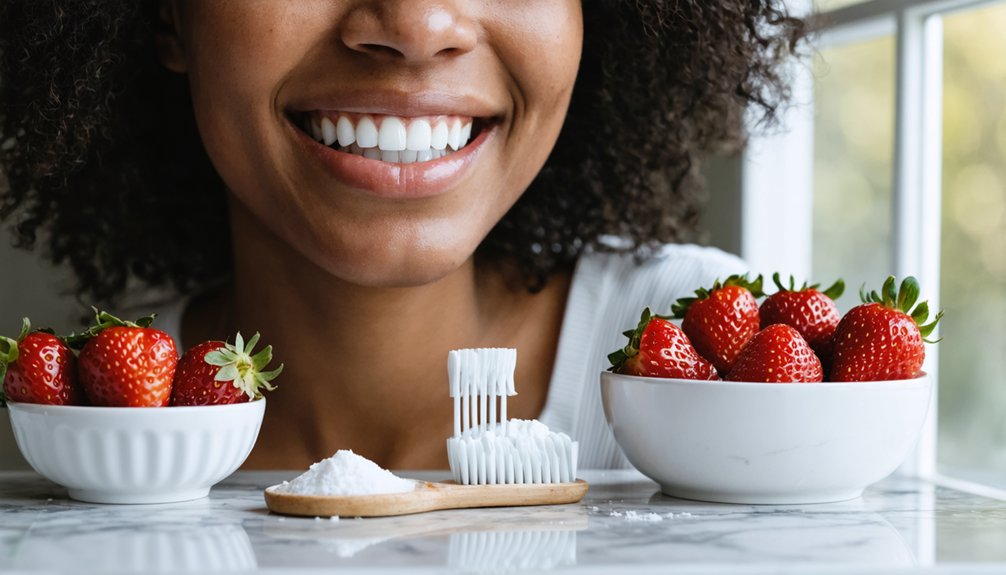
You can reduce surface stains at home by brushing twice weekly with a paste made of equal parts baking soda and water, which gently abrades discoloration without harsh chemicals.
Rinsing with a 3% or lower hydrogen peroxide solution daily or every few days lightens teeth over time through controlled oxidation.
Oil pulling with coconut oil for 15–20 minutes each day further reduces plaque buildup and diminishes stubborn discoloration.
Baking Soda Paste Benefits
Baking soda paste ranks among the most practical home remedies for fading surface stains, and it’s backed by straightforward chemistry. Its mild abrasiveness delivers effective dental polishing without aggressively stripping enamel.
To maximize results, follow these three application principles:
- Mix equal parts baking soda and water to form a consistent paste before each use.
- Limit application to twice weekly to avoid compromising enamel strengthening over time.
- Brush gently for two minutes, targeting discolored areas without excess pressure.
You’re working with a low-cost, accessible compound that disrupts stain adhesion at the surface level. It won’t reverse deep intrinsic discoloration, but consistent use visibly reduces extrinsic stains caused by coffee, tea, and similar chromogenic sources.
Oil Pulling For Whitening
While baking soda works mechanically to abrade surface stains, oil pulling takes a different approach by using lipid-based binding to reduce plaque and discoloration. Swish one tablespoon of coconut oil in your mouth for 15–20 minutes daily, then spit it into a trash bin—not the sink—to avoid clogging pipes.
This natural remedy works by attracting fat-soluble bacteria and plaque compounds, pulling them away from enamel surfaces before they harden into stain-causing deposits. It’s a low-risk addition to your oral hygiene routine that complements brushing and flossing rather than replacing them.
Consistent daily practice diminishes surface discoloration over time. You’re not relying on abrasives or bleaching agents—you’re systematically reducing the microbial buildup that drives staining in the first place.
Diluted Hydrogen Peroxide Rinse
Hydrogen peroxide works as a mild bleaching agent that penetrates enamel to oxidize chromogenic compounds responsible for discoloration. For safe stain penetration without damaging teeth enamel, you’ll need to follow a precise protocol:
- Use a 3% or lower concentration solution, diluting it equally with water before rinsing.
- Swish the solution for 60 seconds daily or every few days, then rinse thoroughly with water afterward.
- Discontinue use immediately if you experience sensitivity, gum irritation, or enamel discomfort.
Consistent application gradually lightens surface and moderate stains over several weeks. Exceeding recommended concentrations accelerates enamel erosion rather than improving results.
You’re in control of the outcome—precision in dilution and frequency determines both effectiveness and safety.
How to Choose the Right Whitening Product for Dark Spots
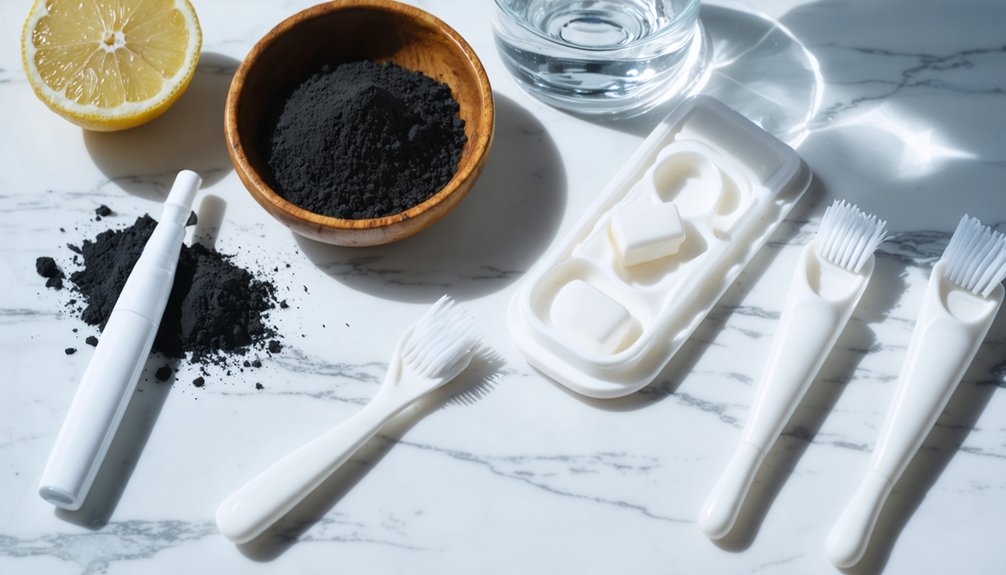
When selecting a whitening product for dark spots, you’ll encounter three main categories: whitening toothpastes, strips, and tray systems, each targeting stains at different depths.
You should prioritize key active ingredients—sodium bicarbonate and sodium hypochlorite address surface stains, while carbamide peroxide penetrates more deeply for greater color correction.
If your discoloration is severe or habit-related, professional in-office treatment delivers results that no at-home product can match.
Types Of Whitening Products
Several over-the-counter whitening products target dark spots with varying levels of intensity, so matching the right product to your specific type of staining matters. Ignore teeth whitening myths that suggest natural stain removal alone resolves deep discoloration—clinical formulations deliver measurable results.
- Whitening toothpastes containing sodium bicarbonate or sodium hypochlorite address surface stains gradually through daily brushing.
- Whitening strips with carbamide peroxide penetrate enamel more deeply, brightening teeth several shades after consistent application.
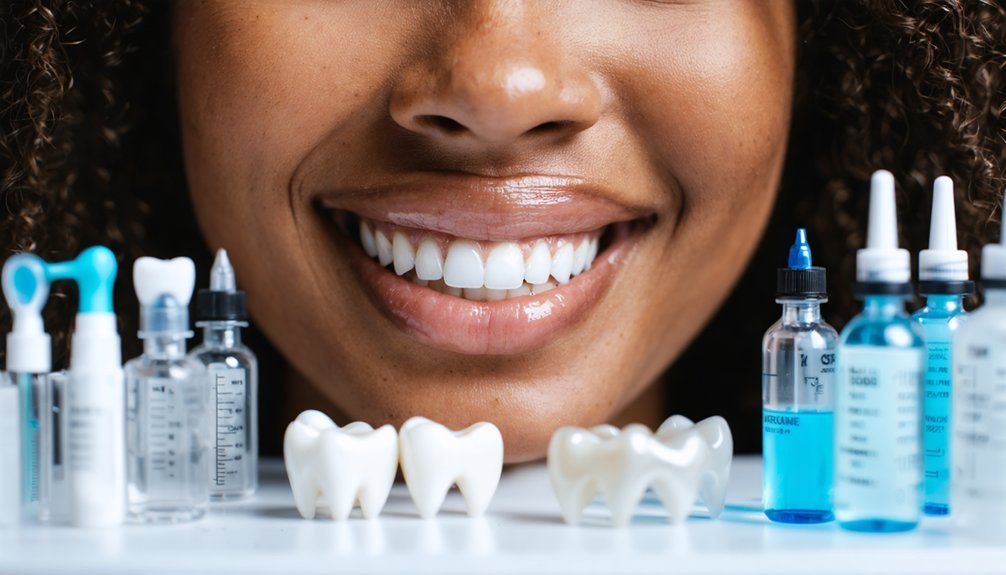
- Tray whitening systems using carbamide peroxide bleaching gel provide the deepest at-home treatment, offering customized, controlled exposure.
Look for the ADA Seal of Acceptance to confirm a product’s safety and efficacy. Selecting the correct concentration for your stain severity prevents enamel damage while maximizing results.
Key Ingredients To Consider
Choosing the right whitening product starts with understanding which active ingredients actually target dark spots effectively. Hydrogen peroxide and carbamide peroxide are the most clinically validated bleaching agents — they penetrate enamel to break down intrinsic and surface stains.
Sodium bicarbonate provides mild abrasion, lifting surface discoloration without aggressive erosion. For enamel health, prioritize products containing fluoride, which reinforces mineral structure weakened by whitening agents.
Avoid formulas with excessive acidity or charcoal, as both compromise enamel integrity over time. Natural oils, particularly coconut oil used in oil pulling, complement whitening routines by reducing plaque-related discoloration without chemical exposure.
Always verify the ADA Seal of Acceptance before selecting a product — it confirms both safety and demonstrated efficacy against surface stains.
Professional Versus At-Home Options
Deciding between professional and at-home whitening depends on the severity of your dark spots and how quickly you need results.
If you have dental implants, note that whitening agents won’t alter their color, making professional assessment essential before starting any regimen.
Enamel erosion also limits your options, since abrasive at-home products can worsen sensitivity.
Use this framework to guide your decision:
- Mild surface stains — Whitening strips or toothpastes with carbamide peroxide deliver gradual, controlled results.
- Moderate discoloration — Tray whitening systems provide deeper penetration with customizable application schedules.
- Severe or deep stains — In-office professional whitening, bonding, or veneers offer clinically superior outcomes.
Matching your treatment to your specific condition guarantees you’re not wasting time or risking further damage.
Best Over-the-Counter Products for Teeth Dark Spots
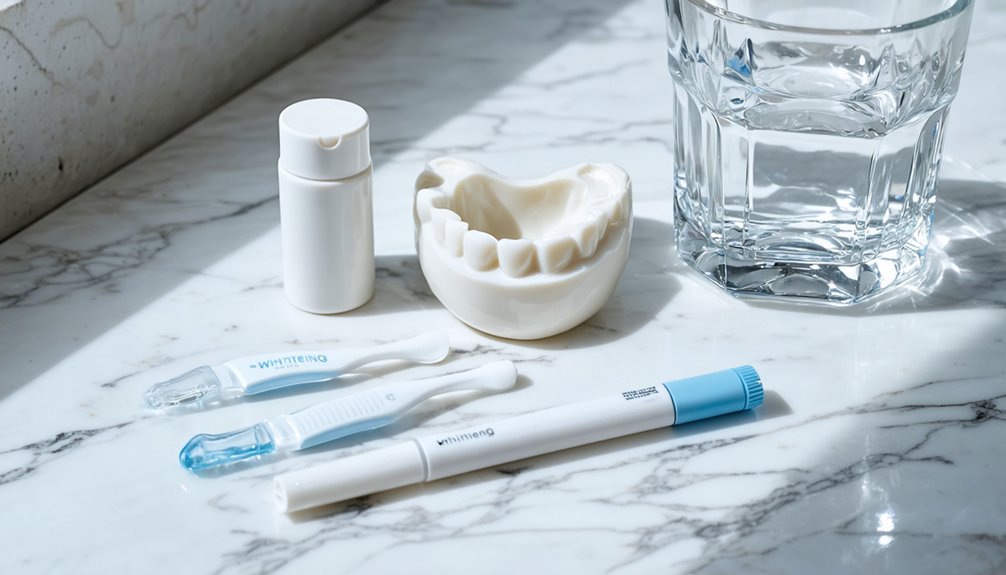
When tackling dark spots at home, five over-the-counter product categories offer clinically supported results. Whitening mouthwashes with hydrogen peroxide reduce surface stains daily; rinse with water afterward.
Whitening toothpastes containing sodium hypochlorite or sodium bicarbonate target discoloration incrementally, unlike natural remedies or teeth whitening myths suggesting charcoal delivers equivalent outcomes.
Whitening strips with carbamide peroxide brighten teeth several shades through consistent application.
Tray whitening systems using carbamide peroxide gel penetrate deeper, offering customized treatment beyond strip coverage.
Look for the ADA Seal of Acceptance on any whitening paste you select, confirming both safety and effectiveness.
Prioritize products with documented active ingredients, maintain consistent use schedules, and track progress methodically.
Informed product selection gives you measurable control over your whitening outcomes.
When Dark Spots on Teeth Need a Dentist
Some dark spots resist home remedies and over-the-counter products entirely, signaling that professional intervention is necessary. If you’ve maintained consistent dental flossing and brushing yet spots persist or darken, it’s time to consult a dentist. Enamel erosion beneath a spot often indicates decay requiring clinical treatment.
Seek professional evaluation when you notice:
- Dark spots that expand despite two or more weeks of consistent home treatment
- Sensitivity, pain, or structural changes accompanying the discoloration, suggesting decay or nerve involvement
- Pitting or visible surface breakdown indicating enamel erosion beyond cosmetic concern
Your dentist can deliver in-office whitening, apply dental bonding, or recommend veneers for severe cases. Early professional assessment prevents minor discoloration from progressing into irreversible structural damage requiring more invasive and costly procedures.
Professional Treatments That Clear Deep Teeth Stains
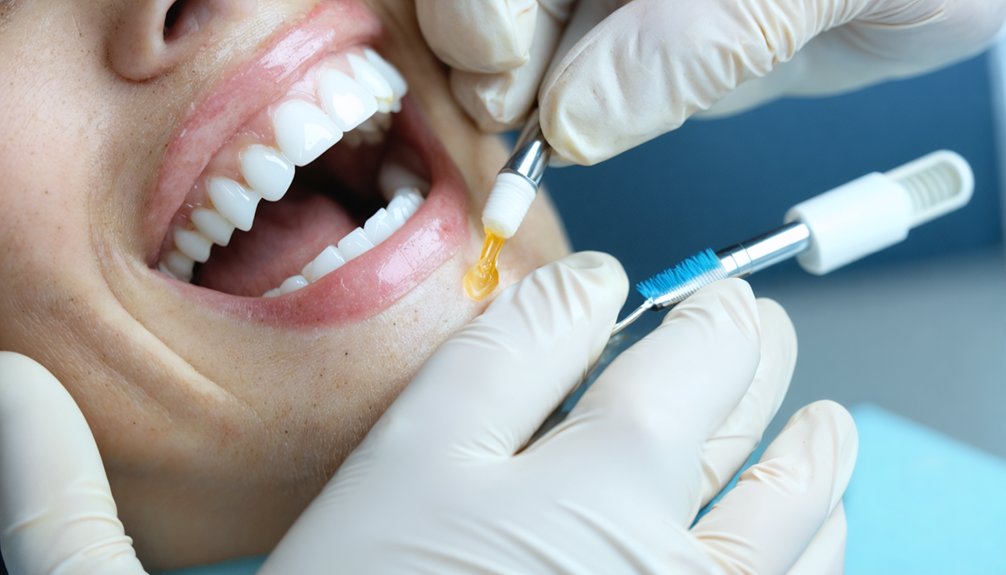
Professional dental treatments offer measurable results when at-home methods fail to clear persistent or deep-set stains. In-office whitening targets discoloration that resists surface-level intervention, delivering color improvements beyond what over-the-counter products achieve.
Your dentist removes accumulated dental plaque and tartar during professional cleanings, which restores baseline brightness and prevents further staining.
For severe discoloration, dental bonding applies tooth-colored resin directly over affected surfaces, while veneers cover the entire front of each tooth for a permanent correction.
If enamel erosion has compromised your tooth structure, your dentist will assess the damage before recommending any bleaching procedure to avoid worsening sensitivity.
Twice-yearly cleanings remain your most reliable preventive measure. These visits also allow your dentist to identify habit-related damage and build a targeted treatment plan.
Daily Habits That Stop Dark Spots From Returning
Keeping dark spots from returning depends on consistent daily habits that limit stain adhesion and preserve enamel integrity. Your dental stain history directly informs which habits carry the highest priority. Despite teeth whitening myths suggesting occasional cleanings suffice, daily discipline drives lasting results.
Daily habits—not occasional cleanings—determine whether dark spots stay gone for good.
Apply these three evidence-based practices:
- Brush with fluoride toothpaste for two minutes twice daily, neutralizing chromogens before they bond to enamel.
- Floss once daily to eliminate interproximal debris that accelerates plaque-driven discoloration.
- Rinse with water immediately after consuming coffee, tea, or red wine to interrupt stain adhesion.
Using a straw with dark beverages and quitting tobacco further reduces recontamination risk.
Consistent execution of these habits preserves your whitening results and maintains structural enamel defense long-term.
Lifestyle Changes That Keep Teeth Brighter Longer
Reducing your intake of coffee, tea, red wine, and dark juices directly lowers your risk of new stain formation on enamel.
When you do consume these beverages, using a straw minimizes contact with your front teeth and limits discoloration.
If you smoke, quitting eliminates tar and nicotine exposure—two of the most persistent causes of black and brown tooth staining.
Limit Stain-Causing Beverages
What you drink daily has a measurable impact on tooth discoloration. Coffee, tea, red wine, and dark juices deposit chromogens directly onto enamel. Ignoring this is one of the most common teeth whitening myths—products alone can’t outpace continuous staining.
Apply these stain prevention techniques:
- Use a straw when consuming dark beverages to bypass front tooth surfaces entirely.
- Add milk or cream to coffee, which neutralizes acidity and dilutes staining compounds.
- Rinse with water immediately after drinking chromogen-rich liquids to limit enamel adhesion.
Limiting high-risk beverages to mealtimes further reduces cumulative exposure. You control your intake frequency and method—both directly influence how effectively any whitening intervention performs long-term.
Quit Smoking For Brightness
Tobacco use introduces tar and nicotine directly onto enamel, producing black and brown stains that no whitening product can fully reverse while exposure continues. Smoking also accelerates dental plaque accumulation, increasing your risk of gum disease and compounding discoloration beyond surface-level staining.
Nicotine reduces saliva flow, which normally neutralizes acids and rinses debris, so enamel erosion progresses faster in smokers than in non-smokers.
Quitting eliminates these compounding variables entirely. Once you stop, whitening treatments, professional cleanings, and consistent oral hygiene produce measurably better results because the primary staining agent is removed.
Your dentist can recommend cessation resources, including nicotine replacement therapy or behavioral support, to improve your success rate. Sustained abstinence is the single most impactful lifestyle change you can make for long-term tooth brightness.
Warning Signs Your Dark Spots Are Something Serious
Some dark spots on your teeth signal conditions that go beyond surface staining and require prompt professional evaluation. Don’t dismiss discoloration that persists despite consistent dental flossing and whitening efforts—it may indicate structural or systemic problems.
Watch for these warning signs:
- Pitting or cavities: Dark spots accompanied by soft, sensitive areas suggest active decay requiring immediate intervention.
- Enamel erosion: Transparent or thinning edges near dark spots indicate acid-induced structural damage that whitening can’t reverse.
- Sudden or spreading discoloration: Rapid darkening across multiple teeth may signal internal trauma, nerve damage, or systemic disease.
If you identify any of these signs, schedule a dental appointment immediately. Early professional assessment prevents minor issues from escalating into irreversible structural damage or costly restorative procedures.
Frequently Asked Questions
Can Dark Spots on Teeth Affect Children Differently Than Adults?
Yes, dark spots affect children differently. Their developing enamel is softer, making children’s dental development more vulnerable to staining. You must prioritize pediatric oral health early, as untreated spots can disrupt permanent tooth formation and long-term brightness.
Does Teeth Whitening Work on Dental Crowns or Implants?
Dental crown whitening and implant stain removal don’t respond to bleaching agents like natural enamel does. You’ll need professional cleaning or replacement to address discoloration, as crowns and implants resist peroxide-based treatments entirely.
Are Dark Spots on Teeth Covered by Dental Insurance Plans?
Cosmetic treatments aren’t covered, yet preventive care often is. Your dental coverage depends on insurance policies distinguishing necessity from aesthetics—so you’ll want to confirm whether cleanings or bonding qualify under your specific plan.
How Long Does Professional Whitening Last Before Retreatment Is Needed?
Professional whitening typically lasts six months to two years before you’ll need retreatment. Whitening longevity depends on teeth stain causes like coffee, tobacco, and diet. You can extend results by maintaining consistent oral hygiene and limiting staining beverages.
Can Certain Medications Cause Dark Spots That Whitening Cannot Remove?
Yes, medication side effects can utterly devastate your enamel’s color. Tooth discoloration causes like tetracycline or fluorosis penetrate deeply into dentin, making whitening completely ineffective. You’ll need veneers or bonding for those stubborn, treatment-resistant spots.
References
- https://www.medicalnewstoday.com/articles/322421
- https://www.medicalnewstoday.com/articles/321480
- https://toothworkscalgary.com/blog/removing-black-spots-on-teeth-home-remedies-and-professional-options/
- https://www.vinmec.com/eng/blog/how-to-remove-black-spots-on-teeth-en
- https://health.clevelandclinic.org/how-to-whiten-teeth
- https://www.webmd.com/oral-health/ss/slideshow-natural-teeth-whitening
- https://www.webmd.com/oral-health/tooth-discoloration
- https://my.clevelandclinic.org/health/symptoms/10958-tooth-discoloration
- https://laurelsmiledesign.com/how-can-i-remove-black-stains-from-my-teeth/
- https://dph.illinois.gov/topics-services/prevention-wellness/oral-health/fast-facts-oral-health/how-brighten-smile.html