To revitalize your enamel and brighten your smile, you’ll need to address both extrinsic and intrinsic staining while protecting enamel integrity. Brush twice daily with fluoride toothpaste, limit staining beverages like coffee and red wine, and use a straw to minimize enamel contact. Baking soda and hydrogen peroxide combinations target surface and subsurface stains effectively. Professional whitening delivers faster results when at-home methods fall short. Keep exploring to uncover every strategy that keeps your smile lasting longer.
Key Takeaways
- Brush twice daily with fluoride toothpaste, floss regularly, and rinse with mouthwash to maintain clean, stain-free enamel effectively.
- Limit staining beverages like coffee, tea, and red wine; use a straw to minimize direct enamel contact.
- Combine baking soda and hydrogen peroxide occasionally for both mechanical and chemical removal of extrinsic and intrinsic stains.
- Professional in-office whitening delivers fast, powerful results, while at-home carbamide peroxide trays offer flexible, gradual whitening maintenance.
- Protect enamel by avoiding excessive acidic substances, using a nightguard for grinding, and limiting monthly touch-up whitening treatments.
Why Teeth Yellow and Stain Over Time
Understanding why teeth yellow and stain over time helps you take more targeted steps to prevent and reverse discoloration. Two primary mechanisms drive this process: extrinsic staining and intrinsic discoloration.
Extrinsic stains develop when pigmented compounds from coffee, tea, red wine, and berries bind to your enamel’s surface. Intrinsic discoloration originates deeper within the tooth structure, often resulting from aging, certain medications, or trauma.
Enamel erosion accelerates both processes. As acidic foods and beverages thin your enamel, the darker dentin beneath becomes more visible, producing a yellow appearance. Teeth decay compounds this effect by further compromising enamel integrity and altering tooth color.
Tobacco introduces tar and nicotine, embedding stubborn stains that resist routine brushing. Identifying which mechanism affects your teeth lets you select interventions that actually address the source.
Daily Brushing and Flossing Habits That Preserve Whiteness
Knowing what causes staining gives you a foundation, but consistent daily habits determine whether discoloration progresses or stays in check. Effective oral hygiene starts with brushing twice daily for two minutes using a soft-bristled toothbrush and fluoride toothpaste.
An electric toothbrush enhances plaque removal and reduces surface stains more effectively than manual brushing. Floss daily to clear debris and plaque from interdental spaces that your brush can’t reach.
After brushing and flossing, rinse with mouthwash to complete the routine. Timing matters—wait 30 minutes to an hour after eating before brushing to avoid enamel erosion.
These steps aren’t optional add-ons; they’re your primary defense against the gradual buildup that dulls tooth color and undermines any whitening effort you make.
Foods and Drinks That Stain Teeth Most
Certain foods and drinks are among the leading causes of tooth discoloration, including coffee, tea, red wine, soda, berries, and colorful sauces.
You can reduce staining by drinking these beverages in one sitting rather than sipping over an extended period, and by using a straw to minimize direct contact with your enamel.
Rinsing with water or brushing afterward further limits the residue these substances leave behind.
Common Staining Foods
While brushing and flossing form the foundation of a whitening routine, what you eat and drink plays an equally significant role in determining your teeth’s color over time. Coffee, tea, red wine, soda, colorful sauces, berries, and candy are among the most aggressive staining agents. These substances contain chromogens and tannins that bind to enamel, causing progressive discoloration that natural remedies and home solutions alone can’t always reverse.
You can reduce exposure by drinking staining beverages in one sitting rather than sipping slowly, using a straw to minimize direct contact, and rinsing with water immediately afterward. Limiting frequent sugary snacks also reduces both discoloration and decay risk.
Controlling your dietary habits gives you measurable, proactive influence over your whitening outcomes.
Managing Beverage Stains
Managing beverage stains starts with understanding which drinks do the most damage and why. Coffee, tea, red wine, and soda contain chromogens—highly pigmented compounds that bind to enamel through stain absorption.
Beverage brewing intensity also matters; darker, stronger brews transfer more pigment per sip.
You can reduce exposure by drinking staining beverages in a single sitting rather than sipping slowly throughout the day. Extended contact time accelerates enamel discoloration, so limiting duration is a practical defense.
Use a straw to minimize direct contact between the liquid and your teeth. Afterward, rinse immediately with water to dilute residual pigment.
If brushing, wait 30 to 60 minutes to avoid abrading acid-softened enamel. These habits give you measurable control over stain accumulation.
How Baking Soda and Hydrogen Peroxide Actually Whiten Teeth
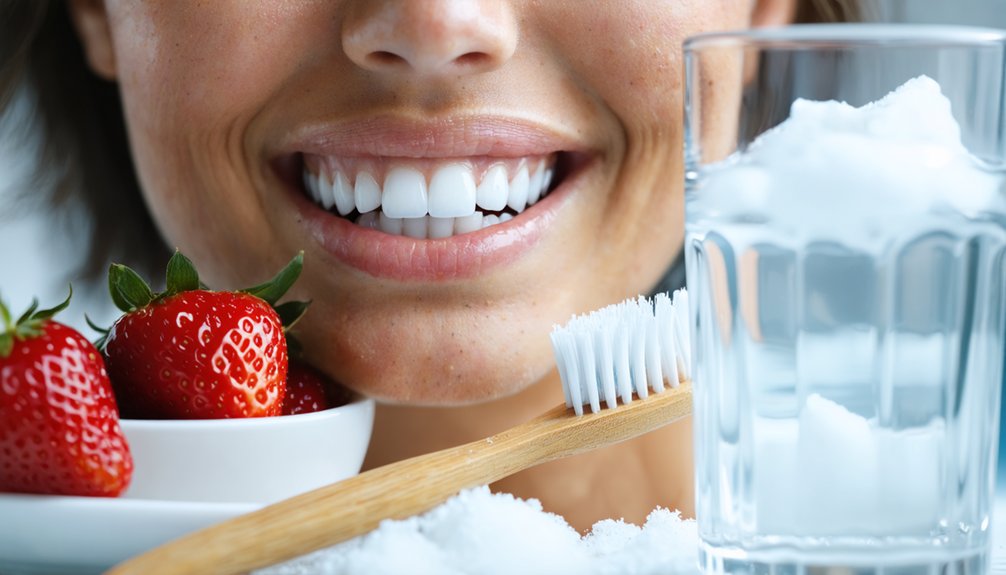
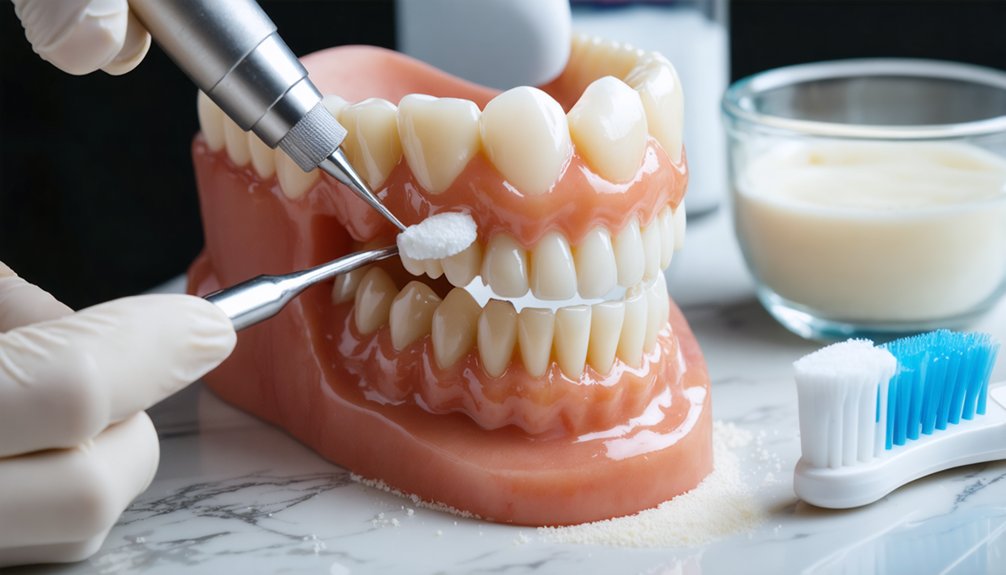
Both baking soda and hydrogen peroxide whiten teeth through distinct but complementary mechanisms. Baking soda uses mild abrasion to physically scrub surface stains, while hydrogen peroxide penetrates enamel to oxidize discolored molecules beneath the surface. Together, they address both extrinsic and intrinsic staining.
Here’s what’s actually happening when you use each:
- Baking soda acts like microscopic sandpaper, lifting coffee and tea residue from enamel without aggressive erosion.
- Hydrogen peroxide releases oxygen radicals that chemically break apart chromogen compounds lodged within enamel.
- Combined pastes deliver simultaneous mechanical and chemical action, amplifying results beyond either agent alone.
- Concentration control matters — use 1.5%–3% hydrogen peroxide and limit baking soda contact to two minutes.
Use both occasionally, not daily, to protect enamel integrity.
How to Use Whitening Toothpaste Without Damaging Enamel
Baking soda and hydrogen peroxide work well for occasional deep stain removal, but your everyday whitening tool is most likely a whitening toothpaste. Used incorrectly, these products can accelerate enamel erosion and trigger tooth sensitivity.
To protect your enamel, choose a toothpaste with the ADA Seal of Acceptance, which confirms it meets safety and efficacy standards. Brush twice daily for two minutes using a soft-bristled toothbrush, applying gentle, controlled pressure. Aggressive scrubbing amplifies abrasion and undermines enamel integrity.
Wait at least 30 minutes after eating before brushing, since acid temporarily softens enamel. If tooth sensitivity develops, switch to a lower-abrasivity formula or a desensitizing toothpaste.
Following product instructions on frequency guarantees you’re whitening effectively without compromising the structural defense your enamel provides.
When Professional Teeth Whitening Is Worth It
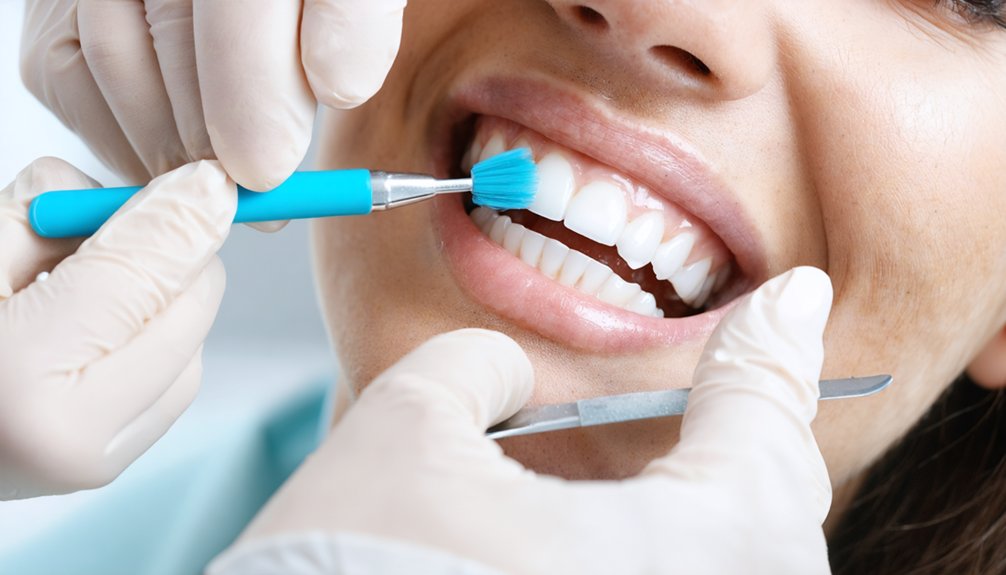
If you’re looking for the fastest visible results, in-office whitening is your most powerful option, delivering noticeable changes in a single appointment.
Unlike at-home trays or OTC strips, professional treatments use higher-concentration peroxide formulas under controlled conditions, giving you an edge that consumer products can’t match.
You’ll want to prepare for potential post-treatment sensitivity, which you can manage by using lower-strength products during touch-ups, desensitizing toothpaste, or shorter wear times.
Fastest Visible Whitening Results
When speed matters most, professional in-office whitening is your strongest option. Dentists apply high-concentration peroxide gels that penetrate enamel quickly, delivering results that at-home methods can’t match in the same timeframe.
Before treatment, your provider addresses dental plaque buildup to ensure even whitening and reduce enamel erosion risk from trapped residue.
- Activated light or laser systems accelerate the gel’s chemical reaction during your appointment
- Single-session results can lighten teeth several shades within one to two hours
- Custom post-treatment trays let you maintain and refine results precisely at home
- Pre-whitening cleanings remove surface debris, creating a clean surface for maximum gel contact
You control the outcome by choosing the right entry point—and in-office treatment gives you the fastest, most measurable start.
Professional Versus At-Home Options
Choosing between professional and at-home whitening comes down to how quickly you want results and how much sensitivity you’re willing to manage. In-office treatments deliver the fastest, most powerful outcomes, using high-concentration peroxides under controlled conditions.
At-home options—custom-fitted trays with 10%–16% carbamide peroxide—offer flexibility but require consistent, patient application.
Your baseline oral health also matters. Maintaining proper dental flossing habits and selecting the right toothbrush types—ideally electric for superior plaque removal—ensures your enamel surface is best prepared before any whitening treatment. Residual plaque undermines results regardless of which method you choose.
If you need significant changes fast, professional treatment is worth the investment.
For gradual maintenance, dentist-supervised at-home trays give you precise control over pace and sensitivity management.
Managing Sensitivity After Treatment
Sensitivity after whitening is common, but it doesn’t have to derail your routine. You can manage teeth sensitivity strategically by adjusting how you use whitening gels and supporting your enamel between sessions.
Apply these targeted strategies:
- Reduce wear time — shorten whitening gel sessions until sensitivity subsides without abandoning your protocol entirely.
- Switch to lower peroxide strength — opt for carbamide peroxide formulas between 10%–16% for overnight trays.
- Use desensitizing toothpaste — apply it before and after treatment to block tubular nerve pathways.
- Limit touch-up frequency — restrict maintenance applications to once monthly after reaching your target shade.
These adjustments keep you in control of your whitening progress without compromising enamel integrity or tolerability.
How to Protect Your Whitening Results Long-Term
Protecting your whitening results long-term comes down to a few consistent habits. Limit stain-causing beverages like coffee, tea, and red wine, and use a straw to minimize contact with enamel. Drink them in one sitting rather than sipping throughout the day. Rinse with water afterward to reduce residue buildup.
Brush twice daily with fluoride toothpaste, floss daily, and rinse with mouthwash to maintain results between professional cleanings.
Address sleep habits that contribute to enamel erosion, such as nighttime teeth grinding, which weakens enamel and accelerates staining. A custom mouthguard can help.
Schedule professional cleanings twice yearly and limit touch-up whitening treatments to once a month or less once you’ve reached your target shade.
Frequently Asked Questions
Can Teeth Whitening Treatments Affect Existing Dental Crowns or Veneers?
Whitening won’t damage dental crown durability, but it won’t change their color either. You’ll face veneer color matching challenges since restorations resist bleaching agents, leaving them mismatched against your newly brightened natural teeth.
Is Teeth Whitening Safe During Pregnancy or While Breastfeeding?
You should avoid teeth whitening during pregnancy due to limited safety data. Pregnancy safety guidelines recommend postponing treatments until after delivery. Breastfeeding considerations also apply, so you’ll want to consult your dentist before resuming any whitening protocols.
At What Age Is It Appropriate to Start Whitening Treatments?
You shouldn’t start whitening treatments until your permanent teeth have fully erupted, typically around 18. Age considerations matter because timing affects enamel sensitivity. Whitening timing should align with your dentist’s guidance for safe, effective results.
Does Teeth Whitening Work on Teeth With Fluorosis or Tetracycline Stains?
Standard whitening treatments won’t effectively address fluorosis treatment needs or tetracycline stains, as these are intrinsic discolorations. You’ll need professional options like veneers or bonding, since peroxide-based systems typically can’t penetrate these deep, structurally embedded stain types.
How Long Does Professional Whitening Actually Last Before Fading?
Like a fading sunset, professional whitening typically lasts one to three years before fading. You’ll prolong whitening longevity by limiting staining foods and scheduling touch-ups monthly. Managing dental sensitivity ensures you’ll maintain consistent, controlled whitening results effectively.
References
- https://longmontdentalloft.com/blog/teeth-whitening-tips/
- https://www.healthline.com/nutrition/whiten-teeth-naturally
- https://health.clevelandclinic.org/how-to-whiten-teeth
- https://www.healthpartners.com/blog/safe-teeth-whitening/
- https://www.listerine.com/articles/teeth-whitening/whitening-teeth-instructions
- https://www.aarp.org/health/conditions-treatments/teeth-whitening/
- https://www.pleasantfamilydentistry.com/blog/6-natural-ways-to-whiten-your-teeth
- https://www.medicalnewstoday.com/articles/322421
- https://www.youtube.com/watch?v=i8yqDgT0tCE
- https://www.gq.com/story/how-to-whiten-teeth-at-home