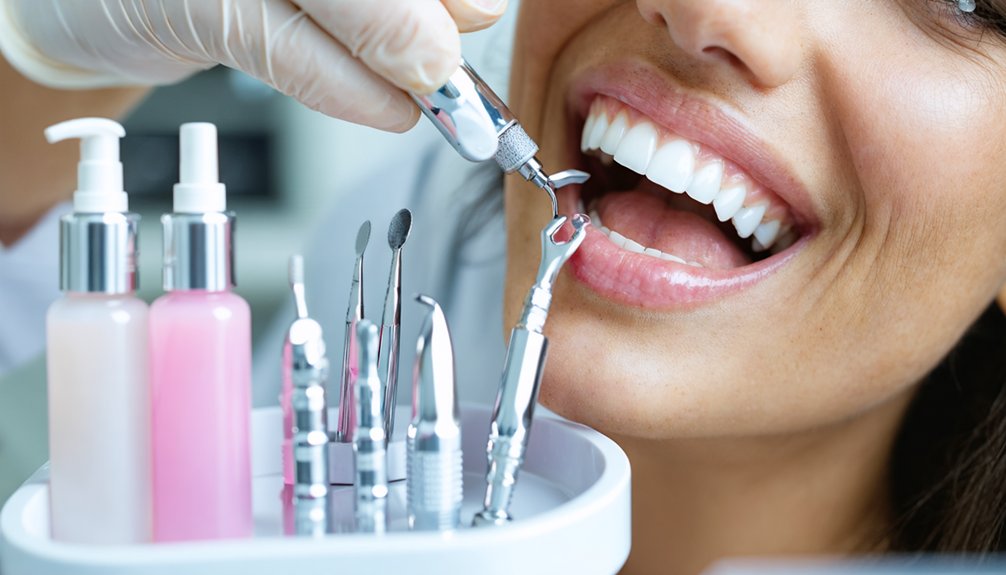
To maximize your teeth whitening coverage, you’ll need to verify that your plan explicitly lists whitening as a covered benefit under CDT codes D9971–D9975. Most insurers classify whitening as cosmetic, so coverage isn’t automatic. Look for a dedicated whitening allowance, percentage-based benefits, and remaining annual maximums before scheduling. Confirm waiting periods and prior authorization requirements directly with your insurer. Every detail in your benefits summary determines how much you’ll actually save, and there’s more to uncover.
Key Takeaways
- Verify your plan’s benefits summary for keywords like *whitening*, *bleaching*, or *cosmetic allowance* to confirm explicit coverage exists.
- Check CDT codes D9971–D9975 are listed as covered services, as in-office whitening holds the highest coverage likelihood.
- Obtain a pre-treatment estimate and submit it to your insurer to confirm reimbursement amounts before scheduling.
- Satisfy waiting periods, typically six months, to avoid paying full out-of-pocket costs due to ineligibility.
- Compare fixed allowances versus percentage-based benefits to determine which structure maximizes savings for your procedure cost.
Does Dental Insurance Cover Teeth Whitening?
Dental insurance rarely covers teeth whitening because most carriers classify it as a cosmetic procedure rather than medically necessary care. Standard dental plans prioritize preventive, basic, and major services, leaving elective whitening treatments outside covered benefits.
Most dental insurers label teeth whitening as cosmetic, excluding it from standard covered benefits entirely.
You’ll typically pay the full cost out of pocket unless your plan explicitly lists a whitening allowance or percentage-based benefit in its summary of benefits.
Your oral health status can influence eligibility in limited cases. Some carriers approve coverage when discoloration stems from injury or medication rather than aesthetics.
Additionally, if you experience teeth sensitivity, document it carefully, as some plans distinguish between therapeutic and cosmetic whitening based on clinical indicators.
Always verify exact benefit language, applicable CDT codes, deductibles, and annual caps before scheduling any whitening procedure.
Why Most Plans Classify Whitening as Cosmetic
When your dental insurer labels teeth whitening as cosmetic, it’s applying a standard industry distinction: procedures that improve appearance without addressing disease, dysfunction, or injury fall outside medically necessary care.
Because whitening doesn’t treat decay, infection, or structural damage, insurers classify it as elective, placing it in the same category as veneers or other aesthetic services.
That classification is what typically triggers a coverage exclusion, shifting the full cost to you unless your plan carries an explicit whitening benefit.
Cosmetic Versus Medically Necessary
Because insurance carriers define coverage based on medical necessity, teeth whitening falls outside standard dental benefits almost universally. Carriers distinguish between treatments that restore function or address disease and those that improve appearance. Whitening belongs to aesthetic dentistry, which targets patient satisfaction rather than physiological need, so underwriters classify it as elective.
To qualify as medically necessary, a procedure must correct a documented pathology, injury, or functional deficit. Discoloration alone doesn’t meet that threshold. Unless your plan explicitly states otherwise, bleaching exclusions apply regardless of severity or provider recommendation.
Understanding this distinction lets you evaluate your policy accurately rather than assuming coverage exists. You’ll need to verify benefit language directly rather than relying on general assumptions about what dental insurance typically includes.
Elective Treatment Classification Explained
The classification framework insurers use goes deeper than a simple cosmetic label. Dental plans distinguish between treatments that restore function and those that alter appearance without clinical necessity. Whitening falls into the latter category because discoloration doesn’t impair chewing, speaking, or oral health.
Insurers codify this through benefit language that explicitly lists cosmetic distinctions, typically excluding bleaching procedures under clauses referencing aesthetic improvement.
Understanding this framework lets you exploit insurance loopholes that most policyholders overlook. Some plans cover whitening when discoloration stems from injury or medication-induced staining, reclassifying the procedure as restorative rather than elective.
If your dentist documents a clinical cause, your insurer may apply different benefit rules entirely. Always request that your provider use precise diagnostic language when submitting claims — classification language directly determines your reimbursement outcome.
Which Teeth Whitening Methods Does Insurance Actually Cover?
When your plan does cover whitening, the benefit typically applies to either in-office treatments or dentist-prescribed take-home trays, rarely both.
In-office procedures, coded under ADA CDT codes D9971–D9975, are the most commonly referenced in explicit benefit language.
However, coverage often caps at 50% or a fixed annual credit like $100.
Take-home kits provided through your dentist may qualify under the same codes, but you’ll need to confirm whether your plan distinguishes between professionally dispensed trays and over-the-counter products, which are almost never covered.
In-Office Whitening Coverage
Although dental insurance rarely covers cosmetic procedures, in-office whitening sits at the top of the coverage hierarchy when a plan does include a whitening benefit. When your plan lists ADA CDT codes D9971 through D9975, in-office treatment is the most likely eligible service.
Verify whether your summary of benefits specifies percentage-based coverage, commonly around 50%, or a fixed annual credit such as $100. Note that some plans only approve whitening when a clinical condition, such as enamel erosion or discoloration from dental bonding treatment, justifies the procedure.
In-office sessions typically cost $500 to $1,000 without insurance, so even partial coverage produces measurable savings. Confirm prior authorization requirements, applicable deductibles, and whether the benefit falls inside your plan’s broader annual maximum before scheduling treatment.
Take-Home Kit Benefits
Dentist-prescribed take-home kits occupy a middle tier in whitening coverage, and some plans that exclude in-office treatment will still recognize them as a covered benefit. Your policy may apply a fixed allowance—often around $100 annually—or a percentage-based benefit near 50% toward kit costs, which typically average $400 without coverage.
Verify CDT codes D9971 through D9975 to confirm your plan recognizes the service. If your plan falls short, dental financing can bridge the remaining out-of-pocket gap without disrupting your smile enhancement goals.
Check whether a waiting period applies, since some plans impose a six-month delay before kit benefits activate. Always confirm coverage specifics in your summary of benefits under whitening, bleaching, or cosmetic allowance language to avoid unexpected costs.
Plan Features That Can Get You Whitening Coverage
Since most dental plans exclude whitening by default, the specific features within a plan’s benefit structure determine whether you’ll get any coverage at all. Insurance exclusions and coverage limitations buried in policy language can disqualify you before you even schedule an appointment.
Target plans that explicitly list whitening in their benefits summary—not in exclusions. Look for a dedicated annual whitening allowance, typically around $100, or percentage-based coverage near 50% for eligible services.
Plans that explicitly list whitening in their benefits summary—not exclusions—may offer a dedicated annual allowance around $100.
Confirm whether those benefits sit inside a shared annual maximum, such as $2,500, which other procedures can quickly deplete.
Also verify waiting period requirements—some plans impose a six-month delay before whitening benefits activate.
Prioritize plans offering immediate access to a separate whitening allowance over vague cosmetic discount language.
What Teeth Whitening Costs Without Insurance
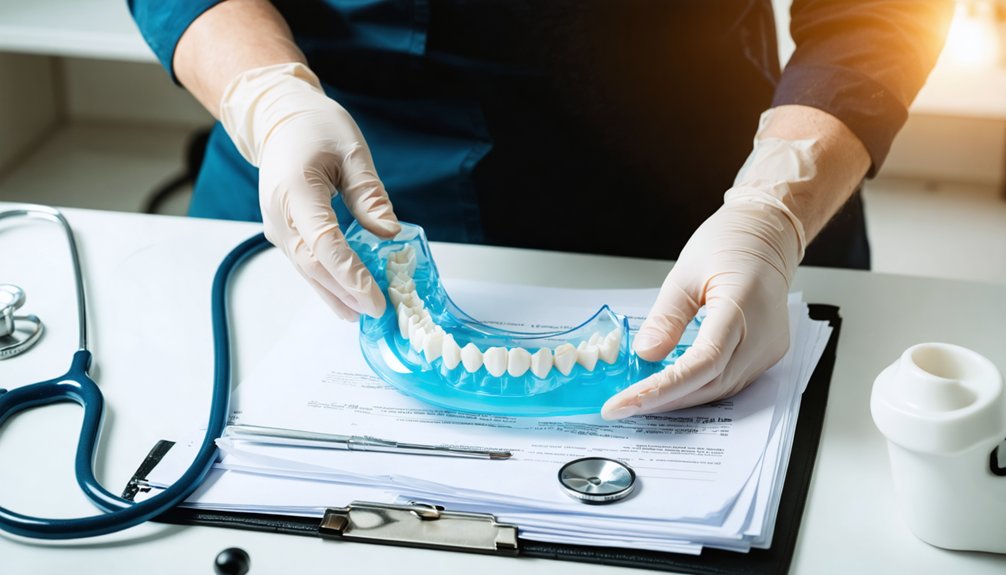
Knowing what a plan covers matters less if you don’t know what you’re actually paying without one. Teeth stain treatment and whitening gels vary substantially in cost depending on the method and provider you choose.
- Over-the-counter whitening gels and strips: under $100
- Dentist-prescribed take-home trays: approximately $400
- In-office whitening (single session): $500–$1,000
- Average in-office cost without insurance: approximately $650
- Premium or multi-session treatments: $1,000 or more
These numbers establish your baseline. Without coverage, you absorb the full cost out of pocket.
Use these benchmarks to evaluate whether a plan’s whitening allowance or percentage benefit actually offsets meaningful expense—or simply reduces a small portion of an already manageable bill.
Waiting Periods, Annual Caps, and Prior Authorization Rules to Watch
Three plan-level restrictions—waiting periods, annual caps, and prior authorization requirements—can reduce or eliminate your effective whitening benefit even when a policy explicitly lists whitening as a covered service.
A waiting period, commonly six months, delays benefit eligibility from your enrollment date. Miss that window and you’ll pay full cost out of pocket.
Annual caps present a separate coverage limitation: if your plan’s $2,500 maximum already absorbed costs from crowns or fillings, little or nothing remains for whitening.
Prior authorization adds another layer—your dentist must submit documentation before treatment, and denial means you absorb the entire expense.
Confirm all three restrictions directly with your insurer before scheduling. Review the summary of benefits, ask about CDT codes D9971 through D9975, and calculate your remaining annual maximum in advance.
How to Read Your Benefits Summary for Whitening Coverage

Your benefits summary is the most reliable document for determining whether your plan covers teeth whitening, but you need to know exactly where and what to look for.
Your benefits summary holds the answer — but only if you know exactly where and what to look for.
Don’t rely on dental myths or insurance myths claiming cosmetic procedures are never covered — some plans do include explicit whitening benefits.
Scan these five critical elements:
- Keywords: Search for *whitening*, *bleaching*, *cosmetic allowance*, or *cosmetic services*
- Exclusions section: Confirm whitening isn’t explicitly listed as excluded
- CDT codes: Verify codes D9971–D9975 appear under covered services
- Allowance or percentage benefit: Identify whether coverage is a fixed credit or percentage-based
- Annual maximum: Determine how much remains after other dental expenses reduce your cap
Control your outcome by reading every line — not just the highlights page.
How to Compare Whitening Allowances, Percentages, and Annual Maximums
Once you’ve confirmed your plan includes a whitening benefit, you need to distinguish between three structurally different benefit types — fixed allowances, percentage-based coverage, and annual maximums — because each one controls your actual out-of-pocket cost differently.
A fixed allowance, such as a $100 annual credit, caps your benefit regardless of total cost.
Percentage-based coverage, commonly 50%, scales with the procedure price, making pricing comparisons between providers directly relevant — lower provider costs mean lower cost-sharing.
Annual maximums pool whitening costs alongside major services like implants, reducing what’s available for whitening after other claims.
When evaluating plans, factor in provider discounts negotiated within the plan’s network. A 50% benefit through an in-network provider often delivers more savings than a fixed allowance at an out-of-network one.
How to Find Out What You’ll Actually Pay Before Your Appointment

Before scheduling a whitening appointment, you’ll want a precise cost estimate — not a ballpark figure — and that requires contacting both your insurer and your dental office directly. Cost transparency starts with verifying your coverage limits before any procedure begins.
- Request a pre-treatment estimate from your dentist and submit it to your insurer for review.
- Confirm which CDT codes (D9971–D9975) apply to your planned whitening method.
- Ask your insurer for your remaining annual maximum after current-year claims.
- Verify whether a deductible applies before any whitening allowance or percentage benefit activates.
- Get the final out-of-pocket figure in writing, accounting for deductibles, coverage limits, and any waiting period requirements.
These steps eliminate billing surprises and ensure you’re making an informed financial decision.
Frequently Asked Questions
Can Teeth Whitening Coverage Be Added to an Existing Dental Plan?
You can sometimes add whitening procedures to your existing dental insurance through a rider or special allowance. Contact your insurer directly to confirm available add-ons, waiting periods, and whether specific whitening procedures qualify under the updated terms.
Does Whitening Coverage Differ Between HMO and PPO Dental Plans?
Like two different gatekeepers, HMOs and PPOs handle cosmetic procedures differently. HMOs rarely cover dental aesthetics like whitening, while PPOs occasionally offer allowances or percentage benefits—giving you more flexibility and control over your whitening coverage options.
Are There Tax Advantages to Paying for Whitening Through an FSA?
You can’t use FSA benefits for cosmetic whitening since the IRS disallows tax deductions on elective procedures. However, if whitening’s medically necessary—tied to injury or medication—you’ll likely qualify for FSA reimbursement.
Can a Dentist Appeal a Whitening Claim Denial on Your Behalf?
Yes, your dentist can initiate insurance appeal processes on your behalf by submitting dental claim documentation, including clinical notes and medical necessity justifications, directly challenging the denial and strengthening your case for potential whitening coverage approval.
Does Whitening Coverage Transfer if You Switch Jobs Mid-Year?
Like a torch passed mid-race, your coverage transfer isn’t guaranteed. When you job transfer, you’ll typically restart waiting periods, lose unused whitening allowances, and must verify your new plan’s explicit whitening benefits immediately.
References
- https://www.humana.com/dental-insurance/dental-resources/teeth-whitening
- https://www.deltadentalct.com/our-plans/individual-and-family-plans/whitening
- https://www.deltadentalnj.com/our-plans/individual-and-family-plans/whitening
- https://www.goodrx.com/conditions/dental-care/how-much-does-teeth-whitening-cost-with-insurance
- https://www.deltadental.com/protect-my-smile/procedures/teeth-whitening/
- https://www.aflac.com/resources/dental-insurance/does-insurance-cover-teeth-whitening.aspx
- https://www.deltadentalct.com/blog/entry/2024/questions-for-dental-insurance-about-teeth-whitening-coverage
- https://www.investopedia.com/ask/answers/111615/does-dental-insurance-cover-teeth-whitening.asp
- https://www.gentledental.com/resources/articles/does-insurance-cover-teeth-whitening
- https://cedardentalgroup.com/does-dental-insurance-cover-teeth-whitening/