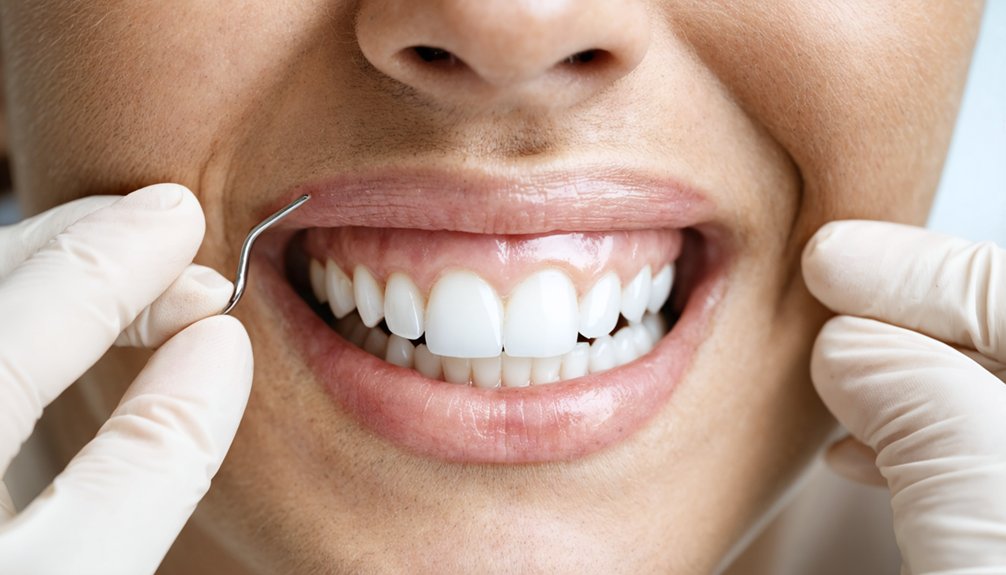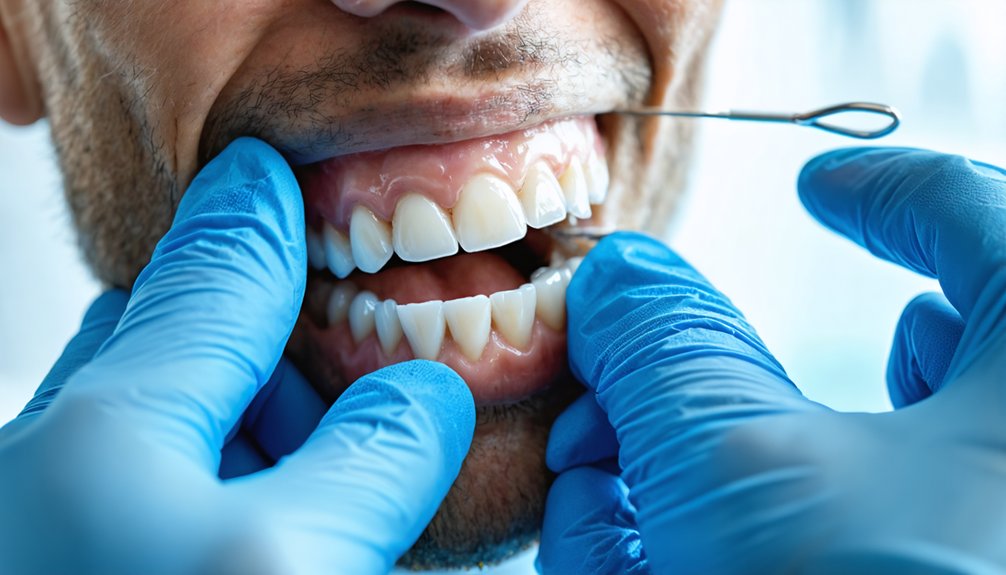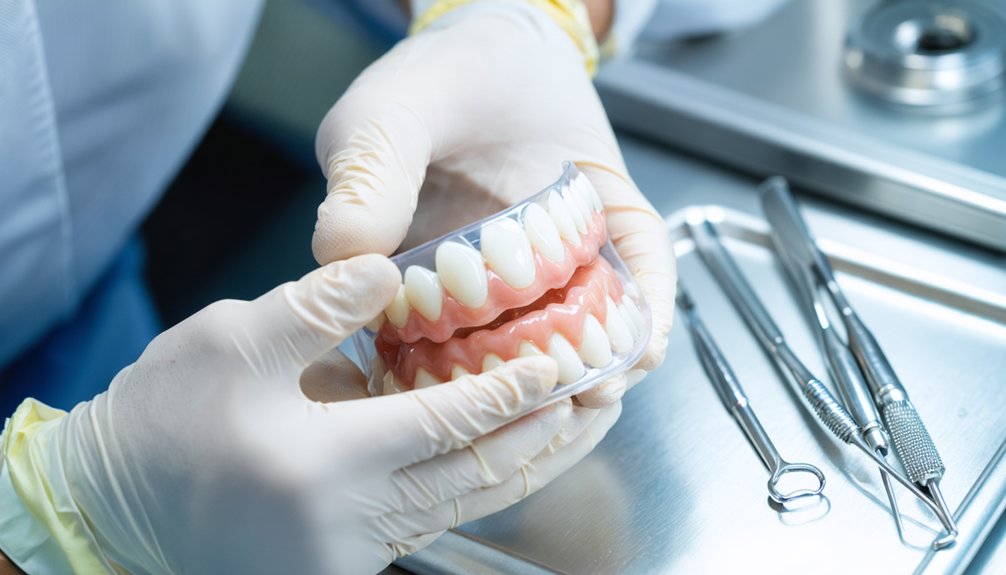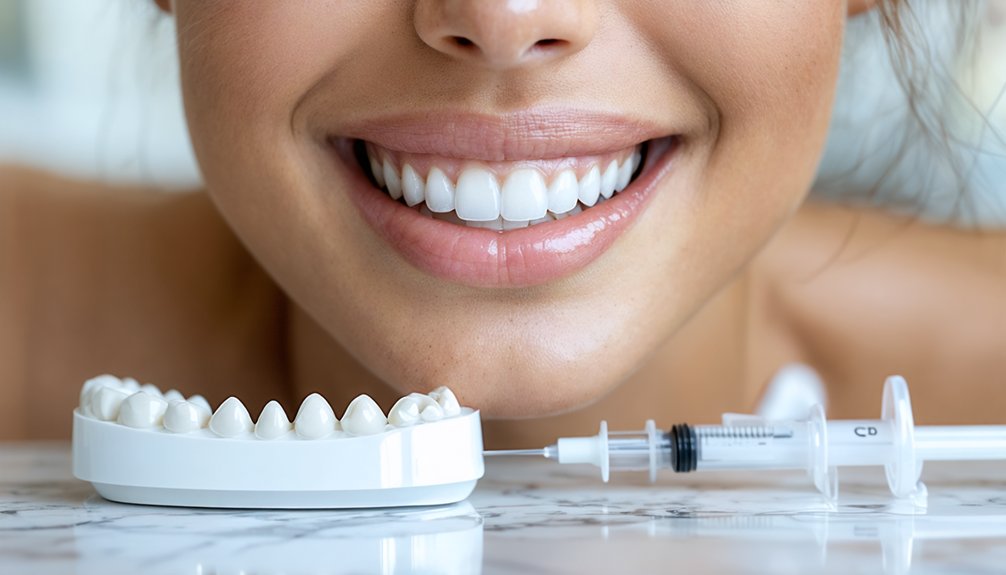
You can whiten your teeth in a single 90-minute in-office session using high-concentration peroxide gels activated by LED or laser technology. If you’re working with a tighter budget, professional take-home kits deliver comparable results over several weeks. Your stain type matters too — extrinsic stains respond well to bleaching, while intrinsic stains may need specialized care. The method that fits your timeline, staining, and budget becomes much clearer ahead.
Key Takeaways
- In-office whitening delivers visible results within 60–90 minutes using high-concentration hydrogen peroxide activated by LED light or laser.
- Dentists control treatment variables during in-office sessions, minimizing sensitivity risks while maximizing whitening efficiency.
- Professional take-home kits with custom trays offer a slower but equally effective alternative at a lower cost.
- In-office whitening results can last 1–3 years, significantly outlasting over-the-counter strip treatments.
- Consulting a dentist ensures the most clinically appropriate and fastest whitening method for your specific stain type.
Which Stains Respond Best to Teeth Whitening Treatments?
Because not all discoloration responds equally to bleaching agents, understanding stain classification helps you set realistic expectations before starting any whitening regimen.
Stain types fall into two primary categories: extrinsic and intrinsic.
Extrinsic stains, caused by coffee, tea, tobacco, and wine, accumulate on enamel surfaces and respond most predictably to peroxide-based treatments. Whitening effectiveness is highest with these surface deposits, often yielding several visible shade improvements.
Intrinsic stains originate within the dentin layer, resulting from tetracycline use, fluorosis, trauma, or aging. These resist standard bleaching protocols and typically require prolonged professional treatment or alternative cosmetic interventions such as veneers.
You’ll achieve ideal outcomes by identifying your specific stain classification with a dentist before selecting a whitening method, preventing wasted effort and unnecessary enamel exposure.
What Can In-Office Whitening Achieve in a Single Visit?
When time is limited, in-office whitening delivers the most immediate results available. Under dentist supervision, your provider applies high-concentration hydrogen peroxide or carbamide peroxide gel directly to your teeth.
An LED light or laser then activates the gel, accelerating oxidation and breaking down deep-set stains efficiently. Within a single 60–90 minute session, you can achieve several shades of improvement — an outcome no over-the-counter product can replicate in comparable time.
Your dentist controls every variable: gel concentration, exposure duration, and gum protection. This precision minimizes sensitivity risks while maximizing outcomes.
Many providers also supply custom trays post-treatment, giving you a structured maintenance protocol. If you need measurable, verified results fast, in-office whitening is the most clinically reliable option you can choose.
Are Professional Whitening Kits Worth More Than Whitening Strips?
Whether you’re choosing between professional take-home kits and over-the-counter whitening strips comes down to concentration, fit, and consistency of results.
A thorough effectiveness evaluation confirms that professional kits use higher peroxide concentrations with custom-fitted trays, reducing gum irritation and delivering more uniform coverage than strips provide.
Strips offer a budget-friendly cost comparison, achieving only one to two shade improvements for mild staining. They lack precise fit, increasing exposure risks to soft tissue.
Professional kits, prescribed by your dentist, produce comparable outcomes to in-office treatments when you follow the protocol consistently.
If you want measurable, controlled results with reduced sensitivity risk, professional take-home kits justify the higher investment.
Strips remain appropriate for minor maintenance, not significant whitening corrections.
Which Teeth Whitening Method Fits Your Timeline and Budget?
Matching your whitening method to both your timeline and budget determines how effectively you’ll achieve and maintain results.
If you need rapid, measurable change, in-office treatment delivers several shades of improvement within a single 90-minute appointment. For moderate timelines, professional take-home kits produce comparable outcomes over several weeks at reduced cost.
When evaluating whitening options against budget considerations, OTC strips offer accessibility for mild staining but lack the precision of custom-fitted systems. Whitening toothpastes serve maintenance rather than transformation.
You’ll control outcomes more effectively when you align method intensity with your actual timeline demands and financial parameters. Consulting your dentist guarantees you’re selecting a clinically appropriate option rather than defaulting to convenience, which often compromises both safety and measurable whitening efficacy.
How Long Does Teeth Whitening Last: and How Do You Extend It?
Although teeth whitening delivers visible results, how long those results last depends heavily on the method you’ve chosen and your post-treatment habits.
In-office treatments typically maintain whitening longevity for one to three years, while OTC strips may fade within a few months. Your dietary and lifestyle choices directly control this timeline.
To extend results, apply these maintenance tips consistently:
- Avoid staining agents — limit coffee, tea, red wine, and tobacco
- Use whitening toothpaste — maintains surface clarity between treatments
- Follow up with take-home trays — periodic touch-ups reinforce professional results
- Rinse after consuming staining foods — reduces pigment absorption
- Schedule dental cleanings regularly — removes surface buildup before it sets
Your compliance determines how effectively whitening results persist over time.
Frequently Asked Questions
Can Teeth Whitening Damage Existing Dental Crowns, Veneers, or Fillings?
Like a coat of paint on mismatched walls, whitening won’t change your crowns or veneers—you’ll notice veneer discoloration contrast and crown sensitivity, as restorations don’t respond to peroxide like natural enamel does.
Is Teeth Whitening Safe During Pregnancy or While Breastfeeding?
You shouldn’t undergo teeth whitening during pregnancy or breastfeeding. As a precaution, you’ll want to avoid peroxide-based treatments. Instead, you can explore natural alternatives like baking soda toothpaste, which offer safer, low-risk maintenance during this sensitive period.
How Old Do You Need to Be for Teeth Whitening?
By Jove, you’ll need to be at least 16 before pursuing whitening treatments. Age restrictions exist to protect developing enamel, so you should schedule dental consultations to confirm you’re ready for safe, effective whitening.
Can Whitening Treatments Worsen Existing Tooth Decay or Gum Disease?
Yes, whitening treatments can worsen existing tooth decay or gum disease. You’ll experience heightened tooth sensitivity, and treatment effectiveness diminishes when underlying issues aren’t addressed first. Consult your dentist to treat active conditions before starting any whitening regimen.
Does Diet Affect the Speed of Professional Teeth Whitening Results?
Yes, your dietary habits directly affect whitening speed. Consuming staining foods like coffee or wine slows results, while whitening foods such as apples and celery can help maintain progress during your professional treatment.
References
- https://drsandihamm.com/top-5-teeth-whitening-methods-explained-by-dr-sandi-hamm-dds-your-expert-guide-to-a-brighter-smile-in-mansfield-texas/
- https://lanedds.com/?p=26079
- https://www.aarp.org/health/conditions-treatments/teeth-whitening/
- https://www.northeastdentalarts.com/blog/what-is-the-least-damaging-way-to-whiten-your-teeth/
- https://www.colgate.com/en-us/oral-health/teeth-whitening/instant-teeth-whitening-what-your-options-are
- https://www.youtube.com/watch?v=i8yqDgT0tCE
- https://www.suttonpda.com/in-office-teeth-whitening/
- https://www.healthpartners.com/blog/safe-teeth-whitening/