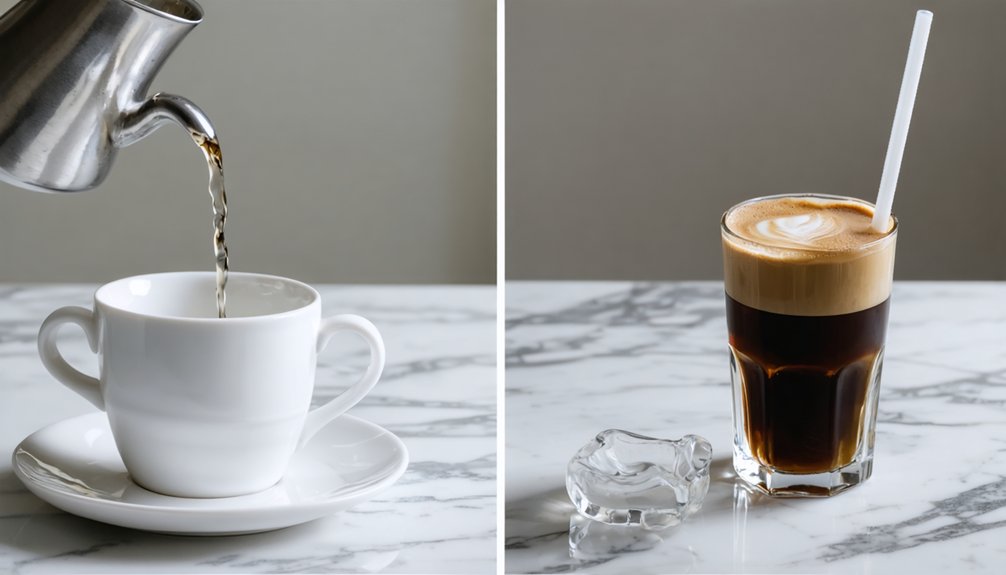
To minimize coffee stains, drink through a straw, rinse with water immediately after each cup, and wait 30–60 minutes before brushing to protect softened enamel. Use an enamel-safe toothpaste with hydroxyapatite or fluoride, and limit yourself to two cups daily. Chewing sugar-free gum stimulates saliva, which naturally fights pigment buildup. These strategies interrupt staining at the chemical level before it becomes a deeper problem—and there’s much more you can do to protect your smile.
Key Takeaways
- Drink coffee through a straw to limit direct contact with teeth, especially effective when consuming iced coffee.
- Rinse your mouth with water immediately after coffee to dislodge pigments and neutralize acidity before it damages enamel.
- Wait 30–60 minutes after drinking coffee before brushing, allowing softened enamel time to remineralize properly.
- Use ADA-approved, enamel-safe toothpaste containing hydroxyapatite or fluoride, avoiding highly abrasive formulas that worsen enamel damage.
- Schedule professional dental cleanings every six months to effectively remove deep-set coffee stains that home remedies cannot address.
Why Coffee Stains Your Teeth in the First Place
Coffee’s rich color comes from chromogens—highly pigmented compounds that bind easily to tooth enamel. Understanding coffee composition helps you see why staining happens so readily.
Coffee also contains tannins, a type of polyphenol that amplifies stain mechanisms by making chromogens adhere more aggressively to enamel’s porous surface.
Your enamel isn’t perfectly smooth. It holds microscopic ridges and pits that trap pigments with every sip.
Acidity worsens this by temporarily softening enamel, opening those surfaces to deeper pigment penetration. The longer coffee stays in contact with your teeth, the more chromogens settle in.
Frequency and duration of exposure directly determine how severe your staining becomes.
Knowing what’s happening at the surface level gives you the foundation to take deliberate, effective action against it.
Drink Coffee Through a Straw
Once you understand how chromogens and tannins latch onto enamel, the logic behind using a straw becomes immediately clear.
Chromogens and tannins bind directly to enamel — once you understand that, the straw strategy explains itself.
You’re redirecting the liquid away from your front teeth, limiting direct contact before swallowing. The straw benefits here are measurable — polyphenols bypass tooth surfaces rather than washing over them, considerably reducing cumulative stain buildup.
This approach works especially well with iced coffee, where positioning a straw toward the back of your mouth is both practical and effective.
It’s a simple dental hygiene upgrade that costs almost nothing yet delivers consistent protection. Dentists actively recommend it alongside other preventive habits.
If you’re serious about controlling discoloration without sacrificing your daily cup, a reusable straw is a non-negotiable addition to your routine.
Does Adding Milk to Coffee Actually Reduce Staining?
Surprisingly, yes — adding milk to your coffee does more than soften the flavor. The milk benefits extend directly to your enamel: proteins in milk bind to polyphenols, blocking them from adhering to tooth surfaces.
Here’s what milk actually does for your smile:
- Binds staining compounds before they contact enamel
- Lightens chromogen concentration, reducing overall stain intensity
- Higher-fat milk offers stronger protective coating
- Dilutes pigments, making it one of the smartest coffee alternatives to black coffee
Choosing whole milk or oat milk with higher protein content gives you measurable control over discoloration.
It’s a simple, evidence-backed adjustment that works quietly every time you pour your cup.
Rinse With Water After Every Cup of Coffee
One of the simplest habits you can build is rinsing your mouth with water immediately after finishing your coffee. The water benefits here are direct: swishing water around your mouth dislodges pigment-laden residue before it adheres to enamel. You’re fundamentally interrupting the staining process at its earliest stage.
For ideal mouth hygiene, swish water firmly between your teeth and along your gum line for about 30 seconds. This clears chromogens and neutralizes the acidic environment coffee creates, protecting enamel from softening.
Don’t brush immediately afterward—acids temporarily weaken enamel, making it vulnerable to abrasion.
Drinking a full glass post-coffee amplifies the effect, flushing residue from hard-to-reach surfaces. It’s a low-effort, high-impact practice that costs nothing and compounds over time.
How Many Cups a Day Is Too Many for Your Teeth?
If you’re serious about protecting your smile, you shouldn’t exceed two cups of coffee daily, as dentists consistently recommend this limit to minimize polyphenol exposure.
How you drink matters just as much as how much you drink — sipping slowly throughout the day prolongs acid and pigment contact with your enamel, so you’re better off finishing your cup in one sitting.
If two cups still feels like too many for your teeth, switching to decaf or green tea considerably cuts your intake of staining agents while keeping your caffeine routine largely intact.
Daily Cup Limit Matters
While savoring your morning coffee is one of life’s simple pleasures, dentists recommend capping your intake at two cups per day to protect your enamel from excess polyphenol exposure.
Building smarter daily habits around consumption greatly reduces long-term discoloration.
- Drink your cups in one sitting rather than sipping throughout the day
- Follow each session with a water rinse to clear residual pigments
- Explore coffee alternatives like green tea, which contains fewer chromogens
- Switch to decaf during afternoon hours to cut overall staining agents
Consolidating your intake minimizes prolonged enamel contact with staining compounds.
When you treat your coffee ritual as a controlled, time-limited habit rather than an all-day indulgence, you’re actively preserving both your smile’s brightness and your enamel’s long-term integrity.
Sipping Frequency Affects Teeth
Every time you reach for a second or third cup, you’re extending your teeth’s exposure to chromogens and polyphenols — compounds that bind stubbornly to enamel and deepen staining over time. Your sipping habits directly determine how aggressively discoloration develops.
Frequency impacts enamel more than most people realize. Spreading coffee consumption across hours keeps your teeth in near-constant contact with staining agents, preventing saliva from neutralizing acids and clearing pigments naturally.
Dentists recommend limiting intake to two cups daily, consumed in one concentrated sitting rather than prolonged throughout the day.
Treating coffee like a timed ritual — one sitting, one rinse afterward — gives your enamel recovery time. Controlling when and how often you sip is one of the most practical, high-impact decisions you can make for your smile.
Switching Reduces Stain Risk
When three or more cups become your daily baseline, the cumulative polyphenol load on your enamel compounds faster than saliva can counteract it.
Strategic switching to coffee alternatives isn’t a compromise — it’s a deliberate stain prevention choice that protects your smile’s aesthetic integrity.
Consider these evidence-backed switches:
- Matcha or green tea — notably lower chromogen concentration than dark roast coffee
- Decaf coffee — retains ritual without the full polyphenol intensity of caffeinated blends
- Golden milk or herbal infusions — zero staining pigments, zero enamel compromise
- Lighter roasts — less surface color saturation means reduced discoloration risk per cup
Capping your intake at two cups daily while rotating in alternatives gives your enamel measurable recovery time between exposures.
How to Brush After Coffee Without Damaging Enamel
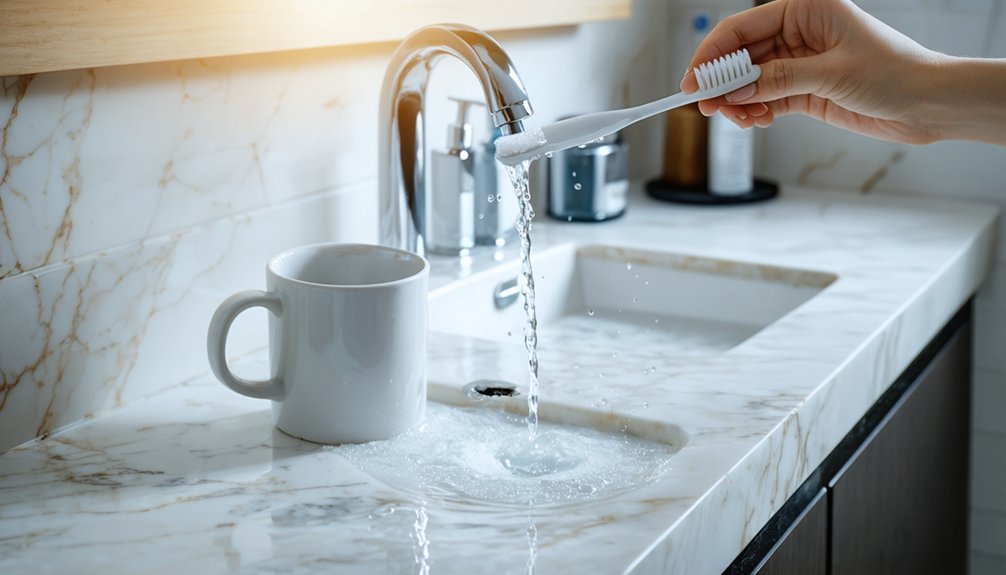
After your last sip of coffee, wait 30 to 60 minutes before reaching for your toothbrush, since coffee’s acids temporarily soften enamel and brushing too soon accelerates erosion.
Once that window passes, choose a whitening toothpaste bearing the ADA seal, which confirms it’s effective against surface stains without compromising enamel integrity.
Pairing proper timing with the right toothpaste gives you a clinically sound routine that fights discoloration while keeping your enamel intact.
Timing Your Brushing Session
Brushing immediately after your morning coffee might seem like the responsible move, but it can actually work against you. Coffee temporarily softens enamel through acid exposure, making aggressive brushing techniques during this window counterproductive.
Ideal timing means waiting 30–60 minutes post-consumption before reaching for your toothbrush.
Use this window strategically:
- Rinse with water immediately after coffee to neutralize acids and clear surface pigments
- Wait 30–60 minutes before brushing to allow enamel remineralization
- Brush for two full minutes using gentle, circular brushing techniques
- Choose a whitening toothpaste with an ADA seal to target residual staining compounds
Controlling your timing protects enamel integrity while still addressing discoloration—precision matters more than immediacy.
Choosing Enamel-Safe Toothpaste
Not all toothpastes protect enamel equally—and after coffee, that distinction becomes critical.
You’ll want to prioritize enamel safe ingredients like hydroxyapatite or fluoride, which actively remineralize weakened enamel rather than just polishing it away. Avoid highly abrasive formulas—even ones marketed as whitening—since post-coffee enamel is temporarily softened and vulnerable to micro-scratching.
Toothpaste consistency matters more than most people realize. Gel formulas typically carry lower abrasivity scores (RDA values), making them gentler for daily use.
Check for the ADA Seal of Acceptance as a baseline standard. Nano-hydroxyapatite toothpastes offer a strong evidence-backed option, rebuilding enamel structure while addressing surface discoloration.
Selecting the right formula means you’re not just cleaning your teeth—you’re actively protecting their long-term integrity.
Home Remedies That Lift Coffee Stains Fast
While professional cleanings remain the gold standard for stubborn discoloration, several home remedies can effectively lift coffee stains between dental visits. Incorporating these natural remedies into your routine strengthens your stain prevention strategy without compromising enamel integrity.
- Baking soda paste: Apply once or twice weekly to gently scrub surface pigments away.
- Hydrogen peroxide rinse: Mix with equal parts water to safely lift embedded chromogens.
- Diluted apple cider vinegar: Use sparingly as a rinse to break down existing discoloration.
- Crunchy fruits: Snack on apples or strawberries, whose fibrous texture naturally scrubs tooth surfaces.
Each option targets surface-level staining effectively.
Each remedy works directly on visible surface stains, delivering targeted results where discoloration appears most prominently.
Consistency matters—integrate these methods deliberately rather than sporadically for measurable, lasting results.
Does Whitening Toothpaste Actually Remove Coffee Stains?
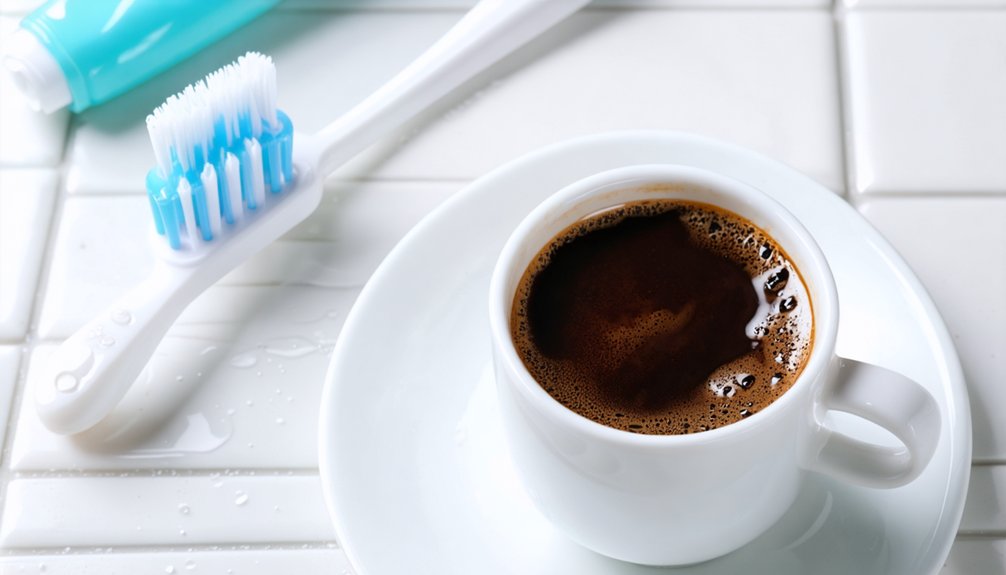
Whitening toothpaste can reduce coffee stains, but its effectiveness depends on the type and severity of discoloration. Most formulas contain mild abrasives or chemical agents like hydrogen peroxide that polish surface stains without altering intrinsic tooth color.
For whitening effectiveness, look for the ADA seal, which confirms safe, tested formulations. You’ll see the best results when you use it consistently twice daily, combined with proper brushing technique.
It won’t reverse deep staining, but it’s a reliable stain prevention tool when incorporated early. Pair it with an electric toothbrush to maximize pigment removal per session.
If surface stains persist despite regular use, consider professional cleaning to address buildup that toothpaste alone can’t reach. Think of whitening toothpaste as maintenance, not a complete solution.
When Professional Cleaning Beats Every Home Remedy
When home remedies fall short, professional cleaning removes stubborn, deep-set coffee stains that brushing and baking soda simply can’t reach.
A dentist’s scaling and polishing tools clear calcified deposits and intrinsic discoloration far more effectively than any counter-top solution.
If you drink coffee daily, scheduling a cleaning every six months keeps stain buildup from compounding beyond what routine care can address.
Stubborn Stains Require Professionals
Home remedies and consistent daily habits can take you far, but stubborn coffee stains that have penetrated below the enamel surface often require a professional’s hand.
When stain prevention strategies no longer deliver visible results, professional treatments restore what daily routines can’t reach.
Dentists offer targeted interventions that go beyond surface-level care:
- Professional cleaning removes calculus and embedded pigments through ultrasonic scaling and polishing
- In-office whitening uses high-concentration peroxide gels activated by light for deeper penetration
- Microabrasion buffs away superficial enamel discoloration with controlled precision
- Custom take-home trays prescribed by dentists deliver consistent, clinically monitored whitening
Scheduling cleanings every six months keeps staining manageable before it compounds.
Don’t wait until discoloration becomes severe—early professional intervention protects both your smile’s aesthetics and long-term enamel integrity.
Deep Cleaning Versus Home Remedies
Though home remedies like baking soda paste and hydrogen peroxide rinses handle surface-level discoloration effectively, they can’t penetrate the deeper layers where polyphenols bond to dentin over years of exposure.
Professional deep cleaning removes calcified deposits and embedded pigments that no at-home treatment reaches. Your dentist uses ultrasonic scaling and polishing tools that physically break apart stain compounds bonded to enamel’s microscopic surface.
Home remedies serve stain prevention best when used consistently between appointments, not as replacements for clinical care. Hydrogen peroxide rinses and baking soda applications slow accumulation, buying you time.
However, once discoloration settles into dentin, professional intervention becomes your only effective option. Schedule cleanings every six months to maintain results and preserve the aesthetic control your daily habits work hard to protect.
When To Schedule Cleanings
Recognizing when home care stops working saves you from watching stains deepen past the point where any paste or rinse makes a difference. Schedule a professional cleaning every six months, or sooner if you notice persistent discoloration, tooth sensitivity, or compromised dental hygiene despite consistent effort.
- Visible yellowing persists after two weeks of whitening toothpaste use
- Tooth sensitivity increases, signaling enamel wear that home remedies can worsen
- Stain prevention efforts plateau, meaning polyphenols have penetrated beyond surface level
- Beverage alternatives haven’t reduced discoloration noticeably within 30 days
A hygienist removes calcified deposits no brush reaches.
Combining professional intervention with disciplined home care gives you complete control over long-term results, protecting both appearance and enamel integrity simultaneously.
How to Keep Teeth White Without Giving Up Coffee
Giving up coffee isn’t necessary to maintain a bright smile—you just need the right strategies. Start by drinking through a straw to minimize contact between polyphenols and your enamel.
Follow each cup with water to rinse away residual pigments before they settle. Adding milk binds staining compounds, reducing their adhesion to tooth surfaces.
For effective stain prevention, brush twice daily and wait 30–60 minutes post-consumption to protect softened enamel. Incorporate a weekly baking soda treatment to address surface discoloration proactively.
If you’re open to coffee alternatives, green tea offers considerably fewer chromogens while still delivering caffeine.
Frequently Asked Questions
Can Coffee Staining Ever Cause Permanent Damage Beyond Surface Discoloration?
Yes, prolonged coffee exposure can weaken your tooth enamel, creating micro-pores that deepen discoloration. The long-term effects extend beyond aesthetics, increasing cavity risk. You’ll prevent irreversible damage by rinsing, limiting intake, and brushing consistently.
Are Certain Coffee Roasts Less Likely to Stain Teeth Than Others?
Light roasts actually contain more polyphenols than dark roasts, making them slightly more likely to stain your teeth. If you’re prioritizing aesthetics, you’d benefit from choosing darker roasts and adding milk to reduce chromogen concentration.
Does Teeth Whitening Sensitivity Worsen With Continued Daily Coffee Consumption?
Like sandpaper on soft wood, daily coffee erodes your progress—yes, it worsens sensitivity. You’re compromising enamel health while using whitening products, so rinse thoroughly after each cup to protect your results.
Can Dental Sealants or Coatings Protect Teeth From Coffee Staining?
Dental sealants effectiveness against coffee staining remains limited; they’re designed for decay prevention, not aesthetics. You’ll gain more from protective coatings benefits by combining milk additives, straw use, and consistent rinsing routines instead.
Does Coffee Staining Affect Dental Veneers or Crowns the Same Way?
Like armor with weak spots, veneers and crowns resist staining better than enamel, but their edges don’t. You’ll support veneer longevity and crown maintenance by limiting coffee exposure and rinsing consistently after each cup.
References
- https://thesummerdental.com/ways-to-avoid-coffee-stains-on-your-teeth/
- https://www.giangrecofamilydental.com/6-ways-to-remove-coffee-stains-from-your-teeth/
- https://www.healthline.com/health/dental-and-oral-health/what-does-coffee-do-to-your-teeth
- https://mariettaroswelldentist.com/blog/5-tips-to-stop-your-favorite-drinks-from-staining-your-teeth
- https://www.gentledentalcaregroup.co.uk/blog/how-to-stop-tea-and-coffee-staining-teeth
- https://www.larsoncreekdental.com/8-ways-to-prevent-coffee-from-staining-your-teeth/
- https://www.youtube.com/shorts/OfJ_egm7FnM
- https://smilecos.com/p/BLOG-113964-2024.7.15-How-to-Enjoy-Coffee-Without-Staining-Your-Teeth-p.asp?C=1573