Wine stains your teeth fast, but you can stop and reverse the damage with the right methods applied at the right time. Rinse with water immediately after your last sip, then wait 30 minutes before brushing to protect softened enamel. Use baking soda paste or diluted hydrogen peroxide weekly to lift surface pigments. Eating cheese and fibrous foods during dinner also reduces staining considerably. Everything you need to protect your smile is covered ahead.
Key Takeaways
- Rinse with water immediately after drinking wine to dilute acids and lift surface pigments before they bond to enamel.
- Wait 30 minutes before brushing, then use whitening toothpaste with an electric toothbrush for two minutes.
- Apply a baking soda and water paste to teeth for two minutes, limiting use to twice weekly.
- Swish diluted 3% hydrogen peroxide for one minute to chemically break down surface pigments through oxidation.
- Consult a dentist if stains persist after 4–6 weeks of home treatments, as professional bleaching may be required.
Why Wine Stains Teeth in the First Place
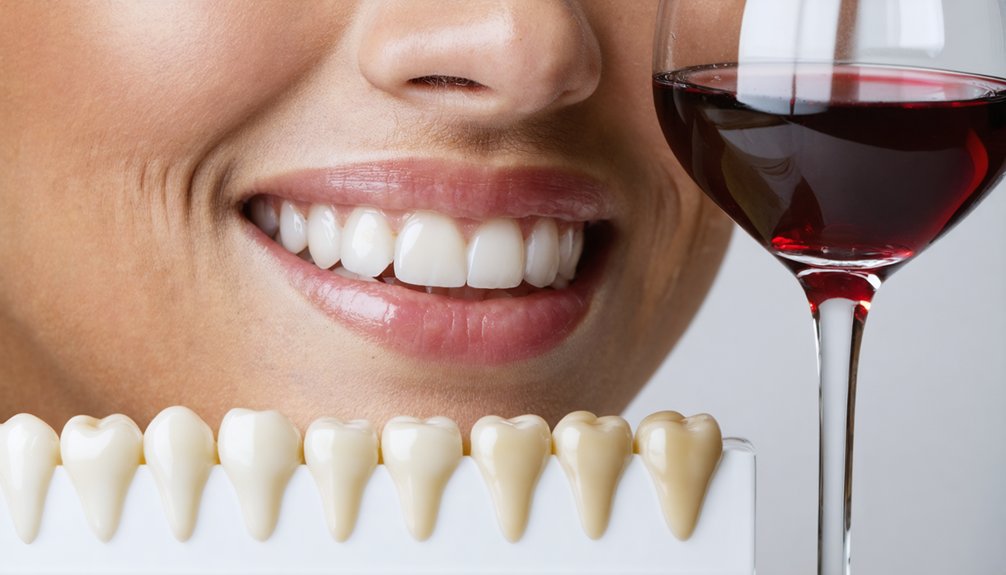
Wine stains teeth through a combination of chromogens, tannins, and acid that work together to embed pigment deep into enamel. Chromogens are intense color compounds produced during wine fermentation, and they bind readily to tooth enamel surfaces.
Tannins act as a bonding agent, helping those pigments grip the microscopic ridges and pores within enamel. Meanwhile, wine’s natural acidity temporarily softens enamel, making it more porous and receptive to staining.
Red wine delivers all three elements simultaneously, which is why it discolors teeth faster than most beverages. White wine, though lighter in chromogens, still erodes enamel enough to amplify staining from other foods.
Understanding this mechanism gives you a precise foundation for choosing interventions that actually interrupt the staining process rather than simply masking its effects.
Rinse With Water Right After Your Last Sip of Wine
Once you understand how acid, tannins, and chromogens work together to embed pigment into enamel, the logic behind rinsing with water becomes immediately clear. Acting fast protects dental enamel before stains set.
Acid, tannins, and chromogens work fast — rinsing with water immediately disrupts the staining cycle before pigment bonds.
- Rinse with plain water immediately after your last sip.
- Water dilutes residual acid and lifts surface pigment before it bonds.
- Milk works as an alternative rinse for enhanced stain prevention.
- Sip sparkling water between glasses to loosen stain-causing residue.
- Avoid brushing immediately — wine’s acidity makes enamel temporarily vulnerable.
This single habit interrupts the staining cycle at its earliest stage. You don’t need specialized products to make an immediate difference — water alone disrupts pigment adhesion efficiently.
Consistent rinsing gives you measurable control over long-term discoloration without compromising enamel integrity.
Wait 30 Minutes Before You Brush Your Teeth
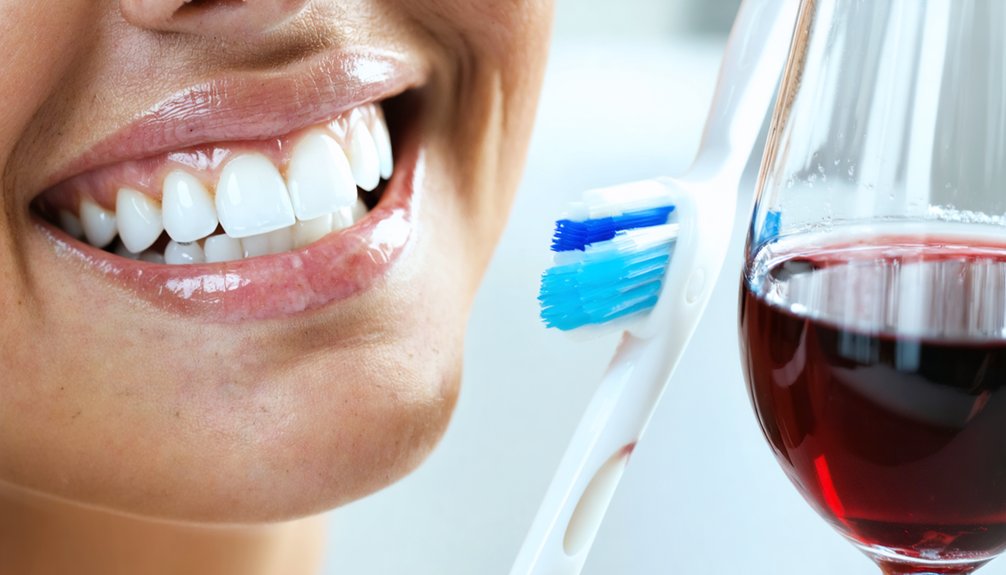
After your last glass, resist the urge to brush immediately—wine leaves your mouth acidic, and brushing too soon accelerates enamel erosion rather than preventing stains.
Wait at least 30 minutes to allow your saliva to neutralize the acid and reharden the enamel surface.
Once that window passes, brush for a full 2 minutes and follow with flossing to clear any remaining pigment from between your teeth.
Why Timing Matters
Brushing your teeth immediately after wine does more harm than good. Wine fermentation produces acids that temporarily soften tooth enamel, making it vulnerable to abrasion. Brushing during this window accelerates enamel erosion rather than removing stains.
Wait at least 30 minutes to let your saliva neutralize the acid and reharden the enamel surface before applying any mechanical force.
- Wine fermentation acids weaken tooth enamel within minutes of contact
- Brushing too soon physically scrubs away softened enamel
- Saliva naturally neutralizes oral acidity over 30 minutes
- Rinsing with water immediately after wine accelerates this recovery
- Brushing before drinking reduces plaque that traps pigment
Controlling the timing of your routine protects enamel integrity while still allowing effective stain removal.
Post-Wait Brushing Tips
When the 30-minute window has passed, you’ll want to brush for a full two minutes using a whitening toothpaste, which provides mild abrasion to lift fresh surface pigment without compromising enamel integrity. An electric toothbrush enhances this step, delivering more consistent plaque removal than manual brushing alone.
Follow with flossing to extract stain particles lodged between teeth—areas your brush consistently misses. This combination completes your oral hygiene routine with precision, addressing stain prevention at every contact surface.
Brushing before your next glass is equally strategic. Clean enamel with reduced plaque buildup traps considerably less pigment. Treat pre- and post-wine brushing as deliberate, sequenced actions rather than afterthoughts, and you’ll maintain measurably cleaner, more stain-resistant teeth over time.
Remove Wine Stains With a Baking Soda Paste
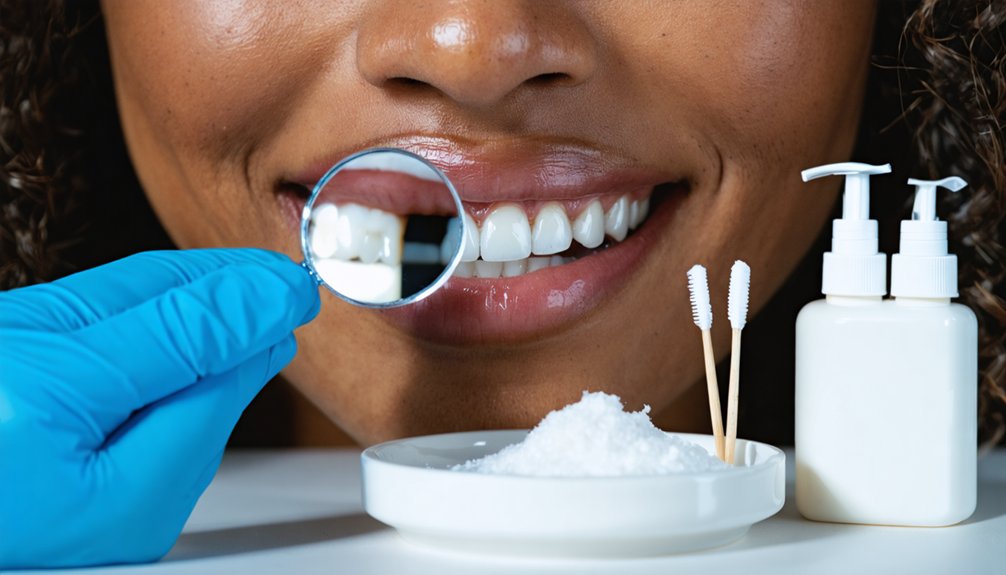
Baking soda paste offers a practical, low-cost solution for lifting wine stains from tooth surfaces. Wine chemistry leaves behind pigment compounds that bond to enamel—baking soda’s mild abrasive action disrupts that bond without bleaching agents.
- Mix baking soda with water to form a thin, workable paste.
- Apply gently to tooth surfaces using a soft-bristled brush.
- Brush for two minutes, focusing on stain-prone front teeth.
- Limit use to 1–2 times per week to protect enamel integrity.
- Combine with salt for added mild abrasion against stubborn residue.
You’re not bleaching—you’re mechanically lifting surface deposits. That distinction matters for long-term enamel health.
Consistent, controlled application gives you measurable results without compromising tooth structure through overuse.
Use Hydrogen Peroxide to Bleach Surface Wine Stains
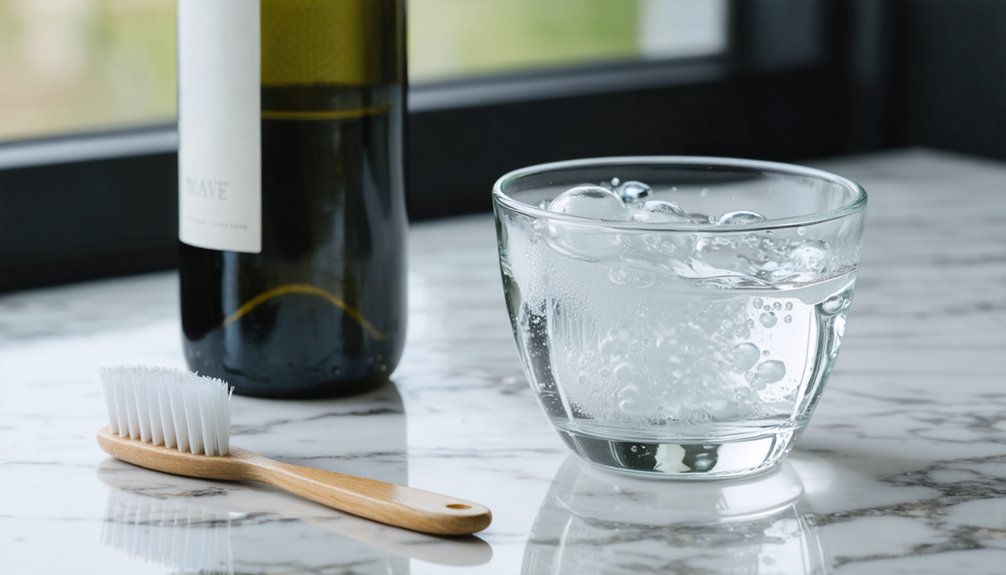
Where baking soda lifts stains mechanically, hydrogen peroxide breaks them down chemically. As an oral bleaching agent, it penetrates surface pigment left by red wine and oxidizes the compounds responsible for discoloration.
For at-home use, dilute 3% hydrogen peroxide with equal parts water to reduce tissue irritation without sacrificing efficacy. Swish the solution for approximately one minute, then rinse thoroughly with plain water.
Limit this method to once or twice per week. Overuse degrades enamel integrity and may irritate soft tissue—outcomes that undermine the aesthetic results you’re working toward.
Hydrogen peroxide addresses surface staining effectively, but it won’t correct deep or structural discoloration. For persistent staining beyond what this method resolves, professional-grade bleaching treatments offer a stronger, more controlled solution.
Whitening Strips and Toothpaste That Remove Wine Stains
For stains that resist single-use treatments, whitening toothpaste and strips offer consistent, cumulative results built into your daily routine. Both tools support dental health by targeting surface pigment through mild abrasion or low-level bleaching without aggressive intervention.
- Whitening toothpaste removes fresh surface pigment daily through mild abrasion.
- Whitening strips penetrate deeper discoloration; choose sensitive-tooth formulas for controlled use.
- Electric toothbrushes enhance plaque and stain removal beyond manual brushing capability.
- Flossing clears trapped staining particles between teeth that brushing consistently misses.
- Consistent use drives stain prevention by stopping pigment accumulation before it compounds.
Integrating these tools strategically—rather than reactively—gives you measurable control over discoloration. Whitening toothpaste works daily; strips address buildup periodically.
Together, they form a precise, layered approach to long-term stain management.
Eat These Foods During Dinner to Reduce Wine Staining
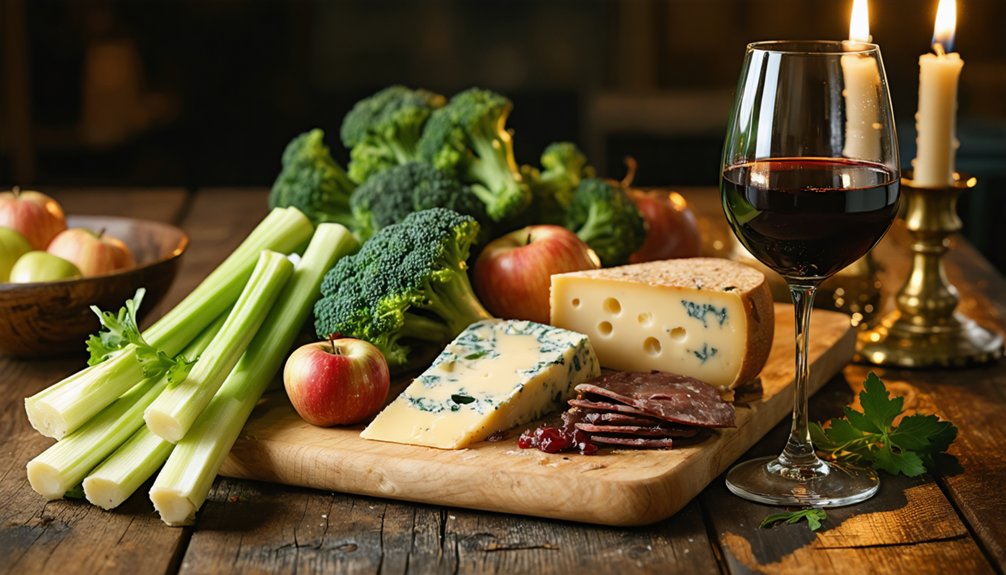
What you eat alongside wine directly affects how much pigment settles onto your enamel. Pairing wine with cheese, yogurt, or nuts creates a protective coating on teeth.
While fibrous foods like apples, carrots, and leafy greens physically scrub stain-causing residue from surfaces.
Keeping your mouth moist throughout the meal also limits the dry conditions that allow pigments to adhere more aggressively to enamel.
Cheese and Dairy Pairings
Pairing your wine with cheese, yogurt, or other dairy foods isn’t just a culinary tradition—it’s a practical strategy for reducing stain formation on your teeth.
Cheese pairing creates a protective film over enamel, while dairy benefits your teeth through calcium that helps neutralize wine’s acidity before pigment can set.
- Choose hard cheeses like aged cheddar or parmesan for maximum enamel coating
- Add yogurt to your spread as a softer dairy option that still delivers protection
- Alternate bites of cheese between sips to maintain consistent surface coverage
- Use dairy’s natural proteins to bind tannins before they adhere to enamel
- Position cheese pairings strategically throughout your meal, not just at the start
This approach keeps your enamel defended without interrupting the dining experience.
Fibrous Foods That Scrub
While dairy creates a protective barrier against staining, what you eat alongside your wine matters just as much as what you drink it with.
Fiber foods work as natural stain removal agents, physically scrubbing tooth surfaces between sips. Apples, carrots, broccoli, and leafy greens act like passive cleansing tools — their texture disrupts pigment before it bonds to enamel.
Strategically incorporate these foods throughout your meal rather than saving them for the end. Each bite creates a mild mechanical action that reduces residue accumulation over time.
This approach gives you active control over staining during the event itself, not just after. Pairing fibrous vegetables with wine isn’t incidental — it’s a deliberate, evidence-backed method for preserving your tooth’s surface clarity in real time.
Keeping Your Mouth Moist
Moisture levels in your mouth directly influence how deeply wine pigment penetrates enamel. Strong saliva production creates a natural barrier, diluting tannins and acids before they bond to tooth surfaces.
Prioritizing mouth hydration throughout your meal gives you measurable control over stain formation.
- Sip water between glasses to maintain consistent mouth hydration
- Eat hydrating foods like cucumbers or leafy greens to support saliva production
- Pair wine with cheese or yogurt to coat enamel and neutralize acidity
- Keep lips moist to visibly reduce dark residue on surrounding tissue
- Avoid mouth-breathing during meals, which accelerates dryness and pigment adhesion
Each strategy directly reduces the conditions that allow wine stains to develop and deepen.
Use Water Rinses and Wine Wipes Between Glasses

Between glasses, a simple water rinse can considerably reduce staining buildup before pigment has a chance to set. Swirl water briefly around your mouth after setting down your wine glass, then swallow or spit — this dilutes residual acids and loosens chromogen particles clinging to enamel.
For stain prevention during social events, sparkling water works particularly well, as its mild effervescence helps dislodge surface residue more effectively than still water.
When a rinse isn’t practical, wine wipes offer a discreet, targeted alternative. These pre-moistened cloths quickly lift dark pigment from tooth surfaces between pours. Keep them accessible in a bag or pocket during tastings or dinners.
Both methods interrupt the staining cycle early, giving you measurable control over discoloration before it progresses.
When to See a Dentist About Stubborn Wine Stains
Home remedies handle most surface stains effectively, but if discoloration persists after several weeks of consistent whitening toothpaste use and occasional baking soda or peroxide treatments, it’s time to consult your dentist.
Professional evaluation identifies whether you’re dealing with surface pigment or enamel erosion that’s compromising tooth structure.
Watch for these signs that require professional attention:
- Staining that doesn’t respond to 4–6 weeks of at-home whitening
- Visible yellowing or translucency suggesting enamel erosion
- Tooth sensitivity increasing alongside discoloration
- Uneven color that whitening strips can’t correct
- Aesthetic concerns that make dental veneers worth considering
Your dentist can recommend professional-grade bleaching, bonding, or dental veneers depending on the severity. Acting early preserves both your enamel and your options.
Frequently Asked Questions
Does White Wine Stain Teeth as Much as Red Wine Does?
White wine doesn’t stain as visibly as red, but its wine acidity still erodes enamel, making teeth more stain-prone. You’ll want dental whitening strategies to maintain control over long-term discoloration risks.
Can Wine Staining Damage Tooth Enamel Permanently Over Time?
Yes — time is unforgiving. Wine’s acidity drives enamel erosion before stain removal becomes possible. You’ll accelerate permanent damage by brushing too soon. Wait 30 minutes, rinse immediately, and you’ll protect your enamel effectively.
Are Some People More Genetically Prone to Wine Staining Than Others?
Yes, your genetic predisposition directly influences your staining susceptibility. Thinner enamel, more porous tooth structure, and lower saliva production—all genetically influenced—can make your teeth absorb wine pigment faster and more intensely than others’.
Do Certain Medications Make Teeth More Vulnerable to Wine Staining?
Yes, certain medications can heighten your tooth discoloration factors. Antihistamines, antihypertensives, and chemotherapy drugs are common medication interactions that dry your mouth, reducing saliva’s protective role and leaving your enamel more vulnerable to wine staining.
How Long Does It Take for Wine Stains to Become Permanent?
“A stitch in time saves nine” — wine stains aren’t permanent yet within 24–48 hours they’ll set deeply. You’ll want to apply stain removal techniques quickly; delaying whitening treatments makes reversal considerably harder to achieve.
References
- https://www.mydentaloffice.com/natural-whitening-remedies-for-coffee-and-wine/
- https://www.mainedentalclinic.com/blog/wine-stain-teeth-and-other-first-world-problems/
- https://drpostel.com/8-tricks-to-enjoy-wine-without-staining-your-teeth/
- https://mypenndentist.org/dental-tips/2024/02/13/how-to-remove-stains-from-teeth/
- https://www.colgate.com/en-us/oral-health/teeth-whitening/how-to-avoid-red-wine-teeth-this-holiday-season
- https://elizabethlwakimdds.com/blog/how-to-remove-red-wine-stains-from-teeth-safe-dentist-approved-tips/
- https://www.rd.com/article/red-wine-stains-teeth/
- https://www.carlmontdentalcare.com/blog/wine-and-tooth-staining
- https://crest.com/en-us/oral-care-tips/how-to-prevent-and-get-rid-of-red-wine-teeth-stains
- https://www.youtube.com/watch?v=5MgJOEzxsxg