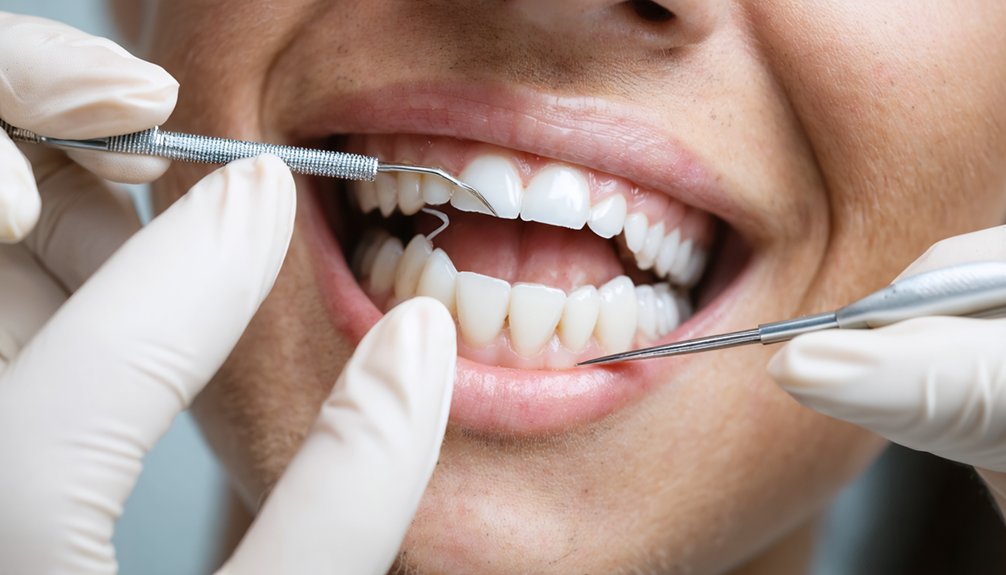
Adding teeth whitening to your self-care routine is a results-driven decision that directly impacts how you present yourself. Discolored teeth can quietly erode your confidence, affecting how you engage in conversations, interviews, and social settings. Whitening targets both surface stains and deeper discoloration using bleaching agents like hydrogen peroxide, delivering real, visible results. When used responsibly, it’s safe and effective. Keep going to discover exactly how to make it work for you.
Key Takeaways
- Teeth whitening is a results-driven self-care practice that boosts confidence and enhances personal presentation in social and professional settings.
- Brighter teeth reduce self-conscious habits like covering your mouth, helping you engage more freely in conversations and interactions.
- Whitening agents like hydrogen peroxide safely break down surface stains from coffee, tea, wine, and aging when used correctly.
- Options range from affordable OTC strips and trays to professional treatments offering faster, more dramatic, clinically supervised results.
- Maintaining results requires limiting staining foods, daily flossing, regular cleanings, and monthly touch-ups to reinforce lasting oral health habits.
Teeth Whitening as a Self-Care Habit Worth Taking Seriously
When most people think about self-care, they picture skincare routines, exercise, or nutrition—but teeth whitening deserves a place in that conversation. It’s a deliberate, results-driven practice that directly affects how you present yourself to the world.
Discolored teeth don’t just affect aesthetics—they quietly erode emotional confidence and limit your social impact in ways you mightn’t immediately recognize. When you take control of your smile, you shift how you engage in conversations, interviews, and everyday interactions.
A dull smile doesn’t just look different—it changes how confidently you show up in every room.
Whitening isn’t vanity—it’s strategic self-improvement. It reinforces consistent oral hygiene habits, encourages healthier daily choices, and delivers visible results without surgery or recovery time.
Treating it seriously means understanding its benefits, its limits, and how to use it correctly for lasting effect.
Why a Brighter Smile Changes How You Carry Yourself
A brighter smile doesn’t just change how others see you—it changes how you see yourself. When you address discoloration, you eliminate a subtle but persistent source of dental aversion—the self-conscious hesitation that keeps you from smiling freely, speaking confidently, or engaging fully in social and professional settings.
Cosmetic confidence isn’t vanity; it’s a strategic advantage. When your teeth look polished and uniform, you naturally project more authority and ease. You stop covering your mouth mid-laugh or choosing words carefully to avoid wide smiles. That shift in behavior is measurable and real.
Whitening gives you direct control over a visible, improvable aspect of your appearance. That control reinforces self-assurance, and self-assurance shapes how you carry yourself in every room you walk into.
What Teeth Whitening Actually Does to Tooth Color
When you whiten your teeth, you’re targeting surface stains left behind by coffee, tea, wine, and aging—compounds that settle into enamel and dull your natural tooth color over time.
Bleaching agents like hydrogen peroxide break down those stains at a molecular level, restoring a more uniform color across the tooth surface.
The result is an aesthetic enhancement you can achieve without surgery, recovery time, or invasive procedures.
Targeting Surface Stains
Teeth whitening works by targeting the surface stains that build up on your enamel over time from coffee, tea, red wine, and other deeply pigmented foods and drinks. Whitening agents like hydrogen peroxide or carbamide peroxide penetrate the enamel’s outer layer, breaking apart discolored molecules and restoring a more uniform, polished appearance.
You’re not just masking stains — you’re chemically disrupting them at the source.
However, you’ll want to monitor both gum health and tooth sensitivity during treatment. Overuse or incorrect application can irritate gum tissue and increase sensitivity, so following product instructions isn’t optional — it’s essential.
When used correctly, whitening delivers precise, visible results without surgery or recovery time, giving you direct control over how your smile looks and how confidently you present it.
Improving Color Uniformity
Beyond stain removal, whitening treatments actively work to even out inconsistencies in your tooth color — bringing discolored patches, yellowed areas, and minor tonal variations closer to a single, cohesive shade.
When staining agents penetrate dental enamel over time, they don’t distribute evenly, leaving visible patches that make teeth appear dull or mismatched. Whitening agents target these uneven deposits at the enamel level, breaking down chromogens across the entire tooth surface rather than spot-treating isolated areas.
The result is a more uniform, polished appearance that looks natural rather than artificially bright. Minor imperfections — small chips or hairline cracks — also become less visually prominent against a consistent color baseline.
You’re not just removing stains; you’re actively recalibrating how your entire smile presents itself.
Achieving Aesthetic Enhancement
What whitening treatments ultimately deliver is a measurable shift in tooth color — one that goes deeper than surface-level cleaning. By targeting intrinsic and extrinsic discoloration, whitening refines your smile’s aesthetic in ways that complement other treatments, including dental veneers, which rely on a consistent baseline color for seamless results.
You’re not just removing stains — you’re recalibrating how your teeth reflect light.
This process also supports gum health indirectly. When your teeth look cleaner and more uniform, you’re more likely to maintain the consistent oral care routine that keeps gum tissue healthy. Whitening won’t replace clinical intervention, but it reinforces the discipline behind it.
The result is an aesthetic enhancement that’s both visible and structurally supported — achieved without surgery, downtime, or invasive procedures.
Is Teeth Whitening Safe for Regular Use?
When used correctly, teeth whitening is generally safe—but overuse can lead to enamel softening, surface roughening, and damage to restorations like crowns. You need to follow manufacturer instructions precisely and avoid exceeding recommended treatment frequency.
Common side effects include tooth sensitivity and gum irritation, both of which are manageable when you use products responsibly.
Tooth sensitivity and gum irritation are common—but responsible product use keeps both firmly in check.
Don’t fall for teeth whitening myths suggesting that aggressive or frequent application delivers faster results—it doesn’t. Similarly, natural remedies like activated charcoal or lemon juice can be abrasive or acidic, potentially causing more harm than improvement.
Hydrogen peroxide and carbamide peroxide remain the most clinically supported options when used as directed.
You’re in control of your results. Strategic, disciplined use protects your enamel while maintaining the brighter smile you’ve worked to achieve.
Side Effects of Teeth Whitening You Should Expect
Tooth sensitivity and gum irritation are the two most common side effects you’ll encounter with whitening treatments, and both are entirely manageable with proper use. Overuse, however, accelerates enamel erosion and worsens dental discoloration long-term. Stay informed and stay in control.
Expect these four side effects:
- Tooth sensitivity – Temporary, triggered by peroxide penetrating enamel; use desensitizing toothpaste to counteract it.
- Gum irritation – Caused by bleaching agent contact; proper tray fit minimizes exposure.
- Enamel erosion – Results from overuse or high-concentration products; always follow manufacturer guidelines.
- Restoration damage – Crowns and veneers won’t respond to whitening agents and may show uneven color contrast.
Respecting usage limits protects your enamel and preserves your results.
At-Home Teeth Whitening vs. Professional Treatment: What to Know
When you choose at-home whitening, you gain flexibility, lower cost, and reduced sensitivity compared to in-office treatments.
Professional whitening, however, delivers faster, more dramatic results that at-home kits rarely match.
Understanding both options lets you build a maintenance strategy—such as starting with an in-office treatment and following up with monthly over-the-counter touch-ups—that keeps your smile consistently bright.
At-Home Whitening Benefits
Although professional whitening delivers faster results, at-home treatments offer a practical, cost-effective alternative that fits naturally into your daily self-care routine. You control the pace, frequency, and method—making it easier to maintain results long-term without repeated clinical visits.
Key benefits of at-home whitening include:
- Enamel protection — Gradual application reduces sensitivity risks compared to high-concentration in-office treatments.
- Cost efficiency — OTC strips, trays, and whitening toothpaste cost markedly less than professional procedures or dental veneers.
- Convenience — You integrate whitening directly into your existing routine, whether morning or night.
- Sustained results — Monthly touch-ups preserve brightness between professional cleanings.
When used as directed, hydrogen peroxide and carbamide peroxide products deliver measurable improvement—giving you consistent, visible results without clinical dependency.
Professional Treatment Advantages
Professional whitening delivers results that at-home treatments simply can’t match in speed or concentration. In-office procedures use higher-grade peroxide formulations, giving you a noticeably brighter smile in a single session. That efficiency matters when you’re managing a demanding schedule and want predictable outcomes.
You’ll also benefit from clinical oversight. A dentist monitors application, minimizing risks like gum irritation and enamel damage that can result from unsupervised overuse.
Advanced whitening technology used in professional settings guarantees more uniform coverage across all visible surfaces.
One practical consideration: dental insurance typically doesn’t cover cosmetic whitening, so factor that cost into your decision.
However, pairing an in-office treatment with monthly over-the-counter touch-ups maximizes your investment and sustains your results long-term—giving you full control over your smile’s appearance.
Which Teeth Whitening Method Is Right for You?
Choosing the right whitening method depends on your goals, budget, and sensitivity tolerance. You’ve got options that range from fast, professional-grade dental whitening to gradual at-home solutions. Each delivers a different level of oral brightness—pick strategically.
Not all whitening methods are equal—your goals, budget, and sensitivity tolerance determine the right pick.
- In-office treatment – Fastest results; ideal if you want immediate, dramatic improvement.
- Custom take-home trays – Professional-grade gel with flexible timing; balances effectiveness and sensitivity control.
- OTC whitening strips – Cost-effective and accessible; suitable for mild staining and maintenance.
- Whitening toothpaste – Gradual improvement of one to two shades; best combined with other methods for sustained results.
Match your choice to your lifestyle. If sensitivity concerns you, start with lower-concentration at-home products and scale up based on your response.
How Teeth Whitening Reinforces Stronger Oral Hygiene Habits
When you commit to a whitening routine, you naturally build more consistent brushing and flossing habits to protect your results. That investment in a brighter smile often pushes you to schedule regular dental cleanings and limit staining foods and drinks.
Over time, these reinforced habits don’t just maintain your whitening results—they strengthen your overall oral health.
Whitening Builds Consistent Habits
Starting a teeth whitening routine does more than brighten your smile—it tends to reshape how you approach oral care overall. When you invest in whitening technology, you naturally become more deliberate about protecting those results.
This shift creates measurable behavior changes:
- Brush and floss consistently to reduce plaque that dulls whitening results.
- Schedule regular cleanings to extend the effects of professional or at-home treatments.
- Limit staining foods and beverages like coffee, red wine, and soda.
- Explore dental financing to maintain access to professional treatments and quality products long-term.
Each habit reinforces the next. You’re not just maintaining a whiter smile—you’re building a structured routine that supports your oral health with intention and control.
Maintaining Results Improves Hygiene
Maintaining your whitening results naturally pushes you toward stronger oral hygiene practices. Once you’ve invested in your dental aesthetics, you’re far more motivated to protect that outcome. You’ll brush more consistently, floss with intention, and think twice before reaching for staining beverages like coffee, red wine, or soda. That shift isn’t accidental — it’s behavioral accountability in action.
To sustain your results, pair in-office treatments with monthly OTC touch-ups, use an electric toothbrush, and schedule twice-yearly professional cleanings. Limiting tannin-rich drinks and tobacco reduces surface staining between sessions.
This cycle of maintenance directly strengthens your overall oral health routine. The oral confidence you build from a brighter smile reinforces the discipline needed to keep it. You’re not just whitening — you’re systematically upgrading your self-care standards.
How to Keep Your Teeth White After Whitening
Once you’ve achieved your desired shade, keeping your teeth white requires consistent daily habits and smart dietary choices. Protecting your results means combining smart avoidance strategies with disciplined oral care.
- Limit staining agents — Reduce coffee, tea, red wine, and tobacco to prevent surface discoloration from reversing your results.
- Prioritize dental flossing — Daily flossing removes plaque buildup between teeth, preventing stain accumulation in hard-to-reach areas.
- Leverage mouthwash benefits — An antiseptic or whitening mouthwash helps reduce bacteria while supporting a cleaner, brighter appearance.
- Schedule monthly touch-ups — OTC whitening treatments used monthly after professional whitening deliver the most durable long-term results.
Twice-yearly professional cleanings further reinforce your maintenance routine, ensuring stains don’t compromise the investment you’ve made in your smile.
Foods, Drinks, and Habits That Undo Whitening Results
Even after achieving your ideal shade, certain foods, drinks, and daily habits can quickly reverse your results. Coffee, tea, red wine, and dark sodas deposit tannins and pigments that degrade dental aesthetics over time.
Tobacco—whether smoked or chewed—is among the most aggressive staining agents and directly undermines oral confidence. Acidic beverages weaken enamel, making teeth more porous and susceptible to discoloration.
Beyond what you consume, inconsistent brushing and skipping flossing allow plaque buildup that dulls your results. Neglecting twice-yearly professional cleanings accelerates stain accumulation.
If you’re committed to maintaining your whitening investment, limit high-stain foods, rinse with water after consuming them, and stay consistent with your oral care routine. Protecting your results demands the same discipline as achieving them.
Frequently Asked Questions
Can Teeth Whitening Help Reduce the Appearance of Minor Tooth Gaps?
Whiter teeth can transform your entire smile’s look! Teeth whitening supports tooth gap concealment by drawing attention away from minor spaces, making cosmetic enhancement effortless. You’ll notice small gaps appear less prominent with a brighter, more uniform smile.
Does Whitening Toothpaste Work Differently Than Bleaching-Based Whitening Products?
Yes, they work differently. Whitening toothpaste relies on abrasives for dental stain removal, targeting surface discoloration, while bleaching products penetrate enamel to lighten deeper stains. You’ll achieve greater control over enamel safety by choosing bleaching for lasting, dramatic results.
Will Teeth Whitening Affect Existing Dental Crowns, Veneers, or Fillings?
Whitening won’t change your crowns or fillings—dental crown compatibility and veneer color matching become critical concerns. You’ll need to replace restorations after whitening to guarantee a uniform, polished smile that matches your newly brightened natural teeth.
How Does Baking Soda Toothpaste Compare to Peroxide-Based Whitening Treatments?
Baking soda toothpaste relies on natural remedies—mild abrasion—to remove surface stains gradually, while peroxide-based chemical formulations penetrate enamel for deeper, faster whitening. You’ll achieve more controlled, measurable results by choosing peroxide treatments over baking soda alone.
Can Whitening Treatments Help Reduce Bacteria Linked to Gum Disease?
Ironically, brightening your smile may do more than impress—some whitening treatments can actively combat oral bacteria linked to gum health issues. You’re not just whitening; you’re potentially protecting your gums from disease-causing bacteria simultaneously.
References
- https://oakhillsdentistry.com/the-benefits-of-teeth-whitening-you-might-not-have-thought-of/
- https://www.hopkinsmedicine.org/health/treatment-tests-and-therapies/teeth-whitening
- https://www.healthline.com/nutrition/whiten-teeth-naturally
- https://www.hmfamilydentistry.com/blog/5-surprising-benefits-of-teeth-whitening-beyond-aesthetics/
- https://www.webmd.com/oral-health/teeth-whitening-and-bleaching
- https://pmc.ncbi.nlm.nih.gov/articles/PMC4058574/
- https://www.smileavenuefamilydentistry.com/teeth-whitening-benefits/
- https://www.logandental.net/about-us/blog-articles/smile-with-confidence-6-stunning-benefits-of-teeth-whitening
- https://health.clevelandclinic.org/how-to-whiten-teeth
- https://lumos.dental/teeth-whitening-for-a-healthier-smile-benefits-beyond-aesthetics/