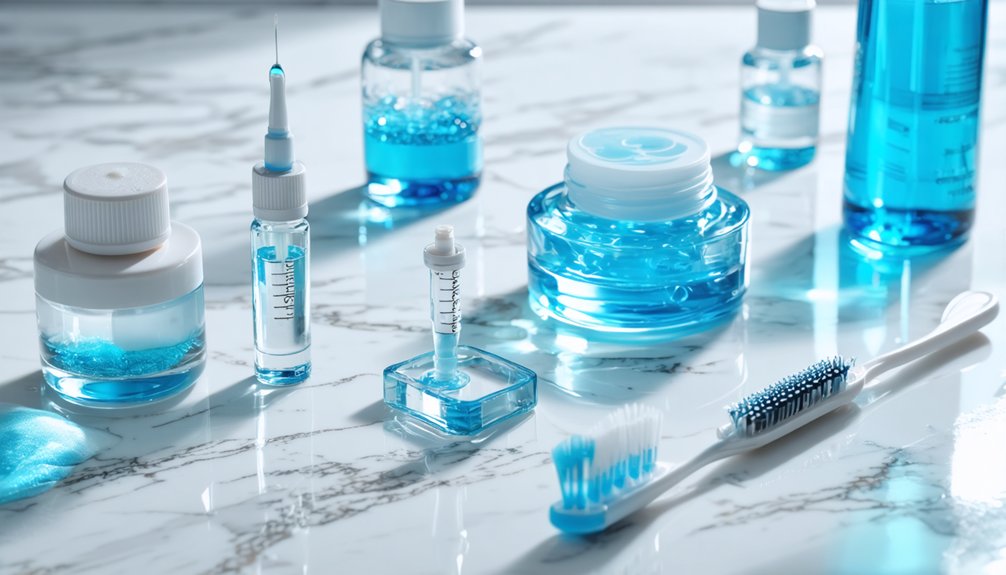
The best desensitizing gels before whitening contain potassium nitrate, fluoride, or glutaraldehyde—each targeting sensitivity through different mechanisms. Potassium nitrate depolarizes pulpal nerve fibers, fluoride reinforces tubule occlusion, and glutaraldehyde physically blocks fluid movement within dentinal tubules. You’ll want to match the formulation to your sensitivity level for the best results. Apply your chosen gel 15 to 60 minutes before whitening for maximum protection. There’s a lot more to know about using these gels correctly.
Key Takeaways
- Potassium nitrate (3%) with fluoride suits mild sensitivity, applied 30 minutes before whitening to block pain signals and occlude tubules.
- UltraEZ-style gels work flexibly within 15–60 minutes pre-treatment, making them practical for same-session or multi-day pre-treatment use.
- Moderate sensitivity responds better to potassium nitrate combined with glutaraldehyde, which physically blocks dentinal tubules for stronger relief.
- Highly sensitive patients benefit from 2–5 days of pre-treatment with desensitizing gels before beginning whitening procedures.
- PAP-based gels are ideal for patients with persistent peroxide reactions, as they eliminate free radical release and reduce sensitivity.
The Real Reason Whitening Makes Your Teeth Hurt
When whitening agents like hydrogen peroxide or carbamide peroxide contact your teeth, they don’t just bleach surface stains—they penetrate the enamel and reach the dentin tubules.
This penetration triggers a fluid shift that activates pulpal nerve fibers. This hydrodynamic response is the primary driver of teeth whitening sensitivity, not surface irritation or gum contact.
Several sensitivity causes compound the effect: pre-existing enamel erosion, exposed dentin, high peroxide concentrations, and prolonged tray contact all increase nerve activation.
The result ranges from mild discomfort to sharp, transient pain during or after treatment.
Understanding this mechanism matters because it directly informs your prevention strategy.
If you address the nerve pathway and tubule permeability before whitening begins, you reduce sensitivity at its source rather than managing it after the fact.
The Ingredients That Actually Block Whitening Sensitivity
Blocking sensitivity at the nerve level means choosing ingredients with documented mechanisms—not marketing claims. Three active ingredients stand out in the research: potassium nitrate, fluoride, and glutaraldehyde.
Potassium nitrate works by depolarizing pulpal nerve fibers, directly interrupting pain signal transmission. Fluoride supports tubule occlusion, reinforcing that barrier against thermal and chemical stimulation. Glutaraldehyde-based formulas like Gluma act by precipitating proteins within exposed dentinal tubules, physically blocking fluid movement.
Application methods matter as much as formula. A 3% potassium nitrate gel applied 30 minutes before whitening reduces both sensitivity frequency and intensity without compromising results. For higher-risk patients, two to five days of pre-treatment strengthens that protection further.
You’re not guessing—you’re applying compounds with identifiable, measurable actions.
Best Desensitizing Gels to Use Before Teeth Whitening
Choosing the right gel comes down to matching active ingredients to documented mechanisms. Three desensitizing agents stand out in clinical research: 3% potassium nitrate gel, potassium nitrate combined with fluoride, and potassium nitrate paired with glutaraldehyde. Each reduces sensitivity before whitening without compromising results.
UltraEZ-style gels offer flexible application techniques—use them 15 to 60 minutes before whitening, or run one to two pre-treatment sessions if you’ve tested sensitivity-positive.
The 3% potassium nitrate plus 0.11% fluoride combination, applied 30 minutes before whitening, shows measurable sensitivity reduction in high-risk patients.
If you prefer to avoid peroxide entirely, PAP-based gels reduce sensitivity by eliminating free radical release. Pair any of these with a lower-concentration whitening formula—HP 3–6% or CP 10–16%—for maximum control.
Which Gel Works Best for Your Sensitivity Level?
Matching the gel to your sensitivity level determines whether pre-whitening desensitization actually works. Identify your sensitivity triggers first.
If you experience mild sensitivity, a 3% potassium nitrate plus fluoride gel applied 30 minutes before whitening is typically sufficient.
For moderate sensitivity, potassium nitrate combined with glutaraldehyde reduces both the frequency and intensity of discomfort without compromising results.
For high sensitivity, begin gel application two to five days before whitening using UltraEZ-style formulas for 15 to 60 minutes per session.
If you’ve had persistent reactions to peroxide, PAP-based gels eliminate free radical release and lower sensitivity by a clinically significant margin.
Match product strength to your documented response history, not assumptions, and you’ll protect comfort while maintaining whitening effectiveness.
How Long Before Whitening Should You Apply Them?
Timing your desensitizing gel application correctly determines whether it actually reduces sensitivity before whitening begins. Application timing directly affects gel effectiveness, so follow the evidence.
For potassium nitrate or potassium nitrate-fluoride combinations, apply the gel 30 minutes before whitening to measurably reduce sensitivity without compromising results. UltraEZ-style gels work within 15 to 60 minutes pre-treatment, making them practical for same-session use.
If you’re highly sensitive, extend your protocol to 2 to 5 days of pre-treatment before your whitening appointment.
Glutaraldehyde-based formulas work faster and suit patients needing rapid desensitization.
Don’t apply the gel too early and expect lasting protection — timing it close to your whitening session keeps the active ingredients working when you need them most.
How to Use Desensitizing Gels With Your Whitening Method
How you apply a desensitizing gel depends on your whitening method.
If you’re using a tray, load the desensitizing gel into the tray and wear it for 15 to 30 minutes before placing your whitening gel. Then rinse before switching trays.
If you’re using strips, apply the gel directly to your teeth for the recommended pre-treatment time. Wipe the excess, and then place the strips as directed.
Tray-Based Whitening Application
When using a desensitizing gel with tray-based whitening, the sequence and timing of application directly affect how well you manage sensitivity.
Apply the desensitizing gel—ideally a 3% potassium nitrate formulation—into your tray for 30 minutes before placing any whitening agent. The gel texture should be smooth and non-runny to maintain even tray contact without displacing toward soft tissue.
After removing the desensitizing gel, load your whitening agent and proceed with your standard protocol.
Avoid color matching your whitening results too early; sensitivity can temporarily distort perceived shade changes.
For high-sensitivity cases, extend pre-treatment to two to five days before your first whitening session.
This structured sequence reduces both sensitivity frequency and intensity without compromising the effectiveness of your whitening outcome.
Timing Before Each Session
Getting the sequence right within a tray-based session is only part of the picture—how you time desensitizing gel use across your entire whitening course matters just as much.
If you have a known sensitivity history, apply your desensitizing gel for two to five days before your first whitening session. On treatment days, apply it 30 minutes before inserting your whitening tray. This pre-treatment window is where ingredient efficacy is most critical—potassium nitrate and fluoride combinations have demonstrated measurable dental sensitivity reduction without compromising whitening outcomes.
Continue post-session applications the same evening. Maintaining this timing protocol across every session—not just the first—keeps tubular occlusion consistent and prevents cumulative sensitivity from intensifying as your whitening course progresses.
Pairing Gels With Strips
Strips don’t come with a built-in sensitivity buffer, so pairing them with a desensitizing gel is one of the more practical ways to manage whitening-related discomfort without switching products entirely.
Apply a gel containing 3% potassium nitrate or a potassium nitrate-fluoride combination for 30 minutes before placing your strips. This pre-treatment window lets the active ingredients work at a neurological level, raising your sensitivity thresholds before peroxide exposure begins.
Gel compatibility matters here — choose a water-based, non-oily formula that won’t create a barrier interfering with strip adhesion or peroxide penetration.
Once the gel application period ends, rinse thoroughly, then apply your strips as directed. This sequence preserves whitening performance while giving your pulpal tissue a measurable head start against sensitivity.
How to Tell Your Desensitizing Gel Is Actually Working
Knowing whether your desensitizing gel is working comes down to tracking a few measurable changes before and during whitening. First, note your baseline sensitivity using a simple 0–10 scale before treatment.
Track your baseline sensitivity on a 0–10 scale before treatment to measure whether your desensitizing gel is actually working.
A working gel produces a clear reduction in that number during and after whitening sessions, not just a vague sense of comfort that could reflect sensory adaptation or placebo effect. Specifically, look for reduced response to cold air, cold liquids, or direct pressure on treated teeth.
If you previously experienced sharp, lingering pain during whitening and now feel only mild, brief discomfort, that’s a clinically meaningful shift.
No change in sensitivity despite correct gel application suggests inadequate contact time, poor tray seal, or the need for a stronger formulation like potassium nitrate combined with fluoride.
Frequently Asked Questions
Can Desensitizing Gels Be Used With Both Tray and Strip Whitening?
Yes, you can use desensitizing gels with both methods. Tray vs. strip gel application techniques differ slightly, but you’ll apply the gel beforehand regardless—strips don’t block efficacy; trays simply offer more controlled, even coverage.
Are Desensitizing Gels Safe to Use During Pregnancy or Breastfeeding?
You should avoid desensitizing gels during pregnancy or breastfeeding due to ingredient concerns around peroxide absorption. Safety precautions recommend consulting your dentist before use, as current evidence doesn’t confirm these products are risk-free for you or your baby.
How Many Times Can You Reuse a Desensitizing Gel Tray?
Like a reusable mold, you can reuse your tray multiple times—clean it after each gel application, inspect it for distortion, and replace it when fit compromises tray reuse effectiveness or hygiene.
Do Desensitizing Gels Expire and Lose Effectiveness Over Time?
Yes, they do expire. You’ll find the shelf life printed on packaging—potassium nitrate and fluoride gels degrade over time. Follow storage tips: keep them sealed, refrigerated, and discard expired product to maintain clinical effectiveness.
Can Children or Teenagers Safely Use Pre-Whitening Desensitizing Gels?
Here’s what you need to know — pediatric oral health guidelines don’t support it. Teen whitening safety requires caution; you shouldn’t use pre-whitening desensitizing gels on children or teenagers without direct clinical supervision and professional clearance first.
References
- http://www.scielo.org.pe/scielo.php?script=sci_arttext&pid=S1019-43552019000400007
- https://la.ultradent.blog/2019/03/19/8-pasos-para-prevenir-la-sensibilidad-antes-del-blanqueamiento-dental
- https://www.aliadadental.es/detail/1839/desensibilizante-dental-previo-blanqueamiento-o-previo-microabrasion-desensibilize-kf-2-
- https://dentisalut.com/blanqueamiento-dental-dientes-sensibles/
- https://denticlinica.com/producto/soothe/
- https://www.ultradent.lat/products/categories/whitening/desensitizing-gel/ultraez
- https://la.ultradent.blog/manejo-de-la-sensibilidad-dental
- https://www.double-white.es/best-whitening-gel-for-sensitive-teeth-ultimate-insight.html
- https://dentsolutions.cl/desensibilizante-kf-2-1-jeringa-25gr-puntera-fgm