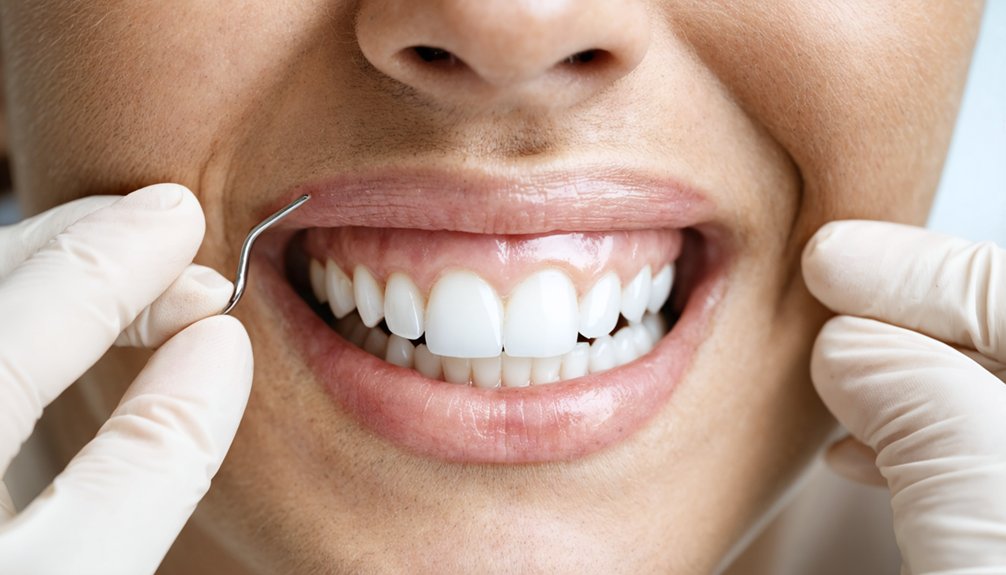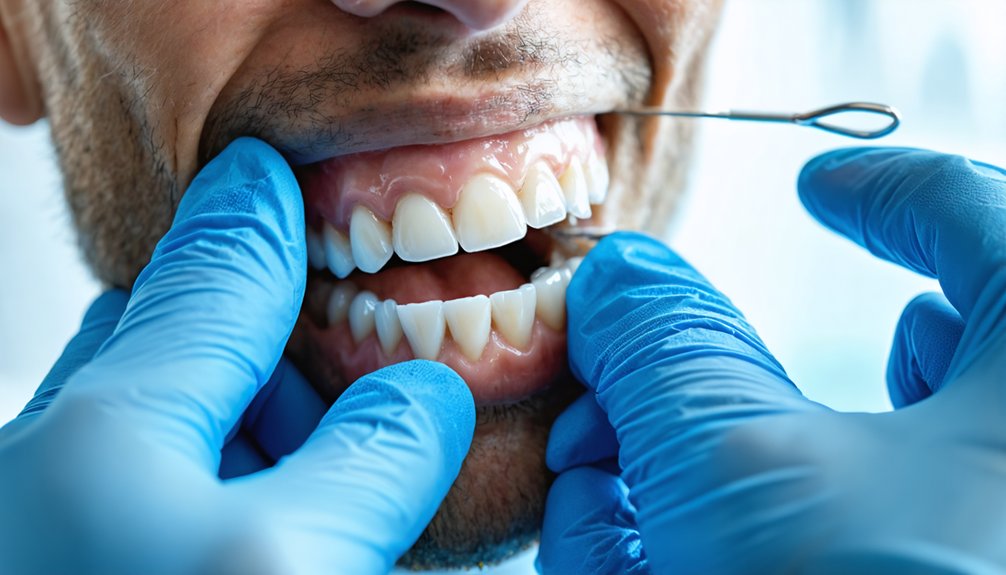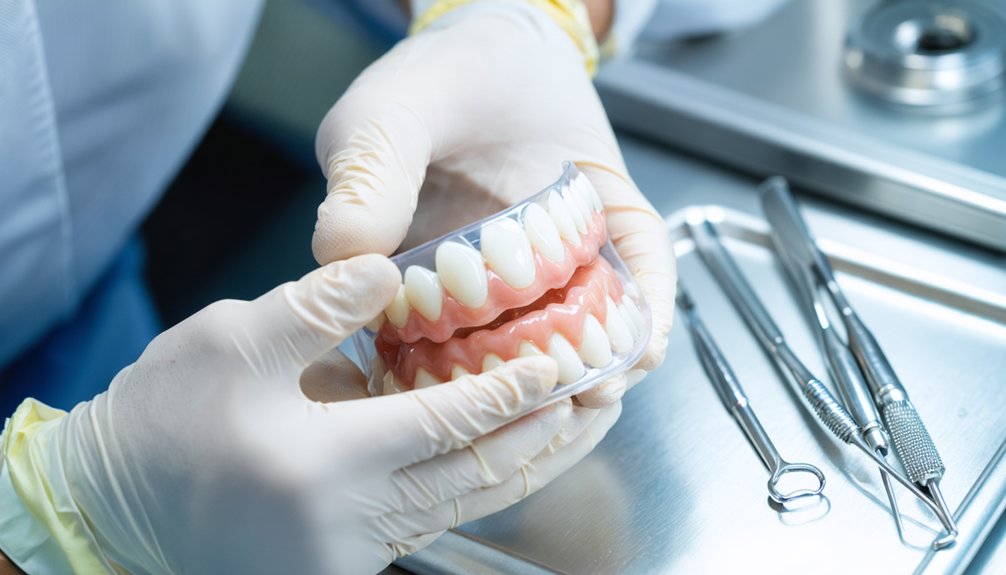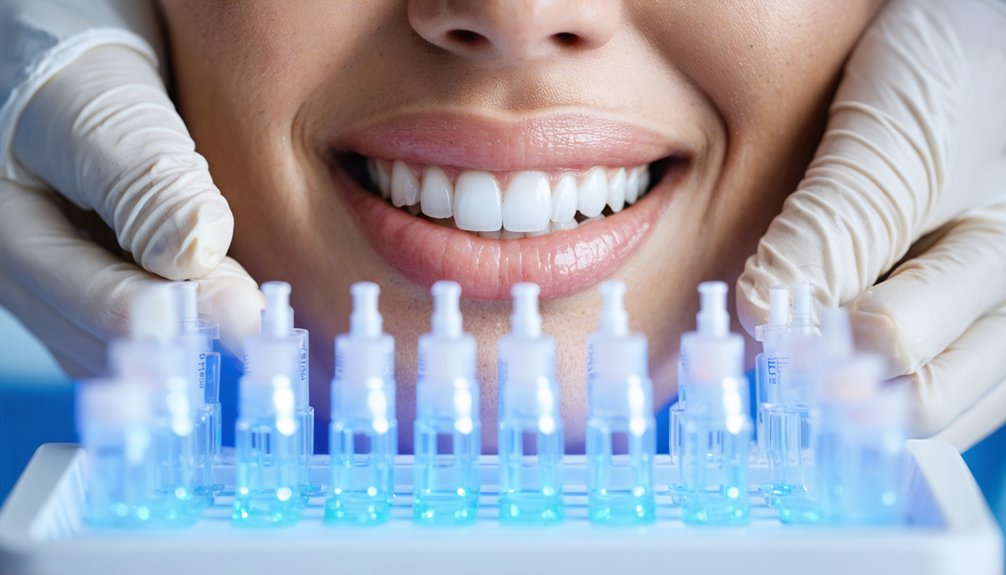
When it comes to eliminating stubborn stains, professional whitening outperforms store-bought kits by delivering higher peroxide concentrations under clinical supervision. Your dentist can match the right method to your stain type—whether it’s in-office bleaching, light-activated treatment, custom trays, or internal whitening for post-root canal darkening. Each approach targets specific discoloration through evidence-based protocols that optimize safety and results. The sections ahead break down exactly which method works best for your situation.
Key Takeaways
- Professional in-office whitening uses high-concentration peroxide gels to deliver visible results within 30-minute sessions under clinical supervision.
- Light-activated whitening combines LED or halogen light with peroxide gel to accelerate stain breakdown and enhance faster oxidation.
- Custom tray-based whitening uses dentist-fabricated trays with 10% carbamide peroxide, worn daily for gradual, precise results.
- Internal bleaching targets intrinsic stains by placing bleaching agents directly inside the pulp chamber after root canal treatment.
- Professional whitening is most effective for extrinsic stains; intrinsic and metallic stains require specialized or alternative protocols.
Why Professional Whitening Beats Store-Bought Kits
Why does professional whitening consistently outperform store-bought kits? The answer is concentration and control. Professional-grade carbamide peroxide and hydrogen peroxide gels operate at dramatically higher concentrations than OTC formulas, delivering faster, more measurable results against moderate-to-severe extrinsic stains from coffee, tobacco, and aging.
Professional whitening outperforms store-bought kits because of one thing: concentration. Higher peroxide levels deliver faster, measurable results.
You also gain precision. A dentist evaluates whether you’re a candidate for whitening or whether a dental veneer is the more appropriate clinical solution. They protect your soft tissue during treatment, minimizing misuse risks that OTC kits ignore entirely.
Equally important, professional supervision accounts for enamel erosion risk. Higher peroxide concentrations require clinical oversight to prevent structural compromise. Store-bought kits give you neither the potency nor the safeguards.
Professional whitening gives you both, on a controlled, evidence-based protocol.
What Types of Tooth Stains Actually Respond to Whitening?
Not all tooth stains respond equally to whitening, and understanding the distinction between extrinsic and intrinsic discoloration determines which treatment will actually work for you.
Extrinsic stains—those caused by coffee, tea, tobacco, and aging deposits on the enamel surface—typically respond well to peroxide-based whitening because the active agent can penetrate and break down the chromogenic compounds.
Intrinsic stains, however, originate within the dentin or pulp chamber and often resist standard external whitening methods, sometimes requiring internal bleaching or restorative intervention entirely.
Extrinsic Versus Intrinsic Stains
Whether whitening treatment will work for you depends largely on the type of stain affecting your teeth. Surface discoloration from coffee, tea, tobacco, and aging responds most predictably to peroxide-based whitening because the active agent penetrates enamel and breaks down chromogenic compounds. Stain removal in these cases is achievable through both professional in-office bleaching and supervised home protocols.
Intrinsic stains originate inside the tooth structure itself, often caused by trauma, tetracycline use, fluorosis, or pulp necrosis following root canal treatment. These discolorations don’t respond to standard external whitening methods.
If you’re dealing with a single darkened nonvital tooth, internal whitening performed at the dental office targets the discoloration from within the tooth rather than from the surface.
Stains That Resist Whitening
Knowing which stains respond to whitening—and which don’t—shapes every treatment decision that follows. Dental stain chemistry determines whether peroxide-based whitening technology can oxidize and break apart chromogenic compounds embedded in enamel or dentin.
Extrinsic stains from coffee, tea, and tobacco typically respond well to professional peroxide treatment. Aging-related yellowing also clears with consistent application.
However, you’ll encounter significant resistance with intrinsic discoloration caused by tetracycline exposure, fluorosis, or trauma-induced pulp degradation. These stains require internal whitening protocols or restorative intervention rather than surface bleaching.
Metallic stains from amalgam or iron compounds don’t oxidize predictably under standard whitening conditions.
Understanding these distinctions lets you select a protocol matched to the actual discoloration mechanism rather than applying a generalized approach that won’t deliver measurable results.
In-Office Professional Whitening for Fast, Visible Results
When fast, visible results are the priority, in-office professional whitening delivers what at-home methods can’t match in speed. Your dentist applies concentrated hydrogen or carbamide peroxide directly, often activating it with LED or halogen light in the 420–460 nm range to accelerate breakdown of extrinsic stains.
Three clinical advantages define this method:
- Speed – Visible whitening occurs within 30-minute treatment sessions, sometimes in a single visit.
- Precision – Your dentist controls peroxide concentration and protects soft tissue, reducing tooth sensitivity risk.
- Supervision – Professional oversight ensures correct application, which OTC products can’t guarantee.
Note that dental insurance rarely covers cosmetic whitening, so confirm costs beforehand. This method targets moderate-to-severe staining from coffee, tobacco, and aging most effectively.
Light-Activated Whitening: What It Does and When It Helps
Light-activated whitening pairs a peroxide gel with a light source—typically LED, halogen, or plasma arc—to accelerate the breakdown of stain molecules on your tooth enamel.
Philips identifies the 420–460 nm wavelength range as effective for this process, and clinicians often use it as an adjunct to peroxide bleaching rather than a standalone treatment.
You’re most likely to benefit from this method if you prioritize speed, have moderate to severe extrinsic staining, and have already been cleared by your dentist for peroxide-based whitening.
How Light Activation Works
During in-office whitening, a dental professional applies a peroxide-based gel to your teeth and then directs a light source—typically LED, halogen, or plasma arc—at the treated surfaces. Light penetration into the gel accelerates the breakdown of hydrogen peroxide molecules, while energy transfer generates heat that drives oxidation of chromogenic compounds within enamel and dentin.
Three mechanisms define this process:
- Photocatalysis – Light excites peroxide molecules, accelerating free radical release that targets stain compounds.
- Thermal activation – Energy transfer raises localized temperature, intensifying the oxidative reaction without damaging surrounding tissue.
- Wavelength targeting – Systems operating in the 420–460 nm range optimize light penetration for stain disruption.
This controlled sequence gives you faster, measurable results compared to gel application alone.
Effective Wavelengths For Whitening
Wavelength selection determines how effectively a light source drives the whitening reaction. When you’re choosing a light-activated system, you need to understand where it falls within the light spectrum.
Philips identifies the 420–460 nm range as particularly effective, targeting chromophore bonds responsible for tooth discoloration. This wavelength precision matters because energy outside that range delivers less activation to the peroxide gel, reducing treatment efficiency.
LED systems operating within this blue-light band offer a clinically reliable option, while halogen and plasma arc sources cover broader spectral ranges with varying activation rates.
You’re not simply choosing brightness—you’re choosing photochemical compatibility with your whitening agent. Matching the correct wavelength to your peroxide concentration maximizes the oxidation reaction, giving you faster, more controlled results without unnecessarily increasing peroxide exposure time.
Best Candidates For Treatment
When you’re evaluating candidates for light-activated whitening, the clearest indication is moderate to severe extrinsic staining from sources like coffee, tea, tobacco, or age-related surface discoloration. Dietary habits and oral hygiene status directly influence candidacy and projected outcomes.
Strong candidates typically share these characteristics:
- Extrinsic staining confirmed — Surface discoloration responsive to peroxide-based chemistry, not intrinsic or pulp-related discoloration requiring internal whitening protocols.
- Stable oral hygiene — No active caries, periodontal disease, or untreated restorations that would compromise treatment safety or gel confinement.
- Speed as the primary objective — Patients requiring accelerated results within a single visit, where light activation provides a measurable advantage over tray-based methods alone.
Nonvital teeth, deep intrinsic staining, or compromised enamel integrity disqualify patients from this protocol.
Professional Custom Trays for Gradual, Controlled Whitening
Custom tray whitening gives you a controlled, gradual approach to tooth lightening that your dentist tailors specifically to your dentition. Dentist-fabricated trays guarantee precise gel placement and minimize gingival exposure during treatment. Tray durability makes this method cost-effective long-term, as you can reuse the same trays for future maintenance cycles with fresh gel.
Most customized protocols use 10% carbamide peroxide, worn 2–4 hours daily or overnight depending on your sensitivity threshold and whitening goals. Results develop steadily over several days to weeks, giving you measurable control over the degree of whitening achieved.
This approach suits patients managing moderate extrinsic staining who prefer incremental progress over single-session intensity. Your dentist monitors outcomes and adjusts concentration or wear time based on your tissue response and shade progression.
Prefilled Professional Trays: Fast Results Without Custom Fitting
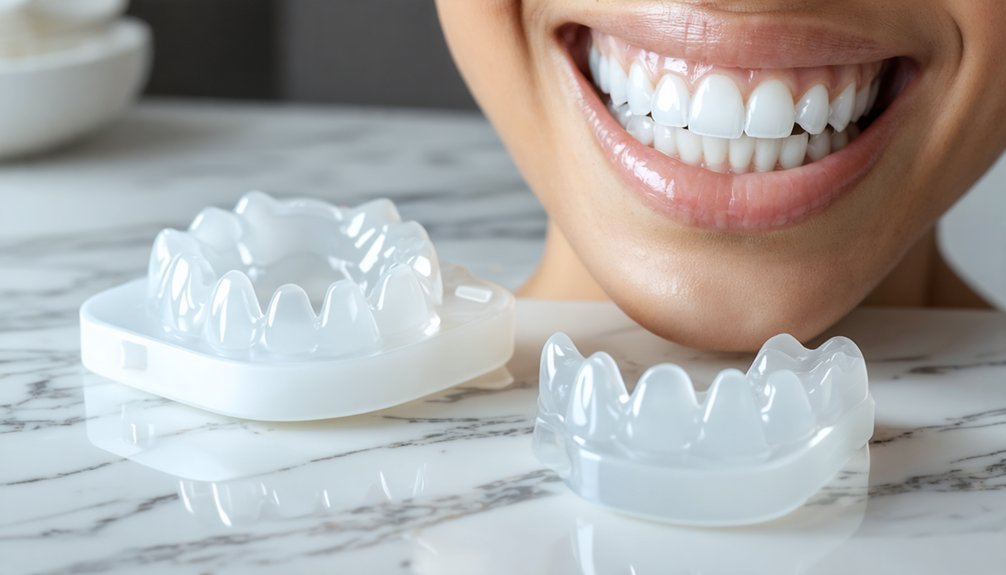
Prefilled professional trays offer a streamlined alternative if you want supervised whitening results without the fabrication timeline of custom trays. Tray convenience is the primary advantage here, letting you begin treatment immediately using dentist-supplied, ready-to-use trays.
Available formulations directly shape your protocol:
- 10% hydrogen peroxide — wear 30–60 minutes daily, delivering controlled, incremental whitening
- 15% hydrogen peroxide — wear 15–20 minutes daily, accelerating visible results with higher concentration
- Treatment customization — your dentist adjusts wear frequency and duration based on stain severity and sensitivity tolerance
These systems occupy a precise clinical middle ground between OTC products and fully custom trays. You’re getting professional-grade peroxide concentrations with built-in oversight, without sacrificing the efficiency that faster-paced whitening timelines demand.
Internal Professional Whitening for Teeth Darkened After a Root Canal
Teeth that have undergone root canal treatment can darken from the inside out, making external whitening methods ineffective regardless of peroxide concentration or application time. Internal whitening targets this intrinsic discoloration by placing a bleaching agent directly within the pulp chamber, allowing oxidation to occur at the source.
Your dentist seals the agent inside the tooth between appointments, then removes it once the desired shade is achieved. If discoloration persists or enamel integrity is compromised, dental bonding provides a restorative alternative to correct remaining color inconsistencies.
Throughout treatment, tooth remineralization protocols help maintain structural integrity, particularly when repeated chemical exposure is necessary. This method applies exclusively to endodontically treated teeth and won’t address surface stains or discoloration affecting adjacent essential teeth.
How to Choose the Right Professional Whitening Method for Your Stains?
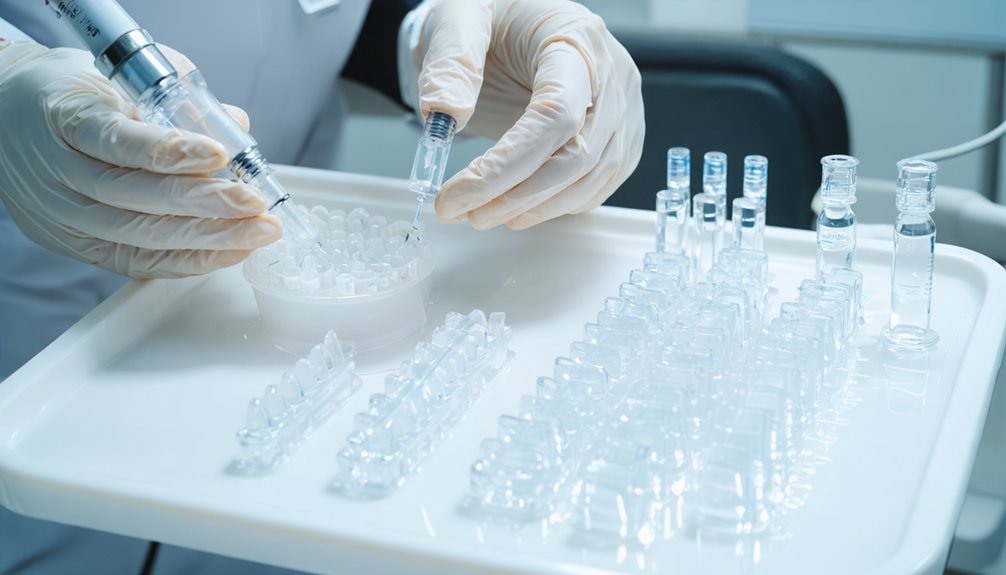
Selecting the right professional whitening method depends on 4 key variables: stain type, discoloration origin, desired treatment speed, and tooth sensitivity.
Your dentist evaluates these variables to match you with the most effective protocol. Consider the following:
- Extrinsic stains from dietary habits like coffee, tea, or tobacco typically respond well to in-office peroxide bleaching or custom tray systems.
- Intrinsic discoloration from root canal-treated teeth requires internal whitening, not surface-level peroxide application.
- Sensitivity and oral hygiene status directly influence whether you’re a candidate for high-concentration in-office treatment or a controlled at-home tray protocol.
Carbamide and hydrogen peroxide remain the primary active agents across all professional methods. Your stain origin determines the protocol—not your preference alone.
How Professional Whitening Affects Sensitive Teeth
Peroxide-based whitening agents penetrate enamel and dentinal tubules, which can temporarily heighten tooth sensitivity—a response your dentist must account for before selecting a protocol.
Peroxide whitening agents penetrate enamel and tubules, temporarily heightening sensitivity—a factor your dentist must evaluate before treatment.
Bleaching effects on sensitive teeth depend on peroxide concentration, exposure duration, and your baseline dentinal sensitivity. Higher concentrations used in in-office systems accelerate whitening but increase the likelihood of post-treatment discomfort.
Your dentist can mitigate tooth sensitivity by applying fluoride or potassium nitrate desensitizers before or after treatment.
Custom tray systems using 10% carbamide peroxide typically produce fewer sensitivity complaints due to lower concentration and controlled wear time.
If you present with pre-existing sensitivity, your dentist should adjust the protocol accordingly—reducing session length, lowering peroxide concentration, or spacing treatment intervals to minimize pulpal irritation without compromising whitening outcomes.
Frequently Asked Questions
How Long Do Professional Whitening Results Typically Last Before Fading?
Your results typically last one to three years. You’ll maintain longevity through consistent whitening maintenance and by avoiding staining agents. If you experience tooth sensitivity, it’s best to consult your dentist before resuming touch-up treatments.
Can Professional Whitening Be Done Safely During Pregnancy or Breastfeeding?
Over 85% of dentists advise postponing treatment. You shouldn’t pursue professional whitening due to pregnancy safety concerns, as peroxide absorption risks remain unstudied. Breastfeeding considerations similarly warrant caution; you’re better off waiting until after you’ve finished breastfeeding.
Does Professional Whitening Work on Dental Crowns, Veneers, or Implants?
Professional whitening won’t change your dental crown or veneer whitening outcomes—restorations don’t respond to peroxide. You’ll need replacement or alternative cosmetic procedures to match your newly whitened natural teeth effectively.
How Much Does Professional Tooth Whitening Usually Cost on Average?
Want control over your budget? You’ll typically spend $300–$1,000 for in-office treatments. Cost comparison favors custom trays at $100–$400. Insurance coverage rarely applies, as it’s cosmetic—plan accordingly.
How Soon After Whitening Can You Eat or Drink Normally Again?
You’ll resume normal eating and drinking 48 hours post-treatment. During that window, you must follow strict diet restrictions—avoiding chromogenic foods and acidic beverages—while prioritizing sensitivity management through desensitizing agents to protect newly opened dentinal tubules.
References
- https://www.dentaly.org/us/teeth-whitening/professional-teeth-whitening/
- https://www.rejuv-health.com/cosmetic-dentistry/teeth-whitening-cost/
- https://www.ada.org/resources/ada-library/oral-health-topics/whitening
- https://mysmilesteeth.com/products/prefilled-teeth-whitening-trays
- https://www.suttonpda.com/in-office-teeth-whitening/
- https://opalescence.com/products/opalescence-go-15-prefilled-whitening-trays
- https://pmc.ncbi.nlm.nih.gov/articles/PMC4058574/
- https://www.droracle.ai/articles/103482/is-35-hydrogen-peroxide-h2o2-safe-for-teeth-whitening
- https://www.bamatis.com/docs/tray_whitening.pdf
- https://www.maidstonedental.co.uk/wp-content/uploads/2022/11/BOUTIQUE-WHITENING-PROTOCOL-2.pdf