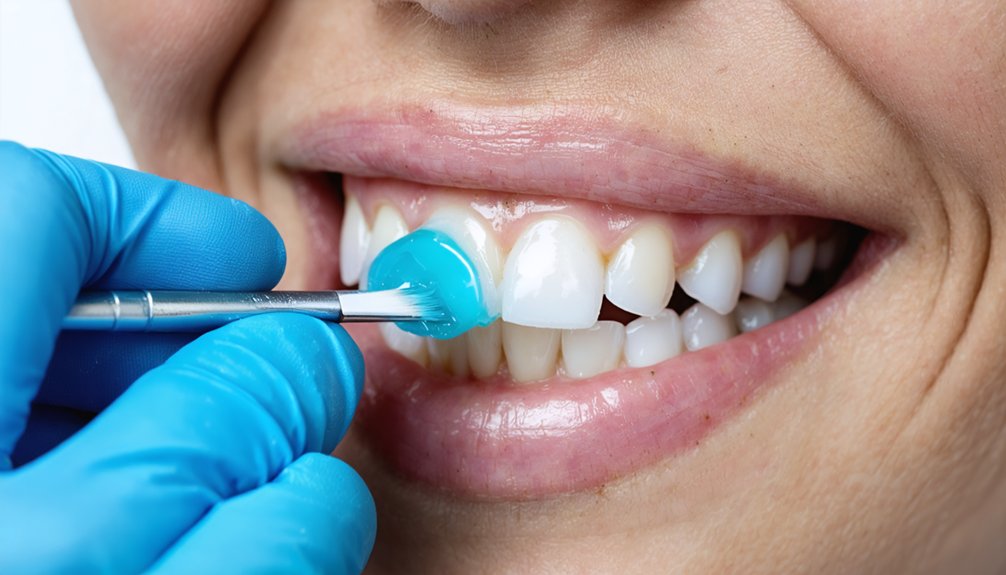
Whitening damaged teeth exposes you to serious risks that healthy teeth don’t face. Cracked or eroded enamel lets peroxide penetrate deeper, irritating nerves and inflaming the pulp. You’re also more vulnerable to accelerated enamel erosion, heightened sensitivity, and uneven whitening results. Exposed roots from gum recession contact bleaching gels directly, increasing tissue irritation. Understanding each risk in detail can help you make a safer, more informed decision about your whitening options.
Key Takeaways
- Damaged or cracked enamel allows deeper peroxide penetration, increasing the risk of nerve irritation and pulpal inflammation.
- Compromised enamel cannot buffer bleaching agents effectively, accelerating erosion and further weakening tooth structure.
- Exposed dentin and roots contact bleaching gels directly, significantly heightening sensitivity and chemical irritation risks.
- Active decay and structural damage cause uneven, unpredictable whitening results and can worsen existing discoloration.
- Repeated whitening on damaged teeth raises the likelihood of prolonged sensitivity, tissue damage, and lasting nerve harm.
Why Damaged Teeth Absorb Whitening Agents More Deeply
When tooth enamel is intact, it acts as a protective barrier that limits how deeply whitening agents penetrate the tooth structure. However, when enamel is cracked, eroded, or compromised by decay, that barrier breaks down.
Whitening agents then penetrate more deeply, bypassing the enamel and reaching the dentin and pulp more easily. This deeper absorption intensifies the chemical reaction occurring inside your tooth, raising your risk of nerve irritation, sensitivity, and internal structural stress.
Deeper penetration means a more intense chemical reaction—and a higher risk of nerve irritation, sensitivity, and structural stress.
Tooth discoloration caused by underlying damage also responds unpredictably to peroxide, making results uneven and harder to control.
Without enamel repair, you’re exposing vulnerable tooth layers to concentrated bleaching agents they aren’t equipped to handle. Addressing structural damage before whitening gives you greater control over both the outcome and your long-term dental health.
The Sensitivity Problem: Why Damaged Teeth Feel It Harder
Tooth sensitivity during whitening isn’t just an inconvenience—it’s a signal that your tooth’s protective layers are struggling to buffer the chemical exposure. When enamel is compromised, peroxide penetrates more rapidly toward the dentin and pulp, triggering sharper, more intense nerve responses than healthy teeth experience.
Damaged teeth amplify this reaction because exposed dentin tubules create direct pathways to the nerve. If you’re exploring whitening options to correct tooth discoloration, existing sensitivity is a critical factor you can’t ignore.
Whitening agents temporarily increase enamel porosity, and on already-weakened teeth, that effect compounds existing vulnerability.
Repeated treatments heighten the risk further. What begins as temporary discomfort can escalate into prolonged sensitivity or pulpal irritation—outcomes that demand professional intervention rather than continued self-treatment.
How Whitening Accelerates Enamel Erosion on Damaged Teeth
Enamel already weakened by erosion, acid corrosion, or structural defects can’t buffer peroxide exposure the way healthy enamel can. When you apply whitening agents to compromised teeth, the peroxide penetrates more deeply and more rapidly, accelerating structural breakdown rather than simply targeting tooth discoloration.
Compromised enamel can’t buffer peroxide the way healthy enamel can — whitening accelerates breakdown rather than simply targeting discoloration.
Laboratory research confirms that aggressive bleaching alters tooth microstructure, increasing permeability and reducing enamel’s mechanical integrity.
Unlike healthy enamel, damaged enamel has no reliable capacity for enamel regeneration once whitening accelerates its breakdown. You’re effectively removing what little protective structure remains.
Overuse of over-the-counter products compounds this damage progressively. Teeth already affected by erosion or caries are poor candidates for whitening precisely because the treatment exploits existing vulnerabilities, leaving the underlying dentin more exposed and your teeth structurally weaker than before treatment began.
Which Types of Tooth Damage Make Whitening Too Risky?
Not all damaged teeth carry the same whitening risk, but several specific conditions make bleaching genuinely contraindicated rather than simply inadvisable. Pursuing tooth discoloration correction before completing enamel repair in these cases can accelerate structural damage or mask serious underlying disease.
Avoid whitening if you have:
- Active decay — peroxide penetrates compromised structure and intensifies pain while worsening damage.
- Exposed dentin or cementum — direct peroxide contact causes acute sensitivity and potential pulpal irritation.
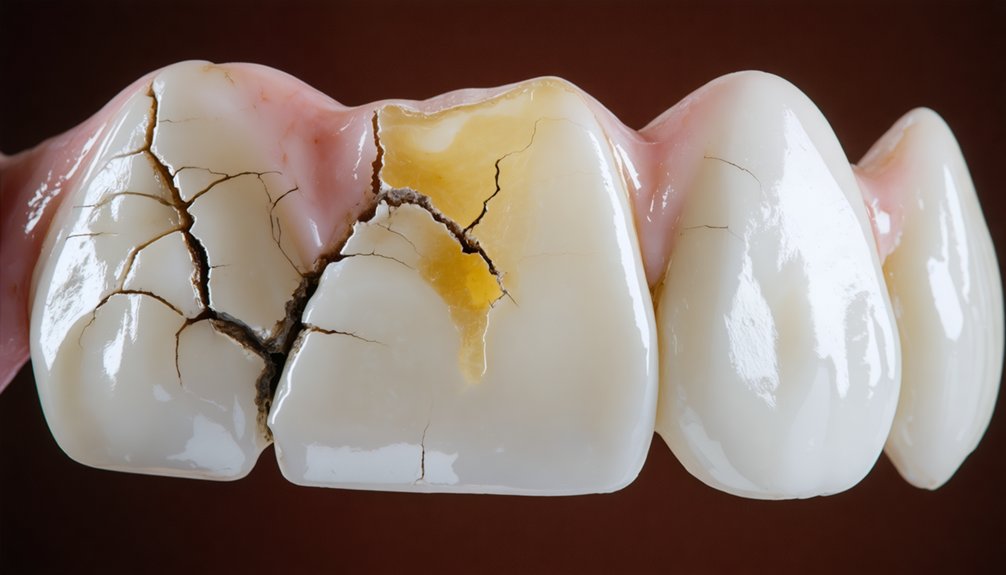
- Cracked or fractured enamel — cracks allow deeper chemical penetration, increasing nerve exposure risk.
- Symptomatic pulpal pathology — inflamed or necrotic pulp tissue is a firm clinical contraindication.
Stabilize these conditions first. Whitening is a cosmetic procedure, not a diagnostic one, and it won’t resolve the underlying damage driving discoloration.
How Whitening Can Irritate the Nerve in a Damaged Tooth
When your tooth structure is compromised by cracks, decay, or erosion, hydrogen peroxide penetrates more deeply than it would through intact enamel, reaching the pulp and triggering nerve irritation.
Cracks act as direct pathways, allowing whitening agents to bypass the protective dentin tubule network and contact sensitive pulpal tissue.
If your teeth already show signs of nerve sensitivity or pulpal stress, whitening can intensify that irritation and potentially cause lasting damage.
Peroxide Penetrates Compromised Teeth
Healthy enamel acts as a protective barrier that slows peroxide absorption, but a damaged tooth can’t rely on that defense. Cracks, erosion, and decay create direct pathways for hydrogen peroxide to reach the pulp faster and deeper. Despite common whitening myths, tooth discoloration from structural damage won’t respond safely the way healthy enamel does.
When enamel is compromised, peroxide penetration increases risk in four key ways:
- Faster pulp exposure — peroxide bypasses weakened structure directly
- Intensified nerve irritation — damaged dentin offers less buffering capacity
- Unpredictable absorption rates — cracks and erosion create uneven peroxide diffusion
- Prolonged inflammation — compromised teeth can’t recover between whitening sessions as efficiently
You’re accelerating internal damage when you whiten structurally unsound teeth.
Cracks Worsen Nerve Irritation
Cracks in tooth enamel do more than compromise structural integrity — they create direct channels for hydrogen peroxide to reach the pulp. When you apply whitening gels to a cracked tooth, the peroxide bypasses normal diffusion barriers and contacts nerve tissue directly.
This accelerates pulpal irritation and can trigger acute sensitivity, inflammation, or lingering pain that outlasts the treatment itself.
Tooth discoloration caused by internal pulp damage or dentin exposure often signals that the nerve is already stressed. Adding whitening gels to that environment forces peroxide into an already compromised pulp chamber.
If your tooth has visible cracks or unexplained color changes, whitening isn’t a safe starting point. You need a clinical evaluation first to assess pulpal health before any bleaching agent is applied.
Why Gum Recession Makes Whitening Riskier on Damaged Teeth
When your gums have receded, they expose the root’s cementum and dentin — surfaces that lack the protective enamel layer covering the crown.
Whitening gel that contacts these exposed roots penetrates more easily, increasing your risk of sharp sensitivity and tissue irritation.
If your teeth are already damaged, recession compounds that risk by giving the peroxide direct access to vulnerable structures that aren’t built to withstand bleaching agents.
Exposed Roots Face More Risk
Gum recession leaves root surfaces exposed, and that exposure changes how whitening products interact with your teeth. Unlike enamel, roots are covered by cementum, which offers far less protection against peroxide penetration. If you’re managing tooth discoloration on already-damaged teeth, applying whitening agents over exposed roots considerably raises your risk profile.
Exposed roots face specific dangers during whitening:
- Cementum absorbs peroxide faster than enamel, intensifying sensitivity.
- Root surfaces whiten unpredictably, worsening visible discoloration rather than correcting it.
- Peroxide contact with exposed dentin increases pulpal irritation risk.
- Poor oral hygiene around receded gumlines accelerates chemical irritation to soft tissue.
Before whitening, have a dentist assess root exposure. Proceeding without that evaluation puts vulnerable tooth structures at unnecessary risk.
Recession Worsens Gel Irritation
Recession doesn’t just expose vulnerable tooth structure—it also removes the natural barrier that keeps whitening gel away from your soft tissue. When your gums have pulled back, whitening gels contact unprotected root surfaces and inflamed margins directly, increasing the likelihood of sharp irritation and localized tissue damage.
Damaged teeth frequently coexist with recessed gumlines, compounding the risk. If you’re using whitening gels to correct tooth discoloration on already-compromised dentition, that gel can seep into vulnerable sulcular spaces, aggravating soft tissue that’s already stressed.
Existing periodontal inflammation makes this worse—irritated tissue responds more intensely to peroxide exposure. Before attempting to address tooth discoloration through bleaching, you need to stabilize recession and gum health first; otherwise, you’re introducing a chemical irritant into an already vulnerable environment.
Why Damaged Teeth Whiten Unevenly
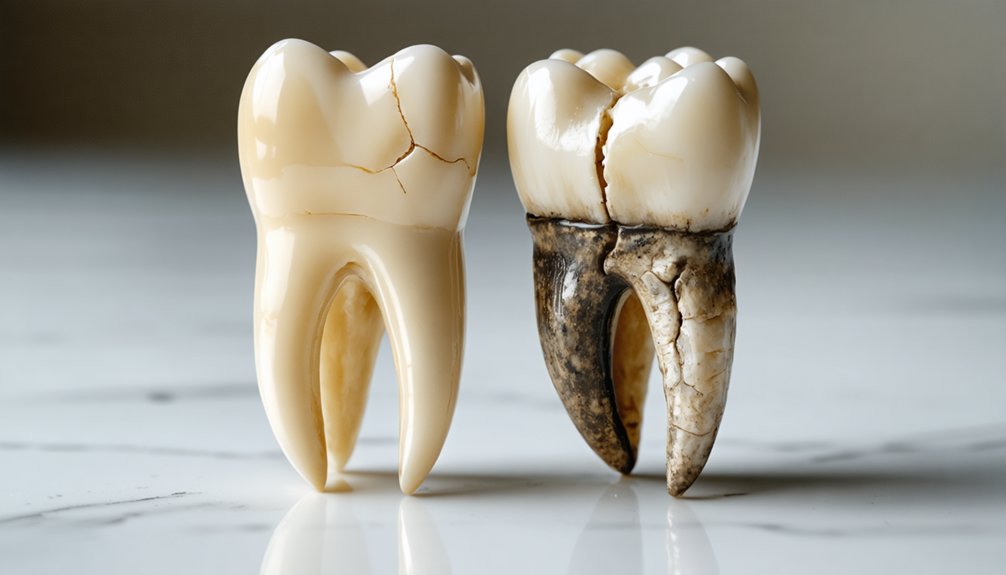
Damaged teeth whiten unevenly because cracks, erosion, and carious lesions alter how peroxide penetrates and reacts with the tooth structure. Existing tooth discoloration compounds this problem, as compromised areas absorb whitening agents differently than healthy enamel.
Before exploring whitening options, understand these four key reasons uneven results occur:
- Cracks create channels where peroxide penetrates deeper, producing inconsistent color zones.
- Erosion removes enamel uniformly, exposing dentin that resists whitening and appears yellow.
- Carious lesions alter mineral density, causing peroxide to react unpredictably across the tooth surface.
- Existing restorations — fillings, crowns, and sealants — don’t respond to bleaching agents, leaving visible color mismatches.
Attempting whitening before addressing structural damage guarantees poor aesthetic outcomes you’ll struggle to correct.
What Dentists Fix First Before Approving You for Whitening
Before approving you for whitening, dentists address existing oral health problems that would otherwise worsen under peroxide exposure. Active decay gets restored first, since cavities allow peroxide to penetrate deeper into the pulp, increasing pain and nerve irritation risk. Cracked or defective fillings require replacement before bleaching begins.
Dentists restore cavities and replace defective fillings before whitening—peroxide exposure on untreated decay risks serious nerve damage.
Exposed dentin and cementum need evaluation because both surfaces heighten sensitivity dramatically during treatment.
Periodontal inflammation and gum recession must be stabilized, as whitening gel irritates already-compromised soft tissue.
If you have misshapen teeth or minor structural defects, your dentist may recommend tooth reshaping or cosmetic bonding after whitening to guarantee color consistency across restorations.
Treating these conditions isn’t optional—it’s what makes whitening both safe and effective for your specific dental situation.
Frequently Asked Questions
Can Whitening Damaged Teeth Cause Permanent Nerve Damage Over Time?
While healthy teeth recover, damaged ones don’t always bounce back — whitening can intensify dental nerve irritation over time, worsening tooth sensitivity. You’re risking potential permanent nerve damage when you bleach already compromised teeth repeatedly.
Are Children With Damaged Teeth at Greater Risk From Whitening Products?
Yes, children’s dental health is particularly vulnerable. Their developing enamel sensitivity makes whitening products riskier, as you’d expose thinner, more porous enamel to peroxide, increasing nerve irritation, uneven whitening, and long-term structural damage considerably.
Does Whitening Toothpaste Pose the Same Risks as Gel-Based Whiteners?
Whitening toothpaste won’t flood your teeth with peroxide like gels do, but you’re still risking enamel erosion from abrasives and heightened tooth sensitivity, especially if your teeth are already compromised. Gels penetrate deeper, amplifying damage considerably.
Can Damaged Teeth Become More Vulnerable to Cavities After Whitening?
Yes, whitening can worsen your damaged teeth’s cavity risk. You’re accelerating enamel erosion, making surfaces more permeable to bacteria. Increased tooth sensitivity signals compromised structure, leaving dentin exposed and considerably less resistant to decay-causing acids.
Is Professional Whitening Safer Than Over-The-Counter Options for Damaged Teeth?
Like a double-edged sword, both options carry risks for damaged teeth. Professional whitening’s safer because your dentist monitors tooth sensitivity and tailors cosmetic benefits while minimizing harm—over-the-counter products lack that critical, personalized oversight.
References
- https://clubwhitesmile.com/risks-of-whitening-with-damaged-teeth/
- https://www.gale.care/health/is-teeth-whitening-safe-for-enamel
- https://adanews.ada.org/huddles/risks-of-frequent-teeth-whitening/
- https://health.clevelandclinic.org/is-teeth-whitening-safe
- https://www.westroaddental.com/can-teeth-whitening-damage-your-enamel-or-cause-sensitivity/
- https://pmc.ncbi.nlm.nih.gov/articles/PMC4058574/
- https://ec.europa.eu/health/opinions/en/tooth-whiteners/l-2/5-tooth-whitening-products.htm
- https://www.lobaydental.ca/does-teeth-whitening-damage-enamel/
- https://dentalpedia.co/clinical/teeth-whitening-safety-side-effects-and-best-practices.html
- https://dentistry.uokerbala.edu.iq/wp/en/2023/06/20/contraindications/