DIY teeth whitening can cause serious, irreversible harm you shouldn’t ignore. Abrasive agents like activated charcoal and baking soda strip away enamel that never grows back. High-concentration peroxide solutions can chemically burn your gum tissue and penetrate deep enough to damage tooth nerves. You’ll also risk uneven results and deterioration of existing fillings and crowns. If you’re experiencing any symptoms, the evidence-based information ahead can help you understand exactly what’s happening inside your mouth.
Key Takeaways
- Activated charcoal, baking soda, and unregulated hydrogen peroxide solutions can permanently erode enamel, increasing cavity risk over time.
- High-concentration peroxide can cause chemical burns on gum tissue, potentially leading to recession and lasting damage.
- Whitening gel penetrating exposed dentin risks nerve damage, with unsupervised high-strength gels potentially causing irreversible injury.
- DIY strips and trays distribute bleach unevenly, delivering inferior results while degrading fillings, crowns, and composite restorations.
- Severe pain, unresolved sensitivity, gum recession, or gastrointestinal distress after whitening requires immediate professional dental attention.
The DIY Teeth Whitening Methods That Cause the Most Harm
Although many DIY teeth whitening methods are marketed as safe and effective, several carry documented risks that can cause lasting oral damage.
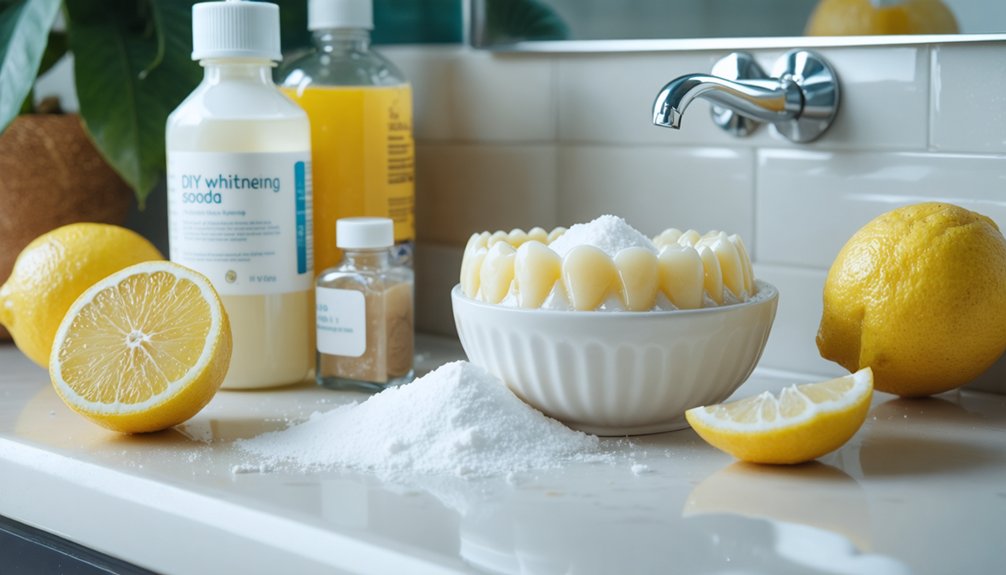
Activated charcoal, frequently promoted as one of many natural remedies, aggressively erodes enamel through repeated abrasion.
Activated charcoal doesn’t polish your teeth — it destroys them, grinding away enamel with every abrasive application.
Bicarbonate of soda toothpaste weakens enamel over time, increasing your cavity risk.
Home-mixed hydrogen peroxide solutions involve inaccurate concentrations, creating unpredictable chemical exposure that damages both enamel and soft tissue.
Light-activation devices offer no measurable whitening benefit despite their widespread marketing claims.
Ignoring safety precautions with these methods doesn’t just produce poor results—it accelerates demineralization, softens tooth surfaces, and increases sensitivity.
You’re fundamentally trading short-term cosmetic appeal for long-term structural damage.
Understanding which methods pose the greatest risk is your first step toward protecting your oral health.
How DIY Teeth Whitening Strips Away Your Enamel
Enamel erosion is one of the most serious and irreversible consequences of unsupervised teeth whitening. Harsh DIY chemicals soften and roughen your tooth surface, leaving it permanently vulnerable. Once enamel’s gone, it doesn’t regenerate.
Here’s what’s actually happening to your teeth:
- Acidic whitening agents demineralize enamel, blocking natural enamel remineralization techniques your dentist can support.
- Aggressive peroxide concentrations chemically alter dentin and enamel microstructure, triggering chronic sensitivity.
- Repeated DIY use accelerates decay risk by stripping your teeth’s primary protective layer.
You’re not gaining control by choosing DIY methods—you’re losing it.
Professional whitening alternatives deliver regulated concentrations under clinical supervision, protecting your enamel while achieving measurable results.
The difference between a brighter smile and irreversible damage is professional oversight.
Chemical Burns and Gum Damage From Home Whitening Kits
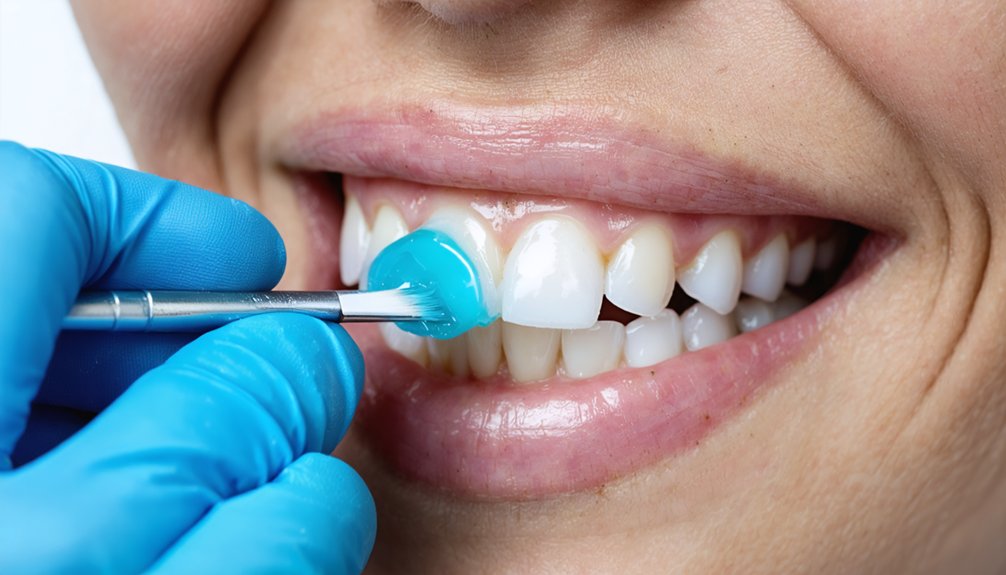
When you apply home whitening kits without professional guidance, high concentrations of hydrogen peroxide or carbamide peroxide can cause chemical burns directly on your gum tissue.
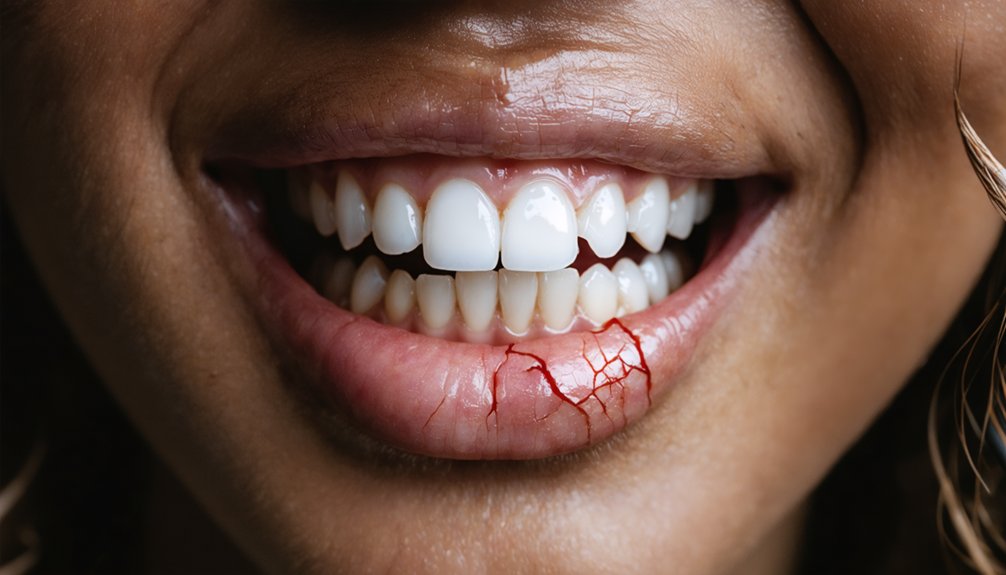
You’ll typically notice gingival irritation within 24 hours, and the damage can persist for several days.
Repeated exposure also causes gum recession, which exposes root surfaces and allows whitening agents to penetrate deeper, intensifying your pain and long-term vulnerability.
Peroxide Burns Gum Tissue
One of the most immediate dangers of home whitening kits is chemical burns to your gum tissue. Improper peroxide application exposes sensitive tissue to concentrated chemicals, triggering rapid cellular damage.
Clinical evidence identifies three documented injury patterns:
- High-dose hydrogen peroxide or carbamide peroxide causes direct chemical burns on contact with gum tissue.
- Gingival irritation typically begins within 24 hours and persists for several days, complicating gum healing.
- White spots on gum tissue signal localized damage from overused whitening strips.
You’re in control of whether this happens. Gel that migrates beyond your tooth surface during treatment isn’t a minor inconvenience — it’s tissue destruction.
Unsupervised, repeated exposure compounds the damage and delays recovery markedly.
Gum Recession Risks
Repeated chemical exposure doesn’t just burn gum tissue — it drives gum recession, a structural consequence that compounds your risk profile significantly.
When gum tissue pulls back, it exposes root surfaces that lack enamel’s protective density. Whitening agents then penetrate these vulnerable areas, reaching dentin and triggering significant internal pain.
Recession prevention depends on recognizing that DIY kits don’t deliver controlled application. Gel migrates beyond teeth, contacting gingival margins repeatedly across treatment sessions. Each exposure accelerates tissue degradation, and recession — unlike burns — doesn’t reverse.
Your gum health deteriorates progressively when you bypass clinical oversight.
Exposed roots also increase decay susceptibility, meaning the aesthetic pursuit of whiter teeth simultaneously undermines your structural dental integrity. The cumulative damage far outweighs any cosmetic benefit you’re chasing.
Tooth Sensitivity and Nerve Damage DIY Whitening Can Cause
Tooth sensitivity is the most commonly reported side effect of DIY whitening, but it can escalate into lasting nerve damage if you’re not careful.
When aggressive bleaching chemicals alter your enamel and dentin, you’re exposing your nerve chamber to real risk.
Here’s what the evidence shows about tooth sensitivity and nerve health:
- Sensitivity typically lasts several days, but permanent enamel erosion can make it chronic.
- Whitening gel penetrates exposed dentin, reaching the pulp and causing internal nerve damage.
- High-strength unsupervised gels carry a rare but serious risk of irreversible nerve injury.
You’re not just managing discomfort—you’re potentially compromising long-term nerve health.
Choosing professional oversight instead of DIY methods keeps you in control of your outcomes safely.
Why DIY Teeth Whitening Leaves Patchy, Uneven Results
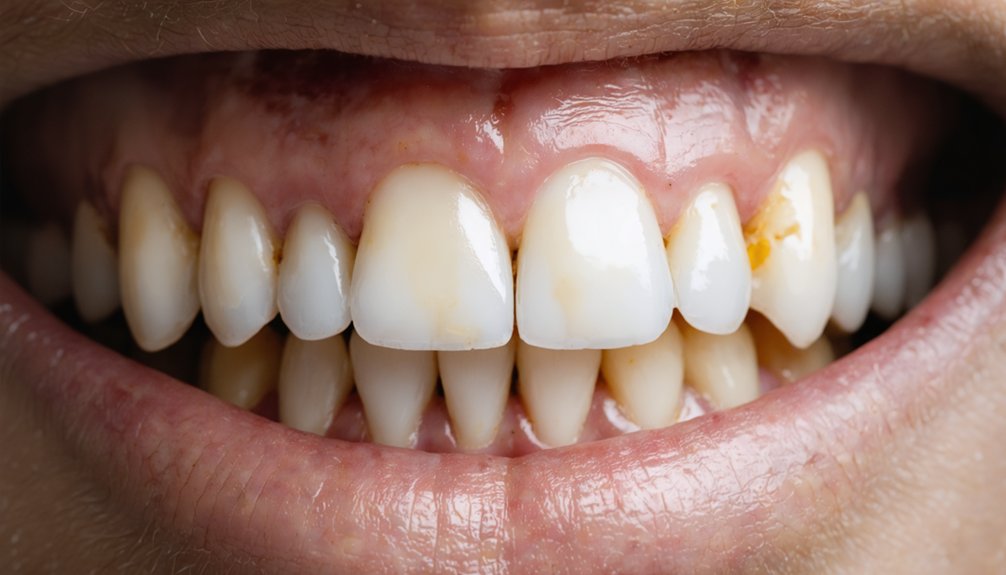
When you use DIY whitening strips or trays, the bleaching agent rarely distributes evenly across all tooth surfaces, leaving behind patchy, inconsistent results.
The strips can’t reach the crevices between your teeth, and gel-filled trays often pool unevenly, concentrating bleach in some areas while barely touching others.
Compounding this problem, consumer products legally contain only low percentages of hydrogen peroxide, giving you insufficient active ingredient to produce meaningful or uniform color change.
Uneven Bleach Distribution
One of the most frustrating outcomes of DIY teeth whitening is uneven bleach distribution, which leaves teeth looking patchy and inconsistent rather than uniformly bright.
Uneven application happens because consumer strips and trays aren’t custom-fitted to your unique dental anatomy. Here’s what poor bleach saturation actually causes:
- Missed crevices – Strips can’t conform to tight spaces between teeth, leaving those areas untreated.
- Overexposed surfaces – Flat surfaces receive excessive peroxide contact, creating white spots rather than true whitening.
- Inconsistent color contrast – Adjacent teeth whiten at different rates, producing a mismatched appearance.
Without professional-grade custom trays, you can’t control where the bleaching agent contacts your enamel, making predictable, uniform results virtually impossible to achieve independently.
Insufficient Peroxide Concentration
Even with perfect application technique, consumer whitening products face a fundamental chemical limitation: the peroxide concentrations legally permitted in over-the-counter kits are too low to produce meaningful color change.
Regulatory safety standards cap peroxide potency well below clinical thresholds, meaning you’re applying a chemically insufficient solution regardless of how carefully you follow instructions.
Professional treatments use hydrogen peroxide concentrations considerably higher than anything available in consumer products.
When you invest time and money into store-bought kits expecting dramatic results, you’re working against a chemically enforced ceiling.
The minimal whitening you might notice often reflects surface-level stain removal rather than true tooth bleaching.
You can’t compensate for inadequate peroxide potency through longer application times without simultaneously increasing your risk of tissue damage and enamel erosion.
What DIY Whitening Does to Your Fillings and Crowns
DIY whitening products don’t just affect your natural teeth—they can compromise your existing dental work in ways that are costly to repair.
DIY whitening doesn’t just brighten teeth—it can silently destroy the dental work you’ve already paid for.
Peroxide-based agents interact chemically with restorations, triggering:
- Fillings degradation — Whitening solutions weaken composite restorations, reducing their structural integrity and shortening their lifespan.
- Crowns discoloration — Ceramic crowns undergo unacceptable color changes when exposed to bleaching gels, creating visible mismatches with surrounding teeth.
- Sealant and cement breakdown — Glass ionomer cements and sealants deteriorate under peroxide exposure, leaving teeth vulnerable to decay and bacterial infiltration.
You can’t reverse these effects with more whitening. Once your restorations are compromised, professional replacement becomes necessary.
Understanding these documented risks lets you make informed decisions before applying any DIY whitening product.
When DIY Teeth Whitening Becomes a Dental Emergency
Compromised restorations signal a serious problem, but some DIY whitening outcomes cross into emergency territory that demands immediate professional attention.
Recognizing emergency symptoms early determines whether you preserve or lose affected teeth. Severe, unrelenting tooth pain suggests pulpal damage from gel penetrating exposed dentin.
Extensive chemical burns producing white, sloughing gum tissue indicate significant soft tissue injury requiring urgent care. Swallowing concentrated peroxide causes gastrointestinal distress that may necessitate poison control intervention.
If you experience sudden sensitivity that doesn’t resolve, visible gum recession, or persistent bleeding, don’t delay treatment. Your dentist can assess structural damage, treat chemical injuries, and discuss treatment options ranging from desensitizing agents to pulp therapy.
Acting quickly prevents temporary damage from becoming permanent, irreversible harm.
Frequently Asked Questions
Can DIY Whitening Methods Permanently Stain Teeth a Darker Color?
While chasing brightness, you can trigger chemical reactions that darken tooth enamel instead. DIY methods risk long-term effects like uneven staining. You’ll protect your results better by choosing professional alternatives over unregulated home treatments.
Are Children and Teenagers More Vulnerable to DIY Whitening Dangers?
Yes, children and teenagers face heightened risks. Their developing enamel intensifies sensitivity concerns, making nerve damage more likely. You’re putting youth dental health at serious risk when you expose immature teeth to harsh peroxide-based DIY whitening agents.
How Long Should You Wait Before Whitening Teeth After Dental Work?
Like a fresh wound needing time to heal, you shouldn’t rush whitening timing after dental work. Wait at least two weeks to avoid teeth sensitivity, as restorations remain chemically vulnerable to peroxide-based agents.
Can Whitening Damage Spread to Neighboring Healthy Teeth Over Time?
Yes, whitening damage can spread. You’ll risk tooth enamel erosion, gum irritation, and sensitivity increase across adjacent teeth. Uneven results often signal chemical migration, meaning neighboring healthy teeth aren’t protected from progressive structural harm.
Does Dental Insurance Ever Cover Damage Caused by DIY Whitening?
Like a closed door, insurance policies won’t cover DIY whitening damage—it’s considered self-inflicted. You’ll hit coverage limits fast, so you’re typically left footing the bill entirely for repairs.
References
- https://norwichaestheticdentistry.com/the-dangers-of-diy-teeth-whitening-critical-information-to-know/
- https://www.urmc.rochester.edu/news/publications/health-matters/diy-teeth-whitening-too-good-to-be-true
- https://pmc.ncbi.nlm.nih.gov/articles/PMC4058574/
- https://mouth.co.uk/the-dangers-and-risks-of-diy-tooth-whitening-methods
- https://www.harpersbazaar.com/uk/beauty/a42259/dangers-of-diy-teeth-whitening/
- https://www.lwdentist.com/diy-teeth-whitening-what-works-and-what-to-avoid/
- https://www.dentistbridgevillepa.com/articles/diy-dental-care-risks-and-realities
- https://www.glendaleheightsfamilydental.com/blogs/diy-teeth-whitening-risks
- https://health.clevelandclinic.org/is-teeth-whitening-safe
- https://www.richardfossumdds.com/blog/what-are-the-dangers-of-diy-teeth-whitening/