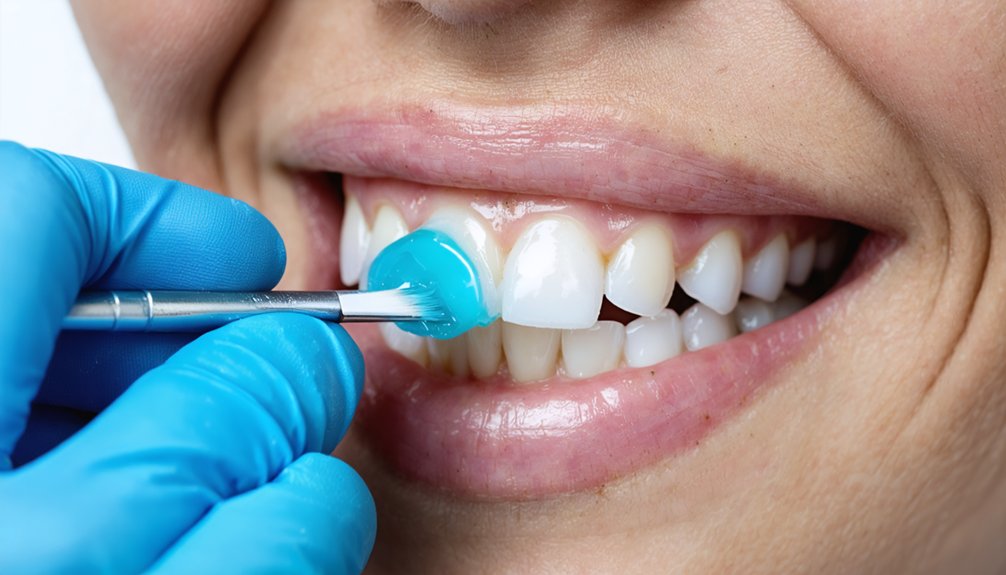
You can whiten your teeth safely at home by matching your method to your sensitivity level and whitening goals. Stick to ADA-approved products, keep hydrogen peroxide concentrations at or below 3%, and limit baking soda use to two to three times weekly. Overusing peroxide-based treatments silently erodes enamel before you notice damage. Stop immediately if you experience sensitivity, gum irritation, or translucent tooth edges. The right approach makes all the difference.
Key Takeaways
- Limit baking soda use to two or three times weekly, as overuse risks enamel erosion despite its effective surface stain removal.
- Keep hydrogen peroxide concentrations at or below 3% to safely whiten teeth while preventing enamel damage and sensitivity.
- Identify your sensitivity level before choosing a whitening method, as frequent sensitivity warrants avoiding high-concentration peroxide products.
- Stop whitening immediately if you notice increased sensitivity, gum irritation, white patches, or translucent tooth edges indicating enamel damage.
- Use ADA-approved products and consider professional custom trays to minimize gum irritation and reduce risks of enamel overexposure.
The Most Common At-Home Whitening Mistakes That Damage Enamel
While at-home whitening is generally safe, misusing these products is one of the fastest ways to compromise your enamel. Overusing peroxide-based treatments beyond two to three times weekly accelerates erosion rather than enhancing results.
Misusing at-home whitening products doesn’t accelerate results—it accelerates enamel erosion.
Many whitening myths suggest that more frequent application produces faster outcomes—it doesn’t. You’re instead stripping protective enamel layers, increasing sensitivity and long-term damage risk.
Additional mistakes include using non-ADA-approved products, skipping custom-fitted trays in favor of ill-fitting strips, and applying baking soda daily rather than the recommended two to three times weekly.
Enamel protection depends on strict adherence to product guidelines and concentration limits—3–10% peroxide for strips, 3% for hydrogen peroxide pastes.
Controlling your whitening routine means respecting these parameters, not exceeding them.
How to Match a Whitening Method to Your Sensitivity and Goals
Before selecting a whitening method, you need to honestly assess your current sensitivity level, since high sensitivity rules out stronger peroxide-based treatments and points you toward gentler options like baking soda or oil pulling.
You should also define clear whitening goals—whether you’re maintaining results from a professional treatment or targeting moderate surface stains for the first time—because your objective directly determines which method’s strength and frequency are appropriate.
Once you’ve established both your sensitivity threshold and your goals, you can confidently match them to the right method, reducing your risk of enamel erosion while maximizing results.
Assess Your Sensitivity Level
Choosing the right whitening method starts with an honest assessment of your tooth sensitivity. Before selecting any treatment, conduct a thorough sensitivity assessment by identifying existing symptoms.
Do your teeth react sharply to cold beverages, sweet foods, or pressure? That’s symptom identification you can’t ignore.
If you experience frequent sensitivity, you’ll want to avoid high-concentration peroxide products and aggressive abrasives. Instead, opt for whitening toothpaste with mild polishing compounds or oil pulling, both of which carry minimal enamel risk.
If your teeth tolerate temperature changes well, you’re a stronger candidate for hydrogen peroxide methods or ADA-approved whitening strips.
Document your symptoms before starting any regimen. That record helps you track reactions, adjust your approach, and maintain control over your whitening outcomes.
Define Your Whitening Goals
Once you’ve mapped your sensitivity profile, the next step is defining what you actually want from whitening.
Are you maintaining results after a professional treatment, or correcting years of staining from dietary impacts like coffee, tea, or wine? Your goal determines your method.
For maintenance, whitening toothpaste or mouthwash provides sufficient daily action without overexposure.
For moderate staining, baking soda or hydrogen peroxide methods offer controlled, measurable progress when used at the recommended whitening frequency of two to three times weekly.
For significant discoloration, ADA-approved strips or dentist-designed take-home trays deliver stronger, targeted results.
Matching method to goal prevents overtreatment. Excessive whitening frequency accelerates enamel erosion and sensitivity.
Define a clear target, select the appropriate tool, and adjust based on results.
Match Methods to Needs
Sensitivity and goals don’t exist in isolation—they work together to narrow your method selection to one or two practical options.
If you’re managing sensitive enamel, dismiss whitening myths suggesting aggressive methods accelerate results—they accelerate damage instead. Prioritize enamel care by selecting low-abrasion options: whitening toothpaste, oil pulling, or ADA-approved strips at 3% peroxide concentration.
If sensitivity is minimal and you’re targeting deeper discoloration, hydrogen peroxide paste used two to three times weekly delivers clinically supported results without overexposure.
For maintenance after professional treatment, whitening mouthwash combined with baking soda brushing sustains your outcome efficiently.
Match intensity to your actual condition. You control the variables—concentration, frequency, and method—so build your protocol around verified evidence, not aggressive marketing claims.
Whitening Toothpaste and Mouthwash: Safe Enough to Use Every Day
When it comes to daily whitening options, toothpaste and mouthwash are among the safest choices you can make. Whitening toothpastes contain mild polishing compounds that remove surface stains without altering your natural tooth color. Their low abrasiveness means minimal enamel risk during routine integration into your brushing habits.
Toothpaste benefits extend beyond aesthetics—they’re especially effective for maintaining results after professional treatments.
Whitening toothpaste does more than brighten—it locks in your professional treatment results for lasting, everyday impact.
Mouthwash effectiveness, while more gradual, complements your efforts by delivering low-strength whitening agents that reduce plaque and surface stains over time. You’ll also gain fresher breath as an added advantage.
Both options integrate seamlessly into your existing oral care routine. Used consistently and as directed, they give you reliable daily whitening control without requiring significant lifestyle adjustments or risking unnecessary dental complications.
Baking Soda: The Right Way to Whiten Teeth Without Damage
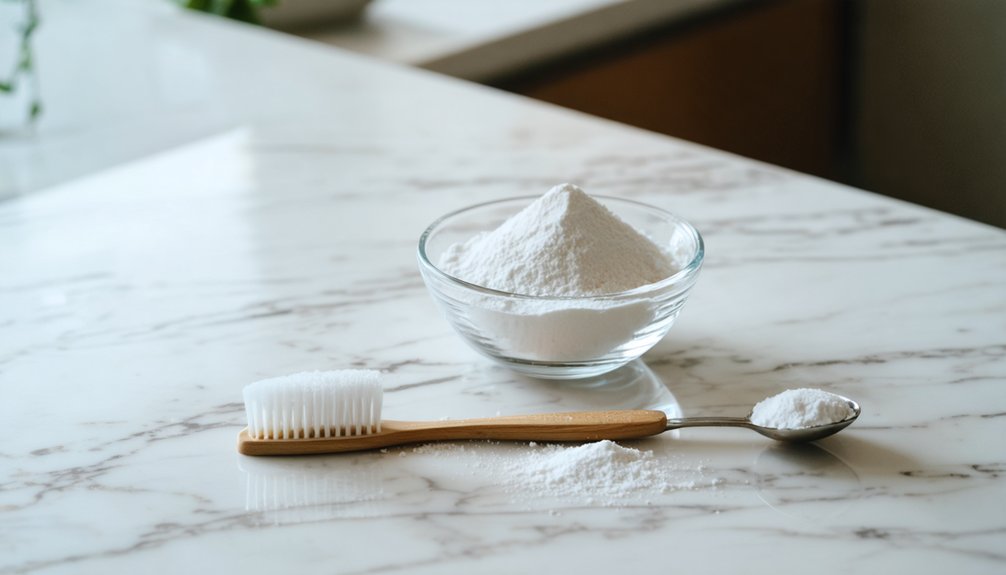
Baking soda works as a mild abrasive that scrubs away surface stains while creating an alkaline environment that inhibits bacterial growth.
To use it safely, mix one teaspoon of baking soda with two teaspoons of water to form a paste, then brush for one to two minutes, two to three times per week.
Studies confirm this method reduces both plaque and gum inflammation without the enamel erosion risk that comes with harsher whitening agents.
Baking Soda’s Whitening Benefits
Although it may seem too simple to be effective, baking soda is a scientifically supported option for removing surface stains from your teeth. Its mild abrasiveness scrubs away discoloration without compromising enamel integrity when you manage baking soda applications and whitening frequency correctly.
Key benefits backed by research include:
- Plaque reduction: Studies confirm lower plaque levels with consistent use
- Antibacterial environment: Its alkaline properties actively inhibit harmful bacterial growth
- Gentle abrasion: Removes surface stains without aggressive enamel erosion
- Inflammation control: Regular use correlates with reduced gum inflammation
To maximize results, limit whitening frequency to two or three sessions weekly. Overuse undermines your enamel’s protective layer, negating the benefits entirely.
You’re in control—precision and consistency determine your outcomes.
Safe Application Techniques
Applying baking soda correctly determines whether you get results or risk enamel damage.
Mix one teaspoon of baking soda with two teaspoons of water to form a consistent paste. Apply it directly to your teeth using a soft-bristled toothbrush, using gentle circular motions for one to two minutes. Rinse thoroughly afterward to remove all residue.
Whitening frequency matters as much as technique. Limit safe application to two to three times per week—daily use accelerates enamel erosion rather than improving results.
Studies confirm this schedule reduces plaque and gum inflammation without compromising tooth structure. Don’t substitute baking soda for your regular fluoride toothpaste; use it as a targeted supplement.
You control the outcome by respecting these boundaries consistently.
Is Hydrogen Peroxide Safe for At-Home Whitening?
When used correctly, hydrogen peroxide is a safe and effective at-home whitening agent. Following proper safety guidelines and application techniques guarantees you’ll minimize risks while achieving results.
When used correctly, hydrogen peroxide is a safe, effective whitening agent that minimizes risks while delivering real results.
Use this evidence-backed formula:
- Combine 1 teaspoon baking soda, 3 drops of 3% hydrogen peroxide, and 8 drops of water
- Maintain concentration levels at or below 3% to prevent enamel erosion
- Apply with a toothbrush for 1–2 minutes, then rinse thoroughly
- Limit use to 2–3 times weekly to protect enamel integrity
A 2020 clinical trial confirmed that higher-concentration peroxide toothpastes produce measurable whitening after 12 weeks.
Oil Pulling: A Gentle Whitening Alternative That Protects Enamel
For those seeking a gentler approach without bleaching agents, oil pulling offers a whitening method that works without exposing your enamel to any acidic compounds. You swish coconut oil around your mouth for a set period, allowing its antimicrobial properties to inhibit bacterial growth while cleaning tooth surfaces.
Unlike peroxide-based treatments, this natural whitening technique carries no acid exposure risk, making it safe for daily use. You’ll achieve a progressively brighter smile without compromising enamel integrity.
One practical note: spit the used oil into a trash receptacle rather than your sink to prevent drain clogs.
Oil pulling won’t dramatically bleach deep stains, but it delivers consistent, protective maintenance that complements your broader whitening strategy while keeping sensitivity and enamel erosion concerns effectively off the table.
Warning Signs Your Whitening Routine Is Damaging Your Teeth
Even the safest at-home whitening methods can cause damage if you’re overusing them or ignoring early warning signs. Monitoring your enamel health requires vigilance—whitening frequency directly impacts long-term outcomes.
Even the safest whitening methods can cause lasting damage when overused or when early warning signs go ignored.
Watch for these indicators:
- Increased tooth sensitivity to hot, cold, or sweet substances signals enamel erosion
- Gum irritation or white patches indicate chemical overexposure from bleaching agents
- Translucent tooth edges confirm progressive enamel thinning requiring immediate cessation
- Persistent sharp pain suggests pulp involvement, demanding professional evaluation
If you notice any of these signs, stop your current whitening routine immediately.
Reduce application frequency, switch to lower-concentration products, or consult your dentist before continuing. Protecting your enamel health means recognizing when ambition outpaces safety—no aesthetic result justifies irreversible structural damage.
Professional At-Home Kits: Are They Actually Worth It?
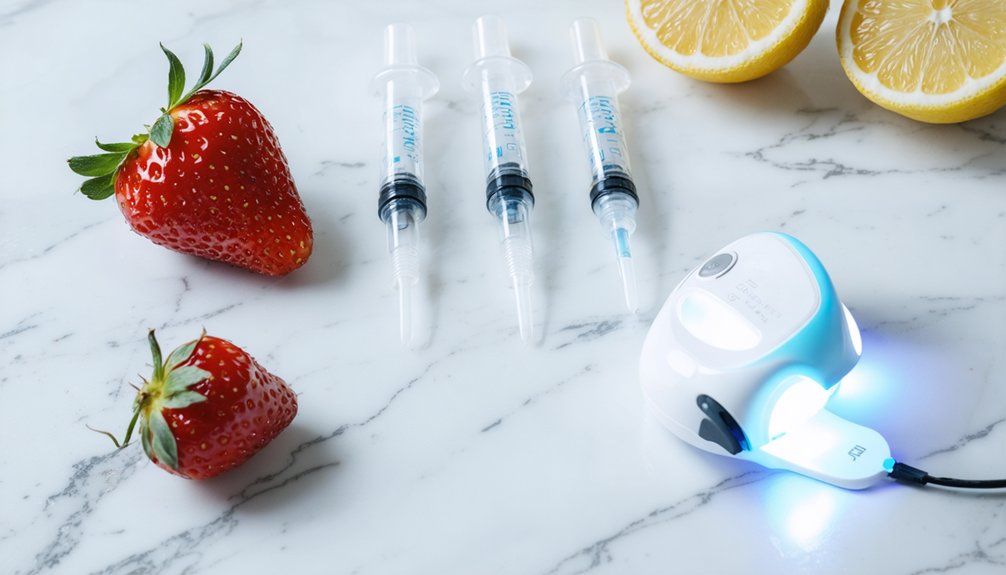
Why spend more on professional at-home kits when drugstore strips line every pharmacy shelf? The cost comparison favors OTC products initially, but professional whitening benefits justify the investment.
Custom dentist trays fit your unique dental anatomy, markedly reducing gum irritation and enamel exposure risks that generic strips can’t prevent.
Take-home kits prescribed by dentists contain stronger peroxide concentrations than anything you’ll find over the counter, yet they’re engineered specifically for your sensitivity threshold.
ADA-approved formulations minimize adverse reactions while delivering measurable results. You’re not paying for a brand name — you’re paying for precision and safety protocols tailored to your mouth.
If you’re serious about controlling outcomes and protecting your enamel long-term, professional at-home kits aren’t a luxury. They’re a calculated, evidence-backed decision.
Habits That Make Your Whitening Results Last Longer
Maintaining your whitening results comes down to consistent, targeted habits that address both stain prevention and enamel preservation. Applying these whitening maintenance tips strategically extends your results without additional treatments.
- Limit dietary stain prevention culprits—coffee, tea, and red wine—or rinse immediately after consuming them.
- Brush twice daily with whitening toothpaste to manage surface deposits before they penetrate enamel.
- Use whitening mouthwash daily to reduce plaque accumulation and reinforce gradual brightness.
- Schedule professional cleanings every six months to remove calcified stains beyond home care’s reach.
You’re in control of how long your results last. Consistent brushing, smart dietary choices, and ADA-approved maintenance products work together to preserve brightness.
Your habits determine how long your results last—consistent brushing, smart choices, and the right products preserve your brightness.
Neglecting these habits accelerates stain recurrence, undoing your investment faster than most people anticipate.
Frequently Asked Questions
Can Whitening Treatments Affect Dental Crowns, Veneers, or Fillings?
Like oil and water, whitening treatments don’t mix with crowns, veneers, or fillings—they won’t whiten restorations. You’ll risk crown sensitivity and compromise veneer longevity. Consult your dentist to protect your restorations effectively.
Is It Safe to Whiten Teeth During Pregnancy or Breastfeeding?
You shouldn’t whiten teeth during pregnancy or breastfeeding. Pregnancy precautions strongly advise avoiding peroxide-based treatments due to unknown fetal risks. Breastfeeding guidelines similarly recommend postponing whitening until you’ve finished nursing to eliminate potential infant exposure.
At What Age Can Teenagers Safely Begin At-Home Whitening?
Studies show enamel fully matures around age 14-16. You shouldn’t begin at-home whitening before 16, as teenage sensitivity peaks during development. Protecting enamel health now guarantees safer, more effective whitening results later.
Does Teeth Whitening Interact With Any Common Medications?
Whitening agents can cause medication interactions, particularly with blood thinners and certain antibiotics. If you’re experiencing teeth sensitivity or taking regular medications, you should consult your dentist before starting any at-home whitening treatment.
How Long Should You Wait Before Eating After Whitening?
Ironically, right after whitening, you’re most vulnerable—wait 30–60 minutes before eating. Your teeth sensitivity peaks post-treatment, so avoid staining foods for 24 hours. Managing whitening frequency guarantees you’re protecting enamel while maximizing results effectively.
References
- https://www.northeastdentalarts.com/blog/what-is-the-least-damaging-way-to-whiten-your-teeth/
- https://www.youtube.com/watch?v=S8kPjMd8akI
- https://www.healthline.com/nutrition/whiten-teeth-naturally
- https://www.berkeleyhillsdentist.com/brighten-your-smile-naturally-berkeley-home-remedies-for-teeth-whitening/
- https://mytoothhq.com/6-simple-ways-to-naturally-whiten-your-teeth-at-home/
- https://www.goodrx.com/conditions/dental-care/is-teeth-whitening-safe
- https://newsnetwork.mayoclinic.org/discussion/mayo-clinic-q-and-a-many-safe-choices-available-to-help-whiten-teeth/
- https://news.llu.edu/patient-care/7-dentist-approved-tips-safely-whiten-your-teeth
- https://www.ada.org/resources/ada-library/oral-health-topics/whitening
- https://www.pleasantfamilydentistry.com/blog/6-natural-ways-to-whiten-your-teeth