Maintaining bright white teeth requires consistent daily habits that protect enamel and prevent stains from taking hold. You’ll need to brush twice daily at a 45-degree angle, floss every day, and rinse with water after consuming coffee, tea, or wine. Avoid smoking, limit acidic foods, and use ADA-approved whitening products consistently. The strategies that deliver the most dramatic, lasting results are just ahead.
Key Takeaways
- Brush twice daily using soft bristles at a 45-degree angle with small circular motions for two full minutes.
- Floss daily in a “C” shape to remove plaque and prevent hidden stains from bonding to enamel.
- Rinse with water immediately after consuming staining beverages like coffee, tea, or red wine.
- Use ADA-approved whitening toothpaste and whitening strips consistently, as skipping applications undermines progress.
- Quit tobacco, limit acidic foods, and schedule regular dental evaluations to sustain long-term whitening results.
The Brushing Mistakes That Are Yellowing Your Teeth
Brushing your teeth daily doesn’t guarantee a brighter smile if your technique is working against you. Aggressive, back-and-forth scrubbing compromises enamel protection, accelerates gum recession, and leaves plaque removal incomplete — all contributing to yellowing over time.
Refine your brushing techniques by angling bristles 45 degrees toward the gumline and using small, controlled circular motions. This approach prioritizes gum health while lifting surface pigments efficiently. Spend two full minutes per session, addressing every tooth surface systematically.
Toothbrush selection matters equally. Soft bristles paired with ADA-approved whitening toothpaste deliver effective stain prevention without sacrificing enamel integrity.
Replace your toothbrush every three to four months — worn bristles clean poorly and undermine every other effort you’re making.
How Daily Flossing Keeps Your Teeth White Between Brushing
When you skip flossing, you’re leaving up to 40% of your tooth surfaces untouched, allowing plaque and pigment-trapping debris to accumulate in the interdental spaces your brush can’t reach.
Daily flossing removes these hidden stains before they bond to enamel, actively preserving the brightness that brushing alone can’t maintain.
Flossing Removes Hidden Stains
Flossing reaches the 40% of tooth surfaces that your toothbrush simply can’t access, clearing out the plaque and food particles that accumulate between teeth and quietly contribute to discoloration over time.
Hidden plaque hardens into tartar, creating a rough surface that traps pigments from coffee, tea, and wine. Daily flossing techniques determine how effectively you eliminate these threats before they settle permanently.
Curve the floss against each tooth surface rather than snapping it between contact points. This precise motion lifts debris without traumatizing gum tissue.
Use a water flosser or interdental brushes if standard string floss feels difficult to maneuver. Always use fresh floss sections to avoid redistributing bacteria.
Consistent, correct execution keeps interproximal spaces clean and your smile visibly brighter between brushing sessions.
Interdental Cleaning Prevents Buildup
Daily interdental cleaning does more than remove what you can already see — it interrupts the cycle of buildup that gradually dulls your enamel’s natural brightness. Plaque accumulates between teeth within hours, and without consistent intervention, it hardens into tartar that resists brushing entirely.
Your choice of interdental tools matters. String floss, water flossers, and interdental brushes each target different gap sizes and tooth geometries, so selecting the right instrument for your anatomy maximizes effectiveness.
Refined flossing techniques — curving the floss against each tooth surface rather than snapping it through — guarantee you’re disrupting plaque at the margin where staining compounds settle first.
Incorporate interdental cleaning daily without exception. That consistency is what separates maintained brightness from gradual, preventable discoloration you’ll eventually struggle to reverse.
Daily Flossing Supports Whiteness
Between brushing sessions, plaque doesn’t pause — it continues accumulating in the tight contact zones where your toothbrush bristles simply can’t reach. Daily flossing dismantles this buildup before it calcifies into tartar or deepens into discoloration.
Among the most significant flossing benefits is intercepting pigment-trapping plaque at its source, preserving the luminosity you’ve worked to maintain.
Mastering proper flossing techniques amplifies these results. Curve the floss in a “C” shape against each tooth surface, sliding gently beneath the gumline rather than snapping aggressively between contacts. This controlled motion lifts debris without traumatizing tissue.
You’re not simply removing food — you’re protecting enamel clarity. Floss once daily, consistently, and you actively govern the aesthetic outcome of your smile between every brushing session.
Foods and Drinks That Dim Your Smile
What you eat and drink directly shapes the brightness of your smile, with staining beverages like coffee, tea, red wine, and cola depositing pigments onto enamel surfaces over time.
You can minimize this contact by drinking these liquids through a straw and rinsing your mouth with water immediately afterward.
Sugary foods compound the problem further, fueling bacterial activity that accelerates decay and discoloration, so reducing your sugar intake is essential to preserving a clean, white appearance.
Stain-Causing Beverages To Avoid
Though your brushing and flossing habits may be impeccable, what you drink can quietly undo that effort. Red wine, coffee stains, and tea discoloration are among the most aggressive threats to enamel brightness, depositing chromogens and tannins that bond deeply to tooth surfaces.
Cola effects extend beyond sugar damage, introducing phosphoric acid that weakens enamel and accelerates pigment absorption. Berry pigments in fruit juices and smoothies carry concentrated anthocyanins that stain with surprising efficiency.
Acidic drinks, including sports drinks, erode enamel’s protective layer, making teeth increasingly porous and vulnerable. You can minimize contact by drinking these beverages through a straw and rinsing immediately with water afterward.
Strategic consumption habits protect your investment in a consistently white, polished smile.
Sugary Foods And Decay
Everything you eat contributes to your oral environment, and sugary foods create conditions that actively destroy tooth brightness from within. When you consume sugar, oral bacteria metabolize it into acids that erode enamel, triggering decay that permanently compromises tooth structure and appearance.
Understanding sugar impact means recognizing that damage begins within 20 minutes of consumption.
Decay prevention starts with deliberate dietary control. You’ll want to eliminate sticky candies, pastries, and sweetened beverages that cling to tooth surfaces and prolong bacterial acid production.
When you do consume sugar, rinse immediately with water to neutralize acids before they penetrate enamel. Reducing your daily sugar intake doesn’t just protect your health—it directly preserves the luminous, white appearance you’re actively working to maintain.
Habits That Stain Teeth Faster Than You Can Whiten Them

Certain daily habits work against your whitening efforts faster than any treatment can reverse them.
Smoking deposits tar and nicotine deeply into enamel, accelerating discoloration beyond what standard whitening techniques can effectively address.
Coffee, tea, and red wine consumed without stain prevention strategies—like drinking through a straw or rinsing immediately afterward—compound pigment buildup daily.
Alcohol-based mouthwashes dry oral tissues, making enamel more porous and vulnerable to staining agents.
Neglecting consistent brushing and flossing allows chromogenic bacteria to colonize tooth surfaces, darkening them progressively.
Even acidic foods, when consumed frequently, erode enamel and expose the yellower dentin beneath.
You control the pace of discoloration by eliminating these habits deliberately, protecting both your investment in whitening and the long-term aesthetic integrity of your smile.
Whitening Toothpastes, Strips, and Rinses That Actually Work
Selecting the right whitening products requires understanding what each formulation actually does to your teeth.
ADA-approved whitening toothpastes use gentle abrasives or chemical agents to target surface stains without compromising enamel integrity.
ADA-approved whitening toothpastes lift surface stains without sacrificing the enamel integrity your teeth depend on.
Whitening strips deliver concentrated hydrogen peroxide directly onto tooth surfaces, offering measurable whitening effectiveness over consistent use.
For rinses, choose a hydrogen peroxide mouthwash at 1.5% or 3% concentration and apply it before brushing to maximize results.
If you prefer natural alternatives, oil pulling with coconut oil for 15 to 20 minutes removes bacteria while avoiding harsh chemicals.
Whichever products you choose, consistency drives results. Skipping applications or mixing incompatible products undermines your progress.
Control your outcomes by committing to a structured, evidence-based whitening routine that complements your daily oral hygiene habits.
When to See a Dentist for Faster Whitening Results
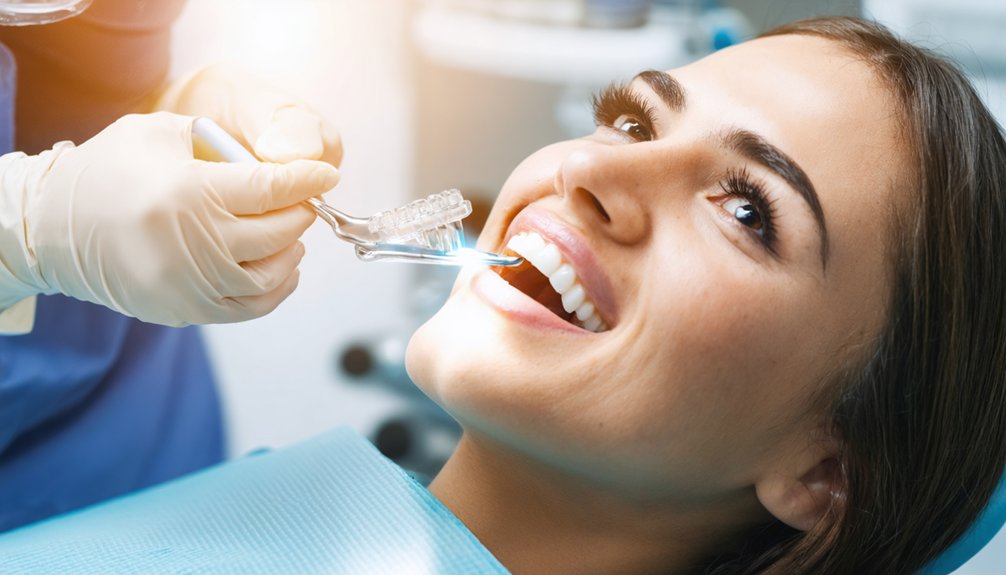
Some stains resist every over-the-counter product you apply, and that’s when professional intervention delivers results that no strip or rinse can match. Schedule a dental consultation to assess stain depth, enamel condition, and candidacy for in-office whitening treatments.
Professional-grade hydrogen peroxide gels and laser-activated procedures penetrate beyond surface discoloration, targeting intrinsic stains that consumer products can’t reach. You’ll achieve measurable results within a single session rather than weeks of inconsistent at-home application.
Discuss teeth sensitivity concerns with your dentist before treatment begins. Concentrated whitening agents can temporarily heighten sensitivity, but your dentist can apply desensitizing agents or adjust concentration levels to minimize discomfort.
Taking control means choosing precision over guesswork—professional whitening gives you documented, calibrated outcomes aligned with your specific aesthetic goals.
Simple Daily Habits That Keep Teeth Whiter Long-Term
Once professional whitening delivers your target shade, daily habits determine how long those results actually last. You control the outcome by building a precise routine that protects enamel and sustains brightness.
Brush twice daily using small circular motions at a 45-degree angle, spending two full minutes per session. Floss every day to eliminate plaque from surfaces your brush can’t reach. Staying hydrated supports consistent saliva production, your body’s most underrated natural whitening mechanism, as saliva neutralizes acids and clears pigment-carrying residues continuously.
Eat crunchy produce like apples and carrots to reinforce natural whitening between brushings. Rinse with water immediately after coffee, tea, or wine. Quit tobacco entirely.
These aren’t optional additions—they’re the structural commitments that keep your results from reversing within weeks.
Frequently Asked Questions
Does Drinking Fluoridated Water Help Prevent Teeth Discoloration Over Time?
Yes, drinking fluoridated water delivers key fluoride benefits that strengthen your enamel, making it more resistant to staining. Prioritizing consistent water consumption throughout your day actively shields your teeth from discoloration and decay over time.
How Does Saliva Production Naturally Contribute to Keeping Teeth White Daily?
Like a silent guardian, your saliva’s composition neutralizes acids and rinses away staining debris daily. It’s actively strengthening enamel protection, preventing discoloration before it starts—keeping your teeth naturally radiant without extra effort.
Can Tongue Scraping Improve Overall Teeth Whiteness and Oral Hygiene Effectively?
Yes, tongue scraping delivers measurable tongue benefits by eliminating odor-causing bacteria, directly elevating your oral hygiene standards. You’ll reduce bacterial load that contributes to staining, achieving a cleaner oral environment that supports consistently brighter, healthier-looking teeth daily.
How Long Should You Wait to Brush After Eating Acidic Foods?
Imagine sipping lemon juice, then immediately brushing—you’d scrub softened enamel away. You should wait 60 minutes after acidic foods, letting your tooth enamel reharden as saliva restores pH balance before you brush.
Does Staying Hydrated Throughout the Day Help Maintain Whiter Teeth Naturally?
Yes, staying hydrated delivers powerful hydration benefits for your smile. You’ll stimulate consistent saliva flow, one of nature’s best natural remedies, which actively neutralizes acids, washes away staining pigments, and preserves your enamel’s brilliant whiteness daily.
References
- https://timesofindia.indiatimes.com/life-style/health-fitness/health-news/8-daily-habits-and-home-remedies-to-get-white-and-bright-teeth-quickly/articleshow/111342523.cms
- https://www.westlosangelesperio.com/9-simple-daily-habits-to-whiten-your-teeth/
- https://www.listerine.com/articles/teeth-whitening/habits-white-teeth
- https://www.fairviewdentalcare.com/blog/7-habits-people-white-teeth/
- https://mypenndentist.org/dental-tips/2021/08/02/maintain-white-teeth/
- https://www.healthline.com/nutrition/whiten-teeth-naturally
- https://www.claytondentalstudio.com/blog/how-to-maintain-white-teeth-4963b
- https://www.youtube.com/watch?v=pxBK4NDS0-k
- https://dentistinsanmarcostx.com/4-tips-for-healthy-white-teeth-dentist-78666/
- https://flatironfamilydental.com/blog/10-daily-habits-that-improve-your-oral-health-i-flatiron-family-dental/