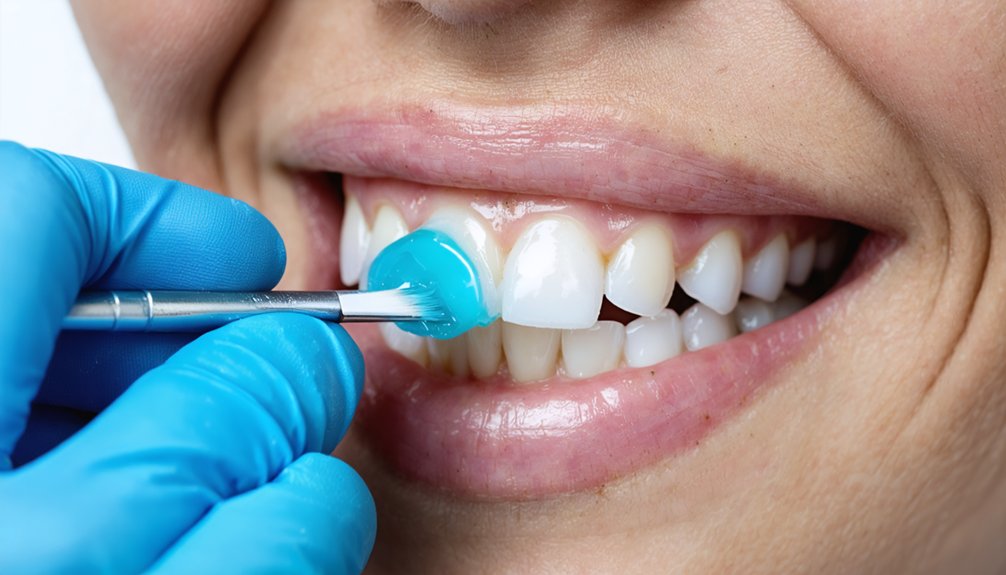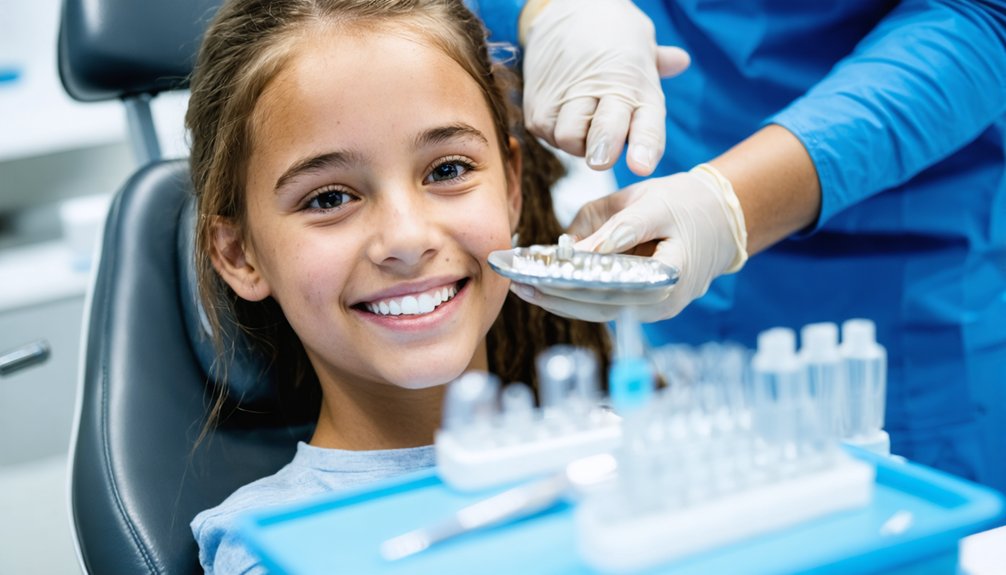
Teeth whitening can be safe for your teenager, but only when their dental development and oral health meet specific clinical criteria first. All permanent teeth should be fully erupted, enamel should be mature, and your teen’s mouth should be free of cavities or gum disease. Most dentists recommend waiting until around age 14-16. Skipping these checkpoints risks sensitivity, enamel damage, and uneven results. Keep going to find out exactly what makes a teen a safe candidate.
Key Takeaways
- Teeth whitening can be safe for teenagers once all permanent teeth have erupted and oral tissues are healthy, typically around age 14-16.
- Active cavities, gum disease, or thin enamel must be treated before whitening to prevent further damage or complications.
- Professional whitening is safer than over-the-counter products, offering controlled peroxide levels and custom-fitted trays to minimize sensitivity and enamel damage.
- Overusing whitening products does not accelerate results and instead increases risks of sensitivity, enamel erosion, and gum irritation.
- A dental evaluation before treatment is essential to confirm developmental readiness and ensure whitening is appropriate for the individual teenager.
Is Teeth Whitening Safe for Teenagers?
Teeth whitening can be safe for teenagers, but the answer depends on where your teen is in their dental development. The key factors aren’t just age — they’re whether all permanent teeth have fully erupted and whether your teen has healthy gums and enamel.
Teen teeth whitening safety isn’t just about age — it’s about dental development, erupted permanent teeth, and healthy gums and enamel.
Dental organizations, including the AAPD, confirm that whitening causes no irreversible tooth damage when used correctly. However, teen safety depends heavily on supervision. Unsupervised or premature whitening raises the risk of sensitivity, gum irritation, and enamel damage.
Most dental professionals recommend waiting until at least age 14 to 16, once baby teeth are gone and adult teeth are stable.
Before starting any whitening treatment, have a dentist evaluate your teen’s oral health to determine if they’re actually a good candidate.
What Age Can Teens Start Whitening Their Teeth?
Most dental professionals recommend waiting until your teen is at least 14 to 16 years old before starting any whitening treatment. The key factor isn’t just age — it’s whether all permanent teeth have fully erupted and enamel has properly matured.
Starting too early increases sensitivity risk and can worsen tooth discoloration rather than correct it. One of the most persistent whitening myths is that younger means faster, better results. That’s not accurate.
Immature enamel is more porous and vulnerable to peroxide exposure.
Before you approve any whitening product, schedule a dental evaluation. A dentist can confirm your teen’s teeth are developmentally ready, identify any underlying issues, and recommend the safest approach based on their specific oral health status.
Tooth Sensitivity, Enamel Damage, and Other Whitening Risks
Once your teen gets the green light on timing and tooth development, the next step is understanding what can go wrong if whitening isn’t done carefully. Whitening procedures carry real risks, especially for developing teeth.
Whitening carries real risks for developing teeth — knowing what can go wrong is just as important as knowing when to start.
Watch for these four common risks:
- Tooth sensitivity – affects 1 in 2 to 3 patients after bleaching
- Gum and tissue irritation – caused by direct peroxide contact
- Enamel erosion – linked to overuse, high concentrations, or extended exposure
- White spots or patchy results – common cosmetic concerns from improper application
Pulpal damage and increased leakage around existing restorations are additional complications. Teenagers are especially vulnerable to overuse because repeated exposure raises toxicity risk.
Controlling frequency, concentration, and application method directly reduces the chance of harm.
Should You See a Dentist Before Whitening?
Before you try any whitening product, you should schedule a dental exam to confirm that your permanent teeth are fully in and your gums and enamel are healthy enough to handle bleaching.
A dentist can spot active cavities, thin enamel, or existing restorations that make whitening risky or likely to produce uneven results.
Getting that professional review first greatly reduces your chances of sensitivity, gum irritation, or lasting damage.
Dentist Evaluation Matters
Scheduling a dental visit before your teen tries any whitening product is a step that can prevent a range of avoidable problems. A dentist can assess whether your teen’s teeth color, enamel maturity, and gum health actually support safe whitening.
Before approving any whitening products, a dentist will check for:
- Active cavities or gum disease that must be treated first
- Thin or compromised enamel that raises sensitivity risk
- Restorations like fillings or crowns that won’t respond to bleaching evenly
- Whether all permanent teeth have fully erupted
Skipping this evaluation means proceeding without knowing your teen’s actual oral health status. That gap in information is where avoidable damage happens.
Dental clearance isn’t optional—it’s the foundation of a safe whitening decision.
Assessing Oral Health First
Why does a dental visit matter before whitening? Because your oral health directly affects whether whitening is safe or even effective for you. A dentist checks for cavities, gum disease, thin enamel, and incomplete tooth development—all conditions that make whitening riskier.
If you have active decay or gum inflammation, bleaching agents can worsen damage and increase sensitivity.
Your oral hygiene habits also factor into the assessment. Inconsistent brushing or flossing signals a higher risk of irritation during treatment.
Diet considerations matter too—frequent consumption of acidic foods or drinks can weaken enamel before you even begin. A dentist evaluates these patterns and determines whether your teeth are strong enough to handle peroxide exposure safely.
Getting this evaluation first puts you in control of the outcome.
Professional Guidance Reduces Risks
Seeing a dentist before you whiten isn’t just a precaution—it’s the step that separates a safe outcome from an avoidable complication.
At your teen age, enamel maturity and tooth development directly affect whitening safety. A dentist identifies what an over-the-counter label can’t.
Professional evaluation gives you control by confirming:
- Whether all permanent teeth have fully erupted
- If enamel thickness supports peroxide exposure without damage
- Whether cavities or gum disease must be treated first
- Which product concentration and application method suits your specific oral health
Without this step, you’re guessing.
A dentist can recommend ADA-accepted products, fit custom trays to reduce gel contact, and monitor for sensitivity.
Supervised whitening consistently produces fewer complications than unsupervised use—because the right guidance eliminates the variables that cause harm.
Who Is a Good Candidate for Teen Whitening?
Not every teenager is automatically a good candidate for whitening, even if their teeth look healthy on the surface. Dentists evaluate several factors before recommending treatment, and you should understand what qualifies someone as a reasonable candidate.
Strong candidates typically share these characteristics:
- Full permanent dentition – All baby teeth are gone, and tooth maturity is confirmed.
- No active cavities or gum disease – Existing oral health problems must be resolved first.
- Healthy enamel – Thin or weakened enamel increases sensitivity risk.
- Realistic teeth discoloration concerns – Surface staining responds better than intrinsic discoloration.
- No existing restorations – Crowns and fillings won’t whiten evenly with natural teeth.
If you don’t meet these criteria, whitening could cause more harm than cosmetic benefit. A dentist confirms candidacy before you start.
Safer Ways for Teens to Whiten Their Teeth
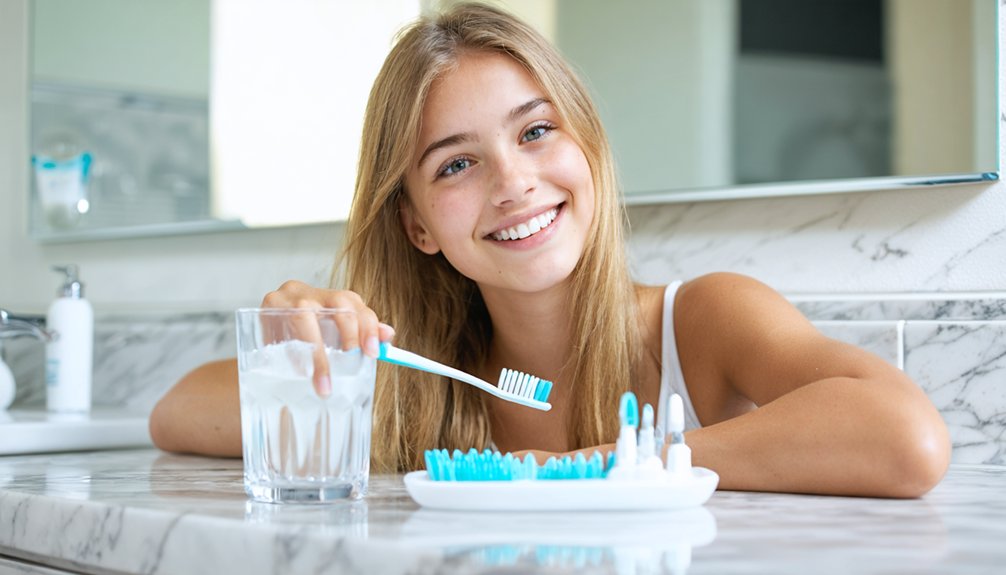
If you’re considering whitening, choosing the right method and setting makes a significant difference in safety. A dentist can evaluate your tooth development, recommend an appropriate product, and fit you with custom trays that minimize gel exposure and gum irritation.
If you use over-the-counter products at home, you should do so only with adult guidance and follow instructions carefully to avoid overuse.
Dentist-Supervised Whitening Options
When a dentist oversees the whitening process, teens get a safer, more controlled experience than any over-the-counter product can offer on its own. Despite common teeth whitening myths, professional treatment isn’t just a stronger version of store-bought strips—it’s a clinically guided protocol tailored to your teen’s oral health status.
Dentist-supervised options typically include:
- Custom-fitted trays that minimize gel contact with gum tissue
- Controlled peroxide concentrations matched to enamel maturity
- Pre-treatment evaluations to rule out cavities, thin enamel, or restorations
- Monitored application schedules that reduce overuse risk
Alternative whitening methods lack this oversight. A dentist can confirm whether your teen’s permanent teeth are fully erupted and structurally ready, making professional supervision the most preventive, evidence-based starting point.
Safe At-Home Whitening Tips
At-home whitening can be a reasonable option for teens, but only with adult guidance and the right product choices. Before addressing teeth discoloration, confirm that all permanent teeth are fully erupted and that no cavities or gum issues are present.
Choose products carrying the ADA Seal of Acceptance, and follow instructions precisely without extending application time or frequency.
Custom trays from a dentist reduce unnecessary gel exposure compared to generic over-the-counter strips.
Don’t let whitening myths convince you that more product means faster or better results—overuse increases sensitivity and enamel risk.
Avoid non-dental commercial whitening services, which carry higher complication rates.
If you notice tooth sensitivity or gum irritation, stop use immediately and consult a dentist before continuing any whitening treatment.
When Should Your Teen Wait Before Whitening?
Timing matters more than most parents realize when it comes to teen teeth whitening. Your teen’s age and tooth development stage directly determine whether whitening is appropriate or premature.
Dental professionals generally recommend waiting if any of these conditions apply:
- Baby teeth are still present
- Your teen is under age 14
- Permanent teeth haven’t fully erupted yet
- Active cavities or gum disease exist
Starting too early risks enamel damage, sensitivity, and uneven results on still-maturing teeth. The safest approach is confirming that all permanent teeth are fully in place before proceeding.
A dentist can assess your teen’s specific development and give you a clear go or wait decision rather than guessing based on age alone.
Frequently Asked Questions
Can Teeth Whitening Affect Braces or Orthodontic Treatment in Teens?
With 1 in 2 patients experiencing sensitivity, you should avoid whitening during active orthodontic treatment. Braces compatibility is poor, and orthodontic concerns include uneven coloring where brackets sit, leaving noticeable patches after removal.
Do Whitening Results Last as Long for Teenagers as for Adults?
Your whitening longevity may actually be shorter than adults’ since your diet and habits shift frequently. You’ll also notice teeth sensitivity signals faster re-staining. Maintaining results requires consistent preventive care and periodic dentist-supervised touch-ups tailored to your age.
Are Natural or DIY Whitening Remedies Safer Than Peroxide Products for Teens?
Don’t be fooled by the “natural” label — natural remedies and DIY whitening aren’t automatically safer for your teeth. You’re better off choosing dentist-approved peroxide products, as unregulated DIY methods can still cause enamel erosion and gum damage.
Can Teens Whiten Teeth if They Have Dental Sealants?
You can whiten teeth with dental sealants, but expect whitening compatibility issues—sealants won’t respond like natural enamel. Consult your dentist first to assess your specific oral health before starting any whitening treatment.
Does Diet Affect How Well Whitening Works for Teenagers?
Like painting a wall you keep scuffing, diet impact undermines whitening effectiveness. You’ll undo results faster if you consume staining foods and drinks. Avoid coffee, soda, and berries right after treatment to maintain your teen whitening outcomes.
References
- https://www.nationwidechildrens.org/family-resources-education/700childrens/2024/02/tooth-whitening-for-teens
- https://www.parkavepd.com/2024/01/02/what-are-my-teeth-whitening-options-for-my-teenager/
- https://www.familysmilespa.com/2025/08/25/tooth-whitening-for-teens-how-and-when-to-do-it-safely/
- https://www.aapd.org/globalassets/media/publications/archives/lee-27-5.pdf
- https://legacydentalonline.com/is-teeth-whitening-safe-for-kids-and-teens/
- https://bentonvilledentist.com/blog/can-whitening-damage-my-teens-tooth-enamel/
- https://pubmed.ncbi.nlm.nih.gov/16435634/
- https://www.aapd.org/research/oral-health-policies–recommendations/use-of-dental-bleaching-for-child-and-adolescent-patients/
- https://www.thesuperdentists.com/teeth-whitening-for-kids-how-to-whiten-kids-teeth-safely/
- https://www.babylondentalcare.com/blog/pros-and-cons-of-whitening-teeth-for-teens/