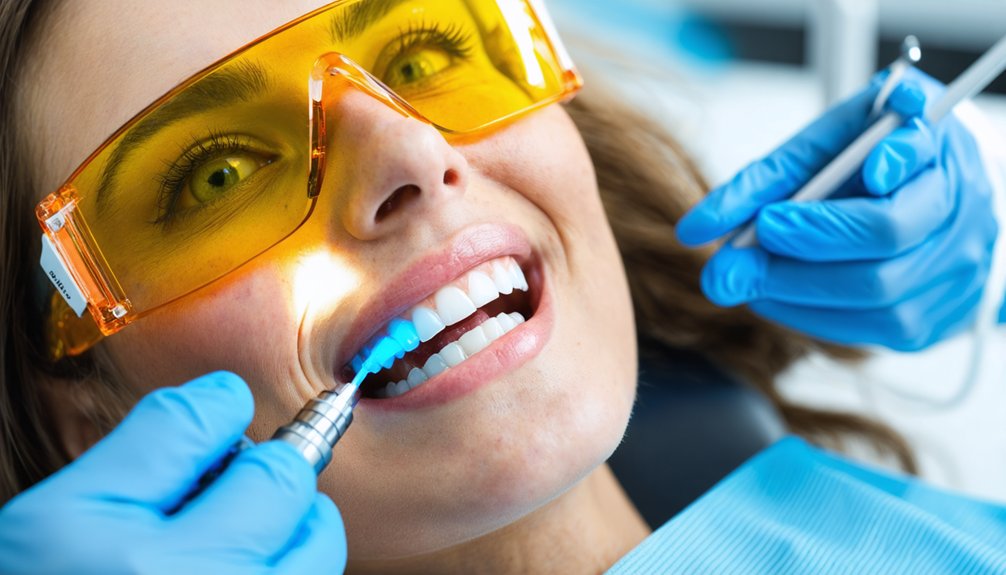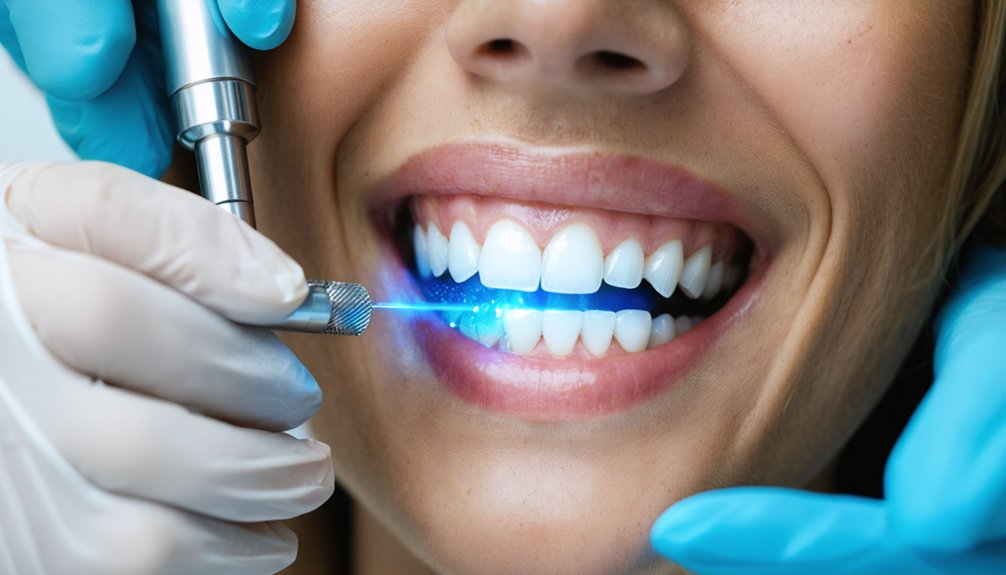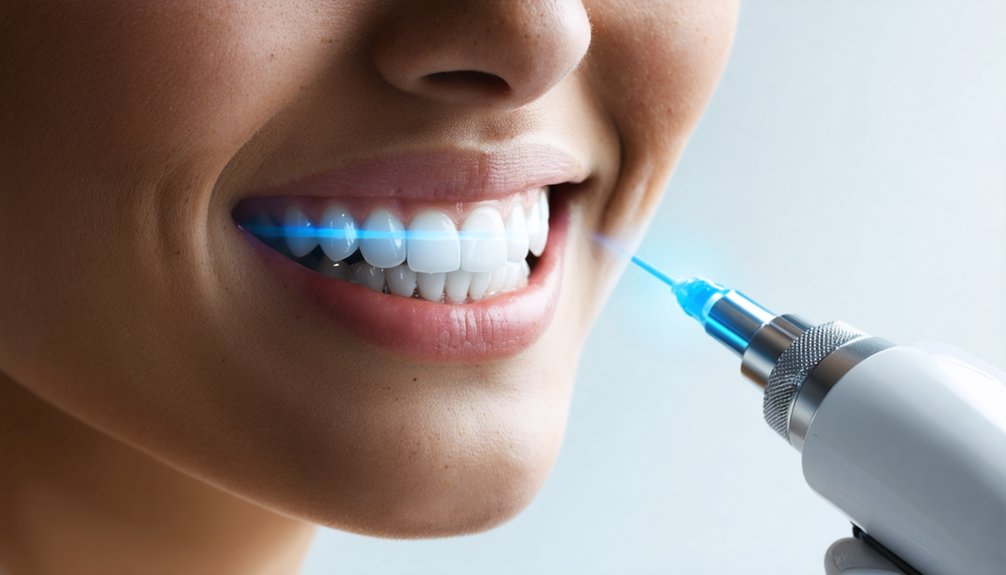
Laser teeth whitening isn’t permanent — your results will fade over time, typically lasting anywhere from 6 months to 3 years depending on your habits and oral care routine. Staining foods, tobacco use, and poor dental hygiene all accelerate discoloration. You’ll likely need periodic touch-up treatments to maintain your desired brightness. The good news is that with the right approach, you can substantially extend your results — and that’s exactly what we’ll break down ahead.
Key Takeaways
- Laser teeth whitening is not permanent; results typically last between 6 months and 3 years depending on individual habits.
- The first 48 hours post-treatment are critical, as open enamel pores make teeth highly susceptible to restaining.
- Consuming staining agents like coffee, red wine, and tobacco significantly accelerates the fading of whitening results.
- Annual touch-up sessions are recommended to maintain desired brightness after the initial whitening treatment.
- Consistent oral hygiene and dietary discipline are essential for prolonging laser whitening results as long as possible.
Is Laser Teeth Whitening Permanent?
Although laser teeth whitening delivers fast and noticeable results, it’s not a permanent solution. The whitening effect fades over time as your teeth encounter new staining agents, meaning you’ll need touch-ups to maintain brightness. Most results last anywhere from six months to three years, depending on your habits and oral care routine.
Laser teeth whitening fades over time — expect touch-ups every six months to three years based on your habits.
You should also understand the procedural risks before committing. Tooth sensitivity and potential enamel erosion are real concerns that can affect your long-term dental health.
Additionally, dental insurance typically doesn’t cover this cosmetic procedure, so you’re managing both the financial and physical risks independently.
The procedure works best when you actively limit staining habits like tobacco use and coffee consumption. Laser whitening gives you control over your appearance, but sustaining results requires consistent effort on your part.
How Long Do Laser Teeth Whitening Results Last?
How long your results last depends heavily on the choices you make after leaving the dental chair. Most patients see results lasting anywhere from six months to three years, with the average falling between one and two years before a touch-up becomes necessary.
Your lifestyle drives that timeline. Coffee, red wine, tobacco, and poor oral hygiene accelerate staining and shorten your results significantly. If you eliminate those factors, you extend your investment.
Before committing, consider a cost comparison: a single session runs $100–$450, with full treatment reaching $1,800 or more. If you need frequent touch-ups, costs compound quickly.
An alternative treatment like professional take-home trays may offer comparable longevity at lower cumulative expense, giving you more control over both your schedule and your budget.
What Makes Laser Teeth Whitening Results Fade Faster?
Your habits after treatment are the biggest threat to lasting results. If you regularly consume coffee, red wine, tea, or other deeply pigmented foods and drinks, you’ll accelerate staining on your freshly whitened enamel.
Tobacco use—whether smoked or chewed—compounds this effect, introducing tar and nicotine that discolor teeth faster than almost any dietary factor.
Staining Foods and Drinks
After investing in laser teeth whitening, what you eat and drink plays a decisive role in how long your results last. Coffee, red wine, tea, and dark berries contain chromogens and tannins that bind directly to enamel, accelerating discoloration.
Tobacco compounds the damage considerably.
Dietary restrictions aren’t optional if you want to protect your investment. The bleaching process temporarily opens enamel pores, making your teeth especially vulnerable to staining in the first 48 hours post-treatment.
What you consume during this window matters most.
Stain prevention requires deliberate choices: limit dark beverages, use a straw when possible, and rinse with water after consuming staining foods. These aren’t suggestions—they’re the variables you control that directly determine how long your whitening results hold.
Tobacco and Smoking Habits
Beyond what you eat and drink, tobacco use stands as one of the most aggressive accelerators of whitening fade. Nicotine and tar penetrate enamel deeply, causing stubborn discoloration that resurfaces quickly after treatment. If you smoke or use chewing tobacco, you’re actively working against your investment.
Consider the cost comparison: laser whitening sessions range from $400 to $1,800 or more, and dental insurance rarely covers cosmetic procedures.
Every cigarette shortens your results, forcing more frequent touch-ups and higher cumulative costs. You’re fundamentally paying to undo damage you’re continuing to create.
Quitting or markedly reducing tobacco use gives you direct control over how long your results last. It’s the single most impactful behavioral change you can make to protect your whitening outcome.
How Can You Make Laser Teeth Whitening Last Longer?
You can extend your results considerably by cutting back on coffee, red wine, tea, and other staining foods and drinks that accelerate discoloration.
Avoiding tobacco is equally important, as it’s one of the fastest ways to compromise your whitening investment.
Scheduling annual touch-up sessions with your dentist helps you maintain brightness and offset the natural fading that occurs over time.
Limit Staining Foods
What you eat and drink after laser teeth whitening has a direct impact on how long your results last. Staining agents penetrate tooth enamel quickly, especially in the days following treatment. Applying smart dietary restrictions gives you direct control over how long your investment holds.
Prioritize avoiding these three culprits:
- Coffee and tea – High tannin content aggressively stains enamel; switch to water or use a straw.
- Red wine – Chromogens and acids work together to discolor and weaken enamel faster than most beverages.
- Tomato-based sauces and dark berries – Deeply pigmented foods cling to enamel surfaces and accelerate color relapse.
Consistency with these dietary restrictions is one of the most controllable factors in preserving your results long-term.
Schedule Regular Touch-Ups
Dietary discipline protects your results, but it can’t stop the natural fading process entirely. Teeth gradually discolor through daily exposure, making regular touch-ups essential for maintaining brightness. Most dentists recommend scheduling a touch-up session annually or whenever noticeable fading occurs.
Plan your budget carefully since dental insurance typically excludes cosmetic procedures like whitening, meaning you’ll cover costs out of pocket. Individual sessions range from $100 to $450, so building that expense into your routine makes financial sense.
Before each touch-up, discuss tooth sensitivity with your dentist. Repeated treatments can increase sensitivity, and your provider can adjust gel concentration or session duration accordingly.
Proactive scheduling, combined with honest communication about sensitivity, keeps your whitening results consistent and your treatment plan both effective and manageable.
How Much Does Laser Teeth Whitening Cost?
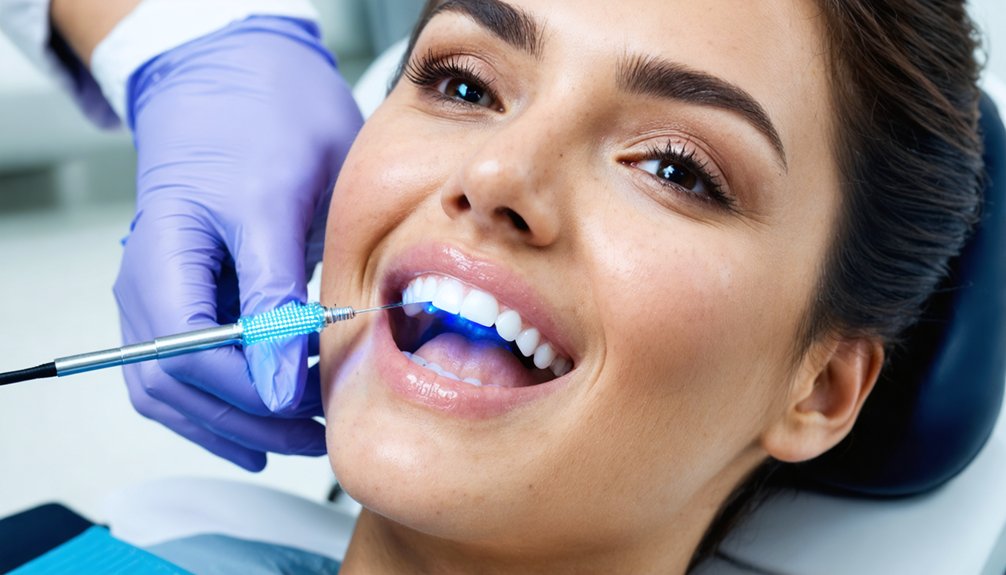
Laser teeth whitening carries a notable price tag, with a single session typically running between $100 and $450. Full treatment comparison across multiple sessions can push your total investment to $400–$1,800 or more. Cost considerations matter because insurance rarely covers cosmetic procedures, meaning you’re managing this expense entirely out-of-pocket.
Laser teeth whitening costs $100–$450 per session, with full treatment reaching $1,800 or more—entirely out-of-pocket.
Before committing, weigh these financial realities:
- Multiple sessions — Three to four sessions are often required for ideal results.
- Annual touch-ups — Maintenance treatments add recurring costs beyond your initial investment.
- No coverage on restorations — Crowns and dentures won’t respond to whitening, making prior dental work a sunk cost.
Understanding the full financial picture lets you plan strategically and avoid unexpected expenses.
Who Is Laser Teeth Whitening Actually Right For?
Knowing the cost is only half the equation — the other half is whether you’re actually a good candidate. Laser teeth whitening works best if you have natural teeth with surface or lifestyle staining from coffee, wine, or tobacco. It won’t work on crowns, veneers, or dentures — those won’t respond to bleaching gel regardless of laser intensity.
You’re also a stronger candidate if you can fund it out-of-pocket, since dental insurance rarely covers cosmetic procedures. If cost is a barrier, alternative treatments like tray-based whitening or whitening strips offer lower price points with comparable long-term results.
You’re not an ideal candidate if you have severe enamel erosion or deep intrinsic staining — laser whitening won’t fix structural discoloration, and pushing forward anyway risks sensitivity without meaningful results.
Frequently Asked Questions
Can Laser Teeth Whitening Cause Long-Term Damage to Tooth Enamel?
Yes, laser teeth whitening can risk long-term enamel erosion if you overuse treatments. You’ll likely experience tooth sensitivity, and repeated exposure weakens enamel over time, so controlling treatment frequency protects your dental health effectively.
Does Laser Whitening Work Differently on Sensitive Teeth?
Yes, laser whitening works differently on your sensitive teeth. You’ll experience heightened tooth sensitivity during treatment, which can reduce laser effectiveness, as dentists must lower intensity or shorten exposure to protect your enamel from further irritation.
How Does Laser Whitening Compare to UV Light Whitening Treatments?
Like alchemists of old, you’re chasing transformation. Laser safety makes laser whitening superior—it’s more controlled and precise. UV efficacy remains debatable, as UV light carries higher sensitivity risks and delivers less consistent, predictable whitening results for you.
Can You Whiten Teeth That Have Undergone Root Canal Treatment?
Yes, you can whiten root canal-treated teeth, but standard laser whitening won’t fix root canal discoloration effectively. You’ll need internal bleaching, where your dentist places whitening agent inside the tooth for superior, controlled results.
Is Laser Teeth Whitening Safe During Pregnancy or Breastfeeding?
Picture a shield protecting new life—you shouldn’t risk laser teeth whitening during pregnancy or breastfeeding. Pregnancy safety concerns and breastfeeding considerations mean bleaching chemicals could harm your baby, so you’ll want to postpone treatment until after.
References
- https://www.healthline.com/health/dental-and-oral-health/laser-teeth-whitening
- https://www.fletcherfamilydentistry.com/laser-teeth-whitening-vs-other-methods/
- http://www.smilesatdoral.com/2020/11/13/things-to-know-about-laser-teeth-whitening/
- https://www.youtube.com/watch?v=nj-DYcJR1ZY
- https://www.biolase.com/procedures/dentists/tooth-whitening/
- https://dentalecostsmile.com/is-laser-teeth-whitening-permanent/
- https://www.dentalcurve.in/is-laser-teeth-whitening-permanent/
- https://www.nhs.uk/tests-and-treatments/teeth-whitening/
- https://www.dailytoothcare.com/archives/18812
- https://ddadental.com/blog/how-long-does-laser-teeth-whitening-last/