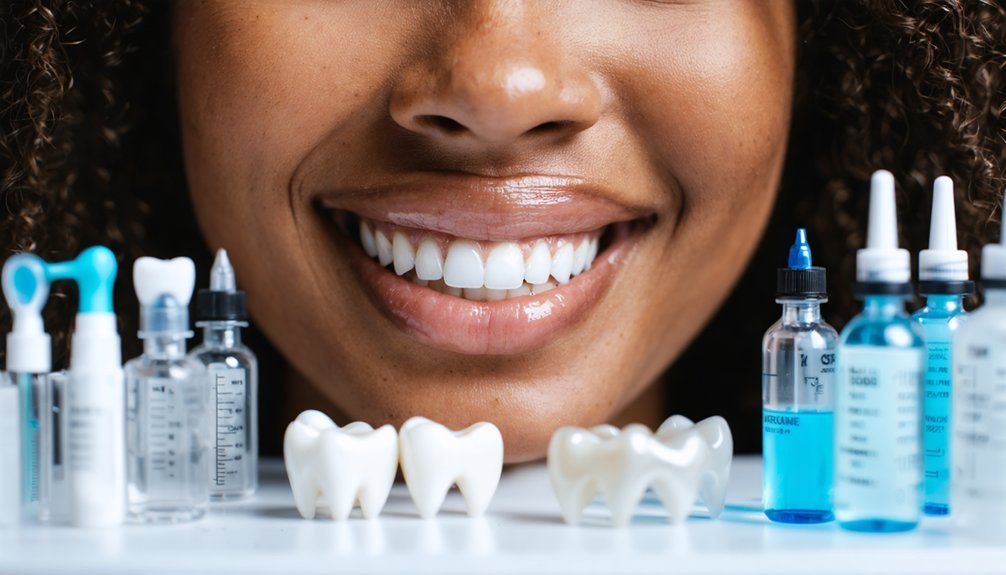
For fast results, you can use peroxide-based whitening strips containing 6% hydrogen peroxide or 10–14% carbamide peroxide to bleach surface stains within days. Baking soda used 2–3 times weekly gently lifts mild discoloration without harsh chemicals. Rinse immediately after consuming staining foods or drinks to reduce pigment absorption. However, if spots persist beyond three to four weeks or worsen, there’s much more you’ll need to know.
Key Takeaways
- Peroxide-based whitening strips deliver fast results within days by penetrating enamel to bleach surface stains effectively.
- Rinsing immediately after consuming staining foods or drinks reduces pigment absorption and prevents further discoloration.
- Baking soda used 2–3 times weekly gently lifts mild surface stains without significant enamel damage.
- Professional cleaning removes plaque, calculus, and surface stains in a single visit using specialized polishing tools.
- Avoid lemon juice and activated charcoal, as their acidity and abrasiveness can worsen enamel damage.
What Causes Dark Spots on Teeth?
Dark spots on teeth can stem from two distinct sources: extrinsic stains on the outer enamel surface or intrinsic discoloration originating deeper within the tooth structure. Understanding tooth discoloration causes helps you target the right solution.
Extrinsic stains form when chromogens from coffee, tea, red wine, or tobacco bind to your enamel. Poor brushing habits accelerate this stain formation process by allowing plaque and tartar to calcify onto tooth surfaces.
Intrinsic discoloration runs deeper. Trauma, certain medications like tetracycline, excessive fluoride during tooth development, or structural decay can all alter your tooth’s internal color. These causes won’t respond to surface-level treatments.
Identifying which type you’re dealing with determines whether at-home whitening will work or whether you’ll need professional intervention.
The Best At-Home Treatments for Surface Stains, Ranked
If you’re dealing with surface stains, peroxide-based whitening strips are your fastest at-home option, delivering visible results within days by breaking down discoloration at a slightly deeper level than brushing alone.
For a lower-cost alternative, baking soda works well a few times per week to lift food- and beverage-related stains without straining your budget.
No matter which treatment you choose, pairing it with consistent daily habits—brushing twice daily, flossing, and rinsing after meals—prevents new stains from undoing your progress.
Peroxide Strips Work Fastest
When surface stains are the problem, not all at-home treatments remove them at the same speed. Peroxide strips outperform baking soda and whitening toothpaste because peroxide effectiveness depends on direct, sustained contact with enamel, which strips maintain for 30 minutes or more per session. That extended contact allows the compound to penetrate stain depth that brushing-based methods can’t reliably reach.
You’ll typically see visible results within three to five days of consistent use. Choose strips with 10% to 14% carbamide peroxide or 6% hydrogen peroxide for meaningful reduction without excessive sensitivity. Follow the manufacturer’s schedule precisely — overuse won’t accelerate results and may irritate gum tissue.
For surface discoloration from coffee, tea, or tobacco, strips are your fastest evidence-supported option before considering professional whitening.
Baking Soda Budget Option
Peroxide strips deliver speed, but budget matters too — and baking soda is the lowest-cost option you’ll find for food- or beverage-related surface stains. Among natural remedies, it remains one of the most accessible tools for lifting mild discoloration caused by coffee, tea, or wine.
Apply it two to three times per week, not daily, since overuse accelerates enamel wear. Pair this routine with diet modifications — reducing tannin-heavy beverages and rinsing after meals — to slow new staining while baking soda addresses existing spots.
Expect gradual results rather than overnight transformation. If discoloration persists beyond three to four weeks, you’re likely dealing with calcified deposits or early decay, which no home remedy resolves.
At that point, a professional evaluation becomes your most efficient next step.
Daily Habits Prevent Stains
Treatments like whitening strips and baking soda correct existing stains, but daily habits determine how quickly new ones form. Lifestyle changes compound over time, making prevention more substantially than repeated correction.
Start with the fundamentals: brush twice daily with fluoride toothpaste, floss once, and rinse after meals—especially after coffee, tea, or red wine. These dietary adjustments reduce chromogen and tannin contact before pigments bind to enamel.
Use a straw for dark beverages to minimize direct surface exposure. Limit tobacco, which produces particularly resistant staining. If you can’t avoid staining foods, rinsing immediately afterward considerably reduces absorption.
Consistency separates people who maintain results from those who cycle through whitening treatments. Control the inputs daily, and you reduce how often correction becomes necessary.
Which Dark Spot Remedies Can Actually Damage Your Enamel?
Some popular dark spot remedies can quietly erode your enamel while appearing to work. Lemon juice mixtures trigger enamel erosion fast—the acidity dissolves surface minerals even as discoloration fades temporarily.
Lemon juice may fade dark spots, but its acidity silently dissolves the minerals protecting your enamel.
Apple cider vinegar carries the same risk; it may lift stains, but repeated exposure weakens enamel structure over time.
Activated charcoal’s abrasiveness physically strips away enamel with each use, making chemical sensitivity worse and leaving teeth more vulnerable to future staining.
Even hydrogen peroxide causes tissue irritation and enamel damage when used undiluted or too frequently.
Baking soda is safer but still requires limiting use to a few times per week.
If you’re experiencing tooth sensitivity after using any of these remedies, stop immediately and consult your dentist before continuing.
How to Use Baking Soda on Teeth Without Damaging Enamel
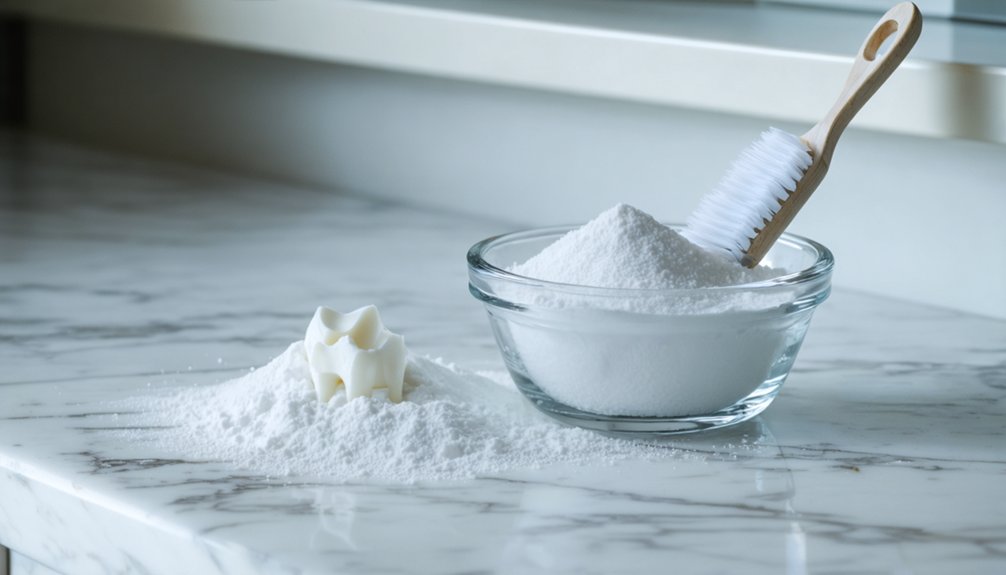
Baking soda removes surface stains effectively, but how you use it determines whether it helps or harms your enamel. Limit use to two or three times per week — daily application accelerates enamel wear over time.
Apply it as a paste mixed with water, brush gently for two minutes, then rinse thoroughly. Avoid combining baking soda with dietary acids like lemon juice or apple cider vinegar; that combination softens enamel before abrasion strips it away.
If you experience tooth sensitivity during or after use, reduce frequency immediately. Sensitivity signals that enamel integrity is already compromised.
Pair your baking soda routine with fluoride toothpaste on alternate days to remineralize enamel and offset any mild abrasive damage.
Consistency and restraint produce results without unnecessary structural risk.
Do Whitening Strips Work Faster Than a Professional Cleaning?
When you’re weighing whitening strips against a professional cleaning, the key difference lies in what each method actually targets. Whitening strips use peroxide compounds to bleach surface discoloration over days or weeks.
While a dental prophylaxis physically removes plaque, calculus, and stains in a single appointment. If you need faster, more reliable results—especially for stubborn spots—a professional cleaning typically outperforms strips in both speed and thoroughness.
Strips Vs. Professional Cleaning
Whitening strips and professional cleanings both target surface stains, but they work differently and deliver results on different timelines. Strips use peroxide compounds to bleach discoloration gradually, typically requiring consistent daily use over one to two weeks before you’ll notice meaningful improvement.
A professional cleaning, by contrast, removes plaque, calculus, and surface stains in a single appointment using polishing tools and abrasive paste.
If your priority is teeth whitening, strips may eventually deliver comparable brightness, but dental hygiene maintenance through professional cleaning acts faster on stubborn buildup you can’t address at home.
For localized dark spots caused by tartar or calculus, no strip will substitute for clinical removal. Your best strategy depends on what’s actually causing the discoloration, which only a professional can definitively determine.
Speed And Effectiveness Compared
Speed matters when you’re dealing with visible dark spots, and the answer here isn’t straightforward. Unlike historical treatments and natural remedies, modern options differ significantly in timing and depth of results.
- Whitening strips show visible lightening within 3–7 days for extrinsic surface stains.
- Professional cleaning delivers immediate results in a single appointment by physically removing calculus and polishing discoloration.
- Strips target pigmentation through peroxide absorption, while professional cleaning removes structural deposits strips can’t dissolve.
- Stubborn or calcified spots won’t respond to strips at all—only clinical intervention works.
If you want the fastest measurable outcome for surface staining, strips compete well. But if your dark spots involve tartar or decay, professional cleaning gives you results no at-home product can match.
When Dark Spots Actually Need a Dentist
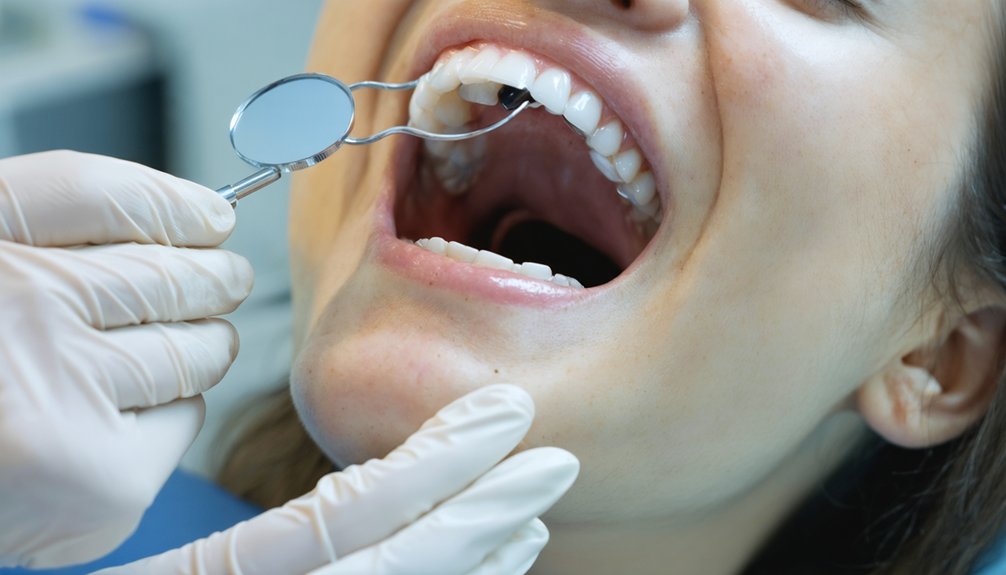
Some dark spots won’t respond to home treatment no matter how consistent you are, and recognizing that early saves you from wasting time and risking further damage. If a spot persists beyond three to four weeks of targeted home care, it’s likely not a surface stain.
Genetic predispositions can affect enamel density and tooth structure, making certain discolorations intrinsic from the start. Lifestyle habits like smoking or heavy coffee consumption may also mask deeper decay developing underneath.
Black dots, spreading discoloration, or spots accompanied by sensitivity signal structural damage or cavities that whitening products can’t fix. In these cases, a dentist can assess whether you need prophylaxis, bonding, veneers, or decay treatment.
Acting quickly gives you more options and better outcomes.
Veneers, Bonding, and Other Fixes When Whitening Fails
When whitening products can’t budge a dark spot, your dentist has stronger tools available. Dental discoloration causes vary widely, and teeth whitening myths often lead people to over-rely on strips or pastes for stains that require clinical intervention. Here are four targeted solutions:
- Professional cleaning removes calculus and tartar that home products can’t touch.
- Professional whitening delivers concentrated peroxide treatments for stubborn extrinsic stains.
- Composite bonding covers persistent dark spots with tooth-colored resin applied directly to the surface.
- Veneers permanently mask deep discoloration that no whitening agent can reverse.
Each option addresses a specific discoloration type. Knowing which solution fits your situation lets you skip ineffective guesswork and move directly toward a result that actually holds.
Simple Daily Habits That Keep Dark Spots From Returning
Keeping dark spots from coming back requires less effort than removing them in the first place. Brush twice daily with fluoride toothpaste for two full minutes, and floss once daily to eliminate plaque before it calcifies into stain-trapping tartar.
Dietary influences matter considerably—limit coffee, tea, red wine, and dark-pigmented foods, or use a straw to reduce direct enamel contact. Rinse with water immediately after consuming staining substances.
Among natural remedies, baking soda used two to three times weekly can intercept surface buildup without excessive enamel wear.
Schedule professional cleanings every six months to clear what daily care misses. These habits work systematically, targeting the conditions that allow dark spots to form rather than simply reacting after discoloration appears.
Frequently Asked Questions
Can Dark Spots on Teeth Appear Suddenly Overnight?
Yes, you can notice urgent discoloration with sudden appearance overnight, often from trauma, foods, or drinks. If you spot new dark spots, don’t ignore them—see your dentist promptly to identify and address the cause.
Are Dark Spots on Baby Teeth Treated the Same Way?
No, baby teeth discoloration remedies differ from adult treatments. You shouldn’t use whitening strips or baking soda on baby teeth—instead, consult a pediatric dentist who’ll assess decay risks and recommend age-appropriate, safe interventions quickly.
Does Teeth Whitening Work Differently on Dental Crowns or Implants?
Like painting over sealed glass, whitening won’t penetrate your dental crown or implant discoloration — these materials resist peroxide entirely. You’ll need your dentist to replace or repolish them for a matched, refreshed appearance.
Can Certain Medications Cause Dark Spots That Won’t Respond to Whitening?
Yes, medication side effects can cause intrinsic tooth discoloration that won’t respond to whitening. If you’re experiencing this, you’ll need professional solutions like veneers or composite bonding to effectively mask those stubborn, treatment-resistant dark spots.
How Long Do Professional Whitening Results Typically Last Before Spots Return?
Your professional whitening results typically last six to twelve months before spots return. To extend whitening durability, you’ll need to protect your tooth enamel by limiting staining foods, using fluoride toothpaste, and scheduling regular dental cleanings.
References
- https://www.medicalnewstoday.com/articles/321480
- https://www.healthline.com/health/black-dot-on-tooth
- https://www.vinmec.com/eng/blog/how-to-remove-black-spots-on-teeth-en
- https://toothworkscalgary.com/blog/removing-black-spots-on-teeth-home-remedies-and-professional-options/
- https://biologyinsights.com/how-to-remove-black-spots-from-teeth-at-home/
- https://laurelsmiledesign.com/how-can-i-remove-black-stains-from-my-teeth/
- https://www.inglewoodfamilydental.ca/how-to-remove-black-spots-on-teeth-home-professional-treatments/
- https://clubwhitesmile.com/expert-tips-for-whitening-dark-teeth-spots/
- https://www.youtube.com/watch?v=owN1Kg7pzhw
- https://snuggymom.com/black-spots-on-teeth-home-remedies-to-remove/