Hydrogen peroxide can safely whiten sensitive teeth, but only if you use the right concentration and follow strict guidelines. For at-home use, stick to concentrations at or below 3% and limit applications to twice weekly. Higher concentrations increase your risk of enamel damage and nerve exposure. You should also consult your dentist before starting any whitening regimen. Keep exploring to find out exactly how to protect your teeth throughout the process.
Key Takeaways
- Hydrogen peroxide can safely whiten sensitive teeth when used at concentrations at or below 3%, minimizing enamel damage and nerve exposure.
- Concentrations above 6% increase enamel porosity risks, while levels above 9% can cause chemical burns to gum tissue.
- Limiting application to under one minute daily, twice weekly, allows enamel adequate recovery time between sessions.
- Using desensitizing toothpaste before treatment helps reduce nerve exposure and post-treatment discomfort significantly.
- Stop whitening immediately if sharp pain persists beyond 24 hours, gum inflammation appears, or white spots develop on enamel.
Is Hydrogen Peroxide Safe for Sensitive Teeth?
Hydrogen peroxide can whiten sensitive teeth safely, but only under the right conditions. The ADA confirms hydrogen peroxide benefits are well-supported when concentrations stay at or below 3.5% for over-the-counter use.
Two decades of data show minimal long-term risks with proper application.
However, if you have sensitive teeth, you face higher risks of temporary enamel porosity, nerve exposure, and sharp pain—especially with concentrations exceeding 6%. You should consult your dentist before starting any peroxide-based regimen.
If sensitivity is severe, whitening alternatives like ADA-approved desensitizing toothpastes or professionally supervised lower-concentration treatments may better suit your needs.
You’re in control of your outcomes, but only when you choose concentrations, contact times, and application methods carefully and deliberately.
How Hydrogen Peroxide Affects Sensitive Teeth
When you apply hydrogen peroxide to your teeth, it temporarily increases enamel porosity, creating microscopic channels that expose the underlying dentin.
This exposure places your dentin’s nerve endings in direct contact with external stimuli, producing the sharp, sudden sensitivity you may experience during or after treatment.
The higher the concentration you use, the greater your risk of intensifying this nerve exposure and prolonging discomfort.
Temporary Enamel Porosity Effects
During whitening treatments, hydrogen peroxide temporarily increases enamel porosity, exposing the underlying dentin and its nerve-connected tubules to external stimuli.
This structural change explains why you’ll likely experience sharp sensitivity to hot, cold, or sweet substances during and after treatment. The porosity isn’t permanent — enamel recovery typically occurs within 24-48 hours after you discontinue application.
However, if you’re using concentrations above 6% or extending contact time beyond recommendations, you’re accelerating dentin exposure and complicating sensitivity management considerably.
You can reduce these effects by choosing lower concentrations, limiting treatment frequency, and avoiding temperature extremes post-treatment.
Understanding this mechanism gives you direct control over your whitening experience, allowing you to balance aesthetic goals against manageable, temporary physiological responses rather than risking prolonged discomfort.
Dentin Nerve Exposure Risks
Beyond temporary enamel porosity, peroxide’s ability to penetrate dentin poses a more direct risk to the nerves within your teeth. When peroxide reaches dentin, it stimulates the fluid-filled tubules connected to your pulp, triggering sharp, often intense pain—a hallmark of dentin sensitivity.
Concentrations exceeding 6% greatly elevate this nerve exposure risk, particularly if you’re already prone to sensitivity.
Prolonged or frequent application compounds the problem. Repeated peroxide contact can chronically irritate pulp nerves, changing what was initially transient discomfort into persistent pain.
You’re especially vulnerable if existing enamel erosion has already left your dentin partially exposed.
To manage this risk effectively, limit concentration, reduce application frequency, and consult your dentist before starting any whitening regimen if you experience sensitivity.
What Concentration of Hydrogen Peroxide Is Safe for Sensitive Teeth?
If you have sensitive teeth, you should stick to hydrogen peroxide concentrations at or below 3% for at-home use, as the ADA limits over-the-counter products to 3.5% to minimize enamel and nerve exposure.
Concentrations exceeding 6% greatly raise your risk of temporary enamel porosity, dentin exposure, and sharp pain that can become persistent with repeated misuse.
You should avoid any homemade or store-bought solutions above this threshold unless a dental professional supervises your treatment and determines a higher concentration is clinically appropriate.
Safe Concentration Levels
When it comes to sensitive teeth, the concentration of hydrogen peroxide you use makes a critical difference in both safety and comfort. Choosing the right level helps you balance effective application techniques with minimized risk.
- 3% or less – Ideal for at-home use; safest for sensitive teeth with minimal irritation.
- 3–6% – Acceptable with caution; monitor for increased sensitivity throughout treatment.
- 6–10% – Higher risk of dentin exposure; consult your dentist before proceeding.
- Above 10% – Requires professional supervision; not recommended for sensitive teeth without evaluation.
For safe product recommendations, the ADA approves OTC products up to 3.5%. Staying within these thresholds protects your enamel while still delivering meaningful whitening results.
Risks of Higher Concentrations
Knowing the safe concentration thresholds is only part of the picture — understanding what happens when you exceed them is equally important.
When concentration effects escalate beyond 6%, you risk accelerating enamel damage through increased porosity, which exposes dentin and sensitizes nerve endings. This exposure triggers sharp, often immediate pain responses — particularly to temperature changes.
Prolonged or repeated overexposure compounds this damage. Enamel doesn’t regenerate, so erosion from high-concentration misuse creates lasting vulnerability to decay and chronic sensitivity.
Concentrations above 9% carry a measurable risk of chemical burns to gum tissue as well.
If you have sensitive teeth, exceeding recommended thresholds doesn’t accelerate safe results — it accelerates harm. Staying within clinically validated limits protects both your comfort and your long-term dental health.
Who Should Avoid Hydrogen Peroxide Whitening Entirely
While hydrogen peroxide whitening suits many people, certain groups should avoid it entirely due to meaningful health risks. A dental consultation helps you determine whether safer alternative whitening methods better fit your situation.
Avoid hydrogen peroxide whitening if you fall into these categories:
- Pregnant or nursing women – Insufficient safety data exists; consult your healthcare provider first.
- Children with primary teeth – The AAPD cautions against use, as developing enamel faces higher damage risk.
- People with active gum disease or untreated cavities – Peroxide penetrates compromised tissue, worsening existing conditions.
- Those with peroxide allergies or dental restorations – Chemical reactions and uneven whitening create unpredictable outcomes.
Taking control of your oral health means recognizing when a treatment isn’t appropriate for your specific circumstances.
Warning Signs You’re Overusing Hydrogen Peroxide
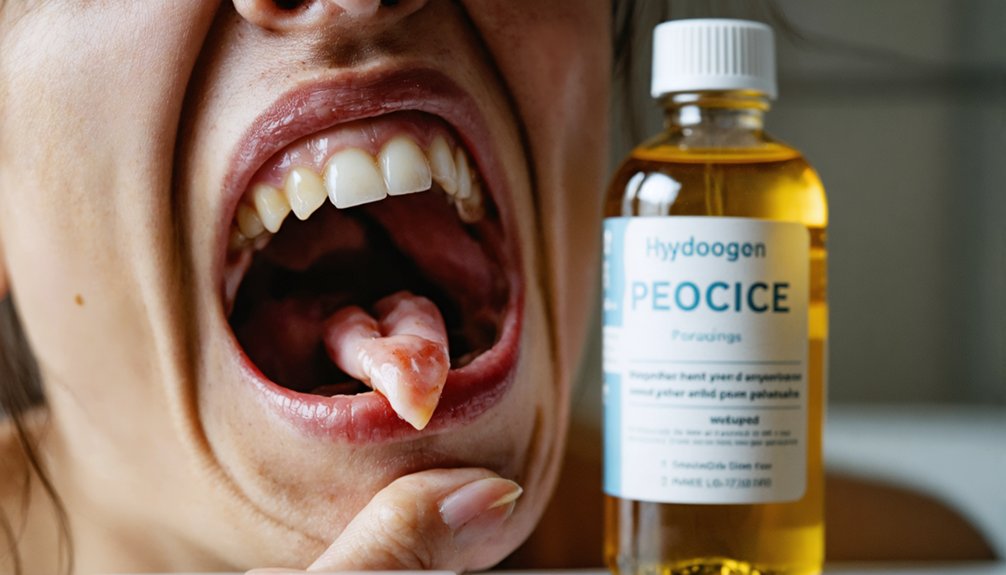
Recognizing the warning signs of hydrogen peroxide overuse can prevent irreversible enamel damage before it progresses. Key overuse indicators include persistent tooth sensitivity lasting beyond 48 hours post-treatment, sharp pain triggered by hot or cold temperatures, and visible gum redness or irritation.
If you’re experiencing any of these symptoms, your sensitivity management strategy needs immediate adjustment.
Stop treatment promptly if you notice increased transparency at tooth edges, which signals enamel thinning, or if discomfort intensifies rather than subsides between sessions.
Bleeding gums or chemical burn sensations indicate concentrations are too high or contact time is excessive. Consult your dentist before resuming any whitening regimen.
Ignoring these signals risks permanent structural damage that no whitening treatment can reverse.
How to Use Hydrogen Peroxide Safely With Sensitive Teeth
Once you’ve identified and addressed overuse warning signs, you can reintroduce hydrogen peroxide whitening with a safer, more controlled approach.
Prioritize sensitivity management by following these evidence-based steps:
Sensitivity management isn’t optional — it’s the foundation of any safe, effective whitening approach worth following.
- Start at 3% concentration or lower — Mix equal parts water and hydrogen peroxide, limiting swishing to under one minute daily.
- Space out applications — Use the solution twice weekly, not daily, allowing enamel recovery between sessions.
- Apply desensitizing toothpaste beforehand — This reduces nerve exposure and minimizes post-treatment discomfort.
- Explore whitening alternatives if sensitivity persists — ADA-approved whitening strips at lower concentrations or professional supervised treatments offer safer options for reactive teeth.
Consult your dentist before restarting any regimen, particularly if sensitivity previously became severe or prolonged.
Is Professional Whitening Worth It If You Have Sensitive Teeth?
For people with sensitive teeth, professional whitening offers distinct advantages over at-home methods that are worth considering.
Dentists control peroxide concentrations precisely, apply protective barriers to your gums, and monitor your response throughout treatment. This level of oversight makes sensitivity management far more effective than self-directed approaches.
You’ll also benefit from a pre-treatment evaluation that identifies existing vulnerabilities like enamel erosion or exposed dentin before any whitening begins.
If discomfort arises, your dentist can adjust concentration levels or pause treatment immediately.
A 2023 study found that a 6% solution applied for 30 minutes daily over two weeks matched or exceeded results from some high-dose in-office regimens.
Professional whitening isn’t just safer for sensitive teeth—it’s often more strategic and controlled.
Symptoms That Mean You Should Stop Whitening Immediately
Knowing when to stop whitening protects you from irreversible damage. Recognizing warning signs early keeps your sensitivity management strategy intact and preserves your options for treatment alternatives.
Stop whitening immediately if you experience:
- Sharp, lingering pain that persists beyond 24 hours after treatment, indicating exposed dentin or nerve involvement.
- Visible gum inflammation or chemical burns, signaling that peroxide concentration or contact time is excessive.
- Increased sensitivity to hot and cold that worsens with each session rather than resolving between treatments.
- White spots or uneven discoloration on enamel, suggesting structural damage from overexposure.
Continuing despite these symptoms risks permanent enamel erosion and chronic nerve sensitivity.
Consult your dentist promptly to reassess your approach and explore safer treatment alternatives suited to your condition.
Frequently Asked Questions
Can Hydrogen Peroxide Whitening Permanently Damage Sensitive Teeth Over Time?
Like Icarus flying too close to the sun, you can permanently damage sensitive teeth through overuse. Misusing high concentrations threatens whitening safety, worsening teeth sensitivity, causing irreversible enamel loss—consult your dentist to maintain control.
Does Desensitizing Toothpaste Work Effectively Before Hydrogen Peroxide Whitening Treatments?
Yes, desensitizing toothpaste’s effectiveness relies on active toothpaste ingredients like potassium nitrate or fluoride, which you should apply before treatments to block exposed tubules, reducing sensitivity and giving you greater control over your whitening experience.
Are Natural Whitening Alternatives Safer Than Hydrogen Peroxide for Sensitive Teeth?
Natural remedies aren’t necessarily safer for enamel protection with sensitive teeth. You’ll find limited evidence supporting their efficacy, while hydrogen peroxide, used correctly at low concentrations, offers clinically proven whitening with manageable, controllable risks.
How Long Should You Wait Between Hydrogen Peroxide Whitening Treatment Sessions?
You should wait 48-72 hours between sessions, allowing sensitivity duration to fully subside. Monitor your treatment frequency carefully—if discomfort persists, extend your pause. Consult your dentist for a personalized schedule that protects your enamel effectively.
Can Children With Sensitive Permanent Teeth Safely Use Hydrogen Peroxide Whitening?
You shouldn’t let children use hydrogen peroxide whitening without consulting a dentist first. Age considerations and sensitivity levels matter greatly—the AAPD cautions against it, as developing permanent teeth face heightened risks from peroxide exposure.
References
- https://www.suntreedental.ca/blog/the-role-of-hydrogen-peroxide-in-teeth-whitening-is-it-safe/
- https://www.gentledental.com/resources/articles/hydrogen-peroxide-teeth-whitening
- https://watsonnivenskahendds.com/hydrogen-peroxide-for-teeth-whitening-safe-or-harmful/
- https://www.medicalnewstoday.com/articles/326148
- https://www.dentistsatorenco.com/blog/how-to-avoid-sensitivity-after-teeth-whitening/
- https://pubmed.ncbi.nlm.nih.gov/23846062/
- https://www.healthline.com/health/hydrogen-peroxide-teeth-whitening
- https://smileactives.com/blogs/blog/everything-you-need-to-know-about-teeth-whitening-for-sensitive-teeth
- https://www.colgate.com.au/oral-health/teeth-whitening/is-hydrogen-peroxide-safe-for-teeth