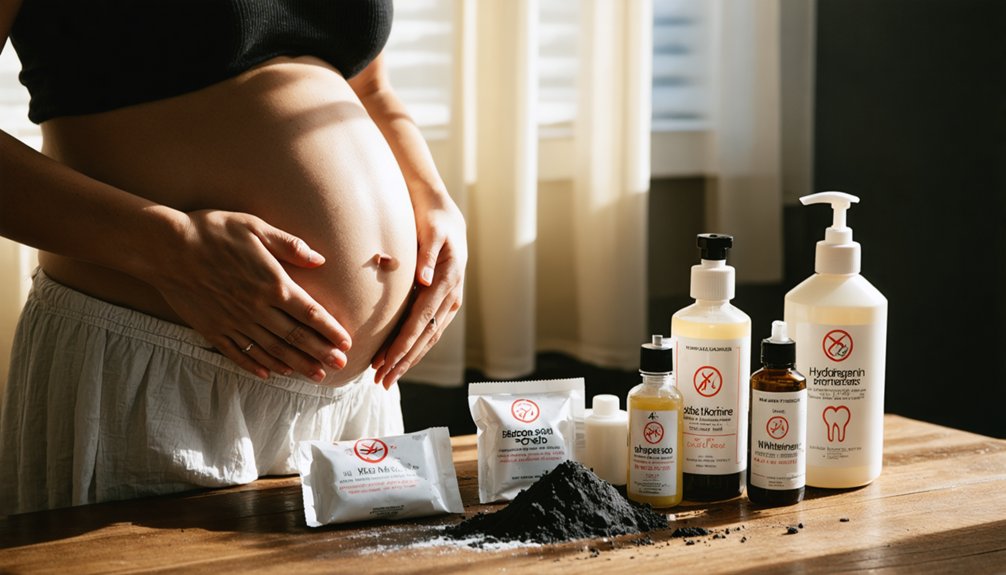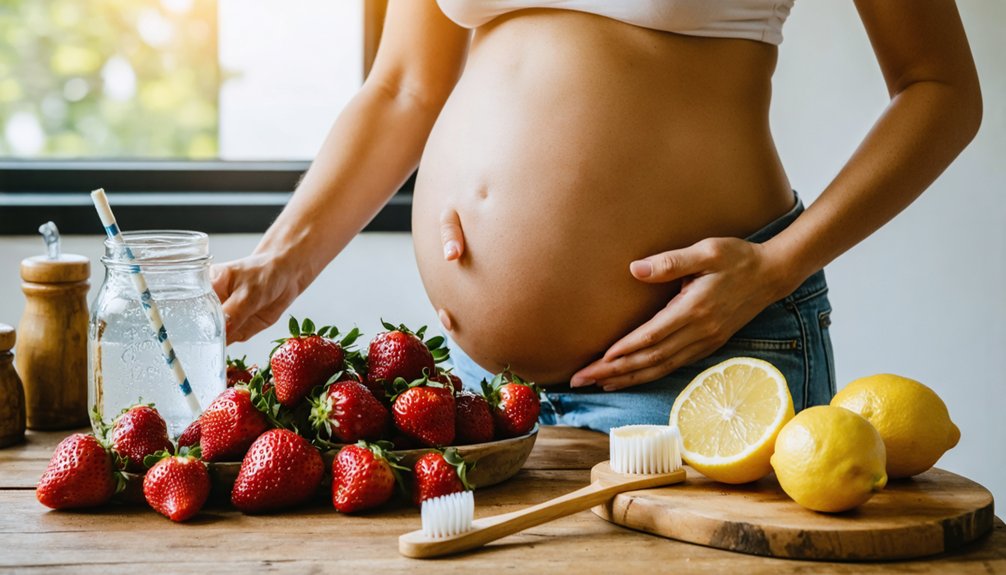
Pregnancy hormones soften enamel and increase plaque buildup, making your teeth more vulnerable to staining. You can fight this by brushing twice daily with fluoride toothpaste, flossing consistently, and rinsing with a baking soda solution after vomiting. Choose fibrous, crunchy foods like apples and celery, limit coffee and tea, and follow acidic drinks with water. Avoiding charcoal and undiluted vinegar keeps your enamel protected. Everything you need to maintain a brighter smile through every trimester is covered ahead.
Key Takeaways
- Brush twice daily with fluoride toothpaste and a soft-bristled brush to control plaque buildup that worsens during pregnancy.
- After vomiting, rinse with baking soda and water, then wait 30 minutes before brushing to protect enamel.
- Eat fibrous foods like apples, celery, and carrots to naturally scrub teeth and disrupt stain-causing plaque.
- Limit coffee, tea, and acidic drinks, following each with water to minimize staining contact with enamel.
- Use baking soda as a mild abrasive no more than twice weekly; avoid activated charcoal during pregnancy entirely.
Why Pregnancy Makes Teeth Stain More Easily
Pregnancy shifts your hormonal balance in ways that directly affect how your teeth collect and retain stains. Elevated estrogen and progesterone increase gum inflammation, which allows plaque to accumulate faster along the gum line.
As plaque builds, it traps pigmented compounds from food and beverages more effectively, accelerating discoloration.
Salivary pH also drops during pregnancy, particularly if morning sickness causes frequent vomiting. A more acidic oral environment softens enamel temporarily, making it more porous and receptive to staining agents.
Teeth sensitivity often increases alongside this enamel vulnerability, signaling that protective layers are compromised.
Together, these physiological changes create conditions where staining happens faster and is harder to reverse. Recognizing these mechanisms helps you target your oral care routine with precision rather than guesswork.
Daily Brushing and Flossing Habits That Keep Stains Away
Because hormonal shifts during pregnancy accelerate plaque accumulation, consistent brushing and flossing become your most reliable tools for controlling surface stains before they set. Prioritizing these habits reduces your risk of teeth sensitivity and dental erosion while keeping discoloration manageable.
Hormonal shifts during pregnancy accelerate plaque buildup, making consistent brushing and flossing your strongest defense against discoloration.
- Brush twice daily using fluoride toothpaste and a soft-bristled toothbrush, paying close attention to the gum line where inflammation concentrates.
- Floss daily to remove trapped particles that swollen, pregnancy-affected gums retain more easily.
- Rinse after vomiting with a baking-soda-and-water solution to neutralize acid and prevent dental erosion from repeated exposure.
- Replace your toothbrush every 3–4 months to maintain effective plaque removal and avoid reintroducing bacteria.
Consistency with these steps gives you direct, measurable control over stain progression.
Which Natural Whitening Ingredients Are Actually Safe?
When you’re pregnant, a few natural whitening ingredients can work safely alongside your daily oral hygiene routine, while others carry enough risk to warrant caution.
Baking soda offers mild abrasive stain removal, but you should limit its use to prevent enamel wear and gum irritation, particularly if pregnancy has already left your gums sensitive.
Fruit-based options like strawberries and pineapple contain malic acid and bromelain respectively, which may reduce surface discoloration, but you’ll want to avoid prolonged contact to protect your enamel.
And you should skip high-risk ingredients like undiluted vinegar or activated charcoal, where pregnancy-specific safety data remain insufficient.
Baking Soda Benefits
Among the natural whitening options you’ll encounter during pregnancy, baking soda stands out as one of the more evidence-supported choices. Its mild abrasive action lifts surface stains without harsh chemicals, making it a practical natural remedy for protecting oral health during this sensitive period.
Use it strategically by following these guidelines:
- Limit use to 2–3 times weekly to prevent enamel abrasion over time.
- Mix a small amount with water to form a paste before brushing gently.
- Avoid use on already-irritated gums, as pregnancy-related inflammation increases sensitivity risk.
- Rinse thoroughly afterward to remove residue and restore normal oral pH.
Baking soda won’t dramatically whiten teeth, but it reliably removes surface buildup when used correctly and consistently.
Fruit-Based Whitening Options
Certain fruits appear frequently in natural whitening routines, but their safety during pregnancy depends on how you use them. Strawberries contain malic acid, which may reduce surface discoloration, but prolonged contact erodes enamel. Limit application to brief, occasional use and rinse thoroughly afterward.
Pineapple contains bromelain, which some sources link to mild stain removal, though clinical evidence remains limited. Treat both options as supplementary rather than primary whitening strategies.
Unlike oil treatments, which work by reducing surface bacteria without acid exposure, fruit-based methods carry an erosion risk if overused. Similarly, replacing staining herbal teas with water reduces discoloration more reliably than any fruit remedy.
If you notice sensitivity after using fruit-based methods, discontinue immediately and return to fluoride toothpaste as your core stain-control approach.
Ingredients To Avoid
Knowing which fruit-based ingredients carry erosion risks leads naturally to a broader question: which popular natural whitening ingredients are actually safe during pregnancy, and which ones should you skip altogether?
Some widely promoted ingredients worsen tooth sensitivity or accelerate dental plaque accumulation rather than reducing it.
Approach these four ingredients cautiously:
- Activated charcoal – Limited pregnancy-specific safety data makes this a high-uncertainty choice.
- Undiluted apple cider vinegar – Its acidity erodes enamel rapidly, increasing tooth sensitivity.
- Turmeric – Minimal whitening evidence exists, and it risks surface staining.
- Baking soda overuse – Occasional use lifts stains, but frequent application abrades enamel and inflames already-sensitive pregnancy gums, worsening dental plaque retention.
If an ingredient triggers sensitivity or irritation, discontinue it immediately.
How to Use Baking Soda Without Damaging Your Enamel
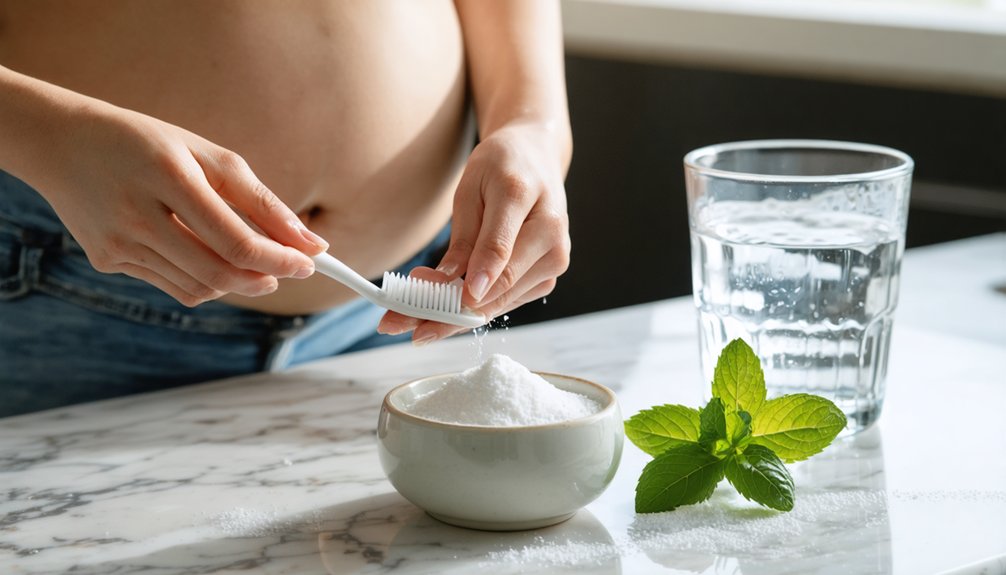
Baking soda can lift surface stains through mild abrasion, but using it too frequently or too aggressively puts your enamel at risk—especially when pregnancy-related gum inflammation makes your mouth more sensitive.
Baking soda lifts surface stains, but overuse risks enamel damage—particularly with pregnancy-heightened gum sensitivity.
To minimize enamel erosion, limit baking soda use to once or twice per week. Mix a small amount with water to form a paste, apply it gently with a soft-bristled toothbrush, and rinse thoroughly.
Don’t use it as a daily fluoride toothpaste replacement, since fluoride actively protects enamel while baking soda only removes surface dental plaque through abrasion.
Avoid combining it with acidic ingredients like lemon juice, which accelerates enamel breakdown.
If you notice increased sensitivity or gum irritation, stop use immediately and return to standard fluoride toothpaste.
Foods That Naturally Help Scrub and Brighten Teeth
Crunchy produce like apples, celery, and carrots acts as a natural abrasive, scrubbing residue from tooth surfaces as you chew.
Adequate intake of vitamins A, C, D, calcium, and phosphorus supports enamel integrity and gum health, both of which affect how bright your teeth appear.
Replacing sugary snacks with cheese, unsweetened yogurt, and raw vegetables reduces plaque buildup and limits the dullness that sugar-driven decay promotes.
Crunchy Produce Scrubs Teeth
When you bite into firm, fibrous produce like apples, celery, carrots, or broccoli, the mechanical action helps scrub tooth surfaces and dislodge food residue between meals. This natural polishing effect supports brightness without chemical agents or sensitivity risks.
Produce exfoliation works best when you:
- Choose raw, firm varieties — cooking softens texture and reduces mechanical scrubbing action.
- Eat them at meal’s end — finishing with crunchy produce maximizes surface-cleaning contact.
- Prioritize high-fiber options — celery and broccoli create the most abrasive friction against enamel.
- Pair them with water — rinsing afterward removes loosened particles and reduces residue.
During pregnancy, these foods also deliver vitamins A, C, and calcium, directly supporting enamel integrity and gum health simultaneously.
Vitamins Supporting Tooth Brightness
Beyond mechanical scrubbing, the nutrients in your diet directly influence enamel strength, gum resilience, and how well your teeth resist discoloration. Maintaining strong dental hygiene during pregnancy means supporting your teeth from the inside out.
Vitamins A, C, and D play distinct roles: vitamin A supports mucous membrane integrity, vitamin C strengthens gum tissue and reduces inflammation, and vitamin D enhances calcium absorption for denser enamel.
Calcium and phosphorus work together to remineralize tooth surfaces, helping resist staining over time.
If your diet falls short, targeted vitamin supplements can close nutritional gaps, though you should consult your provider before adding any.
Prioritize whole food sources first—dairy, leafy greens, eggs, and fortified foods—then use supplementation strategically to maintain ideal oral resilience throughout pregnancy.
Smart Snacking Choices Matter
Nutritional support for your teeth doesn’t stop at vitamins—what you snack on throughout the day also shapes how clean and bright your teeth stay. Unlike dental sealants or mouth guards, which require professional intervention, smart snacking is something you control entirely right now.
Choose snacks that actively work for your teeth:
- Apples, celery, and carrots — their fibrous texture scrubs enamel surfaces and disrupts plaque buildup.
- Cheese and unsweetened yogurt — neutralize oral acids and deliver calcium directly to tooth structure.
- Water between snacks — rinses staining particles before they settle.
- Broccoli and cucumber — low-sugar, crunchy options that reduce residue without feeding decay-causing bacteria.
Avoid dried fruit, toffees, and sticky sweets—they cling to enamel and accelerate discoloration.
Which Drinks Are Staining Your Teeth Most?
What you drink every day can quietly work against your efforts to keep your teeth white during pregnancy. Coffee, tea, and red wine top the list of staining culprits, depositing chromogens directly onto enamel over time.
Since professional teeth whitening is avoided during pregnancy, and dental veneers aren’t a current option, prevention becomes your primary tool.
Sugary drinks and fruit juices compound the problem by feeding plaque bacteria, which dulls tooth appearance beyond surface staining. Acidic sodas erode enamel, accelerating discoloration at the structural level.
Your most effective swap is water. Drinking it consistently throughout the day rinses staining particles before they settle.
When you do consume coffee or tea, follow immediately with water to minimize contact time with enamel.
How to Protect Your Enamel After Morning Sickness
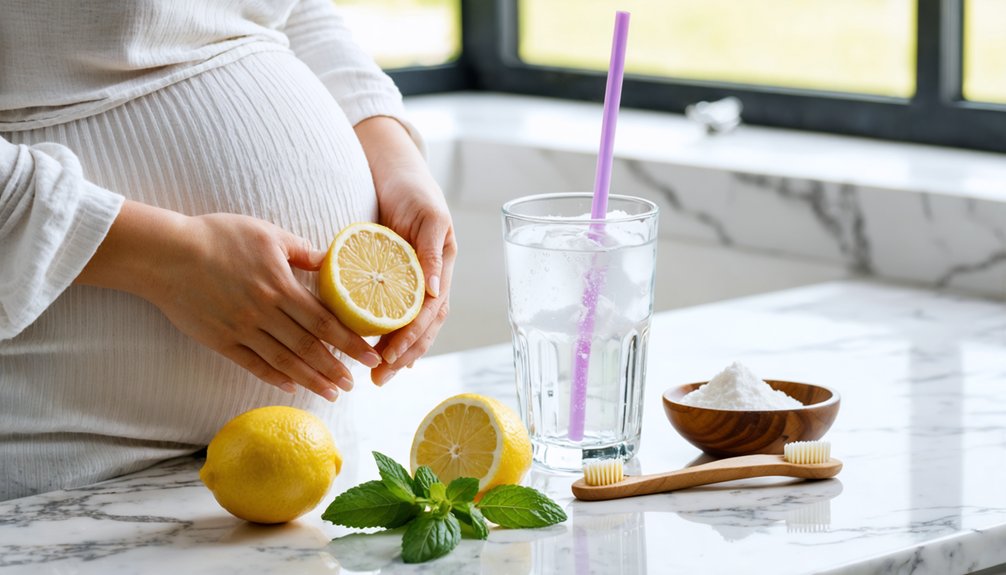
Staining beverages aren’t the only threat to your tooth color during pregnancy. Morning sickness exposes your enamel to stomach acid repeatedly, accelerating enamel erosion and leaving teeth more vulnerable to discoloration.
Reduced saliva production during nausea compounds the problem by limiting your mouth’s natural acid-buffering capacity. Take deliberate action after each vomiting episode:
- Rinse immediately with a baking-soda-and-water solution to neutralize acid before it damages enamel.
- Wait 30 minutes before brushing, since brushing softened enamel increases abrasion risk.
- Drink water frequently to support saliva production and continuously dilute residual acid.
- Use fluoride toothpaste at your next brush to actively remineralize weakened enamel surfaces.
Consistent post-vomiting protocol protects both enamel integrity and long-term tooth brightness.
Your Step-by-Step Pregnancy Oral Care Routine
Building a consistent oral care routine during pregnancy protects both your enamel and your tooth brightness at every stage. Start mornings with fluoride toothpaste and a soft-bristled toothbrush — your toothbrush selection matters because firm bristles aggravate inflamed pregnancy gums.
Brush for two minutes, paying close attention to the gum line where hormonal changes increase plaque retention. Follow with dental flossing to remove trapped particles that brushing misses, reducing bacterial buildup in swollen gum pockets.
Rinse at night with an alcohol-free fluoridated mouthwash to strengthen enamel while you sleep. If morning sickness occurs, rinse immediately with a baking-soda-and-water solution before brushing to neutralize acid.
Replace your toothbrush every three to four months. This structured routine consistently controls staining, decay, and gum disease throughout your pregnancy.
Natural Whitening Methods to Avoid While Pregnant
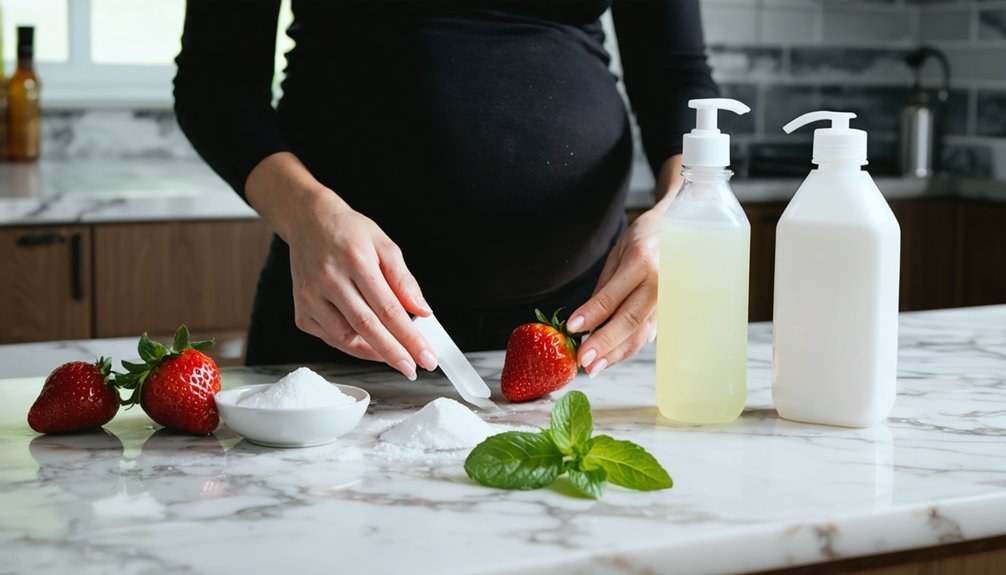
While the desire for brighter teeth during pregnancy is understandable, some popular whitening approaches carry real risks you should avoid.
Professional bleaching agents, whitening strips, and high-concentration peroxide products lack sufficient safety data for pregnancy and are best postponed until after delivery.
Similarly, acidic home remedies like undiluted vinegar or excessive citrus applications can erode enamel.
Overusing abrasive ingredients like baking soda can worsen sensitivity and gum irritation—both concerns that are already heightened by pregnancy’s hormonal changes.
Bleaching Agents To Avoid
During pregnancy, some commonly promoted natural whitening methods carry risks that outweigh their cosmetic benefits. Protecting your enamel and gum health takes priority over cosmetic results right now.
Avoid these four approaches:
- High-concentration bleaching agents — Safety data during pregnancy are insufficient; discontinue use immediately.
- Activated charcoal — Abrasive particles can compromise dental sealants and wear enamel without reliable whitening evidence.
- Undiluted acidic mixtures — Vinegar or excess citrus erodes enamel, worsening discoloration long-term.
- Extended strawberry or baking soda contact — Brief application may lift surface stains, but prolonged use damages enamel and irritates inflamed gums.
Incorporate tongue cleaning into your daily routine instead, since bacterial buildup contributes to overall oral dullness.
Conservative hygiene consistently outperforms risky whitening shortcuts during pregnancy.
Risky Acidic Home Remedies
Avoiding bleaching agents protects your enamel from abrasive damage, but acidic home remedies present a separate and equally important risk. Popular home remedies like undiluted apple cider vinegar, lemon juice, and excessive citrus applications are frequently promoted for whitening, yet each carries a real risk of enamel erosion.
Acid dissolves the mineral surface of your teeth, and repeated exposure permanently weakens enamel—damage that can’t be reversed. Strawberry paste and vinegar-based mixtures may reduce surface stains briefly, but prolonged contact accelerates structural breakdown.
During pregnancy, when gum sensitivity is already elevated, this erosion risk intensifies. If you’ve tried these methods, rinse immediately with water to neutralize residual acid.
Protecting your enamel now prevents long-term discoloration caused by exposure of the softer, darker dentin layer beneath.
Overusing Abrasive Ingredients
Baking soda and activated charcoal are two abrasive ingredients you’ll encounter frequently in natural whitening routines, but overusing either one carries real consequences for enamel integrity. Repeated mechanical abrasion thins enamel progressively, increasing sensitivity and long-term discoloration risk.
Protect your enamel by following these boundaries:
- Limit baking soda use to once or twice weekly maximum to prevent cumulative surface wear.
- Avoid activated charcoal during pregnancy, as safety data remain insufficient to justify routine use.
- Prioritize fluoride applications through fluoride toothpaste daily, since fluoride actively remineralizes and strengthens enamel abrasives can’t restore.
- Ask your dentist about dental sealants if enamel erosion is already present, as sealants offer a protective barrier against further mechanical and chemical damage.
When to See a Dentist About Whitening During Pregnancy
While natural stain-control methods can help maintain tooth appearance throughout pregnancy, they don’t replace professional dental assessment. Schedule a dental visit if you notice persistent tooth sensitivity, bleeding gums, or discoloration that worsens despite consistent brushing and dental flossing. These signs may indicate underlying issues that home care can’t resolve.
Natural stain-control methods help during pregnancy, but persistent sensitivity or bleeding gums calls for professional dental assessment.
Your dentist can evaluate enamel condition, identify pregnancy gingivitis, and recommend pregnancy-safe interventions without resorting to high-concentration bleaching agents.
If tooth sensitivity develops after using any natural whitening ingredient, stop immediately and consult your provider before continuing.
Routine prenatal dental checkups also give you the opportunity to ask about safe whitening options postpartum.
Taking this proactive approach keeps you informed, in control, and better positioned to protect both your oral health and your pregnancy.
Frequently Asked Questions
Can Hormonal Changes During Pregnancy Permanently Alter Your Natural Tooth Color?
Like storm clouds gathering over enamel, hormonal fluctuations don’t permanently recolor your dental enamel—they amplify plaque buildup and gum inflammation, which dull your teeth temporarily. You can actively reverse this discoloration through consistent, diligent oral hygiene practices.
Is It Safe to Use Whitening Toothpaste Throughout All Three Trimesters?
You can safely use whitening toothpaste throughout all three trimesters. It supports dental hygiene by lifting surface stains mildly. Pair it with natural remedies like baking soda rinses, but avoid overuse to prevent enamel sensitivity.
Does Breastfeeding After Pregnancy Continue to Affect Tooth Staining or Whiteness?
Breastfeeding won’t demolish your whiteness overnight, but hormonal shifts can still affect your dental hygiene. You’ll want to keep using natural remedies like baking soda and crunchy vegetables to actively control staining and maintain brightness.
Can Teeth Whitening Products Affect Fetal Development or Pregnancy Outcomes?
You should avoid whitening products during pregnancy, as safety data on fetal development remain limited. Prioritize dental hygiene and natural remedies instead—they’re evidence-based, preventative approaches that keep you in control without risking unknown pregnancy outcomes.
Are There Specific Pregnancy Vitamins That Help Maintain Whiter, Stronger Teeth?
Your prenatal vitamins—especially vitamins C, D, calcium, and phosphorus—strengthen enamel and support gum health. Combine them with daily dental flossing and consistent oral hydration to actively maintain stronger, brighter teeth throughout pregnancy.
References
- https://nvdentists.com/pregnancy-safe-teeth-whitening/
- https://www.espiredental.com/blog/safe-ways-to-whiten-teeth-while-pregnant
- https://abqteethwhitening.com/natural-teeth-whitening-solutions-for-expecting-mothers/
- https://lagunadentalcenter.com/teeth-whitening/can-you-whiten-your-teeth-while-pregnant/
- https://pmc.ncbi.nlm.nih.gov/articles/PMC6883753/
- https://teethsnow.com/pregnancy-safe-teeth-whitening/
- https://www.youtube.com/watch?v=9OfKK7o7-gc
- https://www.babycenter.com/pregnancy/health-and-safety/is-it-safe-to-bleach-my-teeth-during-pregnancy_1245153
- https://www.mchoralhealth.org/PDFs/OralHealthPregnancyHandout.pdf
- https://www.reddit.com/r/moderatelygranolamoms/comments/o4noe1/teeth_whitening/