To choose the best LED teeth whitening kit, you’ll want to prioritize peroxide concentration, kit format, and clinical credibility. Look for gels containing hydrogen peroxide or carbamide peroxide, since these active ingredients do the actual whitening work. The LED light simply accelerates the reaction. Mouthpieces outperform strips for uniform coverage, and verified dentist endorsements matter more than vague “brightening” claims. If you have sensitive teeth, concentration levels become even more critical — and there’s much more to evaluate before buying.
Key Takeaways
- Look for kits containing whitening gel, an LED mouthpiece, and a shade guide as essential components for effective teeth whitening.
- Choose peroxide concentrations based on your goals; 35% carbamide peroxide offers strong results, while lower concentrations reduce sensitivity risks.
- Prioritize mouthpieces or trays over strips, as they provide broader gel coverage and more uniform LED light distribution.
- Select a kit with session lengths that fit your routine, ranging from 8-minute to 30-minute daily treatments.
- Verify dentist endorsements by checking for named professionals, clinical trials, and transparent ingredient concentrations like 6% hydrogen peroxide.
What Does an LED Teeth Whitening Kit Actually Do?
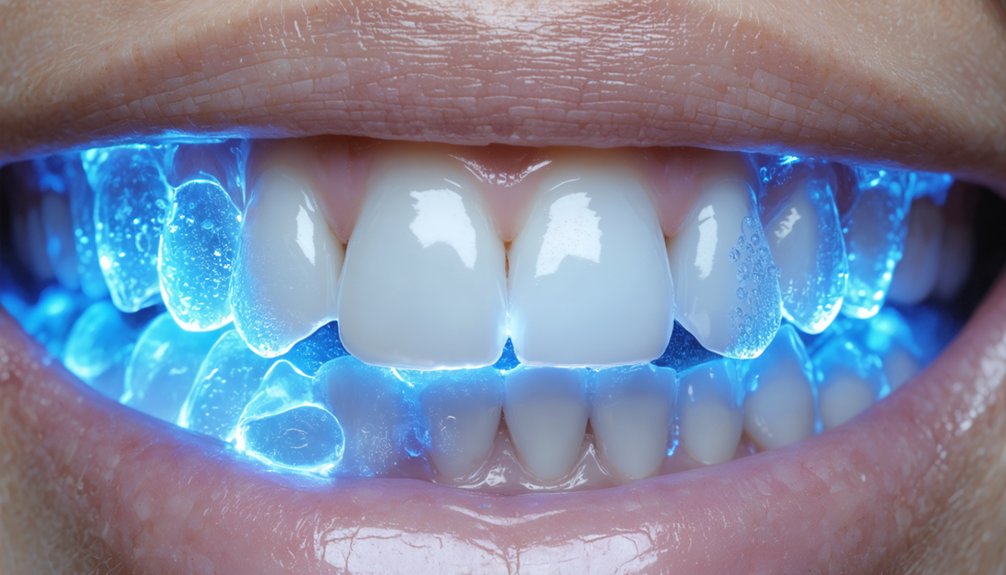
LED teeth whitening kits combine a peroxide-based whitening gel with a light source designed to accelerate the bleaching process. The active ingredient—typically hydrogen peroxide or carbamide peroxide—penetrates tooth enamel and breaks down pigmented molecules responsible for discoloration.
The active whitening ingredient penetrates enamel, breaking down the pigmented molecules responsible for discoloration.
The LED light amplifies this reaction, targeting stains more efficiently than gel alone. Understanding LED benefits helps you evaluate kit effectiveness before purchasing. The light doesn’t whiten teeth independently; it works only in combination with the chemical agent.
This distinction matters when comparing products that rely solely on vague “brightening” claims without peroxide-based formulas. You’re looking for a system where both components are clinically supported.
When the gel concentration and light activation work together correctly, you gain measurable control over your whitening outcomes.
Why Peroxide Percentage Is the Most Important Number
Once you understand how LED light and peroxide work together, the next variable that determines your results is the concentration of that peroxide.
Peroxide potency directly controls whitening effectiveness — higher concentrations remove deeper stains faster but raise sensitivity levels. Kits using 35% carbamide peroxide, like Auraglow, offer clinical validation and strong user testimonials supporting their stain-removal claims.
Lower concentrations, such as 6% hydrogen peroxide, prioritize enamel safety and application simplicity, making them better fits for reactive teeth. Gel consistency also affects how evenly the active ingredient contacts your enamel.
Evaluate brand reputation and treatment frequency requirements alongside concentration to match the kit to your tolerance and goals. Choosing based on percentage gives you measurable, controllable expectations rather than vague brightening promises.
What the LED Light Actually Does Inside the Mouthpiece
Many shoppers assume the LED mouthpiece is the primary whitening agent, but that’s a misconception worth correcting. The gel’s peroxide concentration drives stain removal. LED activation simply accelerates the process by targeting specific light spectrum wavelengths that help break down tooth pigmentation faster than peroxide alone.
The gel’s peroxide concentration is the real whitening force — LED light simply accelerates what chemistry already drives.
Think of light technology as a catalyst, not the active ingredient. It enhances whitening efficiency by energizing the peroxide molecules already working against stained enamel. Without gel, the LED produces no meaningful oral health benefit.
When conducting a product comparison, don’t let a flashy mouthpiece distort your treatment expectations. A kit with a superior LED but weak peroxide concentration will underperform every time.
Prioritize the chemistry first, then evaluate how well the light technology supports your overall user experience.
Tray, Mouthpiece, or Strip: Which Format Works Best?
The format you choose directly affects both comfort during treatment and how evenly the whitening agent reaches your teeth.
Trays and mouthpieces tend to offer broader gel coverage across all visible tooth surfaces, while strips may leave gaps near the gumline or between teeth.
If you’re committed to consistent results, you’ll want a format that fits your mouth well enough to maintain full contact with the gel throughout the entire treatment window.
Format Fit and Comfort
When choosing an LED whitening kit, three primary delivery formats compete for your attention: trays, mouthpieces, and strips. Each format demands a fit assessment before purchase. Ill-fitting trays allow gel leakage, reducing contact time with enamel and increasing gum irritation risk.
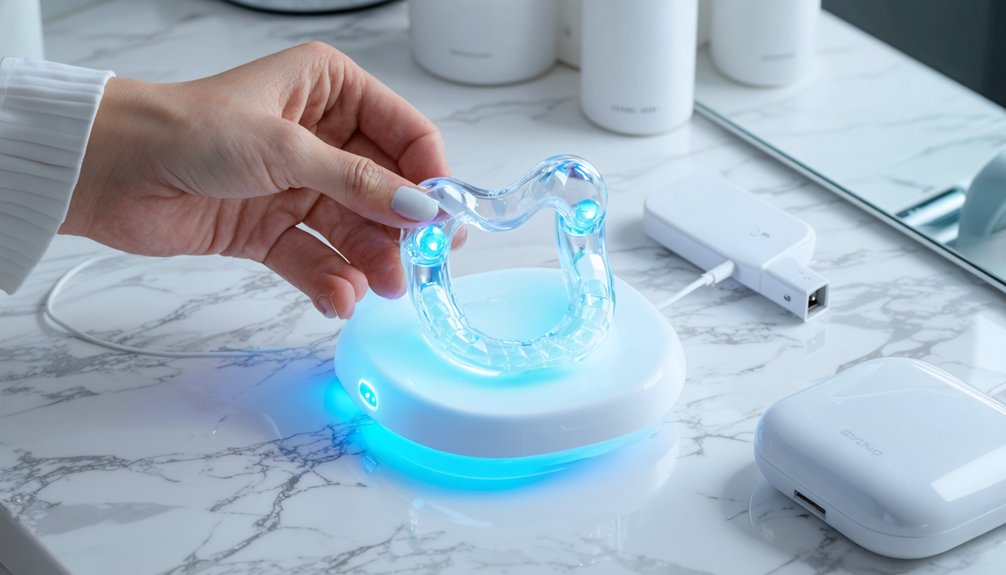
Mouthpieces, particularly wireless rechargeable models, offer more uniform light distribution and adapt better to varied arch shapes. Strips conform closely to tooth surfaces but may shift during treatment, compromising consistent coverage.
Comfort factors include material flexibility, jaw fatigue during treatment, and sensitivity to light intensity. Mouthpieces with integrated timers reduce guesswork, while lower-intensity settings accommodate reactive teeth.
Your arch shape, sensitivity level, and treatment schedule should drive format selection. Prioritize clinical fit over marketing aesthetics when comparing options.
Coverage and Whitening Reach
Fit and comfort set the foundation, but coverage determines how much of your smile actually gets treated. Whitening coverage varies greatly across formats, directly affecting your application reach and final results.
Consider how each format performs:
- Trays conform closely to tooth surfaces, delivering gel contact across both front and back-facing enamel for broader, more uniform coverage.
- Mouthpieces typically cover the full arch simultaneously, maximizing application reach with minimal repositioning during treatment.
- Strips target only the front-facing surfaces they physically contact, often leaving edges and back-facing enamel untreated.
If full-arch whitening is your goal, tray or mouthpiece systems offer measurably better whitening coverage than strips.
Prioritize formats with documented contact area and clinical evidence supporting consistent, even results across your entire smile.
What Should Come in a Complete LED Whitening Kit?
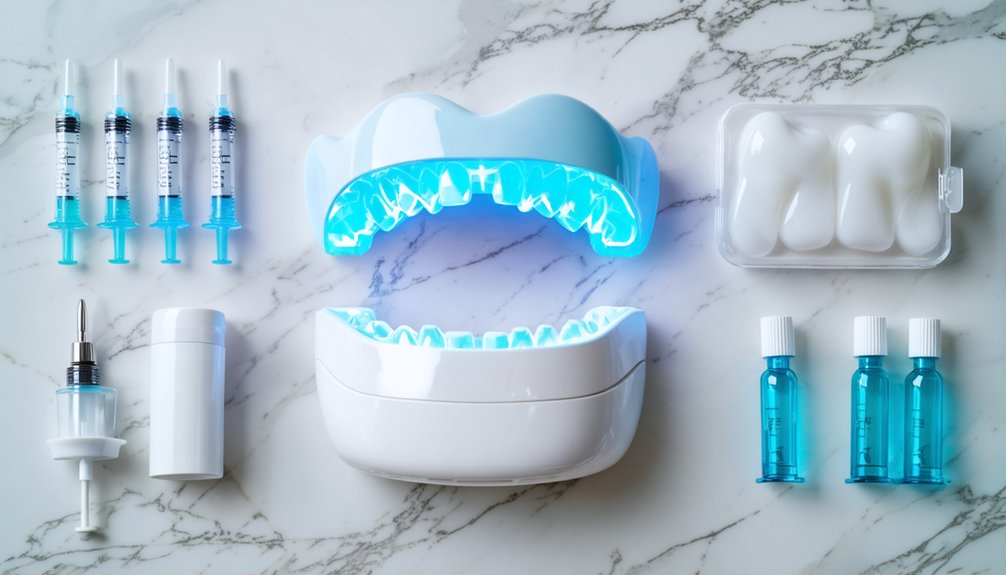
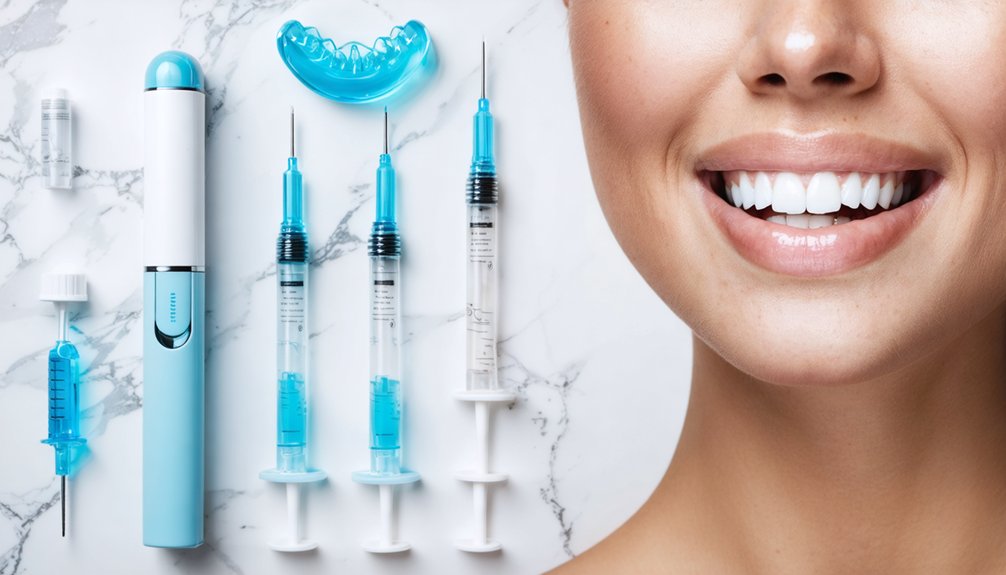
When evaluating an LED whitening kit, you should confirm it includes all components necessary for effective, complete treatment — typically gel syringes, an LED mouthpiece, a charger, and a shade guide.
Kits like Novashine go further by adding a USB adapter and travel bag, which strengthens portability for users who whiten on the go.
You’ll also want to prioritize usability features such as wireless or rechargeable mouthpieces and integrated timers, as these reduce setup complexity and support consistent treatment compliance.
Essential Kit Components
A complete LED teeth whitening kit should include several core components that directly affect both your results and your experience. Missing any of these essential tools compromises your ability to whiten effectively and safely.
The three non-negotiable kit components are:
- Whitening gel — Look for carbamide peroxide or hydrogen peroxide formulas; concentration matters for measurable results.
- LED mouthpiece — Confirms light-activated acceleration; wireless or rechargeable designs improve compliance and portability.
- Shade guide — Gives you a measurable baseline so you can objectively track progress across treatment sessions.
Secondary inclusions worth evaluating are a charger, storage pouch, and usage instructions.
Kits like Novashine bundle all of these into one package. Prioritize completeness before purchasing so you’re not sourcing missing components separately.
Usability and Portability Features
How easily you can use a kit every day determines whether you’ll actually finish the treatment. User experience depends on design details that reduce friction, such as integrated timers, wireless mouthpieces, and clear application instructions.
These features help you stay consistent without guessing.
Portability options matter if your schedule requires flexibility. Rechargeable mouthpieces, USB charging, and compact travel cases let you maintain your whitening routine away from home.
Novashine, for example, includes a smart LED mouthpiece, USB adapter, and travel bag in a single kit.
Evaluate whether the kit’s daily time commitment fits your lifestyle. Some systems require only 10 to 15 minutes per session, while others need 30.
Choosing a kit that matches your routine directly improves adherence and your final results.
Pick the Right Treatment Time for Your Schedule
Treatment time varies considerably across LED whitening kits, so matching a product’s protocol to your daily routine is essential for consistent use and better outcomes.
Treatment flexibility directly determines whether you’ll complete a full course or abandon it midway.
Consider these three scheduling profiles before purchasing:
- Minimal time commitment – Some kits require only 8 minutes, three times daily over five days, fitting easily into short breaks.
- Moderate daily sessions – Options like Auraglow recommend 30 minutes once per day, suiting those with predictable evening routines.
- Quick daily maintenance – Wireless kits using 10 to 15 minutes daily integrate seamlessly into your morning or bedtime regimen.
Align your daily routine with a kit’s protocol to maximize adherence and achieve clinically measurable results.
Sensitive Teeth? Here’s What to Look For
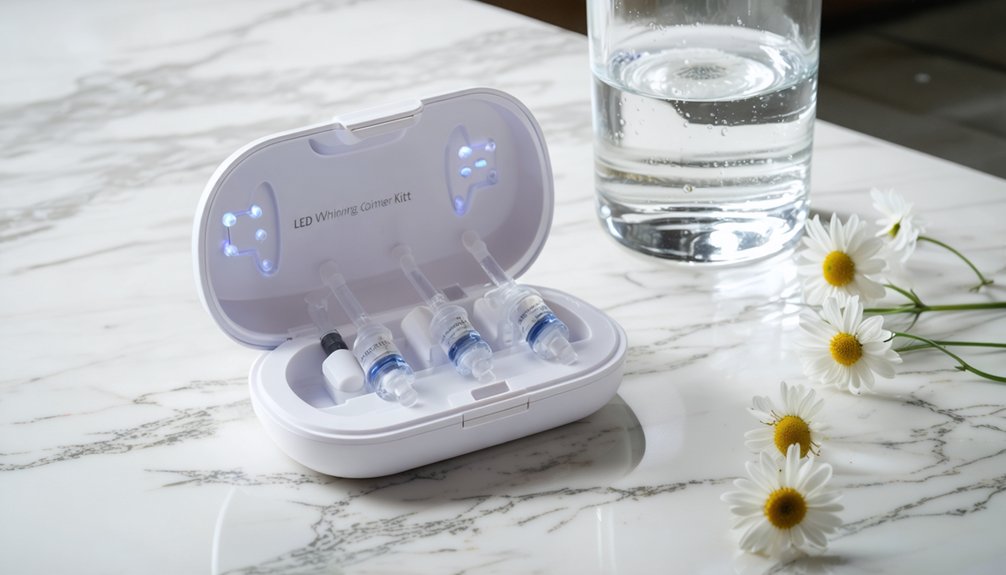
Sensitivity is one of the most overlooked factors when choosing an LED whitening kit, yet it’s critical for users with reactive teeth. Before selecting a kit, evaluate your existing sensitivity levels honestly.
Higher peroxide concentrations deliver faster results but increase the likelihood of discomfort. GLO Science uses lower hydrogen peroxide concentrations specifically to minimize sensitivity sting, while Byte BrightByte Pro earned recognition from People.com as the top pick for sensitive users.
Look for kits that offer adjustable comfort options, such as reduced-intensity light modes or lower-strength gel formulas.
Enamel-safe claims require scrutiny—cross-reference ingredient concentrations against usage instructions rather than accepting marketing language at face value.
If you experience persistent discomfort, consult your dentist before continuing treatment.
How to Tell If a Kit Is Actually Dentist-Approved
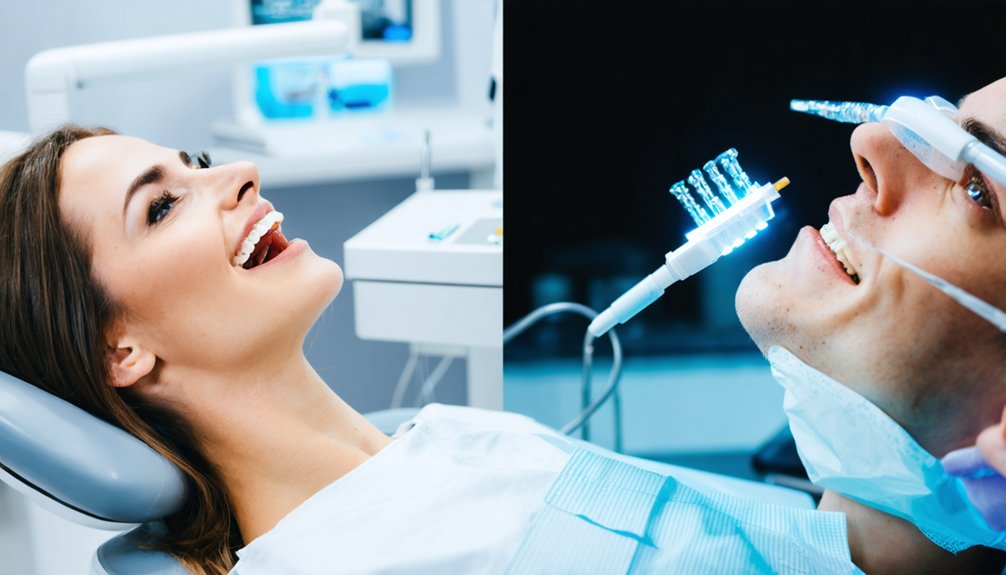
When evaluating whether a kit is genuinely dentist-approved, you should look beyond marketing language and seek verified clinical evidence or direct professional endorsements.
Reputable sources like Forbes and Allure feature dentist-recommended picks, and brands like Auraglow back their 35% carbamide peroxide gel with clinical proof of stain removal.
You’ll want to treat vague “brightening” claims with skepticism and prioritize kits that cite real testing data or carry credible third-party validation.
Verified Clinical Evidence
Not every whitening kit that claims dentist approval actually has it, so you’ll want to look for specific, verifiable signals before buying. Vague product endorsements without supporting data aren’t enough.
Check for these three markers of credible clinical evidence:
- Published clinical trials — Confirm the brand references actual studies, not just testimonials. Auraglow, for example, states its 35% carbamide peroxide gel is clinically proven to remove stains.
- Named professional endorsements — Forbes and Allure both feature dentist-recommended kits, meaning real professionals reviewed and approved the product.
- Transparent ingredient disclosure — Clinically backed kits list active concentrations, such as 6% hydrogen peroxide or 35% carbamide peroxide, so you can verify potency independently.
Treat unsupported claims as red flags, and prioritize brands that back their assertions with measurable proof.
Dentist Recommendation Signals
Dentist approval is a marketing phrase that carries real weight only when the brand can back it up with specifics. When evaluating dentist credibility, look beyond the label.
Authentic professional endorsements typically include named dental professionals, affiliated institutions, or published clinical data supporting the product’s efficacy and safety profile.
Forbes and Allure both feature dentist-recommended LED kits, but you should verify whether those endorsements reflect independent clinical review or paid partnerships.
Ask whether the recommending dentist has examined the formulation, concentration levels, and usage protocols.
Vague phrases like “dentist-inspired” or “professionally designed” signal weak backing.
Prioritize kits where dentists have reviewed specific active ingredient concentrations, confirmed enamel safety, and validated treatment timelines.
That specificity separates genuine endorsement from promotional language.
The Best LED Teeth Whitening Kits Right Now
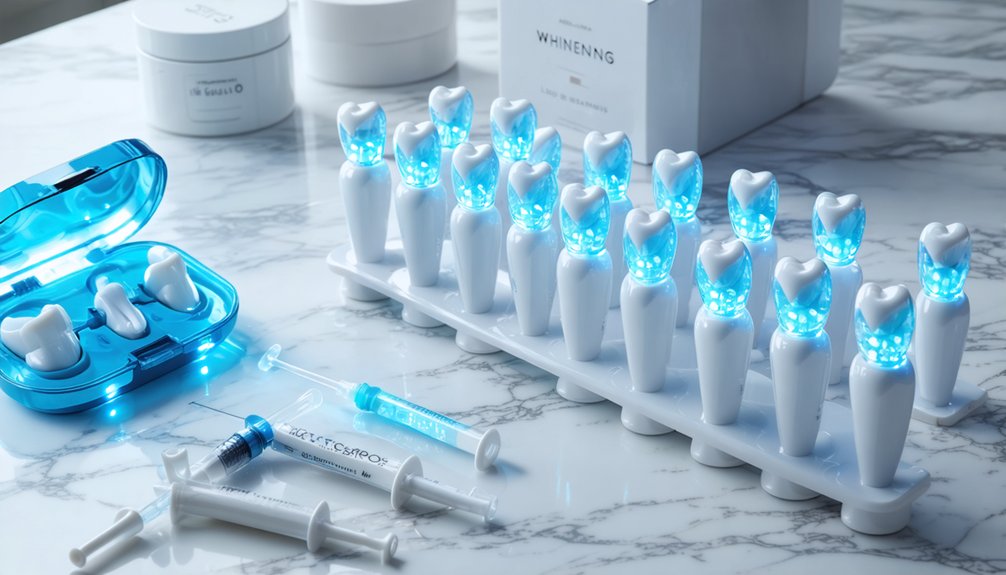
Though the market is crowded with options, a handful of LED teeth whitening kits consistently stand out based on real-world testing, dentist approval, and clinically supported formulas.
Product comparisons and user testimonials confirm these three as top contenders:
- Auraglow – Uses 35% carbamide peroxide with a 30-minute daily treatment and clinically proven stain removal results.
- Byte BrightByte Pro – Identified by People.com as the best for sensitivity after testing 27 kits head-to-head.
- GLO Science – Delivers gentler whitening with reduced hydrogen peroxide concentration, minimizing sensitivity without sacrificing results.
Each kit targets a different priority.
Each LED teeth whitening kit is designed with a distinct goal in mind—sensitivity, speed, or strength.
You’ll want to match your choice to your sensitivity level, schedule, and preferred treatment duration for the most controlled outcome.
Warning Signs That a Kit Isn’t Worth Your Money
Spotting a low-quality LED whitening kit before you buy can save you money and protect your enamel.
Avoid kits that lack ingredient transparency—if the active concentration isn’t clearly listed, you can’t assess efficacy or safety. Vague claims like “brightening” or “naturally whiter” without clinical backing are red flags.
Question kit longevity by checking how many treatments are included and whether replacement gel is available. Kits with cheap, non-rechargeable mouthpieces often signal poor build quality and limited durability.
Skip products without dentist endorsements or published evidence. If sensitivity accommodations, usage instructions, or contact information are absent, assume quality control is lacking.
Prioritize brands that disclose formulations, offer transparent return policies, and have been vetted by credible sources like Forbes or People.com.
Frequently Asked Questions
Can LED Teeth Whitening Kits Damage Existing Dental Work or Restorations?
LED kits won’t damage restorations, but they can’t whiten them either. You’ll want to check restoration compatibility before starting, as teeth sensitivity may increase around existing crowns, veneers, or fillings during peroxide-based treatments.
How Soon After Whitening Can You Eat or Drink Normally?
“Better safe than sorry”—wait at least 48 hours before eating staining foods or drinks. Post whitening care demands you avoid coffee, wine, and acidic items immediately, as enamel sensitivity peaks right after treatment.
How Often Should You Repeat LED Whitening Treatments Throughout the Year?
You should space out whitening frequency to every three to six months, allowing treatment intervals that protect enamel integrity. Monitor your results and sensitivity responses to determine how often you’ll need to repeat cycles annually.
Is It Safe to Use LED Whitening Kits During Pregnancy or Breastfeeding?
You should avoid LED whitening kits due to pregnancy safety concerns, as peroxide absorption risks remain unstudied. Apply the same breastfeeding precautions and consult your healthcare provider before resuming any peroxide-based whitening treatments.
Can Children or Teenagers Safely Use LED Teeth Whitening Kits?
Most manufacturers don’t recommend LED whitening kits for children. You should follow strict age restrictions—typically 18+—and consult a dentist before use. Safety guidelines indicate developing enamel increases sensitivity risks, making professional supervision essential for teenagers.
References
- https://auraglow.com/products/teeth-whitening-kit
- https://people.com/best-teeth-whitening-kits-8648182
- https://novashinesmile.com/products/teeth-whitening-kit
- https://www.allure.com/story/best-led-teeth-whiteners
- https://www.forbes.com/sites/forbes-personal-shopper/article/best-teeth-whitening-kit/
- https://gloscience.com/products/so-brilliant-whitening-kit
- https://www.amazon.com/Best-Sellers-Teeth-Whitening-LED-Accelerator-Lights/zgbs/hpc/21193192011
- https://getevo.net/products/led-whitening-kit
- https://www.reddit.com/r/BuyItForLife/comments/1le9zs4/what_is_the_best_teeth_whitening_kit/
- https://nhdentistrybeverlyhills.com/press/6-of-the-best-teeth-whitening-kits-in-the-drugstore/