Most LED teeth whitening devices work best when you use them one to two times per week during an initial treatment phase lasting one to two weeks. After that, you’ll scale back to maintenance sessions every four to six weeks. Your dietary habits, sensitivity levels, and gel concentration all influence how often you’ll actually need touch-ups. The full picture of what affects your ideal schedule—and what can go wrong—is worth understanding before your next session.
Key Takeaways
- Use an LED whitening device 1–2 times per week for 1–2 weeks during the initial treatment phase.
- After the initial course, reduce usage to maintenance sessions every 4–6 weeks.
- Heavy coffee, tea, wine, or smoking habits may require touch-ups every 2–3 weeks.
- Mild sensitivity signals extending sessions by 2–3 days; persistent sensitivity means stop and consult a dentist.
- Always follow manufacturer instructions, as gel strength and device design affect recommended frequency.
What the LED Light Actually Does to Your Teeth
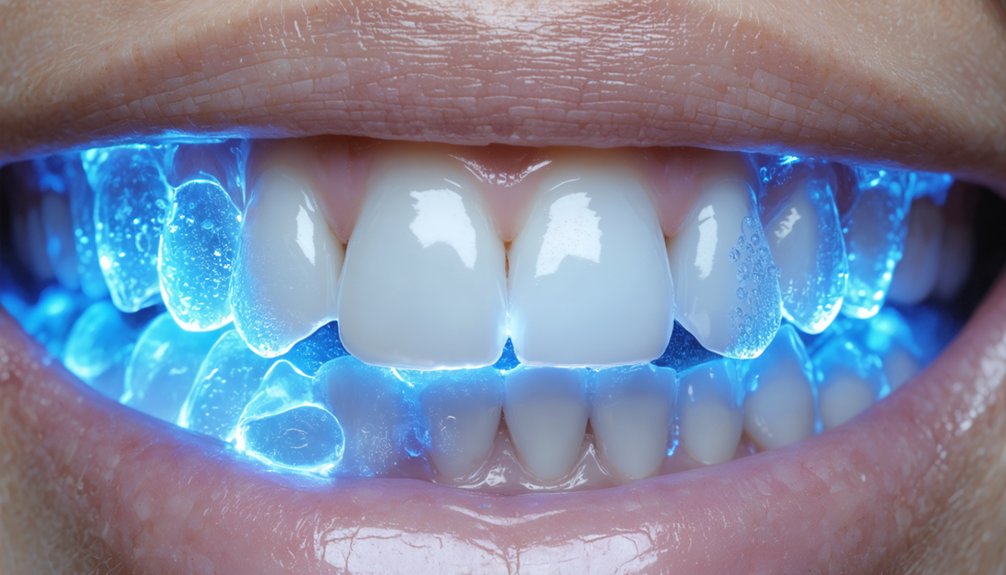
The LED light in a whitening device doesn’t whiten your teeth on its own—it works by accelerating the chemical reaction of the whitening gel applied to your tooth surface. The light activates the peroxide compound in the gel, speeding up the breakdown of stain molecules embedded in your teeth enamel. Without the gel, the LED produces no whitening effect.
What you’re controlling is a photochemical process. The light increases the reaction rate, which can shorten treatment time but also intensifies exposure to your enamel and surrounding tissue. That intensity is why session frequency matters directly to your oral health.
More light doesn’t mean better results—it means more stress on enamel if you exceed the recommended treatment window.
How Often Should You Use an LED Whitening Device?
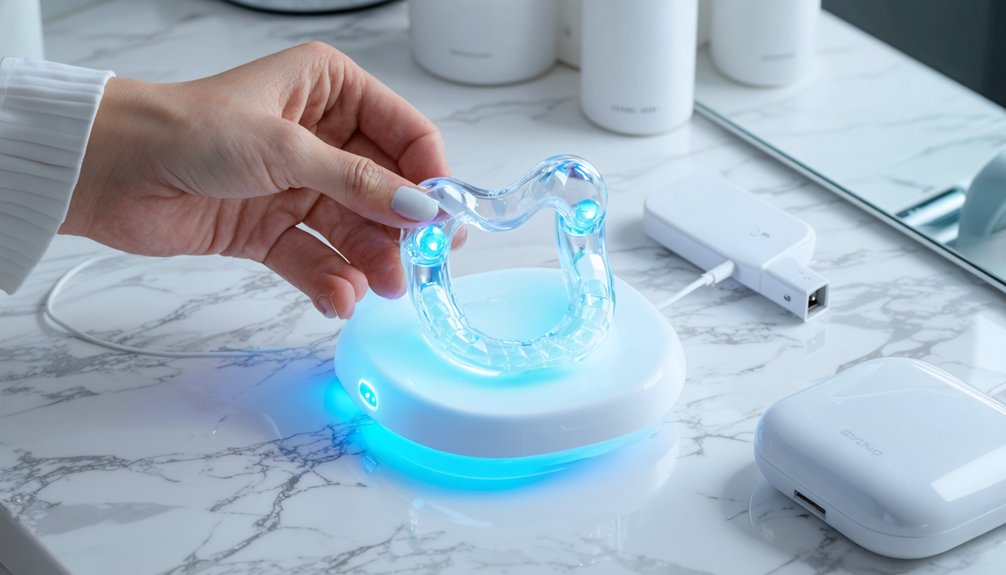
Most at-home LED whitening devices are designed for short treatment cycles, not continuous daily use. Typical protocols run one to two sessions per week for one to two weeks, or daily sessions capped at seven to fourteen days.
At-home LED whitening devices are built for short cycles—not indefinite daily use.
After the initial course, you shift to maintenance touch-ups every four to six weeks.
Exceeding these windows increases your risk of enamel erosion and sensitivity. Your dental dietary habits also influence scheduling—frequent coffee, tea, or wine consumption may prompt touch-ups sooner, but that doesn’t justify compressing sessions.
Stronger peroxide formulas require longer intervals between cycles.
Follow your device’s labeled schedule precisely. Manufacturer instructions and your dentist’s guidance should always override general recommendations, particularly if you already experience sensitivity or enamel vulnerability.
Initial Course vs. Maintenance: What Changes After Week Two
Once you’ve completed your initial one-to-two-week whitening course, you shift from active treatment to a maintenance pattern with far less frequent use.
Most at-home systems recommend spacing touch-ups every two to six weeks, depending on your sensitivity level and how quickly staining returns.
Lifestyle habits like coffee, tea, and wine consumption influence how often you’ll need those touch-ups, but you shouldn’t treat maintenance sessions as a reason to restart a full daily cycle.
Shifting to Maintenance Mode
After completing an initial LED whitening course—typically one to two weeks of daily or near-daily sessions—your treatment frequency should drop markedly. Continuing at the same intensity won’t accelerate results; it will compromise your dental health by increasing sensitivity and stressing enamel unnecessarily.
Maintenance mode means spacing sessions every two to four weeks, or extending that interval to every three to six months depending on your lifestyle and how quickly staining returns. Coffee, tea, wine, and tobacco accelerate discoloration and may require shorter intervals between touch-ups.
Shifting your approach also supports product longevity—gel supplies and device components last considerably longer when you’re not running daily cycles indefinitely. Match your maintenance frequency to actual need, not habit, and you’ll preserve both your results and your oral tissue.
Spacing Out Touch-Ups
The shift from an initial whitening course to maintenance isn’t just a scheduling change—it reflects a fundamentally different treatment goal. During the initial phase, you’re actively lifting stains. Afterward, you’re preserving results while protecting enamel health.
Touch-up timing depends on several controlled variables:
- Dietary habits — Coffee, tea, and wine accelerate restaining
- Dental plaque accumulation — Plaque traps chromogens, making touch-ups more urgent
- Gel concentration — Stronger formulas require longer spacing between sessions
- Sensitivity response — Any discomfort signals your enamel needs recovery time
Most maintenance schedules fall between every two weeks and every three months. You control that range by monitoring your results honestly.
Don’t treat touch-ups as routine—treat them as targeted interventions applied only when measurable fading occurs.
Why Manufacturer Schedules Vary and How to Follow Yours
Manufacturer schedules differ because gel concentration, LED intensity, and tray design vary across products, meaning a protocol built for one system won’t translate accurately to another.
When you pick up your kit, read the instructions fully before your first session, noting the recommended session length, daily or weekly frequency, and the total treatment window.
Once you’ve confirmed those details, follow your specific plan without substituting general guidelines, since straying from your product’s schedule increases the risk of sensitivity and uneven results.
Why Schedules Differ
Schedule differences across LED whitening products come down to three main variables: gel concentration, device design, and intended user sensitivity tolerance.
Higher peroxide formulas require longer recovery windows. Milder gels support more frequent short-term sessions. These distinctions directly shape what the manufacturer prints on the label.
Key factors that drive schedule variation include:
- Gel strength — stronger formulas demand wider spacing between sessions
- Device output — LED intensity affects how quickly enamel responds
- Sensitivity baseline — users with reactive teeth need extended recovery periods
- Dietary habits — frequent staining agents may alter touch-up timing without changing product safety parameters
Ignoring these distinctions increases your risk of sensitivity and enamel stress. Your product’s labeled schedule accounts for these variables, so treat it as a clinical protocol, not a suggestion.
Reading Your Instructions
Once you understand why schedules differ, applying that knowledge starts with reading what your specific product actually tells you. Your kit’s instructions reflect its whitening gel concentration and LED timing parameters—factors that directly affect teeth enamel integrity and sensitivity risk.
Don’t substitute general advice for labeled guidance. If your product calls for 10-minute daily sessions over 14 days, that window exists for a reason. A stronger gel formula may require longer gaps between sessions to allow enamel recovery. A milder formula may permit more frequent short-term use.
Check whether your instructions distinguish between an initial treatment phase and a maintenance phase—many do. Follow both.
When product guidance conflicts with what you’ve read elsewhere, the manufacturer’s protocol takes priority.
Sticking To Your Plan
Because no two LED whitening systems use identical gel concentrations or LED parameters, the treatment schedules printed on their packaging will rarely look the same. Once you’ve read yours, follow it precisely and resist improvising.
Maintain your results by controlling the variables you can:
- Track every session using a log so you don’t accidentally stack treatments too closely
- Prioritize oral hygiene before each session to reduce sensitivity risk and maximize gel contact
- Make diet modifications during active treatment cycles by limiting coffee, tea, and wine
- Respect recovery windows between full cycles, typically several weeks to months depending on formula strength
Deviating from your prescribed schedule increases sensitivity risk and can produce uneven results. Your manufacturer’s timeline exists for a clinical reason—honor it.
Red Flags That You’re Overusing Your LED Whitening Device
Even when you follow a general whitening routine, your body often signals when that routine has crossed into overuse. Recognizing these red flags early protects both your results and product durability.
Common side effects that indicate overuse include:
- Persistent tooth sensitivity lasting beyond 24 hours after a session
- Gum irritation or redness along the tissue line where the tray sits
- Uneven whitening or chalky patches caused by enamel stress from stacked sessions
- Sharp pain during or after treatment, which signals nerve involvement
- Increased sensitivity to hot and cold, indicating compromised enamel integrity
If you notice any of these responses, stop your current cycle immediately. Allow adequate recovery time before resuming.
These symptoms aren’t minor inconveniences—they’re clinical indicators that your whitening frequency needs adjustment.
How Tooth Sensitivity Should Shape Your LED Whitening Frequency
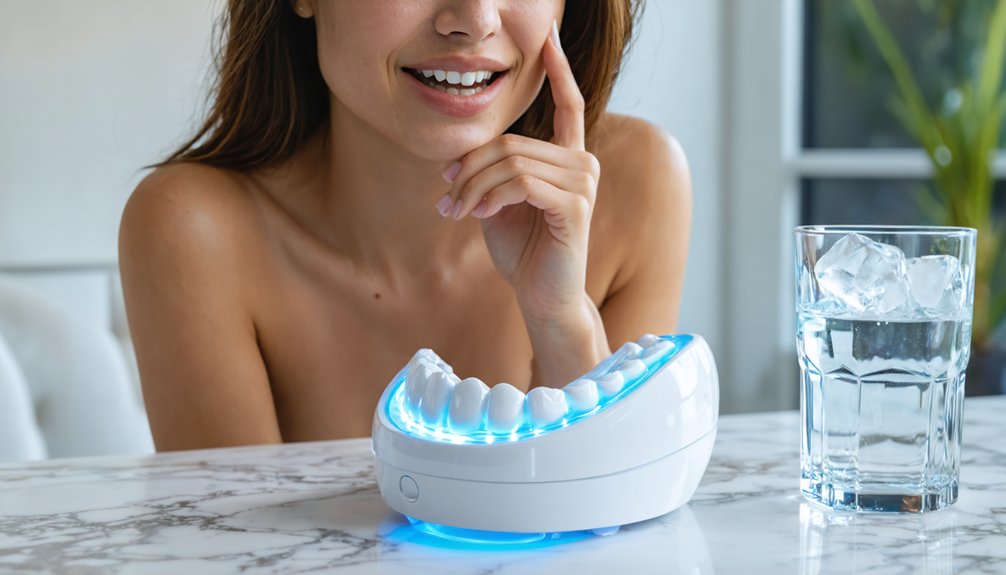
Tooth sensitivity isn’t just a side effect to manage—it’s a direct signal that should dictate how often you use your LED whitening device. Whitening gel penetrates tooth enamel during each session, and repeated exposure without adequate recovery accelerates sensitivity risk.
Use your sensitivity level as a calibration tool:
- No sensitivity: Follow the manufacturer’s recommended schedule without modification.
- Mild sensitivity: Extend the gap between sessions by two to three days.
- Moderate sensitivity: Pause the cycle entirely until symptoms resolve, then resume at reduced frequency.
- Persistent sensitivity: Discontinue use and consult a dentist before continuing.
Pushing through discomfort doesn’t accelerate results—it compounds damage. Treat sensitivity as real-time feedback, and adjust your frequency accordingly rather than defaulting to a fixed schedule.
Coffee, Wine, and Smoking: When You’ll Need More LED Touch-Ups
Sensitivity tells you when to slow down; your daily habits tell you when to speed back up. Coffee, red wine, and smoking accelerate surface staining, shortening the window before your next touch-up becomes necessary. If you consume these regularly, you’ll likely need maintenance sessions every two to three weeks rather than every four to six. That’s not overuse—it’s calibrated response to your actual staining load.
During touch-ups, your dental gel concentration matters; milder formulas suit frequent short sessions better than stronger ones do. Light activation should still follow manufacturer timing precisely, even during maintenance cycles. Skipping that discipline leads to uneven results.
Track your consumption patterns, monitor visible staining, and adjust your touch-up schedule accordingly rather than following a fixed calendar that ignores your lifestyle.
When Your LED Whitening Results Need a Dentist’s Input
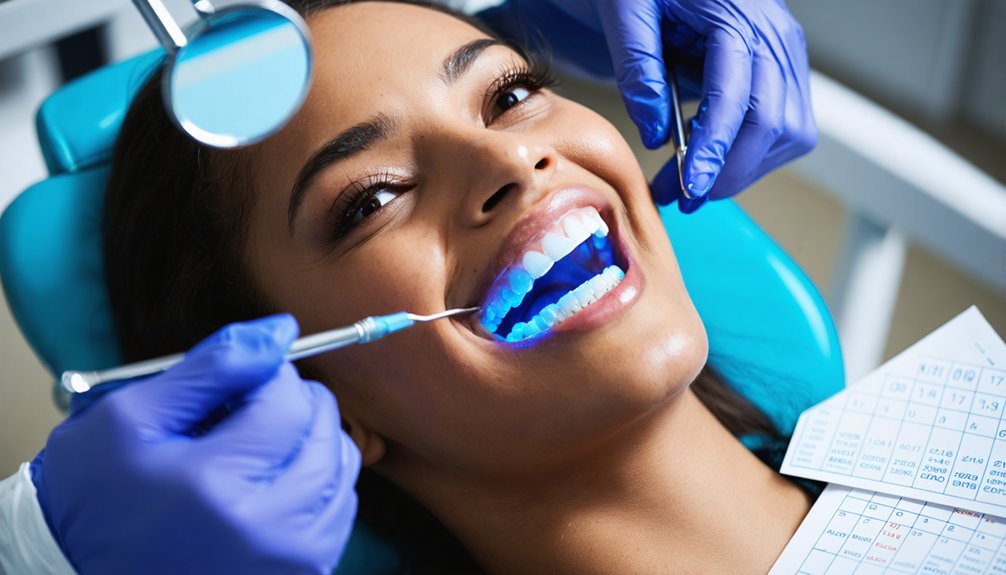
When over-the-counter results plateau or side effects persist beyond a normal recovery window, you need a dentist’s input rather than another whitening session. Stacking sessions without professional evaluation risks enamel damage and worsening sensitivity.
Consult a dentist if you experience:
- Sensitivity lasting more than 48 hours after a session
- Gum irritation that doesn’t resolve between cycles
- Uneven whitening that suggests underlying dental health concerns
- Uncertainty about device compatibility with crowns, veneers, or bonding
A dentist can assess whether your enamel tolerates continued treatment, identify restorations that don’t respond to LED whitening, and recommend a safer frequency.
Self-directed overuse rarely improves outcomes and frequently compounds the problem. Knowing when to stop and seek guidance is part of using any whitening system responsibly.
Frequently Asked Questions
Can LED Whitening Devices Be Used Safely During Pregnancy?
You shouldn’t use LED whitening devices during pregnancy. Pregnancy safety concerns exist because LED light impact combined with peroxide gels lacks sufficient clinical evidence. Consult your dentist before proceeding; postponing treatment until after delivery remains the recommended, evidence-based decision.
Do LED Whitening Devices Work on Dental Crowns or Veneers?
Like ancient alchemy failing on stone, LED whitening devices don’t whiten crowns or veneers. You’ll see no whitening effectiveness on artificial surfaces. Only natural enamel responds, so dental sensitivity remains your primary concern with surrounding teeth.
Should You Brush Your Teeth Before or After an LED Session?
Brush before your LED session to remove plaque and maximize gel contact. Avoid brushing immediately after to protect enamel, especially if you’re experiencing teeth sensitivity, since whitening duration can temporarily compromise surface integrity.
Can Children or Teenagers Safely Use At-Home LED Whitening Kits?
Imagine a 14-year-old enthusiastic for brighter teeth — pediatric safety guidelines say no. You shouldn’t use at-home LED kits on developing teeth. Teen usage risks enamel damage, and dentists consistently advise waiting until adulthood.
Does the Color of the LED Light Affect Whitening Results?
LED light color doesn’t substantially drive whitening effectiveness—the gel’s peroxide formula does the actual work. You’ll find most devices use blue LED light to activate whitening agents, but it’s not the primary whitening mechanism.
References
- https://www.kaiyanmedical.com/post/how-often-can-you-whiten-your-teeth-with-led-light
- https://lampinsider.com/how-often-can-you-whiten-your-teeth-with-led-light/
- https://www.powsmart.com/how-often-should-i-use-a-led-teeth-whitening-light-a-manufacturers-guide/
- https://support.primallifeorganics.com/en-US/articles/device-24747
- https://www.dailytoothcare.com/archives/8731
- https://moonoralbeauty.com/pages/teeth-whitening-device-faqs
- https://www.trysnow.com/blogs/news/how-often-should-you-whiten-your-teeth-with-blue-light
- https://www.powsmart.com/hi/led-teeth-whitening-kits-usage-manual/
- https://clubwhitesmile.com/led-teeth-whitening-at-home/
- https://moonoralbeauty.com/blogs/news/how-does-led-teeth-whitening-work-what-you-need-to-know-about-led-teeth-whitening-and-its-effects-on-your-teeth