Whitening is safe for sensitive teeth if you choose the right approach. Sensitivity occurs when peroxide penetrates enamel and temporarily irritates the dental pulp, affecting up to 78% of patients. You can minimize discomfort by using low-concentration systems like 10% carbamide peroxide, preparing with desensitizing toothpaste for two weeks beforehand, and avoiding dietary triggers post-treatment. With the right strategy, a noticeably whiter smile is achievable — and everything you need to know is covered ahead.
Key Takeaways
- Use potassium nitrate desensitizing toothpaste for at least two weeks before whitening and continue post-treatment to reduce sensitivity.
- Choose low-concentration peroxide systems, such as 10% carbamide peroxide in custom trays, for controlled, gentler whitening.
- Avoid hot, cold, acidic, or sweet foods and beverages for 24-72 hours after each whitening session.
- Sensitivity typically resolves within 24-72 hours; persistent symptoms beyond one week require professional dental consultation.
- Avoid heat- or light-activated in-office treatments, as these increase discomfort for those with sensitive teeth.
Is Whitening Safe If You Have Sensitive Teeth?
Whitening can be safe for sensitive teeth, but it requires careful product selection and technique. Sensitivity affects 15% to 78% of patients undergoing bleaching, so your risk is real but manageable. Lower-concentration peroxide systems produce less irritation than high-intensity, heat-activated alternatives, giving you greater control over your experience.
Sensitivity affects up to 78% of bleaching patients — but the right product makes your risk manageable.
Ignore dental myths suggesting natural remedies like activated charcoal or oil pulling whiten teeth safely without consequence. These lack clinical evidence and may cause enamel abrasion. Peroxide-based systems remain the evidence-backed standard.
Your safest approach involves selecting lower-strength formulations, following application instructions precisely, and pre-treating with potassium nitrate desensitizing toothpaste for two weeks.
If sensitivity persists beyond 72 hours after a session, pause treatment and seek dental evaluation.
Why Whitening Causes Sensitivity in the First Place
When you use a peroxide-based whitening product, the active ingredient penetrates your enamel and reaches the dental pulp, triggering temporary inflammation and sensitivity.
You may notice sharp, brief “zingers” in response to cold, hot, or sweet stimuli during or shortly after treatment.
This reaction is the most commonly reported side effect of essential tooth whitening, affecting anywhere from 15% to 78% of patients across different studies.
Peroxide Irritates the Pulp
Peroxide-based whitening agents penetrate the enamel and reach the dental pulp, which triggers the temporary sensitivity many people experience during treatment. As the peroxide diffuses through your teeth enamel, it enters the pulp chamber and stimulates the nerve endings inside.
This irritation is the direct cause of the sharp, brief “zingers” you may feel in response to cold, heat, or sweetness.
Pulp health isn’t permanently compromised by whitening under normal circumstances, but the inflammatory response is real and measurable. Higher peroxide concentrations and longer contact times increase the degree of pulp irritation.
Understanding this mechanism gives you a clear basis for making informed decisions about concentration levels, session length, and spacing between treatments to keep sensitivity within a manageable range.
Sensitivity Triggers After Whitening
Several specific triggers tend to provoke sensitivity after whitening, and recognizing them helps you manage discomfort more effectively. Dietary triggers are the most immediate concern — avoid very hot, cold, acidic, or sweet foods and beverages for at least 24 to 72 hours post-treatment. During this window, your enamel remains temporarily more permeable, and these stimuli reach the pulp more easily.
Oral hygiene practices also matter. Switch to a soft-bristle toothbrush and use a desensitizing toothpaste consistently after each session. Aggressive brushing amplifies irritation when teeth are already reactive.
Sensitivity typically resolves within 24 to 72 hours after treatment ends. If symptoms persist beyond that window or intensify, stop whitening and consult your dentist before continuing. You control the exposure — adjust accordingly.
The Gentlest Whitening Methods for Sensitive Teeth
Choosing the right whitening method makes a significant difference if you have sensitive teeth. Lower-concentration peroxide systems consistently produce less sensitivity than higher-strength alternatives, making them the clinically preferred starting point.
Custom take-home trays with 10% carbamide peroxide let you control exposure time precisely, reducing cumulative peroxide contact. Avoid heat-activated or light-activated in-office treatments if sensitivity is already a concern, as studies link these to higher discomfort rates.
While natural remedies and alternative treatments like oil pulling or activated charcoal circulate widely online, evidence supporting their whitening efficacy remains limited. They don’t replace peroxide-based options but may complement your routine.
If you’re unsure which concentration suits your sensitivity level, consult your dentist before starting any regimen to select a product matched to your specific risk profile.
Which Whitening Strength Should Sensitive Teeth Use?
When selecting a whitening concentration for sensitive teeth, starting low and increasing gradually based on tolerance is the most evidence-based approach. Lower-concentration whitening gel minimizes pulp irritation while still producing measurable color change. Protecting tooth enamel means choosing strength strategically, not maximizing it.
Use these concentration guidelines to inform your decision:
- 10% carbamide peroxide: The standard starting point for sensitive teeth using tray-based systems
- Lower hydrogen peroxide strips: Preferable over high-concentration alternatives for controlled, gradual results
- Avoid heat- or light-activated systems: These intensify peroxide activity and raise sensitivity risk
- Higher concentrations: Only appropriate under direct dental supervision with desensitizing protocols in place
If sensitivity develops, reduce concentration before stopping treatment entirely. Systematic control over whitening strength gives you results without unnecessary discomfort.
How to Prepare Your Teeth Before Whitening
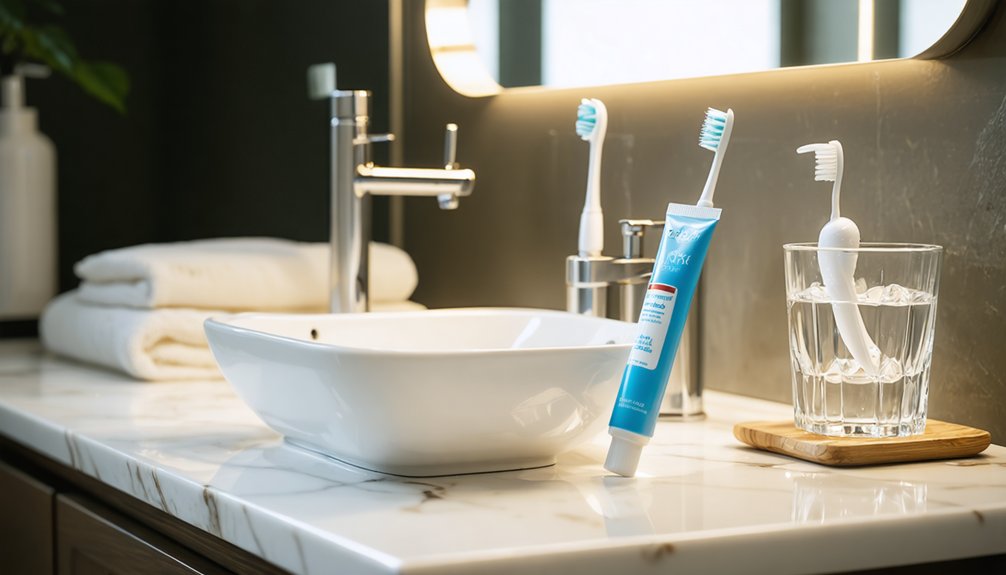
Preparing your teeth before whitening reduces sensitivity risk and improves treatment outcomes. Start using a potassium nitrate desensitizing toothpaste consistently for two weeks before your first session. This helps block dentinal tubules and calm pulp irritation before peroxide exposure begins.
Consistent pre-whitening preparation significantly reduces sensitivity risk and sets the foundation for better, more comfortable treatment results.
Support your enamel further by applying fluoride or remineralizing agents during this preparation phase. Maintain strong oral hydration, since dehydrated enamel is more porous and vulnerable to peroxide penetration.
Make targeted diet modifications by limiting acidic foods and beverages before you begin. Acidic items weaken enamel temporarily, raising your sensitivity risk when whitening agents are applied.
Schedule a dental evaluation beforehand if you already experience baseline sensitivity. Your dentist can confirm there are no underlying issues that would intensify your response to peroxide-based treatment.
How to Reduce Sensitivity While You Whiten
Once whitening begins, managing peroxide exposure is your most effective tool for limiting sensitivity. Follow product instructions precisely, and don’t extend wear time beyond recommendations.
Key strategies to maintain control:
- Shorten sessions if sensitivity appears—reducing contact time lowers cumulative peroxide exposure
- Space out treatments to allow the pulp to recover between applications
- Keep gel off gum tissue to prevent irritation beyond the enamel surface
- Apply diet modifications by avoiding hot, cold, acidic, or sweet foods immediately after each session
Stress management also matters—grinding or clenching during treatment increases sensitivity risk, so address any parafunctional habits before continuing.
If symptoms intensify rather than stabilize, stop treatment and consult your dentist before resuming. You control the pace.
What to Do After Each Whitening Session
After each whitening session, what you do in the next 24 to 72 hours directly affects how much sensitivity you experience. Sensitivity typically peaks within this window, then resolves once peroxide exposure ends.
The 24 to 72 hours after each whitening session determine how much sensitivity you’ll actually feel.
Follow these post-session protocols to minimize discomfort:
- Diet restrictions: Avoid hot, cold, acidic, and sweet foods and beverages. These trigger pulpal irritation when enamel permeability is temporarily elevated.
- Oral hydration: Drink water consistently to support saliva production, which aids remineralization and helps buffer acid exposure.
- Brushing: Use a soft-bristle toothbrush with light pressure to avoid compounding irritation.
- Desensitizing toothpaste: Continue using potassium nitrate toothpaste after sessions to calm nerve response.
If sensitivity doesn’t resolve within 72 hours after your final session, schedule a dental evaluation.
How Long Does Whitening Sensitivity Last?
Whitening sensitivity typically resolves within 24 to 72 hours after a session, though some patients experience symptoms for up to four days before they fully subside.
If discomfort lingers beyond that window or intensifies, you should pause treatment and consult your dentist to rule out underlying issues.
You can speed recovery by avoiding temperature extremes, using a desensitizing toothpaste with potassium nitrate, and brushing gently with a soft-bristle toothbrush until symptoms clear.
Typical Sensitivity Duration
How long does whitening sensitivity typically last? For most people, discomfort from bleaching agents is temporary and resolves predictably once treatment ends.
Clinical evidence suggests you can expect the following timeline:
- Sensitivity often begins within two to three days of starting whitening
- Symptoms typically resolve by the fourth day after treatment ends
- Tooth enamel-related discomfort from in-office bleaching agents may subside within 24 to 72 hours
- Persistent sensitivity beyond one week warrants a dental evaluation
You’re not powerless during this window. Continuing desensitizing toothpaste, avoiding temperature extremes, and brushing gently with a soft-bristle toothbrush can shorten your discomfort period.
If sensitivity doesn’t follow this expected pattern, stop treatment and consult your dentist before continuing.
When Symptoms Linger
Most whitening sensitivity clears within a few days, but what happens when it doesn’t? If discomfort extends beyond 72 hours after your last session, it’s a signal to pause treatment and assess contributing factors.
Review your dietary habits—frequent exposure to acidic, hot, or cold foods prolongs nerve irritation and delays recovery. Your oral hygiene routine also matters; aggressive brushing or abrasive products can compound existing sensitivity. Switch to a soft-bristle toothbrush and continue using potassium nitrate toothpaste consistently.
If symptoms persist despite these adjustments, schedule a dental evaluation. Lingering sensitivity may indicate pulp irritation or an underlying issue requiring clinical attention. Don’t continue whitening until a professional confirms it’s safe to resume.
Speeding Up Recovery
For most people, whitening sensitivity resolves within 24 to 72 hours after a session ends—but you can take steps to move recovery along.
Skip alternative remedies without clinical support and focus on evidence-backed lifestyle habits instead:
- Use desensitizing toothpaste containing potassium nitrate immediately after each session to calm pulp irritation.
- Avoid thermal and acidic triggers—hot beverages, cold foods, and citrus increase post-whitening discomfort.
- Brush gently with a soft-bristle toothbrush to prevent additional enamel and gum irritation.
- Apply fluoride or remineralizing gel to support enamel integrity between sessions.
Controlling your recovery means managing exposure, not just waiting. If sensitivity hasn’t improved within 72 hours after treatment ends, schedule a dental evaluation rather than resuming whitening.
When to Stop Whitening and See a Dentist
While mild, short-lived sensitivity is expected during whitening, you should stop treatment and contact a dentist if discomfort becomes significant, worsens with each session, or doesn’t resolve within a few days after treatment ends.
Persistent sensitivity may signal pulp irritation or enamel compromise that requires clinical evaluation.
You should also seek guidance if your oral hygiene routine or dietary habits—such as frequent acidic food consumption—are compounding irritation.
A dentist can assess whether your current product’s peroxide concentration is appropriate, recommend a lower-strength alternative, or identify underlying issues like gum recession or existing tooth damage that raise your risk.
Don’t continue whitening through escalating pain. Stopping early and getting a professional evaluation protects both your comfort and your long-term dental health.
How to Maintain Your Results Without the Sensitivity Coming Back
Once whitening is complete, maintaining your results comes down to consistent habits that don’t overload your teeth with repeated peroxide exposure. Skip natural whitening remedies like charcoal or lemon juice—they’re abrasive or acidic and can compromise enamel.
Instead, explore alternative treatment options like low-concentration maintenance strips used occasionally rather than on aggressive cycles.
Keep these habits consistent:
- Use desensitizing toothpaste daily to maintain pulpal calm and reduce sensitivity triggers
- Avoid staining foods and drinks—coffee, red wine, and acidic beverages accelerate discoloration
- Brush gently with a soft-bristle toothbrush to protect enamel integrity
- Schedule periodic dental reviews to assess whether retreatment is appropriate and at what concentration
Controlled, infrequent touch-ups outperform aggressive re-whitening cycles every time.
Frequently Asked Questions
Can Children or Teenagers Safely Use Whitening Products for Sensitive Teeth?
Younger smiles aren’t quite ready for whitening. Children’s safety requires avoiding peroxide products on developing teeth. Teenagers whitening should only proceed under dental supervision, as you’d face heightened sensitivity risks and potential pulp irritation without professional guidance.
Does Whitening Toothpaste Cause the Same Sensitivity as Peroxide-Based Treatments?
Whitening toothpaste doesn’t trigger the same sensitivity comparison as peroxide treatments. It relies on abrasives, not peroxides, so ingredient safety concerns differ. You’ll experience far less pulp irritation, making it a manageable option for sensitive teeth.
Will Teeth Whitening Affect Existing Crowns, Veneers, or Dental Implants?
Restorations won’t respond to whitening agents. Dental material compatibility means crowns, veneers, and implants stay unchanged in shade. You’ll need sensitivity management strategies and dentist guidance to align natural teeth with existing restorations effectively.
Can Pregnancy Affect How Sensitive Teeth React to Whitening Treatments?
Pregnancy safety concerns and hormonal changes can heighten your teeth’s sensitivity, making whitening riskier. You should avoid whitening treatments during pregnancy and consult your dentist before proceeding to guarantee you’re protecting both your health and your baby’s.
Does Diet or Smoking Affect How Long Whitening Results Actually Last?
While results aren’t permanent regardless, your habits determine how quickly they fade. Diet impact from staining foods and smoking effects from tobacco accelerate discoloration, so you’ll maintain whitening longer by actively limiting both.
References
- https://www.forbes.com/sites/forbes-personal-shopper/article/best-whitening-product-for-sensitive-teeth/
- https://patient.enlightensmiles.com/blogs/teeth-whitening/teeth-whitening-sensitivity
- https://www.nature.com/articles/4813423
- https://www.goodrx.com/conditions/dental-care/sensitive-teeth-after-whitening
- https://pubmed.ncbi.nlm.nih.gov/19369923/
- https://www.thesuperdentists.com/sensitive-teeth-hurting-after-whitening/
- https://yourvalleydental.com/blog/teeth-whitening-for-sensitive-teeth-finding-the-right-solution/
- https://www.ada.org/resources/ada-library/oral-health-topics/whitening
- https://serenitydentalbloom.com/blog/teeth-whitening-for-sensitive-teeth
- https://www.sensodyne.com/en-us/oral-health-tips/whitening-sensitive-teeth/what-to-know/