Home teeth whitening kits do work, but you should manage your expectations carefully. They typically lighten teeth by around 2.7 shades within two weeks, targeting surface stains effectively. However, they can’t replicate professional-level results due to lower peroxide concentrations. Deep discoloration responds poorly, and consistency matters enormously. They’re generally safe when you follow manufacturer instructions precisely. If you want to know what actually maximizes your results, there’s more worth knowing.
Key Takeaways
- Home whitening kits can lighten teeth by approximately 2.7 shades within two weeks when used consistently and correctly.
- They work best on surface stains; deep discoloration shows minimal improvement with at-home treatments.
- Active ingredients hydrogen peroxide or carbamide peroxide drive results, but concentrations are capped lower than professional treatments.
- Results are real but modest; they cannot replicate the outcomes achieved through professional dental whitening.
- Effectiveness depends on product quality, adherence to instructions, and completing the full recommended treatment course.
Do Home Teeth Whitening Kits Actually Work?
Home teeth whitening kits do work, but not without limitations. On average, you can expect your teeth to lighten by approximately 2.7 shades within two weeks. That’s a measurable result, but it’s not the dramatic transformation professional treatments deliver.
Your effectiveness comparison should account for concentration differences—over-the-counter kits max out at 6% to 10% active ingredients, while clinical formulas penetrate deeper.
Your user experience will depend heavily on the type of staining you have. Surface stains respond well; deep discoloration won’t budge considerably.
Factors like your enamel health, diet, and how consistently you follow the application schedule directly influence your outcome. You’re in control of those variables, but you can’t override the chemical limitations built into retail-grade formulations.
What’s Really Inside Your Whitening Kit
When you pick up a home whitening kit, you’re almost always working with hydrogen peroxide or carbamide peroxide as the core active ingredient.
Over-the-counter formulations, however, cap these agents at roughly 6% to 10% concentration, which is considerably weaker than what your dentist uses in-office.
That gap in potency directly limits how deeply the formula can penetrate your enamel, and it’s the primary reason results stay modest.
Key Active Ingredients
Most whitening kits rely on one of two active agents: hydrogen peroxide or carbamide peroxide. These active ingredients work through oxidation-based whitening mechanisms that break down stain molecules within the enamel.
Over-the-counter formulations are legally restricted to concentrations between 6% and 10%, which limits how deeply they can penetrate.
You’ll also find baking soda in some products, but don’t confuse it with a true whitening agent. It functions solely as a surface abrasive, removing external staining without affecting internal tooth color.
Understanding what’s in your kit gives you control over realistic expectations. Low concentrations mean gradual, surface-level results. If you’re targeting deeper discoloration, these formulations won’t deliver.
Knowing the chemistry helps you make informed decisions rather than relying on marketing claims.
Concentration Limits Explained
Whether you’re browsing drugstore shelves or shopping online, the concentration of active ingredients inside any whitening kit you purchase is strictly capped by regulatory standards.
In most regions, over-the-counter formulations contain between 6% and 10% hydrogen or carbamide peroxide. These concentration variations exist for consumer safety, but they simultaneously limit your results.
Professional comparisons make this gap impossible to ignore. In-office treatments use considerably higher peroxide concentrations, allowing deeper enamel penetration and more dramatic shade changes.
Retail kits simply can’t replicate that outcome within the same timeframe.
Understanding this ceiling helps you set accurate expectations. If you’re managing surface stains, regulated concentrations may suffice.
For deeper discoloration, however, you’ll need to consult a licensed dentist rather than rely on over-the-counter options.
Who Should Skip Home Whitening Kits Entirely
Although home whitening kits suit many users, certain groups should avoid them entirely due to documented risks. If you fall into any of the following categories, proceeding without professional guidance puts your oral health at risk:
- Sensitive teeth – Peroxide-based agents worsen existing sensitivity, causing pain and prolonged discomfort.
- Existing restorations – Crowns, veneers, and fillings don’t respond to whitening agents, producing inconsistent results across your smile.
- Underlying conditions – Untreated decay, gum disease, or enamel erosion make whitening unsafe and potentially damaging.
- Unrealistic expectations – If you require dramatic shade correction, at-home kits can’t deliver professional-level outcomes.
You need accurate self-assessment before purchasing any kit. Consult your dentist first to determine whether home whitening is appropriate for your specific dental profile.
How Much Whiter Can You Realistically Expect?
How much whiter your teeth actually get depends on measurable, documented limits. Expert testing shows home kits lighten teeth by an average of 2.7 shades within two weeks. That’s your benchmark for shade expectations — not the dramatic transformations you see in advertisements.
Realistic outcomes also depend heavily on your stain type. Surface discoloration responds well, but deep-set staining shows minimal improvement with over-the-counter concentrations capped at 6% to 10% active agents.
Your enamel health, diet, and application consistency further influence results.
If you’re expecting professional-level whitening, you won’t get it from a retail kit. What you can expect is modest, gradual improvement — provided you follow the recommended schedule precisely and start with a clean, dentist-evaluated mouth.
Are Home Whitening Kits Safe to Use Regularly?
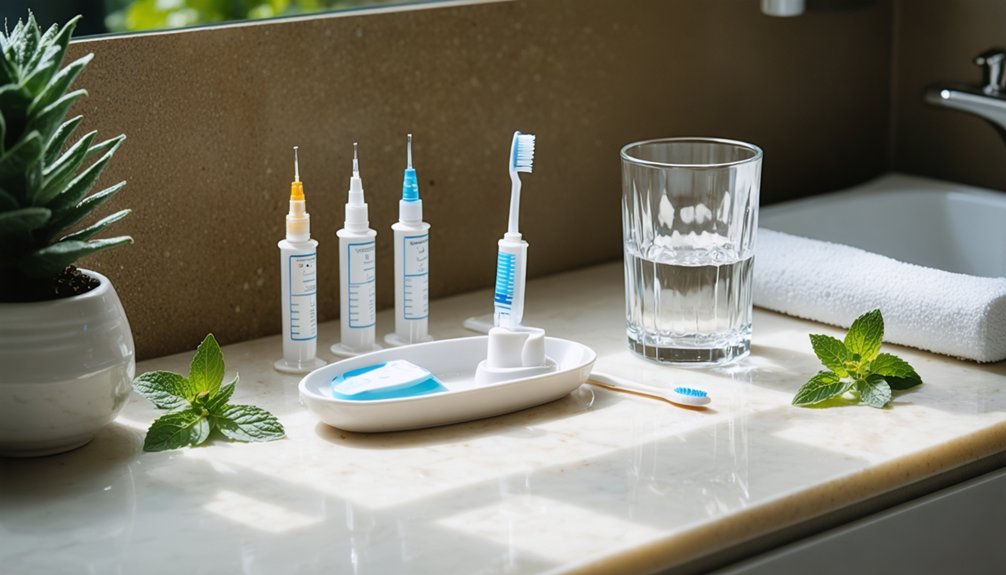
When you follow manufacturer instructions consistently, home whitening kits are considered safe for long-term use, with decades of data showing no significant increase in enamel damage or tooth fractures.
You should, however, watch closely for sensitivity, which signals you to stop treatment immediately and consult a dentist before continuing.
Your individual enamel health and adherence to recommended application schedules directly determine whether you experience adverse effects or achieve results without complications.
Regular Use Safety Profile
For millions of users who follow manufacturer instructions, home whitening kits carry a well-established safety record, with no significant evidence linking regular use to enamel damage or increased fracture risk.
However, you must manage risk factors proactively to protect your enamel health.
Watch for these critical safety indicators:
- Sensitivity management — Stop use immediately if tooth sensitivity develops and consult your dentist.
- Application frequency — Never exceed the recommended schedule; overuse irritates enamel and surrounding tissue.
- Pre-treatment screening — Confirm your mouth is free of cavities, cracks, or restorations before starting.
- Concentration awareness — Over-the-counter limits of 6%–10% active agents exist specifically to minimize adverse outcomes.
Respecting these boundaries keeps regular use clinically safe while delivering measurable results.
Managing Sensitivity Risks
Sensitivity is the most common adverse effect you’ll encounter with home whitening kits, and managing it correctly determines whether continued use remains safe.
If you experience sharp or prolonged discomfort, stop treatment immediately and consult your dentist before resuming. Effective sensitivity management includes reducing application frequency, shortening wear time, and switching to formulations with lower peroxide concentrations.
For pain relief, desensitizing toothpaste containing potassium nitrate used before and after treatments helps block nerve response.
Don’t dismiss sensitivity as a minor inconvenience—it signals that your enamel or underlying dentin is reacting to the active agents. You retain control over the process by adjusting your schedule based on your body’s response rather than pushing through discomfort to accelerate results.
What Actually Gets You the Best Results at Home?
Getting the best results from a home whitening kit comes down to product selection, consistency, and realistic expectations.
Best practices drawn from clinical evidence and real user experiences point to four controllable factors:
- Choose ADA-approved products containing hydrogen or carbamide peroxide within the 6%–10% concentration range.
- Complete the full recommended course — partial use greatly reduces effectiveness and wastes your investment.
- Schedule a dental cleaning beforehand — whitening agents work better on plaque-free enamel surfaces.
- Maintain your application schedule precisely — skipping sessions disrupts the chemical process and delays visible results.
You won’t replicate professional outcomes at home, but surface stains respond measurably within two weeks when you follow these steps without deviation.
Control lies in your compliance.
Frequently Asked Questions
How Does the ADA Seal of Acceptance Help Consumers Choose Whitening Products?
The ADA Seal of Acceptance boosts your consumer confidence by verifying product safety standards. Since the industry isn’t highly regulated, you’ll want to actively check for this seal before purchasing any whitening kit.
Can Monthly Touch-Up Treatments Effectively Maintain Professional Whitening Results Over Time?
With results fading in weeks, you can’t afford to skip monthly maintenance. Touch-up effectiveness is real—consistent over-the-counter applications actively extend your professional whitening, giving you measurable, lasting control over your smile’s brightness.
Why Are Retail-Grade Light Activation Lamps Considered Ineffective by Dental Experts?
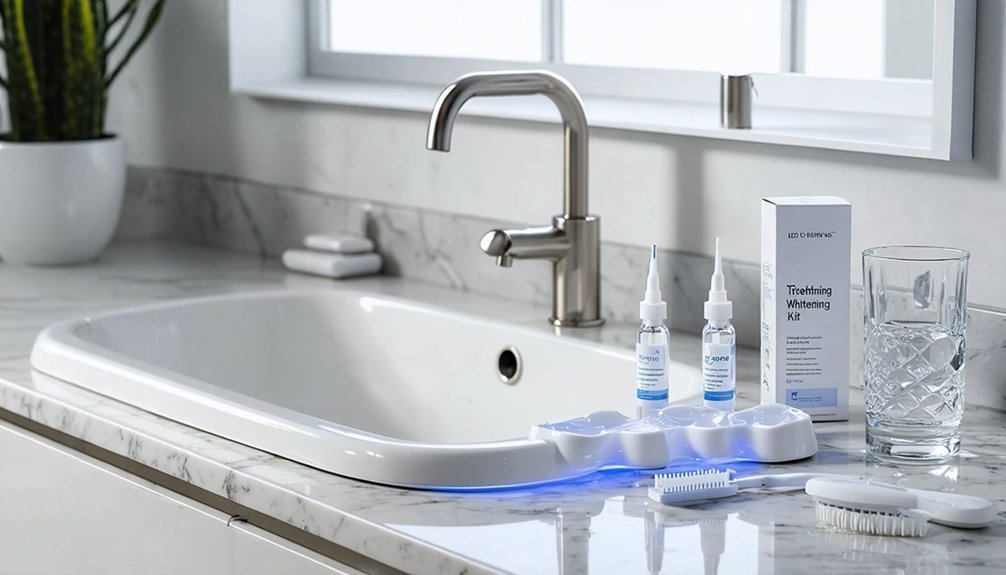
Retail-grade light activation lamps don’t effectively activate whitening agents because they’re too weak. Expert opinions confirm they offer no safety or persistence benefits, so you shouldn’t rely on them for meaningful, controlled whitening outcomes.
How Quickly Can Gel-Filled Trays Produce Visible Whitening Results for Users?
You’ll notice visible results from gel-filled trays in as little as a few days, but you must monitor whitening sensitivity closely and refine your application techniques to avoid uneven outcomes or enamel irritation.
Why Do Dietary Habits Significantly Impact the Overall Results of Whitening Treatments?
Like a sponge, your teeth absorb pigments from food and drink, undermining whitening results. Dietary impact and enamel health directly influence outcomes, so you’ll need to monitor consumption carefully to maintain effectiveness.
References
- https://www.forbes.com/sites/forbes-personal-shopper/article/best-teeth-whitening-kit/
- https://healthcare.utah.edu/the-scope/health-library/all/2023/10/does-home-teeth-whitening-really-work
- https://www.rsndental.com/dental-services/cosmetic/blog/do-home-teeth-whitening-kits-work-which-ones-are-best
- https://matthewsfamilydentistry.com/blog/do-at-home-teeth-whitening-kits-work/
- https://health.clevelandclinic.org/is-teeth-whitening-safe
- https://derksendentistry.com/do-teeth-whitening-kits-really-work/
- https://www.sfdental.com/ask-a-dentist/teeth-whitening/at-home-does-it-work/
- https://www.goodhousekeeping.com/health-products/g28723133/best-at-home-teeth-whitening-products/
- https://www.elle.com/uk/beauty/body-and-physical-health/g31737/teeth-whitening-kit-you-can-do-at-home/
- https://www.youtube.com/watch?v=MFBj_z67W-E