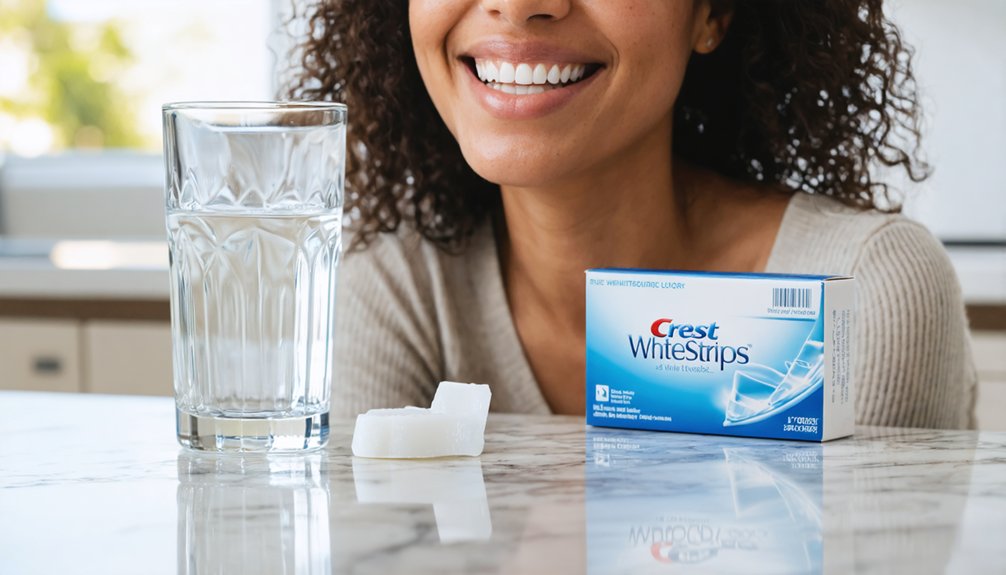
Crest Whitestrips do work, and clinical evidence backs that up. The strips use hydrogen peroxide to oxidize discolored molecules beneath your enamel, targeting both surface and intrinsic stains. You’ll typically notice initial results within 3 to 5 days, with full whitening achieved by days 20 to 22. Results are comparable to professional treatments for mild to moderate discoloration. There’s considerably more you should know before starting your first cycle.
Key Takeaways
- Clinical studies confirm Crest Whitestrips effectively remove both surface and deeper stains, with noticeable whitening appearing within 3 to 5 days.
- Results are comparable to professional whitening treatments for mild to moderate discoloration, at a significantly lower cost.
- Hydrogen peroxide penetrates enamel to oxidize discolored molecules, targeting both intrinsic and extrinsic stains at a molecular level.
- Maximum whitening is achieved by days 20 to 22, with some users gaining a full shade brighter within one week.
- Whitestrips are ineffective on veneers, crowns, or tetracycline-induced discoloration, and overuse risks enamel damage and increased sensitivity.
How Crest Whitestrips Actually Work
Crest Whitestrips consist of thin, flexible plastic strips coated with a hydrogen peroxide or carbamide peroxide gel — the same active bleaching agents used in professional dental treatments.
Once applied, the gel penetrates your enamel and oxidizes discolored molecules beneath the surface.
The peroxide gel seeps beneath your enamel, targeting and breaking apart the discolored molecules responsible for staining.
For an ingredient breakdown: PVP and carbomer guarantee the strip adheres firmly to your tooth’s surface, maximizing contact time and gel efficacy.
Higher-tier variants, like Radiant Express, contain elevated hydrogen peroxide concentrations for accelerated results.
Application tips directly impact your outcome.
Wear time ranges from a few minutes to 30 minutes depending on the product. Cutting sessions short reduces whitening achieved.
Following instructions precisely gives you measurable control over your results.
The Truth About Crest Whitestrips Whitening Power
Clinical studies confirm that Crest Whitestrips effectively remove both surface and deeper stains, with noticeable whitening typically appearing within 3 to 5 days and full results achieved by days 20 to 22.
You can expect outcomes comparable to professional treatments for mild to moderate discoloration, with some users reporting a full shade improvement within one week.
Real-world user experiences largely align with these findings, though results vary based on stain severity, product type, and strict adherence to application instructions.
Clinical Evidence Behind Whitening
Several clinical studies confirm that Crest Whitestrips remove both surface and deeper stains with consistent use, delivering noticeable whitening within 3 to 5 days and full results by days 20 to 22.
Understanding the clinical efficacy and whitening mechanisms helps you control your outcomes precisely.
Key evidence-based findings include:
- Hydrogen peroxide penetrates enamel, targeting intrinsic and extrinsic discoloration at the molecular level.
- Results are comparable to professional treatments for mild to moderate staining when instructions are followed strictly.
- Some users achieve a full shade brighter within one week under ideal conditions.
Your results depend on stain severity, product selection, and adherence to protocol.
Deviating from recommended wear time directly reduces whitening efficacy, giving you measurable control over your outcomes.
Real Results From Users
Real-world feedback aligns closely with clinical data, confirming that consistent use produces visible whitening within a few days for most users. User experiences consistently highlight measurable improvements when you follow instructions precisely and maintain proper oral hygiene throughout the treatment cycle.
User satisfaction remains high among those who commit to the full regimen, with some achieving a full shade improvement within one week.
However, you should anticipate tradeoffs. Sensitivity commonly emerges around day three, affecting your tolerance to hot and cold foods. Tooth aching may appear by day five in certain cases.
Results vary based on your initial tooth condition and stain severity. Long-term users report sustained whiteness through periodic maintenance, confirming that disciplined, scheduled use delivers reliable outcomes without requiring costly professional intervention.
How Long Before You See Real Results?
You’ll typically notice your first results within 3 to 5 days of consistent use, with full whitening achieved between 20 and 22 days.
Your initial tooth condition, stain severity, and adherence to application guidelines directly influence how quickly the peroxide gel penetrates your enamel and produces visible changes.
Some users report brightening by a full shade within one week, though cutting wear time or maintaining poor dietary habits will measurably slow your progress.
First Results Timeline
Most users begin noticing visible whitening within 3 to 5 days of consistent use, with full results appearing after 20 to 22 days.
Initial whitening speed depends heavily on user consistency and stain severity.
Track your progress against these clinically established benchmarks:
- Days 3–5: Surface stains visibly reduce; initial whitening becomes noticeable under normal lighting.
- Days 7–10: Deeper enamel discoloration begins clearing; some users report a full shade brighter.
- Days 20–22: Maximum whitening achieved; results comparable to mild professional treatments.
Skipping applications or cutting wear time directly compromises your outcome.
You control the timeline by adhering strictly to the protocol.
Yellowing from aging, nutrition, or smoking responds most predictably, while darker discoloration from trauma or tetracycline remains largely unresponsive.
Full Whitening Duration
Beyond those early milestones, understanding the full whitening arc helps you set realistic expectations. Most clinical data indicates you’ll reach peak results between days 20 and 22, depending on the variant you’re using.
The Professional Effect formula delivers approximately 20 levels of gradual shade improvement across that full whitening timeline, while Radiant Express, carrying the highest hydrogen peroxide concentration, achieves 34 levels within 20 days.
Your final outcome isn’t fixed. Initial tooth condition, dietary habits, tobacco use, and strict adherence to application time all influence your ceiling.
Cutting wear time short directly reduces the bleaching achieved. For mild-to-moderate discoloration, consistent use positions you at results comparable to professional treatments, without the associated cost.
Control the variables, and you control the outcome.
Factors Affecting Speed
Several variables determine how quickly you’ll see measurable whitening, and understanding them lets you optimize your results.
Your baseline tooth condition and stain types directly control your timeline. Surface stains from coffee or tobacco respond faster than intrinsic discoloration from aging or trauma.
Three factors you can actively manage:
- Application frequency — Consistent daily use accelerates oxidation; skipping sessions compounds delays.
- Stain types present — Extrinsic yellowing responds within days; grey or tetracycline-related stains resist peroxide entirely.
- Wear duration compliance — Cutting sessions short reduces peroxide contact time, directly limiting bleaching depth.
You control two of these three variables entirely. Matching the correct product variant to your specific stain category determines whether you achieve results in days or weeks.
Which Crest Whitestrips Product Is Right for You?
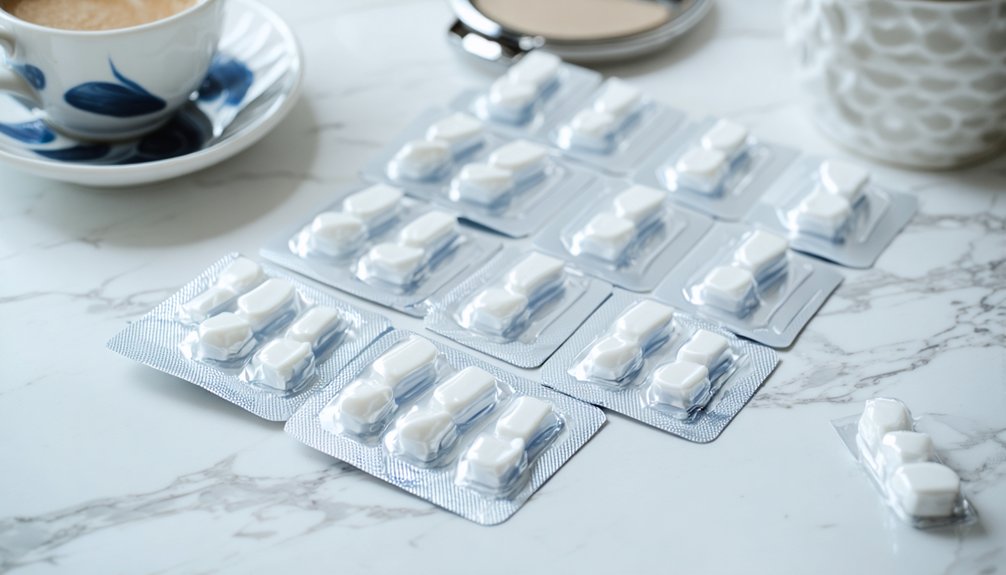
Choosing the right Crest Whitestrips product depends on your specific whitening goals, baseline tooth condition, and sensitivity tolerance.
A Crest Whitestrips comparison reveals two primary options worth reviewing: Professional Effect and Radiant Express. Professional Effect delivers 20 levels whiter in 22 days, making it suitable if you’re managing moderate discoloration with a longer treatment window.
Radiant Express contains the highest hydrogen peroxide concentration, targeting faster results — 34 levels whiter in 20 days — but carries a higher sensitivity risk.
When evaluating product features, consider your dietary habits, stain severity, and whether you need maintenance or intensive treatment. If sensitivity concerns you, opt for lower-concentration formulas.
Neither variant works on veneers, crowns, or tetracycline-induced discoloration, so confirm your candidacy before committing.
What Real People Actually Experience Using Them
Product specs and clinical data only tell part of the story — what you’ll actually notice day-to-day often shapes whether a whitening regimen sticks.
User experiences consistently reveal three predictable milestones:
- Days 1–2: Strips adhere well; no significant discomfort reported.
- Day 3: Sensitivity to hot and cold emerges for many users.
- Days 5–22: Visible whitening appears, though some report tooth aching mid-cycle.
User satisfaction remains high among those who follow instructions precisely and maintain consistent oral hygiene.
Results aren’t always dramatic, but most find them clinically meaningful — comparable to professional treatments without the appointment.
Long-term compliance, including periodic maintenance use, determines whether you sustain those gains beyond the initial treatment window.
Side Effects You Should Know Before Starting
Whitening strips carry a predictable risk profile you should understand before committing to a full treatment cycle.
Sensitivity management becomes critical around day three, when hydrogen peroxide penetration reaches deeper enamel layers, reducing your tolerance to hot and cold temperatures.
By day five, some users report intermittent tooth aching.
Gum irritation develops when strips contact soft tissue directly, so precise application minimizes this risk.
Overuse damages enamel integrity and compounds sensitivity beyond manageable thresholds.
UV or LED accelerators marketed alongside strips don’t reliably improve outcomes and introduce additional damage risk.
Strips also produce zero results on veneers, crowns, or non-natural dental work.
If you follow application instructions precisely and monitor your response daily, you’ll control most adverse outcomes effectively.
How to Avoid Poor Results and Common User Mistakes
Most treatment failures trace back to user error rather than product limitations, so understanding where people go wrong gives you a direct advantage.
Applying strips to wet teeth, cutting wear time short, and ignoring dietary habits post-application consistently undermine outcomes.
Common misconceptions include believing longer wear automatically accelerates results or that strips work on veneers and crowns — they don’t.
Follow these application tips precisely:
- Apply strips to dry teeth for maximum gel adhesion and peroxide penetration.
- Complete the full recommended wear time; reducing it measurably lowers whitening achieved.
- Avoid staining foods and beverages for at least one hour post-removal.
Controlling these variables puts your results within your hands, not chance.
Crest Whitestrips vs. Professional Treatments: Worth the Switch?
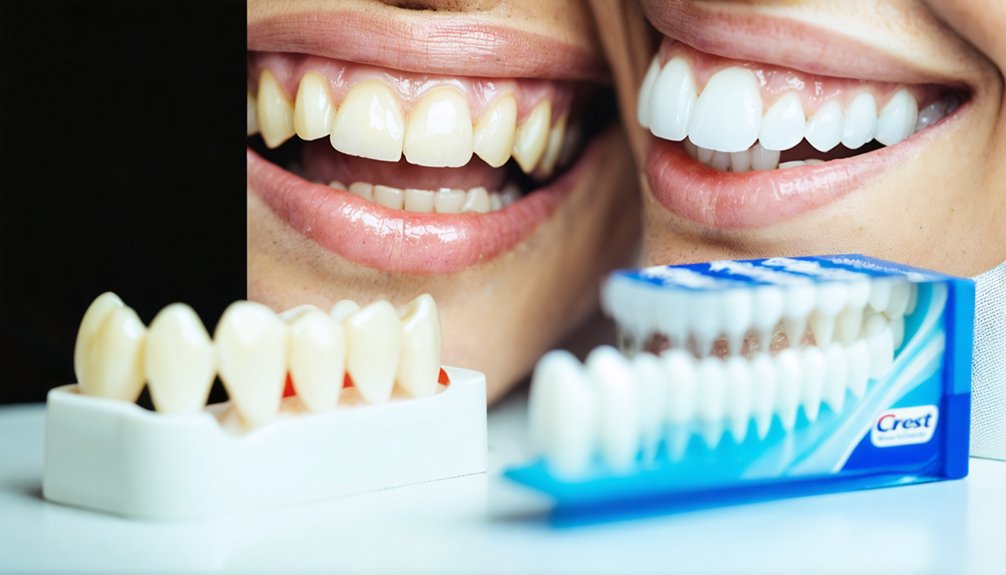
Once you’ve dialed in your application technique, the next logical question is whether Crest Whitestrips can genuinely replace a professional treatment or simply complement it.
On a cost comparison basis, professional whitening exceeds $100, while Whitestrips deliver comparable results for mild-to-moderate discoloration at a fraction of that cost. Treatment convenience further favors Whitestrips—you control the timing, frequency, and duration without scheduling appointments.
Clinical data confirms the Professional Effect variant achieves 20 levels whiter in 22 days, rivaling in-office outcomes for surface and mid-level staining.
However, if you’re managing tetracycline-induced or trauma-related grey discoloration, professional intervention remains your only viable option.
For most yellowing caused by aging, diet, or tobacco, Whitestrips represent a scientifically credible, cost-effective alternative you can execute entirely on your own terms.
Frequently Asked Questions
Can Crest Whitestrips Be Safely Used During Pregnancy or Breastfeeding?
You shouldn’t use Crest Whitestrips during pregnancy or breastfeeding without consulting your doctor first. Current pregnancy guidelines cite insufficient safety data, and safety concerns around peroxide absorption make professional medical clearance essential before proceeding.
Are Crest Whitestrips Safe for Children or Teenagers to Use?
Ironically, your child’s enthusiasm for a bright smile could backfire. Crest Whitestrips aren’t recommended for children; age recommendations suggest teenagers exercise caution due to heightened teeth sensitivity risks, as developing enamel makes younger users especially vulnerable to damage.
Can Crest Whitestrips Be Used With Braces or Orthodontic Appliances?
You shouldn’t use Crest Whitestrips with braces due to critical braces considerations: strips can’t adhere properly, causing uneven whitening. For orthodontic safety, consult your orthodontist before attempting any whitening treatment with appliances present.
How Should Unused Crest Whitestrips Be Stored to Maintain Effectiveness?
With results lasting up to 10 years, you’ll want ideal storage tips for effectiveness maintenance. Store unused strips in a cool, dry place, away from heat and direct sunlight, ensuring the peroxide gel retains full whitening potency.
Do Crest Whitestrips Expire, and Can Expired Strips Still Be Used?
Yes, Crest Whitestrips do expire. You’ll notice expiration effects like reduced peroxide potency, meaning diminished whitening results. Safety concerns arise too, as degraded gel may irritate your gums, so you shouldn’t use expired strips.
References
- https://completedentalcareaz.com/blog/do-crest-whitestrips-actually-work/
- https://www.purewow.com/beauty/crest-3d-whitestrips-vs-lumineux-teeth-whitening-strips-review
- https://thrivedentist.com/oral-care/crest-white-strips-do-they-work/
- https://www.youtube.com/watch?v=quasRaqvrDI