You can technically use whitening strips with Invisalign, but you shouldn’t expect even or effective results. Your aligners block direct contact between the strips and your enamel, and your bonded attachments create raised surfaces that prevent proper adhesion. This causes uneven shade development, potential gum irritation, and inconsistent whitening. There are better approaches worth considering, and understanding exactly why strips fail — and what actually works — will help you make a smarter decision.
Key Takeaways
- Whitening strips cannot adhere properly to teeth while wearing aligners, making them largely ineffective during Invisalign treatment.
- Attachments bonded to teeth create uneven surfaces, preventing strips from lying flush and causing inconsistent, patchy whitening results.
- Trapped peroxide gel between aligners and gums increases sensitivity and irritation risks, making OTC strips potentially harmful during treatment.
- Professional whitening gels like Opalescence can be safely applied inside aligners as custom trays for effective, even whitening.
- The optimal time to use whitening strips is after Invisalign completion, once all attachments are fully removed.
Can You Use Whitening Strips With Invisalign?
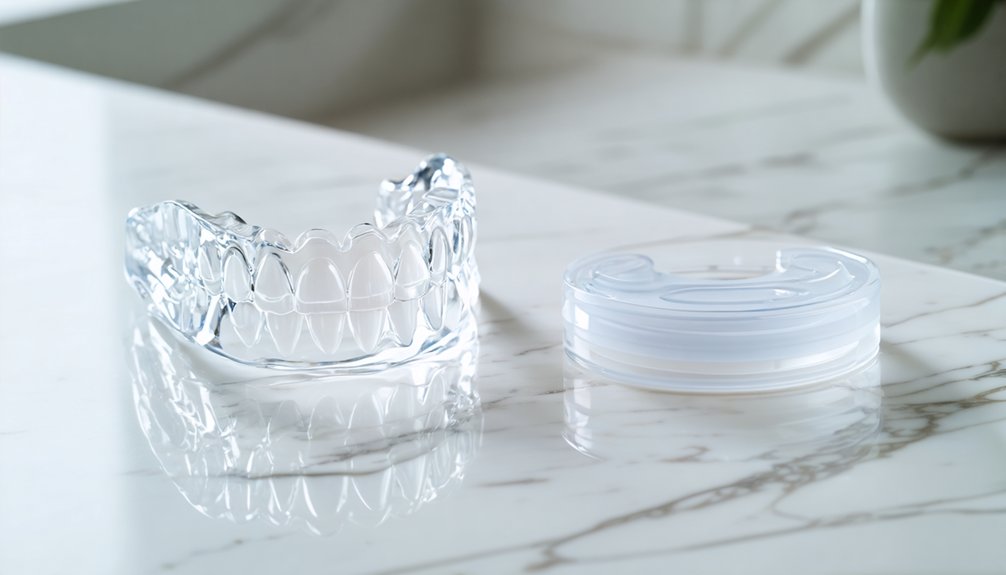
If you’re currently undergoing Invisalign treatment, using traditional whitening strips alongside your aligners isn’t recommended. Your aligners create a physical barrier that prevents whitening agents from reaching tooth enamel effectively, producing poor or uneven results. Strips are designed to adhere directly to teeth, and your aligners make that contact impossible.
Maintaining strong oral hygiene during treatment already requires discipline, and introducing incompatible whitening products complicates your routine unnecessarily. Standard over-the-counter strips simply don’t perform as intended when clear aligner barriers are present.
Before pursuing any whitening method, consult your orthodontist and review your dental insurance plan, as some professional whitening options may be partially covered. Choosing the right whitening approach protects your investment in treatment and keeps your results precise and controlled.
Why Attachments Make Whitening Strips Unreliable
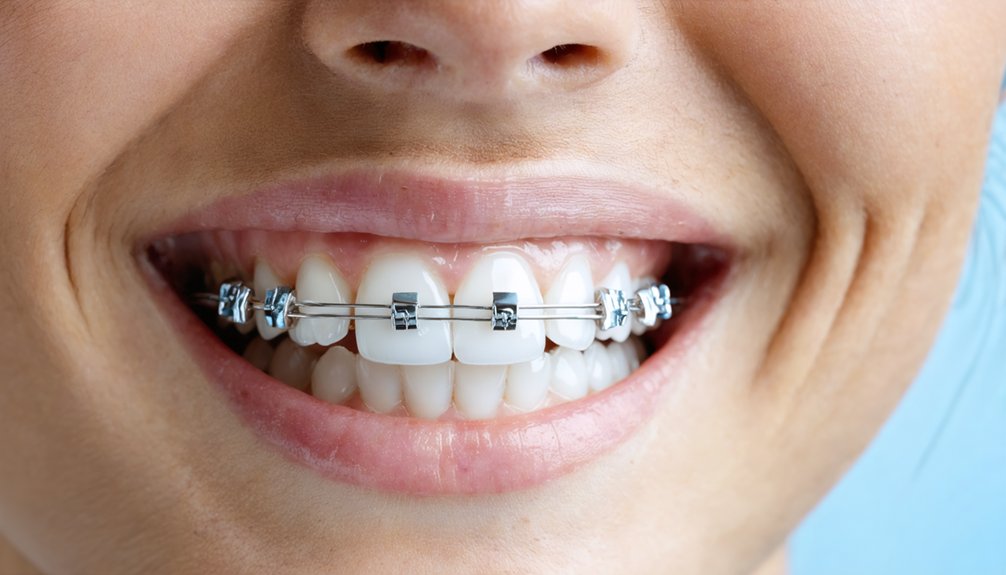
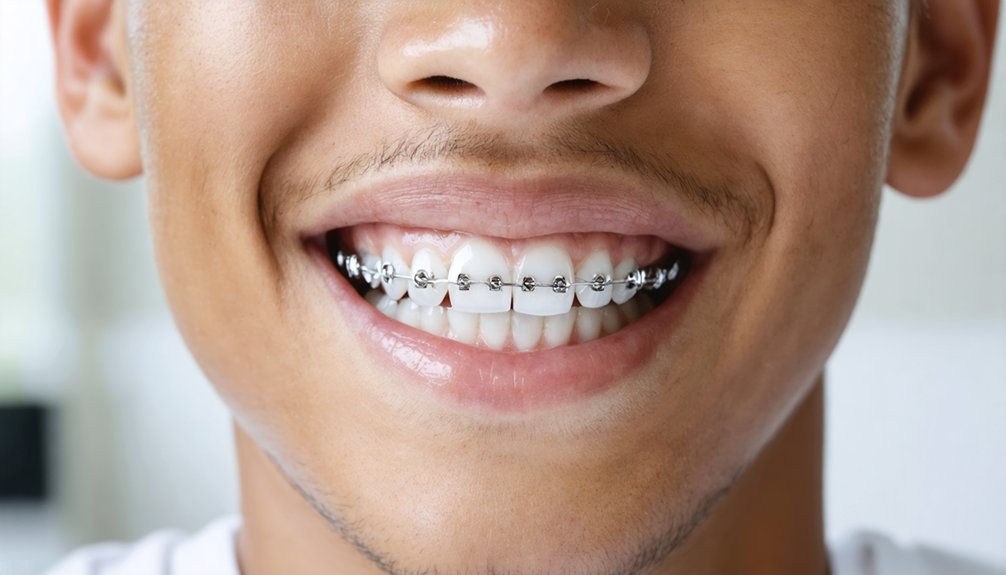
When you have Invisalign attachments bonded to your teeth, whitening strips can’t lay flush against the enamel surface, creating gaps where the whitening gel never makes contact.
These attachment barriers block consistent gel penetration, leaving behind uneven whitening patterns across your teeth.
You risk developing noticeable dark or yellow spots in the exact locations where attachments were placed once your orthodontist removes them.
Attachment Barriers Block Gel
Invisalign attachments—the small tooth-colored buttons bonded to your teeth—create a direct physical barrier that prevents whitening strips from lying flush against the enamel surface.
Where attachments exist, the whitening gel loses direct contact with the tooth, disrupting consistent peroxide penetration. The result is uneven shade development—darker spots remain precisely where the attachments blocked gel absorption.
You can’t compensate for this through diet tips or stricter oral hygiene alone. The barrier is structural, not surface-level.
Even with disciplined oral hygiene practices, no amount of brushing removes the physical obstruction attachments create.
Strips simply can’t conform around bonded buttons. Using them anyway wastes product and produces inconsistent results you’ll have to correct later—an inefficient approach for anyone who demands precise, controlled outcomes from their whitening regimen.
Uneven Whitening Spot Risks
What happens when whitening gel contacts some enamel surfaces but not others? You get inconsistent pigmentation that compromises color matching across your entire smile.
Invisalign attachments create precise barriers where gel can’t penetrate, leaving darker zones directly beneath each bonded button. Those shaded patches remain after attachment removal, revealing a patchwork of lightened and untreated enamel.
This problem compounds with treatment duration. The longer you wear attachments, the more pronounced the contrast becomes between exposed and blocked surfaces. If you’ve been in treatment for twelve or eighteen months, those differential shading patterns are deeply established.
Standard whitening strips can’t correct this uneven development mid-treatment. You’re fundamentally locking in a two-toned result that requires professional intervention to reverse after your final aligner stage concludes.
Why OTC Strips Can Make Things Worse
When you use over-the-counter whitening strips during Invisalign treatment, you’re compounding existing problems rather than solving them.
The peroxide formulas in standard strips can irritate your gums, particularly when strips fail to adhere properly around attachments and trap concentrated gel against soft tissue.
Poor adherence around bonded attachments also means you’re wasting time on a product that can’t make consistent contact with your enamel.
Gum Irritation Risks
Over-the-counter whitening strips often contain high-concentration peroxide formulas that already carry a risk of gum irritation under normal use conditions. When you’re wearing Invisalign, that risk compounds considerably.
Trapped peroxide gel between your aligners and gum tissue prolongs chemical contact beyond safe exposure windows, accelerating tissue inflammation. Poor dental hygiene during treatment further weakens gum tissue resilience, making it more susceptible to peroxide-induced damage.
You’ll also notice that tooth sensitivity intensifies when gel seeps into areas around attachments or beneath aligner edges. Unlike professional-grade alternatives, OTC strips don’t account for your unique oral anatomy or attachment placement.
Without precise control over gel distribution and contact time, you’re exposing soft tissue to unnecessary chemical stress that undermines both your comfort and your overall treatment outcomes.
Poor Attachment Adherence
Gum irritation isn’t the only problem compounding your results—OTC strips also fail mechanically when attachments are present. Invisalign attachments create raised surfaces on your enamel, preventing strips from adhering flush against your teeth. That broken contact disrupts consistent gel distribution, producing uneven whitening zones and potential tooth sensitivity from repeated, ineffective applications.
You’re fundamentally compounding exposure without achieving uniform results.
From a dental hygiene standpoint, this mechanical failure wastes both product and time. Strips applied over attachments leave darker spots exactly where bonded buttons blocked peroxide penetration. Once attachments are removed, those undertreated areas become visibly distinct from surrounding enamel. You can’t correct that inconsistency mid-treatment.
Controlling your whitening outcome requires recognizing that OTC strips aren’t engineered for attachment-covered dentition—they’re designed for flat, unobstructed enamel surfaces.
Whitening Gels That Actually Work With Aligners
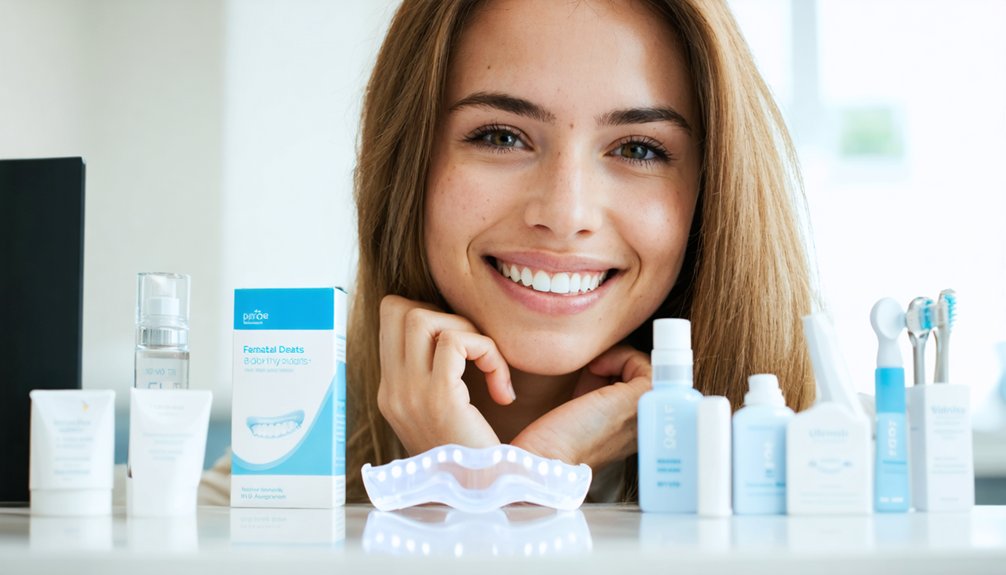
Unlike standard whitening strips, professional-grade whitening gels are fully compatible with your Invisalign aligners. Products like Opalescence gel let you use your aligners as custom-fitted whitening trays, ensuring consistent enamel contact with every application. You’re getting precision that over-the-counter strips simply can’t deliver.
To apply correctly, place a small dot of gel inside each tooth compartment of your aligner before inserting it. This controlled method supports your dental hygiene routine without compromising your treatment progress.
Avoid overfilling the trays, since excess gel increases teeth sensitivity and risks gum irritation.
The Invisalign Professional Whitening System is another clinically validated option designed specifically for use during active treatment. Both approaches give you measurable, even results without the attachment-related interference that strips consistently produce.
How to Apply Whitening Gel Inside Your Trays
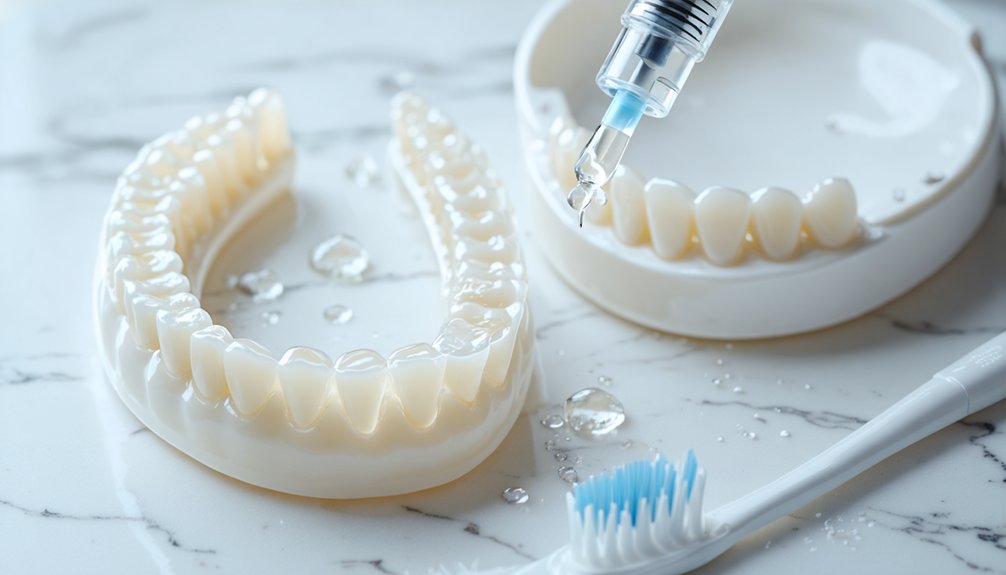
Applying whitening gel inside your trays correctly determines whether you get even results or end up with sensitivity and wasted product. Your dental hygiene routine directly impacts how well the gel performs.
Place one small dot of whitening gel per tooth on the inner surface of each aligner before inserting it. Don’t overfill—excess gel contacts your gums and triggers tooth sensitivity fast.
- Use only professional-grade gel, not drugstore formulas
- Apply precisely to avoid burning gum tissue
- Insert trays slowly to distribute gel evenly
- Wear trays for the exact recommended duration—not longer
- Rinse trays thoroughly after each whitening session
Control every variable in this process. Sloppy application wastes product, damages soft tissue, and produces uneven results you’ll regret when your attachments come off.
When Is the Best Time to Start Whitening Strips?
Timing your whitening strips correctly determines whether you get uniform enamel coverage or patchy results you’ll have to correct later. The ideal window is after your Invisalign treatment is complete and all attachments are removed. Attachments block direct strip contact, creating uneven peroxide penetration and inconsistent shade development across your enamel surface.
Once attachments are off, your teeth present a clean, flat surface that allows strips to adhere properly and deliver consistent results. Before starting, confirm your dental hygiene routine is solid — clean enamel absorbs whitening agents more effectively.
Monitor tooth sensitivity closely during your first application cycle, since post-treatment enamel can respond more acutely to peroxide. If sensitivity escalates, reduce application frequency or switch to a lower-concentration formula under professional guidance.
Frequently Asked Questions
Can Whitening Strips Permanently Damage Invisalign Aligner Material Over Time?
Yes, whitening strips can compromise Invisalign durability over time. Peroxide agents degrade aligner plastic, reducing clarity and structural integrity. You’ll also sacrifice whitening longevity since trapped gel causes uneven enamel exposure, ultimately undermining both your aligners and whitening outcomes.
Does Teeth Whitening Affect How Well Invisalign Attachments Bond to Teeth?
Ironically, yes — whitening before bonding weakens attachment adhesion. You’re compromising the very foundation of your treatment. Whitening gel compatibility matters; teeth sensitivity signals enamel changes that reduce bonding strength, making your attachments less reliable and your Invisalign progress unpredictable.
Are There Specific Foods to Avoid While Whitening During Invisalign Treatment?
You’ll want to follow strict dietary restrictions during whitening: avoid coffee, tea, red wine, and dark sauces. Maintaining rigorous oral hygiene practices between meals guarantees whitening agents penetrate enamel effectively, maximizing your treatment’s controlled, consistent results.
Can Whitening Strips Cause Aligners to Fit Differently or Less Accurately?
“Better safe than sorry” — yes, whitening strips can distort your aligners’ fit. Residual peroxide gel degrades the plastic, compromising precision. You’ll risk teeth sensitivity and enamel erosion, ultimately reducing your aligners’ accuracy and effectiveness.
How Long Should You Wait Between Whitening Sessions During Invisalign Treatment?
Wait 48 hours between whitening gel sessions during Invisalign treatment. You’ll prevent gum irritation and sensitivity. Avoid overuse, especially if you have dental veneers, as excessive peroxide exposure compromises their integrity and disrupts your treatment’s precision.
References
- https://www.dsmcosmeticdentist.com/whiten-teeth-during-invisalign-treatment/
- https://www.class1ortho.com/blog/can-you-use-whitening-strips-with-invisalign
- https://www.reddit.com/r/Invisalign/comments/qckbby/anybody_tried_whitening_strips_while_on_invisalign/
- https://www.youtube.com/watch?v=27xAs4SLRjA
- https://www.kennellortho.com/blog/2024/02/can-i-still-whiten-my-teeth-during-invisalign-treatment
- https://optimaldentalcenter.com/teeth-whitening-options-after-invisalign/
- https://www.reddit.com/r/Invisalign/comments/15onj7u/can_you_use_whitening_strips_with_invisalign/
- https://www.realself.com/question/bronxville-ny-whiting-strips
- https://www.reddit.com/r/Invisalign/comments/1dq0vim/can_you_put_whitening_strips_under_invisalign/
- https://drlints.com/can-i-whiten-my-teeth-with-invisalign-attachments/