You can whiten sensitive teeth naturally by brushing smarter every day, using baking soda occasionally, and applying diluted hydrogen peroxide carefully. Brush twice daily with gentle, circular motions and rinse after staining drinks to stop discoloration before it sets. Mix baking soda with water a few times weekly to lift surface stains. Dilute 3% hydrogen peroxide with equal parts water for a milder whitening boost. Keep exploring to discover exactly how each method works best for you.
Key Takeaways
- Brush twice daily with a soft-bristled brush using gentle circular motions to lift surface stains without irritating sensitive teeth.
- Mix baking soda with water to form a paste and brush gently for two minutes, limiting use to a few times per week.
- Dilute 3% hydrogen peroxide with equal parts water, then add small amounts to baking soda paste for gradual, milder whitening.
- Stop using baking soda or peroxide immediately if sensitivity increases, allowing teeth adequate recovery time between treatments.
- Rinsing after staining beverages like coffee or tea reduces stain contact, supporting natural whitening without aggravating sensitivity.
Brush Smarter Every Day to Stop Stains Before They Form
When it comes to sensitive teeth, your daily brushing routine is your first and most reliable defense against staining. Brush twice daily for two minutes using a soft-bristled brush and gentle, circular motions to lift surface stains without irritating sensitive enamel.
Your daily brushing routine is your first and most reliable defense against staining sensitive teeth.
Clean between your teeth once a day to remove stain-producing debris before it builds up.
Your dietary habits matter just as much. Rinsing after coffee, tea, or red wine reduces direct staining contact, and using a straw limits exposure altogether. These small, consistent choices support your natural whitening efforts far more than sporadic treatments.
Think of smart brushing as your foundation. Whether you eventually pursue professional whitening or stick to natural methods, this daily discipline keeps stains from taking hold in the first place.
Use Baking Soda to Lift Surface Stains Gently
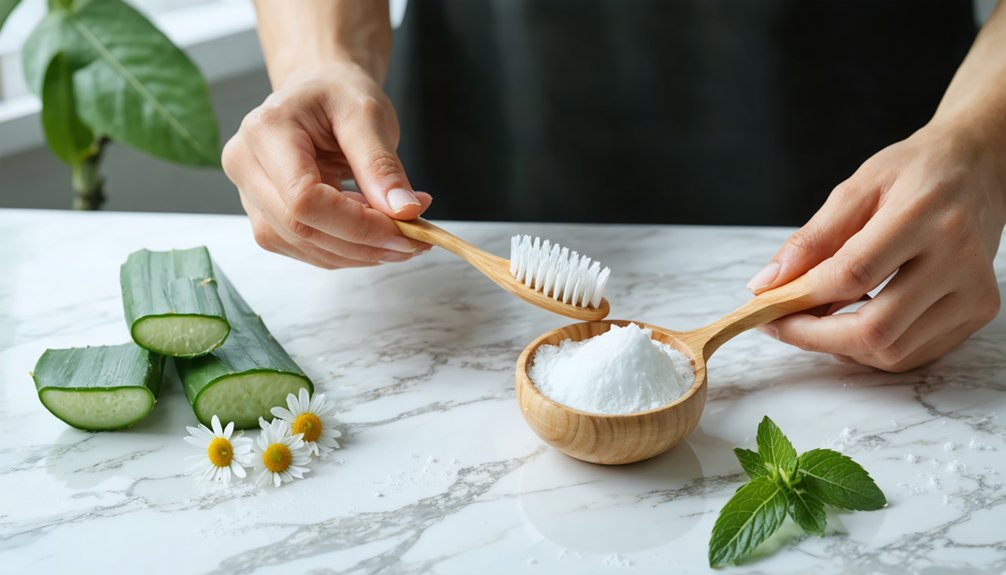
Baking soda is one of the simplest tools you can reach for when surface stains start to dull your smile. Its mild abrasive texture lifts discoloration without the harshness of stronger treatments, making it a smart choice for sensitive teeth.
To use it, mix a small amount with water to form a paste, then brush gently for two minutes. You can also combine it with 1% hydrogen peroxide for slightly more gradual whitening power.
Baking soda consistency matters here—regular, moderate use delivers results, but overuse risks enamel protection by wearing down your tooth’s outer layer. Limit use to a few times per week, and stop immediately if sensitivity increases.
Small, controlled steps protect your teeth while still moving toward a brighter smile.
Try Diluted Hydrogen Peroxide Occasionally for Sensitive Teeth
Hydrogen peroxide can brighten teeth, but it also increases sensitivity, so diluting it before use is a smart precaution. The common drugstore strength is 3%, but mixing equal parts peroxide and water brings it down to a gentler 1.5%.
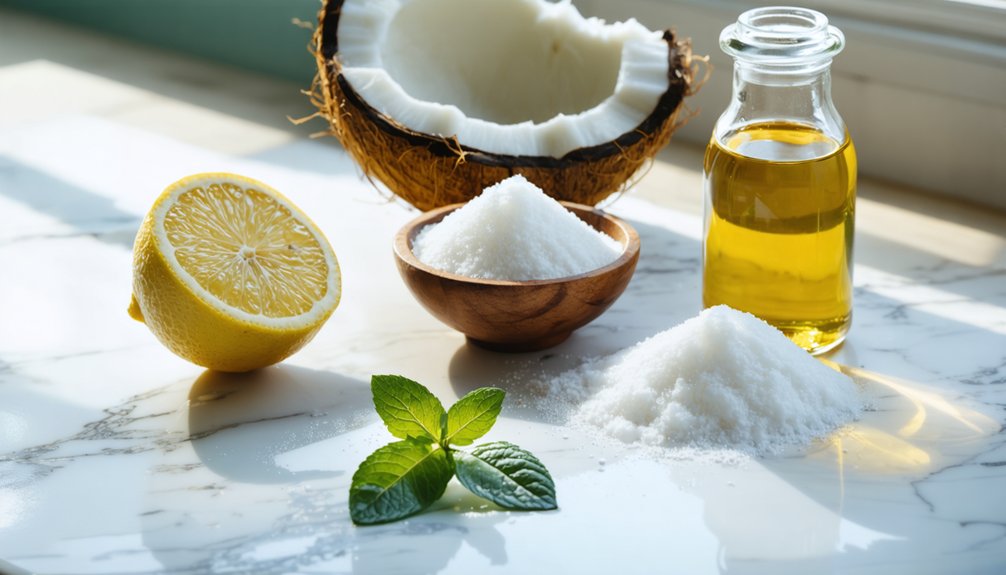
You can also explore alternative application methods, like adding a small amount to a baking soda paste, which creates a slower, milder whitening effect. Peroxide concentration considerations matter here — lower concentrations reduce irritation risk while still lifting surface stains gradually.
Use this approach only occasionally, not as a daily routine. If sensitivity increases after use, stop immediately and give your teeth time to recover. Persistent discomfort is a signal to consult your dentist before continuing any peroxide-based whitening.
Frequently Asked Questions
Does Oil Pulling Actually Whiten Sensitive Teeth Naturally?
Oil pulling doesn’t reliably whiten your teeth. Despite its popularity among home remedies and natural extracts, there’s no solid scientific evidence it works. You’d get better, gentler results focusing on consistent brushing and proven low-abrasion methods instead.
Which Whitening Strips Are Safest for Sensitive Teeth?
Strong strips irritate; gentle ones heal. You’ll want Crest 3D Whitestrips Sensitive—they use half the peroxide of regular strips. Pair them with natural ingredients and home remedies like baking soda for controlled, gradual whitening results.
Can Professional Treatments Help Sensitive Teeth Whiten Faster?
Yes, professional treatments can whiten your sensitive teeth faster. Your dentist controls the process carefully, minimizing dental sensitivity. You’ll get quicker results than natural remedies while still maintaining a gentle, supervised approach that keeps you in control.
What Drinks Should Sensitive Teeth Owners Avoid to Prevent Staining?
Imagine Sarah swapping her morning coffee for herbal tea — her stains faded within weeks. You’ll want to avoid coffee stains, tobacco damage, tea, red wine, and soda to protect your sensitive teeth naturally.
Are Custom Dental Trays Better Than Store-Bought Whitening Kits?
Custom dental trays often give you better control over your dental hygiene and enamel health. They’re fitted precisely, reducing irritation and delivering gentler, gradual whitening—a more natural, mindful approach compared to one-size-fits-all store-bought kits.
References
- https://supremiadentistry.com/the-5-best-ways-to-whiten-sensitive-teeth/
- https://www.forbes.com/sites/forbes-personal-shopper/article/best-whitening-product-for-sensitive-teeth/
- https://deandentalsolutions.com/how-to-whiten-your-sensitive-teeth-safely/
- https://www.healthline.com/nutrition/whiten-teeth-naturally
- https://www.reddit.com/r/beauty/comments/13b8lus/how_to_whiten_extremely_sensitive_teeth/
- https://www.nextleveldentalstudio.com/post/6-natural-ways-to-safely-try-teeth-whitening-for-sensitive-teeth
- https://www.medicalnewstoday.com/articles/322421
- https://www.dentalgroupofamarillo.com/brightening-smiles-gently-how-to-whiten-sensitive-teeth-without-the-ouch/
- https://www.mouthhealthy.org/all-topics-a-z/natural-teeth-whitening
- https://www.sensodyne.com/en-us/oral-health-tips/whitening-sensitive-teeth/what-to-know/