Teeth whitening after a root canal is generally safe, but only if you choose the right method. The stain in a root canal-treated tooth lives inside the pulp chamber, so external whitening products can’t reach it. Internal bleaching is usually the only effective option. You’ll also need to wait several weeks post-treatment before starting any whitening. Keep going to understand which method fits your situation, what risks to watch for, and what realistic results to expect.
Key Takeaways
- Teeth whitening after root canal treatment is generally safe when the appropriate method is chosen and proper healing has occurred.
- Internal bleaching is more effective than external whitening, as discoloration originates within the pulp chamber and dentinal tubules.
- A waiting period of several weeks to months post-treatment is recommended before beginning any whitening procedure.
- Risks include gum irritation, chemical burns, and cervical resorption, particularly with high-concentration hydrogen peroxide bleaching agents.
- Existing crowns and restorations do not whiten with bleaching agents and may require replacement for uniform color matching.
Is Teeth Whitening Safe After a Root Canal?
Teeth whitening after a root canal is generally safe, but the method you choose matters considerably. Conventional external whitening products often fail because discoloration originates internally, within the pulp chamber, not on the surface.
Whitening a root canal tooth requires choosing the right method—surface treatments often miss the deeper, internal source of discoloration.
You’ll need a professional evaluation to determine whether internal bleaching or external whitening better suits your situation.
If your tooth already has a dental crown, whitening agents won’t alter the crown’s shade, so color-matching becomes a separate clinical concern.
Tooth sensitivity during whitening is still possible despite nerve removal, primarily due to gum tissue contact with bleaching agents.
Professional supervision lets you control outcomes more precisely, reduce complication risks, and select appropriate bleaching concentrations.
Without proper assessment, you risk ineffective treatment or unnecessary damage to surrounding structures.
Why Root Canal Teeth Turn Dark in the First Place
Discoloration in a root canal-treated tooth typically originates from intrinsic sources rather than surface staining. Unlike staining from dietary habits or external agents, this darkening occurs within the pulp chamber and dentinal tubules—areas external whitening products can’t reach.
Even with reduced tooth sensitivity due to nerve removal, internal breakdown continues structurally.
Key sources of post-endodontic discoloration include:
- Hemoglobin degradation from residual blood byproducts penetrating dentinal tubules
- Pulp tissue remnants left within the chamber that break down over time
- Sealer and filling materials that leach pigments into surrounding dentin
- Reactive dentin changes triggered by the endodontic procedure itself
Understanding the origin of your tooth’s discoloration determines which whitening method will actually produce measurable results.
How Long Should You Wait Before Whitening?
After completing a root canal, you shouldn’t rush into whitening—most clinicians recommend waiting anywhere from a few weeks to five months, depending on how well the tooth heals.
Starting too early can interfere with the healing process and compromise treatment outcomes. Your dentist will assess the tooth’s condition individually, since no single timeline applies to every case.
Recommended Waiting Periods
Timing matters considerably when you’re planning to whiten a root canal-treated tooth. Most clinicians recommend delaying treatment until healing is confirmed, though recommended intervals vary across sources. Tooth sensitivity and tissue response guide that decision as much as any fixed timeline.
General clinical guidance includes:
- A few weeks minimum after root canal completion before initiating any whitening protocol
- One to five months for cases involving significant periapical involvement or regenerative procedures
- Dental insurance considerations, as multiple staged appointments may affect coverage eligibility
- Professional reassessment before starting, since residual tooth sensitivity or incomplete healing disqualifies early intervention
Don’t rely on a universal waiting period. Your dentist evaluates radiographic healing, tissue condition, and restoration integrity to determine when whitening is both safe and likely to produce measurable results.
Risks of Whitening Early
Whitening too soon after a root canal can interfere with the healing process and increase the risk of complications. Periapical tissues need adequate time to stabilize before you introduce bleaching agents.
Applying whitening products prematurely raises your risk of teeth sensitivity, gum irritation, and chemical injury to tissues that haven’t fully recovered.
Internal bleaching carries additional risks when initiated early, including potential disruption to the temporary coronal seal. A compromised seal allows bleaching agents to migrate apically, increasing the likelihood of cervical root resorption.
You should wait a minimum of a few weeks, though many clinicians recommend one to five months depending on your healing response. Your dentist determines the appropriate window through clinical and radiographic assessment before authorizing any whitening protocol.
Individual Healing Factors
How long you wait before whitening depends on individual healing factors that vary from patient to patient. Your dentist evaluates your specific condition before clearing you for any whitening procedure. Tooth sensitivity levels, tissue response, and dietary habits all influence your readiness timeline.
Key factors your dentist assesses include:
- Tooth sensitivity: Persistent sensitivity signals incomplete healing and contraindicates early whitening.
- Dietary habits: Acidic or staining food consumption affects both healing rate and baseline discoloration.
- Seal integrity: The quality of your restoration determines whether internal bleaching is structurally viable.
- Tissue condition: Periapical healing confirmed through radiographic evaluation establishes procedural safety.
You control the outcome by communicating symptoms accurately and following post-treatment protocols precisely. Rushing whitening before individual healing benchmarks are met increases complication risk significantly.
Internal Bleaching: The Only Method That Reaches the Stain
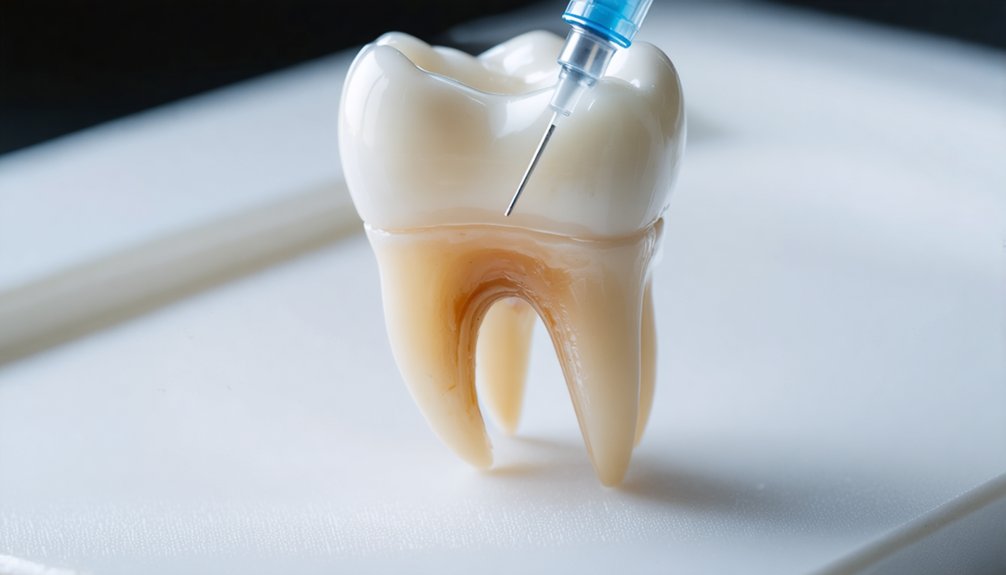
Most surface whitening methods fail on root canal-treated teeth for one straightforward reason: the stain isn’t on the surface. Discoloration originates inside the pulp chamber, where bleaching gel from strips or trays simply can’t penetrate.
Surface whitening can’t fix what it can’t reach — and with root canal-treated teeth, the stain starts within.
Internal bleaching solves this by placing the bleaching agent directly inside the tooth. Your dentist removes the coronal filling, inserts the bleaching material into the chamber, and seals it temporarily.
The gel works from the inside out, targeting the actual source of discoloration.
You may notice teeth sensitivity in surrounding teeth during treatment, though the treated tooth itself has reduced nerve response. Each session is monitored to control concentration and contact time, minimizing tissue exposure while maximizing color correction.
This method gives you the most precise outcome available for internal staining.
Why Store-Bought Whitening Products Usually Fail on Root Canal Teeth
Store-bought whitening strips and trays work by applying hydrogen peroxide or carbamide peroxide to the outer enamel surface, which makes them effective for extrinsic staining but largely useless for the internal discoloration that follows root canal treatment. The stain originates inside the pulp chamber, beyond the reach of any topical agent.
- Over-the-counter concentrations are too low to penetrate dentin effectively.
- Tooth remineralization following root canal treatment may further limit peroxide diffusion.
- No surface application addresses chromogenic breakdown products trapped internally.
- Dental veneers remain an alternative when bleaching fails, but they’re irreversible.
You’re dealing with an intrinsic problem that requires an intrinsic solution. Continuing to use store-bought products delays appropriate treatment and allows discoloration to progress, reducing the likelihood of predictable outcomes.
What External Whitening Can and Can’t Do After a Root Canal
External whitening isn’t entirely off the table after a root canal, but its role is narrow and specific. It can lighten the surrounding natural teeth, helping your dentist achieve a closer color match if internal bleaching is performed on the treated tooth.
What it can’t do is penetrate the pulp chamber where intrinsic staining originates.
You should also know that tooth sensitivity remains a documented side effect, even though a root canal removes nerve tissue. Surrounding gum tissue and adjacent teeth still carry sensory response.
Additionally, dental insurance rarely covers cosmetic whitening, so understanding cost exposure before committing matters.
External whitening used alone on a root canal-treated tooth typically produces little to no visible improvement. It’s a supplementary tool, not a primary solution.
Risks of Whitening a Root Canal-Treated Tooth
Whitening a root canal-treated tooth carries real risks you should weigh before proceeding. Understanding each risk lets you make an informed decision and discuss coverage options with your dental insurance provider.
Key risks include:
- Tooth sensitivity — Even without a live nerve, surrounding tissues may react to bleaching agents, causing temporary discomfort.
- Gum irritation — Bleaching gel contacting soft tissue can cause chemical burns or inflammation.
- Root resorption — Internal bleaching, particularly with high-concentration hydrogen peroxide (30%–35%), carries a documented risk of invasive cervical resorption.
- Incomplete results — Whitening may not fully match adjacent teeth, potentially requiring additional cosmetic treatment.
Consult your dentist before starting any whitening protocol. Early professional evaluation helps you control outcomes and avoid complications that escalate treatment costs.
Will Your Tooth Actually Match the Ones Next to It?
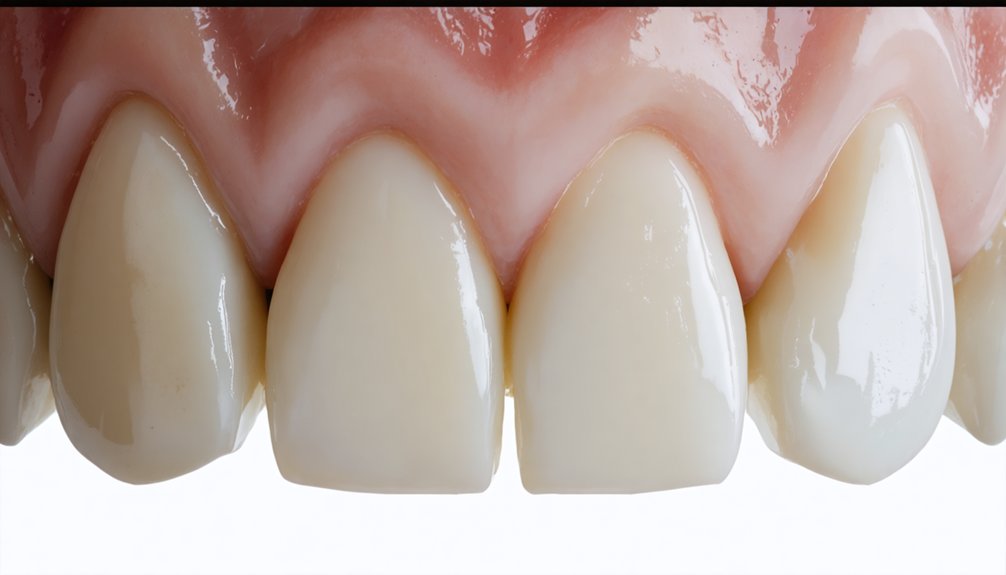
Achieving a color match between a root canal-treated tooth and its neighbors isn’t guaranteed, even with professional whitening. Internal discoloration responds differently than surface staining, and the dental materials used to restore your tooth can further complicate shade alignment.
Composite resins and ceramic crowns don’t whiten like natural enamel, so existing restorations may need replacement after treatment to maintain consistency.
If internal bleaching improves the tooth’s shade but still falls short, your dentist may recommend a veneer or crown for a more predictable outcome.
Tooth sensitivity in adjacent teeth during external whitening can also influence how aggressively you can whiten surrounding enamel.
Managing both factors strategically gives you the most control over your final result, though a perfect match remains clinically difficult to guarantee.
What Your Dentist Needs to Check Before Any Whitening Starts
Before your dentist commits to any whitening approach, a thorough clinical evaluation determines whether the tooth is stable enough to tolerate treatment. Skipping this step risks complications that compromise both the tooth and surrounding tissue.
Your dentist will assess:
- Root canal integrity — confirming complete obturation and absence of periapical pathology
- Coronal seal quality — identifying leaking or degraded restorations that require replacement before bleaching
- Tooth sensitivity baseline — even endodontically treated teeth can transmit thermal stimuli through surrounding periodontal structures
- Dental hygiene status — active gingival inflammation or plaque accumulation contraindicates bleaching until resolved
These findings directly dictate whether internal bleaching, external whitening, or no whitening is appropriate. You need accurate diagnostic data before choosing any treatment path.
Frequently Asked Questions
Can a Crowned Root Canal Tooth Still Be Whitened Effectively?
You can’t effectively whiten a crowned root canal tooth since the crown blocks bleaching agents. You’ll need crown replacement to address crown discoloration, and you won’t experience significant tooth sensitivity due to the absent nerve.
Does Internal Bleaching Require Multiple Dental Visits to Complete?
Yes, internal bleaching typically requires multiple visits. Your dentist places bleaching agent inside the dental pulp chamber, monitors tooth discoloration changes between appointments, then seals the access cavity once you’ve achieved your target shade.
How Long Do Internal Bleaching Results Typically Last Before Fading?
Like a careful investment, your internal bleaching results can last one to three years before dental stain or tooth discoloration returns. You’ll need periodic retreatment to maintain color stability, as longevity varies with individual factors.
Can a Root Canal Tooth Be Whitened More Than Once?
Yes, you can repeat internal bleaching, but you’ll encounter diminishing whitening effectiveness with each session. Monitor tooth sensitivity closely, as repeated treatments increase risk. Consult your dentist to determine if re-bleaching remains clinically appropriate for your specific case.
Is Internal Bleaching Covered by Dental Insurance Plans?
Insurance coverage for internal bleaching is a gray area—you’ll often find it’s excluded as cosmetic. Treatment costs typically fall out-of-pocket, so you should verify your specific plan’s terms directly with your provider.
References
- https://www.drtawa.com/blog/2016/11/23/is-it-safe-to-use-external-teeth-whiteners-on-a-discolored-tooth-that-had-root-canal-treatment
- https://blog.nabadental.com/teeth-whitening-after-root-canal/
- https://www.carolinasdentist.com/whitening-after-root-canal/
- https://www.leedsth.nhs.uk/patients/resources/tooth-whitening-information-for-adult-patients/
- https://www.contident.com/uncategorized/can-you-bleach-a-tooth-that-has-had-a-root-canal/
- https://boutiquewhitening.com/dentists/wp-content/uploads/sites/3/2024/04/Internal-Whitening.pdf
- https://novacaredental.ca/blog/can-you-whiten-teeth-after-root-canal-therapy/
- https://drfriedbergandassociates.com/internal-bleaching-root-canal-houston/
- https://pdfs.semanticscholar.org/ff0f/c2097a987d94715b3ce8387f3eccb299471e.pdf
- https://pmc.ncbi.nlm.nih.gov/articles/PMC9790475/