For sensitive teeth, your best options include brands like Mr. Bright, HiSmile, and Diamond Smile, which use lower peroxide concentrations to minimize nerve irritation. Look for formulas containing potassium nitrate, hydroxyapatite, or PAP, as these ingredients support enamel remineralization while reducing sensitivity triggers. Apply gel precisely to enamel surfaces only, avoiding the gumline. Consult your dentist before starting if you have existing dental concerns. Everything you need to choose wisely is covered ahead.
Key Takeaways
- Brands like Mr. Bright, HiSmile, and Diamond Smile are top recommendations, offering lower peroxide concentrations suited for sensitive teeth.
- Look for ingredients like potassium nitrate, hydroxyapatite, or PAP, which reduce sensitivity while supporting enamel remineralization.
- Lower peroxide concentrations minimize pulp irritation and enamel damage without significantly compromising whitening effectiveness.
- Apply gel precisely to enamel surfaces only, avoiding the gumline, using a single controlled stroke per tooth.
- Stop use if sensitivity persists beyond 2–3 days and consult a dentist if discomfort worsens.
What Makes a Teeth Whitening Pen Safe for Sensitive Teeth?
When choosing a teeth whitening pen for sensitive teeth, the formula matters more than the format. High peroxide concentrations are the primary sensitivity trigger, so you should prioritize pens with lower active agent percentages. Reduced potency limits pulp irritation while still delivering gradual whitening results.
Enamel preservation depends on how the formula interacts with your tooth structure during repeated use. Aggressive formulas strip surface layers faster, increasing nerve exposure over time. A pen designed specifically for sensitive teeth reduces that risk by using gentler bleaching agents that work without compromising structural integrity.
Precise application also matters. Keeping gel off your gums reduces localized irritation and improves overall tolerance. If you have existing sensitivity, recession, or restorations, consult your dentist before starting any whitening regimen.
Best Teeth Whitening Pens for Sensitive Teeth
When choosing a teeth whitening pen for sensitive teeth, you’ll want to focus on formulas with lower concentrations of bleaching agents and precise gel application to minimize gum contact.
Several brands—including Mr. Bright, HiSmile, and Diamond Smile—appear consistently in editorial comparisons as options designed with sensitivity in mind.
Reviewing key ingredients and their concentrations before purchasing helps you identify which pen aligns best with your specific tolerance level.
Top Picks For Sensitivity
Three options stand out for sensitive teeth: Mr. Bright, HiSmile, and Diamond Smile. Each addresses tooth sensitivity triggers differently, but all prioritize lower-concentration formulas over aggressive bleaching agents.
Mr. Bright’s whitening gel consistency allows for controlled, precise application directly onto enamel, minimizing gum contact.
HiSmile formulates its gel specifically for sensitive users, reducing the likelihood of post-application discomfort.
Diamond Smile similarly uses reduced-potency bleaching to limit irritation without sacrificing visible results.
When you’re comparing these options, focus on two factors: concentration level and application accuracy. Both directly influence how your teeth respond.
None of these pens guarantees zero sensitivity, but their targeted formulations give you better control over exposure.
Always test a small area first before committing to a full routine.
Key Ingredients To Consider
Ingredient concentration drives how your teeth and gums respond to any whitening pen, so checking the label before you buy matters. Lower peroxide concentrations reduce the risk of transient sensitivity without eliminating whitening efficacy.
If you’re drawn to natural remedies, look for formulas incorporating hydroxyapatite, which supports enamel remineralization rather than aggressively oxidizing surface stains.
Some alternative treatments use PAP (phthalimidoperoxycaproic acid) instead of peroxide, producing less ionic disruption at the dentin tubule level.
Avoid formulas listing high carbamide or hydrogen peroxide percentages as primary agents if your teeth already react to temperature or pressure.
Calming additives like potassium nitrate can reduce nerve signal transmission, offering measurable comfort during treatment cycles.
Prioritize ingredient transparency over marketing language when evaluating any pen for sensitive teeth.
Mr. Bright’s Formula: Does It Actually Work for Sensitive Teeth?
Mr. Bright formulates its whitening pen with a lower concentration of bleaching agent, which reduces the risk of triggering sensitivity during or after application.
Its precision tip lets you target enamel directly while minimizing gel contact with gums and soft tissue.
If you follow the recommended application intervals, you’re less likely to experience the transient discomfort associated with higher-potency whitening treatments.
Mr. Bright’s Key Ingredients
When evaluating whether Mr. Bright delivers on its sensitive-teeth claims, you’ll want to scrutinize its ingredient list directly. The formula relies on a reduced-concentration whitening gel type, which limits peroxide exposure and lowers your risk of post-application discomfort.
In a straightforward ingredients comparison, this positions Mr. Bright closer to comfort-focused formulas than to high-intensity professional-grade alternatives.
The gel’s precise applicator tip helps you target enamel surfaces while minimizing gingival contact, which matters when your tissue is already reactive.
Some formulations also include supportive compounds intended to buffer sensitivity, though you should confirm specific concentrations on the product label rather than relying solely on marketing claims.
Your tolerance ultimately depends on the formula’s exact composition, not just its category positioning.
Low Concentration Formula Benefits
That reduced-concentration formula isn’t just a marketing angle—it directly affects how your teeth and gums respond during and after application. Lower peroxide levels reduce transient nerve irritation, which is the primary mechanism behind post-whitening sensitivity. You’re not sacrificing results; you’re controlling the intensity of the chemical reaction on your enamel.
Unlike natural remedies or alternative treatments that lack concentration data, Mr. Bright’s formula gives you a measurable variable you can actually evaluate. That specificity matters when you’re managing existing sensitivity.
Precise application combined with reduced active concentration limits gum contact and minimizes collateral irritation. You stay in control of exposure time and frequency, which are the two factors most directly linked to adverse responses in sensitive dentition.
Precision Application Results
Precision in delivery changes what a whitening formula can actually accomplish on sensitive teeth. When you apply a whitening pen with a targeted tip, you’re directing the gel exactly where enamel needs treatment while keeping it off gum tissue and exposed root surfaces. That control directly supports your dental health by reducing unnecessary irritation.
Mr. Bright’s design prioritizes this approach, using a fine applicator that limits gel spread. The result is more deliberate coverage and less overexposure.
In terms of whitening technology, precision application means the active formula contacts only the intended surface, increasing efficiency without compensating by raising concentration. For you, that translates to fewer sensitivity episodes during and after treatment, which is the measurable outcome that separates a well-engineered pen from a generic one.
HiSmile vs. Diamond Smile: Which Is Gentler on Sensitive Teeth?
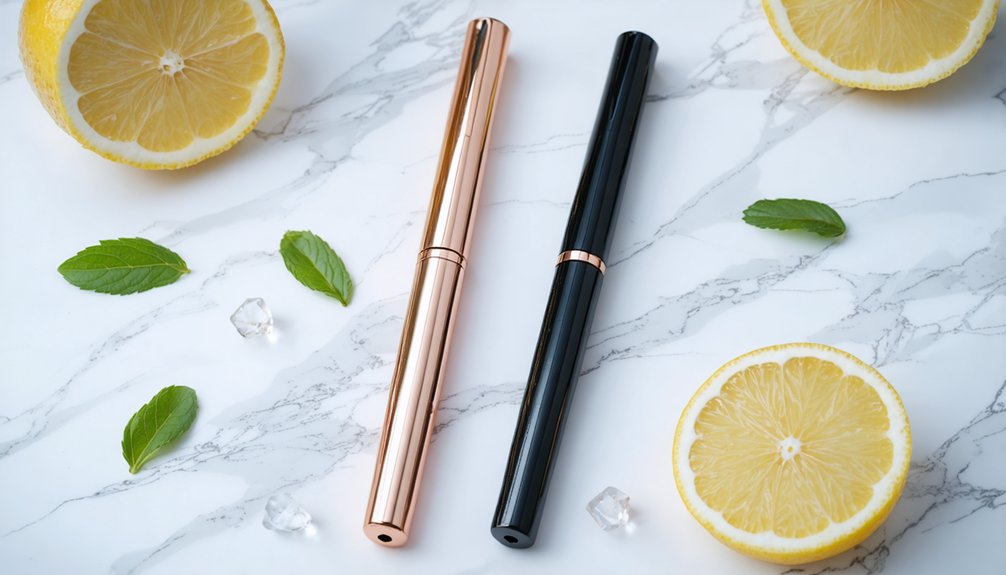
Both HiSmile and Diamond Smile appear consistently in editorial comparisons of whitening pens suited for sensitive teeth, but they aren’t interchangeable. HiSmile is frequently noted for its lower-concentration formula, which reduces irritation risk while still delivering measurable results.
Diamond Smile earns comparable mentions for effective sensitivity-focused formulation and precise application. If you prioritize color matching across multiple shades, HiSmile’s controlled gel consistency supports gradual, even results.
Diamond Smile tends to appeal to users whose taste preferences lean toward milder flavoring during application. Neither brand offers clinical guarantees, and your individual response will depend on your existing sensitivity level and enamel condition.
Evaluate each product’s stated concentration, application format, and ingredient list before committing—editorial popularity reflects consistency in recommendation, not universal compatibility.
What to Look for in a Whitening Pen Formula
When selecting a whitening pen for sensitive teeth, the formula’s peroxide concentration should be your first checkpoint. Lower concentrations reduce irritation risk without eliminating efficacy.
Prioritize products explicitly labeled for sensitive teeth rather than general-use formulas.
Precision of application matters equally. A well-designed tip limits gel contact with gingival tissue, reducing localized irritation. You’re looking for controlled delivery, not broad coverage.
Be cautious with alternative natural remedies or DIY whitening tricks marketed as gentler options—many lack concentration transparency or standardized testing, making them harder to evaluate or control.
Finally, review the ingredient list for supportive compounds alongside the active agent. A formula built for sensitivity balances whitening efficacy with tolerability, giving you measurable results without unnecessary discomfort or guesswork.
How to Apply a Whitening Pen Without Gum Irritation
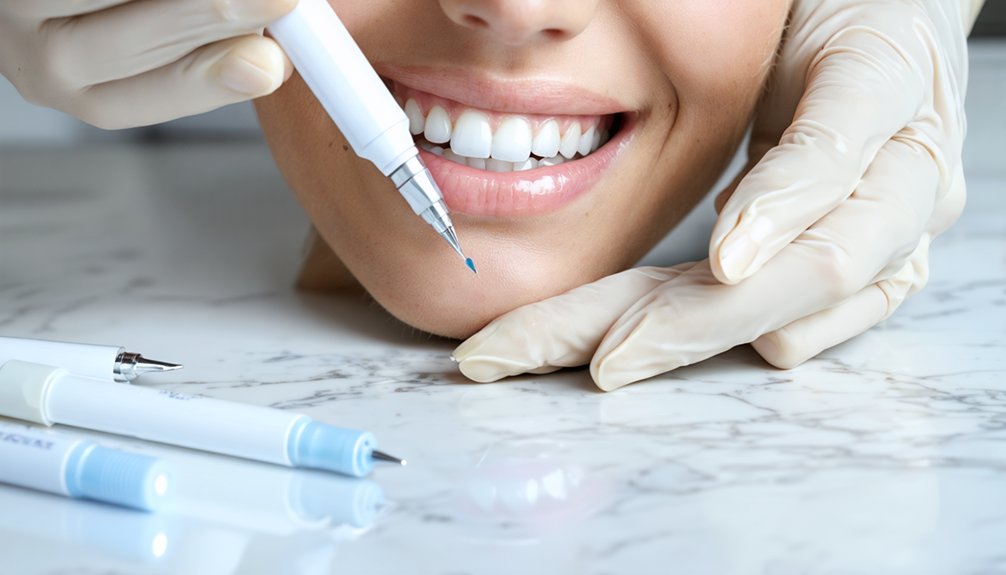
Applying a whitening pen correctly reduces your risk of gum irritation more than the formula alone. Even products with alternative ingredients designed for sensitivity can cause discomfort if you apply them carelessly. Precise application techniques give you direct control over where the gel contacts your teeth.
Correct application technique reduces gum irritation risk more than the whitening formula you choose.
Follow these steps to minimize gum exposure:
- Dry your teeth with a tissue or cloth before applying
- Retract your lips fully to isolate the enamel surface
- Apply the gel only to the visible tooth face, not near the gumline
- Use a single, controlled stroke per tooth
- Avoid eating, drinking, or closing your mouth tightly for at least 60 seconds after application
Consistent technique matters more than product selection alone.
How Often Can Sensitive Teeth Handle a Whitening Pen?
Frequency matters as much as formula when you’re managing sensitivity. Overusing a whitening pen stresses dental enamel, even when the concentration is low. Most sensitivity-focused formulas recommend once-daily application, typically for five to seven consecutive days, followed by a rest period before repeating the cycle.
Gel consistency affects how long the active ingredient stays in contact with your enamel. Thicker gels adhere longer, which means fewer applications can deliver comparable results without compounding irritation. If you notice discomfort after day two or three, stop immediately and extend your rest interval.
Don’t treat the recommended schedule as a minimum—treat it as a ceiling. Using a whitening pen less frequently than directed is always the safer choice when your teeth signal distress.
Signs You’re Overusing Your Whitening Pen
Sticking to a conservative schedule protects your enamel, but even a well-intentioned routine can cross into overuse if you’re not watching for warning signals. Damaged dental enamel and heightened teeth sensitivity are the clearest indicators that you’ve exceeded your threshold.
Even a careful whitening routine can tip into overuse—enamel damage and sensitivity are your first warnings.
Watch for these signs:
- Lingering tooth pain that persists hours after application
- Increased teeth sensitivity to cold, heat, or pressure between sessions
- Gum irritation or whitening along the tissue line
- Visible enamel changes, including translucency or surface roughness
- Pain during application that wasn’t present when you started
If you recognize any of these, stop use immediately and allow recovery time. Dental enamel doesn’t regenerate, so continued exposure worsens cumulative damage.
Consulting a dentist before resuming is the most controlled response.
When to Ask a Dentist Before Using a Whitening Pen
Most whitening pens carry low enough concentrations to use without professional input, but certain conditions change that calculus entirely.
If you have active cavities, cracked enamel, gum recession, or existing restorations, teeth whitening safety depends on a clinical evaluation first. Applying a bleaching agent over compromised surfaces accelerates damage rather than improving appearance.
You should also consult a dentist if you experience persistent sensitivity rather than temporary post-application discomfort. That distinction matters. Chronic sensitivity signals an underlying issue that no sensitive teeth care product resolves on its own.
Other triggers for a dental consult include recent oral surgery, orthodontic appliances, or a history of chemical sensitivity. Using a whitening pen without that clearance shifts the risk from manageable to avoidable.
Frequently Asked Questions
Can Whitening Pens Be Used With Braces or Dental Veneers?
Avoid them with braces—uneven whitening risks patchy enamel. Avoid them with veneers—veneer staining from peroxide can’t be reversed. You’re protecting your investment by checking braces compatibility and consulting your dentist first.
Do Whitening Pens Expire, and Does Expiry Affect Sensitivity Risk?
Yes, whitening pens expire. You should check product ingredients for degraded peroxide, which can increase sensitivity risk. Follow storage guidelines carefully—heat and light accelerate breakdown, reducing efficacy and potentially making formulas harsher on sensitive teeth.
Can Whitening Pens Be Used During Pregnancy or While Breastfeeding?
Picture those chemicals seeping past delicate barriers — you shouldn’t use whitening pens during pregnancy or nursing. Pregnancy safety guidelines and breastfeeding considerations both flag peroxide absorption as an unresolved risk, so consult your doctor first.
Is It Safe to Eat or Drink Immediately After Using a Whitening Pen?
You shouldn’t eat or drink immediately after use. Follow dietary restrictions for at least 30 minutes to maximize absorption and minimize long-term effects on enamel sensitivity. This controlled window directly influences your whitening outcome.
Can Children or Teenagers With Sensitive Teeth Use Whitening Pens Safely?
Most dentists don’t recommend whitening pens for children’s safety or teen sensitivity cases. You should consult a dental professional first, as developing enamel reacts unpredictably to bleaching agents, increasing irritation risks considerably.
References
- https://www.amazon.com/-/es/Los-más-vendidos-Productos-para-Blanquear-Dientes/zgbs/hpc/3778441
- https://drmarkshtern.com/es/blog-es/pros-y-contras-de-las-plumas-blanqueadoras-de-dientes/
- https://www.prodentis.es/blog/mejores-opciones-blanqueamiento-dental
- https://www.double-white.es/article/best-whitening-strips-for-sensitive-teeth-top-picks-and-tips-1.html
- https://www.amazon.es/gp/bestsellers/hpc/4346901031
- https://www.amazon.com.mx/gp/bestsellers/hpc/9845596011
- https://www.consumerhealthdigest.com/es/salud-bucal/los-mejores-boligrafos-para-blanquear-los-dientes.html
- https://www.dentaly.org/es/blanqueamiento-dental/sensibilidad/