You can whiten sensitive teeth without sharp nerve pain by choosing products formulated with low peroxide concentrations, potassium nitrate, and fluoride. These ingredients calm dentin tubule activity, strengthen enamel, and create a protective barrier against irritation. Peroxide-free options and carbamide peroxide formulas release whitening agents more slowly, reducing discomfort markedly. Always consult a dentist before starting any whitening regimen to rule out underlying conditions. The right product choices and safe practices make a meaningful difference.
Key Takeaways
- Peroxide-free formulas like Lumineux minimize irritation, while potassium nitrate and fluoride-based products help calm nerves and strengthen enamel.
- Whitening toothpastes such as Sensodyne Extra Whitening offer mild polishing with significantly less sensitivity risk than peroxide treatments.
- Crest 3D Whitestrips Sensitive (5.25% peroxide) provides a moderate whitening option suitable for those with mild sensitivity.
- Carbamide peroxide releases bleaching agents slowly, reducing nerve irritation compared to standard hydrogen peroxide formulas.
- Avoid charcoal, baking soda, high-concentration peroxide, and overnight treatments, as these worsen enamel erosion and sensitivity.
Why Whitening Hurts Sensitive Teeth
Whitening products penetrate enamel to break down stain molecules, and when enamel is thin or porous, that process reaches the dentin layer beneath it.
Dentin contains microscopic tubules that connect directly to nerve endings, so any chemical activity there triggers sharp sensitivity or lingering discomfort. Peroxide-based formulas are the primary cause, though even some natural remedies and alternative treatments—such as charcoal or acidic fruit-based solutions—can worsen enamel erosion and amplify nerve exposure.
You’re more vulnerable if you have existing gum recession, enamel wear, untreated cavities, or a history of sensitivity.
Understanding this mechanism gives you an advantage: it lets you identify which product concentrations, ingredients, and application durations are likely to cause irritation before you commit to a whitening routine.
When to See a Dentist Before Whitening
Knowing what causes sensitivity puts you in a better position to act on it, and for many people that first step is a dental exam. Before exploring alternative whitening methods or natural remedies, a dentist can identify underlying issues like cavities, gum recession, or enamel erosion that would worsen under any whitening agent. These conditions change your risk profile considerably.
If you have active decay or exposed dentin, even low-peroxide formulas can intensify pain rather than simply cause mild discomfort. A professional evaluation also lets you establish a treatment baseline, so you’re choosing products based on your actual oral health rather than general recommendations.
Skipping this step doesn’t save time—it increases the likelihood of setbacks that delay your whitening goals entirely.
The Gentlest Whitening Products for Sensitive Teeth
Once you’ve confirmed your oral health is stable, selecting the right product category becomes a practical matter of matching your sensitivity level to the available options.
Whitening toothpastes, such as Sensodyne Extra Whitening, offer the gentlest entry point through mild mechanical polishing rather than chemical bleaching.
Whitening toothpastes offer the gentlest starting point, using mild polishing rather than chemical bleaching to brighten teeth.
If you prefer alternative treatments or natural remedies, peroxide-free formulas like Lumineux reduce irritation while avoiding harsh bleaching agents.
For moderate sensitivity, Crest 3D Whitestrips Sensitive delivers controlled whitening at 5.25% hydrogen peroxide with shorter wear times.
LED kits like Snow provide another structured option with reduced discomfort.
Prioritize formulas containing potassium nitrate and fluoride, as both support nerve calming and enamel protection.
Avoid charcoal, chlorine dioxide, and overnight applications regardless of the product category you choose.
Key Ingredients That Reduce Whitening Sensitivity
Understanding which ingredients actively reduce sensitivity helps you evaluate product labels with more confidence. Unlike alternative natural remedies or unverified home whitening tricks, clinically recognized compounds target nerve irritation and enamel vulnerability at a physiological level.
Prioritize products containing these evidence-backed ingredients:
- Potassium nitrate — penetrates the dentin tubules and calms overactive tooth nerves, reducing sharp pain signals during and after whitening
- Fluoride — reinforces enamel mineral structure, creating a protective barrier against peroxide-induced degradation
- Carbamide peroxide — breaks down more slowly than hydrogen peroxide, releasing lower active concentrations that minimize tissue irritation
- Xylitol — supports a balanced oral environment by reducing acid exposure, complementing desensitizing agents in sensitive-specific formulas
Knowing these ingredients puts you in control of every purchasing decision you make.
Peroxide Levels: How Much Is Safe for Sensitive Teeth?
Ingredient awareness only gets you so far — the concentration of the active bleaching agent matters just as much. For sensitive teeth, lower peroxide levels directly support sensitivity reduction without sacrificing results.
Formulas in the 5% to 10% hydrogen peroxide range offer a practical middle ground, while carbamide peroxide options break down more slowly, making them inherently gentler. A Crest sensitive-strip formula, for example, uses 5.25% hydrogen peroxide — a controlled dose that limits nerve irritation.
If you’re exploring peroxide alternatives, peroxide-free products like Lumineux eliminate bleaching exposure entirely, though results may be more gradual.
Regardless of formula, keep sessions to 30 minutes or less. Shorter contact time paired with appropriate concentration gives you measurable control over both whitening outcomes and discomfort.
Ingredients and Methods to Avoid With Sensitive Teeth
Knowing which ingredients to avoid is just as important as choosing the right formula. Even natural remedies and alternative treatments marketed as gentle can damage enamel or worsen sensitivity if they contain the wrong compounds.
Avoid these ingredients and methods:
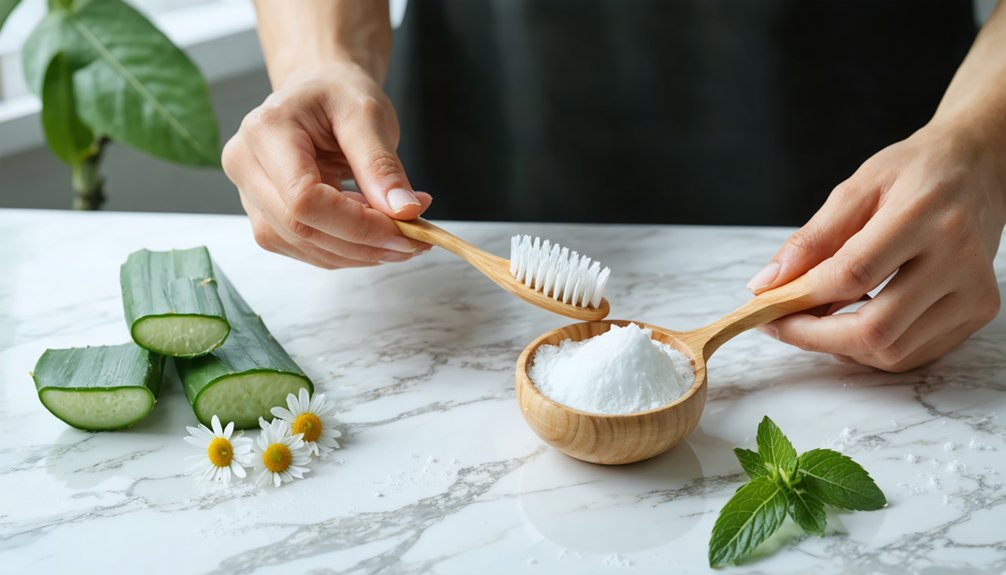
- Charcoal and baking soda: abrasive agents that erode enamel surfaces with repeated use.
- Chlorine dioxide and sodium chlorite: harsh oxidizing chemicals that compromise enamel integrity.
- High-concentration peroxide formulas: without professional supervision, elevated levels trigger nerve irritation and gum damage.
- Overnight whitening treatments: prolonged contact increases sensitivity risk significantly compared to shorter sessions.
You’re in control of what enters your whitening routine. Scrutinize ingredient labels carefully, question claims made by natural remedies, and verify that any alternative treatments align with evidence-based dental guidance before committing.
How to Whiten Safely With Sensitive Teeth
Whitening safely with sensitive teeth requires a structured approach rather than trial and error. Start with a full dental exam to rule out cavities or gum disease before applying any product.
Sensitive teeth demand structure, not guesswork — always begin with a dental exam before reaching for any whitening product.
Use a desensitizing toothpaste containing potassium nitrate or fluoride before and after each session.
Choose low-peroxide formulas under 10% and limit wear times to 30 minutes or less.
Avoid abrasive natural remedies like charcoal or baking soda, as these compromise enamel integrity.
Similarly, alternative treatments using chlorine dioxide or sodium chlorite carry unnecessary risk.
Skip overnight applications entirely.
After whitening, avoid acidic foods and extreme temperatures to reduce nerve irritation.
Brush gently and never immediately after a session.
Consistency with protective habits matters more than treatment frequency.
Frequently Asked Questions
Can Teeth Whitening Permanently Worsen Existing Sensitivity Over Time?
Overuse won’t permanently worsen nerve sensitivity if you protect tooth enamel and follow recommended guidelines. You’ll minimize long-term risk by choosing lower peroxide concentrations, limiting session frequency, and incorporating desensitizing agents consistently into your routine.
Are Whitening Results Less Dramatic for People With Sensitive Teeth?
you don’t have to sacrifice results. With sensitive-friendly home treatments and natural remedies like lower peroxide formulas, you’ll still achieve noticeable whitening—progress is slower, but it’s measurably effective and controlled.
How Long Should You Wait Between Whitening Sessions for Sensitive Teeth?
You should wait at least 48–72 hours between sessions. This recovery window lets your tooth enamel stabilize and allows bleaching agents to clear, reducing cumulative nerve irritation and helping you maintain better control over sensitivity responses.
Does Teeth Whitening Affect Dental Crowns, Veneers, or Bonding Differently?
Like whitening a patchy canvas, results won’t be uniform—whitening won’t change dental crown compatibility or veneer stain resistance since restorations don’t respond to peroxide; you’ll notice your natural teeth brighten while restorations stay their original shade.
Can Diet or Lifestyle Changes Naturally Whiten Sensitive Teeth Without Products?
Yes, you can reduce staining naturally through dietary adjustments like limiting coffee, tea, and acidic foods. Natural remedies such as crunchy vegetables help mechanically cleanse enamel, while staying hydrated supports saliva production, which neutralizes acids effectively.
References
- https://www.forbes.com/sites/forbes-personal-shopper/article/best-whitening-product-for-sensitive-teeth/
- https://www.purpleplumdentistry.com/post/whitening-gel-sensitive-teeth
- https://www.gentledental.com/resources/articles/teeth-whitening-products
- https://crest.com/en-us/oral-care-tips/teeth-whitening/teeth-whitening-sensitive-teeth
- https://www.goochlanddentistry.com/whats-the-best-teeth-whitener-for-sensitive-teeth/
- https://www.health.com/beauty/best-whitening-products-sensitive-teeth
- https://www.youroviedodentist.com/best-whitening-options-for-sensitive-teeth/
- https://www.dentaly.org/us/teeth-whitening/whitening-sensitive-teeth/
- https://www.eyeandpen.com/reviews/best-teeth-whitening-for-sensitive-teeth/
- https://www.youtube.com/watch?v=Gn6JHl-3wkI