Your best solutions for fluorosis stain whitening depend entirely on how deep the stains go. Mild cases respond well to professional whitening or bleaching kits, while moderate stains often need microabrasion combined with bleaching. Severe discoloration typically requires veneers or bonding for uniform results. Daily habits like stannous fluoride toothpaste and limiting staining foods help maintain your outcomes. Each option has specific strengths, limitations, and ideal candidates worth understanding before you choose.
Key Takeaways
- Professional whitening with high-concentration peroxide effectively treats mild fluorosis, producing noticeable results within a single session.
- Enamel microabrasion combined with bleaching optimally treats moderate fluorosis by removing surface enamel and targeting deeper stains.
- Porcelain veneers or composite bonding provide uniform, durable coverage for severe or widespread fluorosis discoloration.
- Stannous fluoride toothpaste reduces surface staining by nearly 28% within six weeks, supporting long-term whitening maintenance.
- Natural remedies like coconut oil pulling and baking soda cannot reverse intrinsic fluorosis; proven clinical treatments are necessary.
Which Treatment Works for Your Severity of Fluorosis
Fluorosis ranges from faint white streaks to heavy brown mottling, and matching the right treatment to your specific severity level is what separates a satisfying outcome from a disappointing one.
For mild cases, professional whitening or at-home bleaching kits can effectively reduce discoloration, especially when dietary impact from staining foods and drinks is minimized alongside treatment.
Moderate fluorosis responds well to enamel microabrasion combined with bleaching, targeting both surface and slightly deeper stains. Supporting enamel remineralization through proper oral hygiene and stannous fluoride dentifrices strengthens your results long-term.
Severe fluorosis, characterized by heavy mottling, typically requires veneers or bonding to achieve a uniform appearance.
Knowing your severity level lets you take precise, deliberate action rather than cycling through treatments that won’t deliver meaningful change.
Professional Teeth Whitening for Fluorosis Stains
When fluorosis stains fall on the milder end of the spectrum, professional teeth whitening is typically your strongest first-line option before considering more invasive procedures. Your dentist applies high-concentration hydrogen or carbamide peroxide directly to the enamel, often producing noticeable results within a single session. You’re targeting surface and near-surface discoloration while supporting enamel strengthening through professionally controlled application.
Keep in mind that deep intrinsic stains may respond less predictably. Your dietary habits also influence outcomes — consuming staining foods and acidic beverages after treatment can compromise results quickly. Controlling those variables gives you a stronger return on your investment.
When whitening alone proves insufficient, it still lays the groundwork for follow-up treatments like microabrasion or veneers, making it a logical and strategic starting point.
Does Enamel Microabrasion Actually Remove Fluorosis Stains?
Enamel microabrasion works by removing a thin outer layer of enamel using a combination of fine pumice and acid.
It effectively reduces fluorosis stains that haven’t penetrated beyond the surface.
It’s particularly well-suited for superficial to moderate staining, where the discoloration remains within the outer enamel layer.
For deeper or more stubborn stains, you’ll often get better results by combining microabrasion with professional whitening, since the two methods target different stain depths.
How Microabrasion Works
Microabrasion works by physically removing a thin outer layer of enamel to eliminate or reduce surface-level fluorosis stains. Your dentist applies a fine pumice-and-acid compound directly to affected enamel, abrading away discolored tissue with controlled precision.
This method targets stains confined to the outer enamel layer, where fluorosis most commonly leaves its visible mark.
What makes microabrasion particularly valuable is what follows removal. Once the superficial stained layer is gone, your tooth undergoes enamel remineralization, gradually restoring mineral density through saliva and fluoride exposure.
This natural repair process strengthens the treated surface rather than simply masking it.
If your stains extend deeper, microabrasion alone won’t fully resolve them—but it creates an ideal foundation for combining with professional bleaching to achieve measurable, lasting improvement.
Treating Superficial Fluorosis Stains
For superficial fluorosis stains confined to the outer enamel layer, microabrasion delivers clinically meaningful results. By selectively removing compromised enamel, the procedure exposes cleaner, more uniform tooth structure beneath. You’ll notice that surface-level white spots and mild mottling respond particularly well, especially when stains haven’t penetrated into deeper dentin.
Dietary influences matter throughout recovery—acidic foods and beverages can temporarily compromise treated enamel, so adjusting your intake supports optimal healing. Pairing microabrasion with enamel remineralization protocols, such as fluoride or calcium-phosphate applications, strengthens the exposed surface and stabilizes long-term results.
When your fluorosis staining remains at a superficial depth, microabrasion gives you a controlled, targeted solution. It removes what whitening alone cannot, setting a cleaner foundation for any subsequent bleaching treatment.
Combining Microabrasion With Whitening
When fluorosis stains persist after whitening alone, combining microabrasion with bleaching offers a stronger clinical approach. This protocol targets both surface and deeper discoloration by addressing varied stain depths systematically.
The sequence works precisely:
- Microabrasion removes the compromised enamel layer, eliminating surface fluorosis deposits that block bleaching agents.
- Increased enamel permeability post-microabrasion allows whitening agents to penetrate more effectively toward deeper stain zones.
- Controlled peroxide application then lightens residual discoloration without unnecessarily stressing the dental pulp.
- Custom tray maintenance consolidates results at home over several weeks.
You’re not guessing at outcomes — you’re following a structured, evidence-backed protocol. This combination consistently outperforms single-method approaches, giving you measurable control over fluorosis correction at multiple enamel depths.
At-Home Whitening Kits: What They Can and Can’t Fix
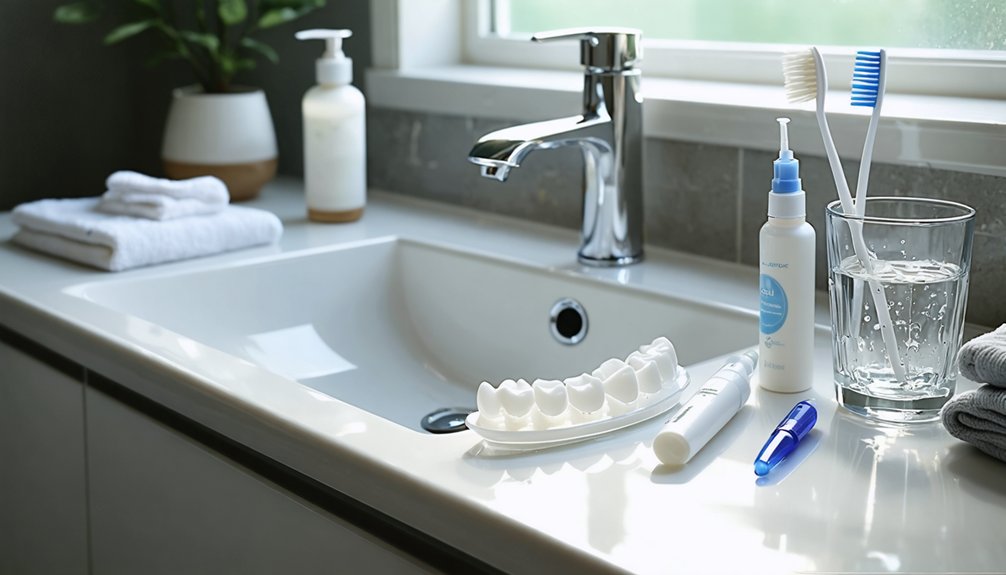
At-home whitening kits offer a more affordable, accessible alternative to in-office treatment, but they come with real limitations when it comes to fluorosis stains. These kits use lower-concentration bleaching agents delivered through custom-fitted trays, requiring consistent use over several weeks to show visible improvement.
They’re best suited for mild to moderate discoloration—not the deeper mottling that fluorosis often causes.
Your dietary habits also influence results. Acidic foods and dark beverages can compromise enamel strength and counteract progress, so managing your intake matters.
If your fluorosis stains extend beyond the surface, at-home kits won’t fully correct them. They work as a maintenance tool or a mild-case solution, but severe staining will likely require professional microabrasion, in-office whitening, or ultimately, veneers.
In-Office Whitening vs. Custom Trays: Which Works Better?
Both in-office whitening and custom trays use peroxide-based bleaching agents, but they differ markedly in concentration, speed, and suitability for fluorosis stains. Your results depend on stain depth, genetic predisposition to enamel porosity, and dietary factors that may have worsened discoloration over time.
- In-office treatment delivers high-concentration peroxide, producing visible change in one session.
- Custom trays use lower concentrations applied consistently over several weeks.
- Deep fluorosis stains resist both methods, often requiring microabrasion or veneers afterward.
- Mild-to-moderate cases respond well to either approach, with in-office offering speed and trays offering affordability.
If you want precise control over your whitening timeline, in-office treatment gives you measurable, faster outcomes with professional oversight guiding each step.
Combine Microabrasion and Bleaching for Stubborn Fluorosis Stains
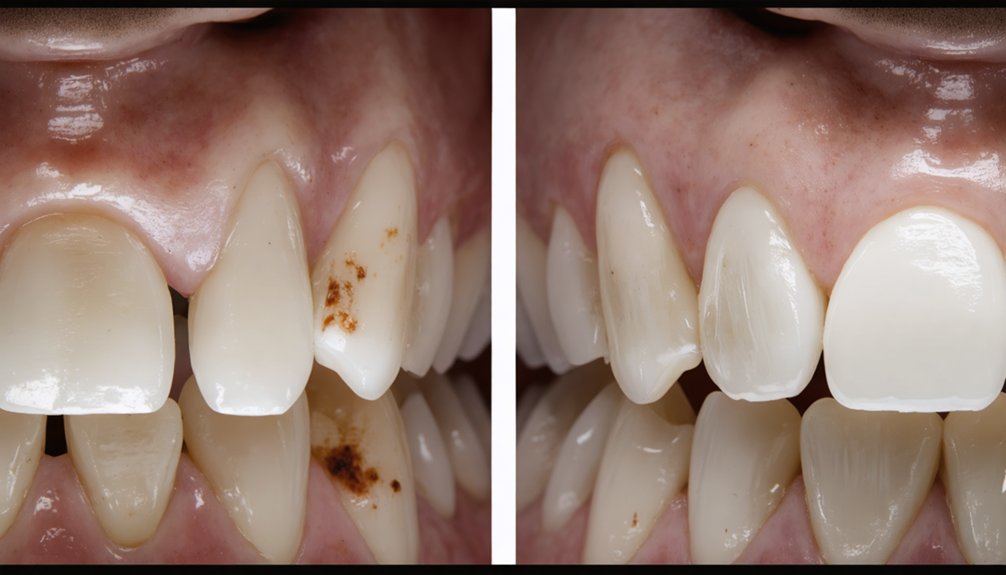
Whitening alone sometimes falls short when fluorosis stains penetrate beyond the outer enamel surface—and that’s where combining microabrasion with bleaching gives you a stronger clinical advantage.
Microabrasion removes the stain-bearing outer enamel layer using fine pumice and acid, exposing fresher enamel beneath. Bleaching then targets any residual discoloration at a deeper level, producing results neither method achieves independently.
You’ll want to understand microabrasion risks before committing—over-aggressive technique can compromise enamel resilience, thinning protective structure if repeated unnecessarily. A skilled clinician controls removal depth precisely, minimizing that risk while maximizing stain reduction.
Following microabrasion, in-office bleaching or custom trays extend your results further. This sequential protocol is particularly effective when fluorosis stains vary in depth and severity, giving you measurable, lasting improvement over single-method approaches.
When Veneers or Bonding Are the Better Choice
When whitening and microabrasion still leave visible staining, veneers or bonding become the stronger clinical choice. Both options let you take direct control over your tooth’s final appearance.
Use this framework to assess veneers suitability and the bonding versus crowns decision:
- Mild-to-moderate mottling — composite bonding covers isolated stains with minimal enamel removal.
- Widespread or severe discoloration — porcelain veneers deliver a uniform, long-lasting white surface across multiple teeth.
- Structural compromise — crowns become necessary when fluorosis has weakened the tooth beyond cosmetic repair.
- Budget and longevity priorities — bonding costs less upfront; veneers offer greater durability and stain resistance over time.
Your dentist’s clinical assessment of stain depth and enamel integrity determines which restoration gives you the most precise, lasting result.
Why Stannous Fluoride Toothpaste Outperforms Regular Toothpaste for Stains
Stannous fluoride toothpaste works differently than regular fluoride toothpaste because it doesn’t just protect enamel — it actively reduces extrinsic staining. If you’re managing dental discoloration alongside other treatments, this distinction matters.
Clinical evidence shows that one stannous fluoride toothpaste reduced extrinsic stains by 17.5% at three weeks and 27.8% at six weeks compared to regular fluoride toothpaste. That’s a measurable advantage you can build into your daily routine.
In six weeks, stannous fluoride toothpaste reduced extrinsic stains by 27.8% compared to regular fluoride toothpaste.
Regular fluoride formulas prioritize cavity prevention but offer little against surface staining. Stannous fluoride addresses both, giving you stronger control over your oral health without adding extra steps.
It won’t correct deep fluorosis on its own, but as part of a broader whitening strategy, it delivers consistent, evidence-backed stain reduction between professional treatments.
Natural Remedies for Fluorosis Stains: Do They Work?
Natural remedies like coconut oil pulling and baking soda are popular alternatives for managing tooth discoloration, but the evidence supporting their use for fluorosis-specific stains is limited. If you’re seeking real control over your results, here’s what you should realistically expect from natural approaches:
- Coconut oil pulling may reduce surface bacteria but won’t penetrate fluorosis stains embedded in enamel.
- Baking soda offers mild abrasiveness for extrinsic stains but can’t reverse intrinsic fluorosis discoloration.
- Dietary restrictions—limiting staining foods and beverages—help preserve your enamel’s current appearance without reversing existing damage.
- Regular dental cleaning removes surface buildup but doesn’t address deeper fluorosis mottling.
You’ll need clinically proven treatments to achieve meaningful whitening beyond what natural remedies can deliver.
Daily Habits That Prevent Fluorosis Stains From Returning
After investing in professional whitening or microabrasion, protecting your results comes down to consistent daily habits. Your oral hygiene routine is your first line of defense—brush twice daily with a stannous fluoride toothpaste, which clinical evidence shows can reduce extrinsic staining by nearly 28% over six weeks compared to standard fluoride formulas.
Brush twice daily with stannous fluoride toothpaste—clinical evidence shows it reduces extrinsic staining by nearly 28% in six weeks.
Floss daily to eliminate plaque before it traps surface pigments.
Diet modifications matter equally. Limit coffee, tea, red wine, and acidic foods that accelerate enamel staining. When you do consume pigment-rich beverages, use a straw and rinse with water immediately after. Avoid tobacco in all forms.
Schedule professional cleanings every six months to catch early stain accumulation before it compromises your results.
Consistency is what sustains your investment long-term.
Frequently Asked Questions
Can Fluorosis Stains Affect Children’s Primary Teeth as Well as Permanent Teeth?
Yes, fluorosis stains can affect both your primary and permanent teeth. You’ll benefit from early detection to explore suitable cosmetic options, helping you maintain control over your smile’s appearance and long-term aesthetic health.
Does Dental Insurance Typically Cover Fluorosis Stain Treatments?
Like locked doors to a brighter smile, insurance typically won’t cover fluorosis treatments. You’ll usually pay out-of-pocket for tooth whitening and cosmetic bonding, as insurers classify these procedures as aesthetic rather than medically necessary.
At What Age Is It Safest to Begin Treating Fluorosis Stains Professionally?
You can typically begin early intervention around age 14–16, once permanent teeth have fully erupted. At this stage, cosmetic options like whitening or microabrasion become safer, giving you greater control over long-term aesthetic outcomes.
Can Fluorosis Stains Worsen Over Time Without Treatment?
Yes, they can. Without care, your cosmetic concerns grow as surface exposure deepens discoloration over time. You’re not powerless—discoloration prevention through consistent oral hygiene and timely professional treatment keeps stains from becoming harder to reverse.
Are Fluorosis Stains Linked to Weakened Enamel or Increased Cavity Risk?
Fluorosis can weaken your enamel, raising cavity risk alongside cosmetic concerns. Staining severity often signals structural vulnerability, so you’ll want to pursue both protective and aesthetic treatments to maintain strong, healthy teeth effectively.
References
- https://hillcrestdentaltx.com/got-blotchy-teeth-eliminate-fluoride-stains-in-texas-now/
- https://www.facebook.com/groups/zerodonto/posts/10166315317545010/
- https://www.realself.com/question/chicago-il-i-hve-fluorosis-stains-teeth-rid-naturally
- https://clubwhitesmile.com/removing-fluoride-stains-a-comprehensive-guide/
- https://www.hazendentistry.com/blog/3-ways-you-can-treat-fluoride-stains-on-your-teeth.php
- https://pubmed.ncbi.nlm.nih.gov/30797258/
- https://www.youtube.com/watch?v=Zwrx4d7blyQ
- https://www.allfitwell.com/dental-fluorosis-teeth-whitening-solutions/