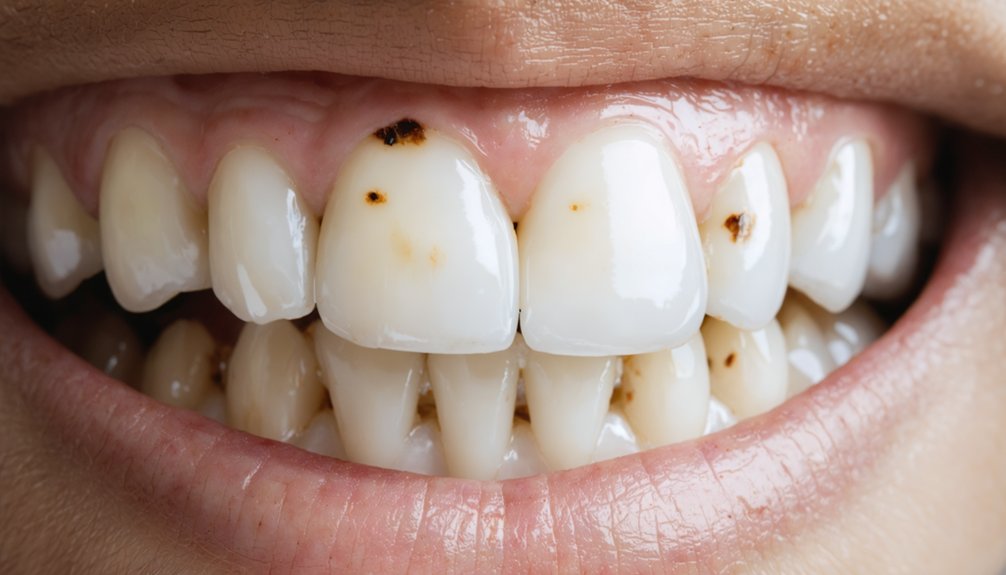
Dark spots on your teeth appear either from surface pigments—like coffee, tea, or tobacco—bonding to your enamel, or from internal discoloration caused by trauma, medications, or structural enamel defects. Extrinsic stains often respond to professional cleaning and whitening, while intrinsic discoloration may require restorative treatment like veneers. Identifying which type you’re dealing with determines the right removal strategy, and the distinctions matter more than most people realize.
Key Takeaways
- Dark spots form from extrinsic sources like coffee, tea, and tobacco, or intrinsic causes such as trauma, fluoride, antibiotics, or genetics.
- Plaque and tartar buildup trap pigments on enamel, worsening discoloration when brushing and flossing are inconsistent.
- Decay appears as rough, sticky, localized spots that grow over time, often causing sensitivity requiring urgent dental care.
- Professional cleaning removes surface stains, while veneers or fillings address intrinsic discoloration unresponsive to whitening treatments.
- Reducing stain-causing foods, quitting tobacco, and maintaining consistent oral hygiene prevent long-term dark spot formation.
What Causes Dark Spots on Teeth?
Dark spots on teeth develop from either extrinsic or intrinsic sources, and identifying which category applies determines how the discoloration is treated.
Extrinsic stains form directly on tooth enamel from coffee, tea, red wine, cola, berries, and tobacco. Reduced saliva production accelerates this process by limiting the mouth’s natural cleansing mechanism, allowing pigments to adhere more readily. Plaque and tartar buildup trap additional pigments when brushing and flossing are inconsistent.
Intrinsic causes originate within the tooth structure itself. These include childhood tetracycline antibiotic use, excessive fluoride exposure, dental trauma, aging-related enamel thinning, and certain systemic conditions such as liver disease or metabolic disorders.
Genetics also influences your baseline enamel quality and color. Distinguishing between surface-level and structural discoloration is essential before pursuing any treatment pathway.
How to Tell If a Dark Spot Is Staining or Decay
Knowing what’s causing a dark spot changes how you approach treatment, and not all discoloration carries the same clinical significance.
Surface stains typically spread across multiple teeth, correlating with dietary pigments or dental plaque accumulation along the gumline.
Decay presents differently — you’ll often notice a rough, sticky texture, localized enamel erosion, or a spot that’s visibly enlarging over time. Sensitivity to temperature or pressure further suggests active caries rather than extrinsic staining.
Trauma-related discoloration tends to appear as an isolated dark patch following a specific injury event.
Stains that respond to professional polishing are generally extrinsic; persistent discoloration that resists cleaning signals intrinsic involvement or structural compromise.
Run your tongue across the spot — texture tells you more than color alone.
When Dark Spots on Teeth Need Urgent Dental Care
Most dark spots on teeth aren’t emergencies, but certain presentations demand prompt professional evaluation. If a dark spot feels rough, sticky, or appears to be enlarging, you’re likely dealing with active decay rather than surface staining.
Not all dark spots signal danger—but rough, sticky, or growing spots likely mean active decay, not just staining.
Tooth sensitivity to temperature or pressure alongside discoloration considerably elevates that concern. A single dark spot following trauma may indicate internal pulp damage or structural cracking.
Dark discoloration near the gumline can signal advanced tartar buildup or periodontal disease. If discoloration persists despite consistent cleaning, intrinsic damage or caries is probable.
Don’t delay evaluation based on dental insurance limitations—early intervention typically costs less than treating advanced decay. Catching these issues early keeps your treatment options broader and your long-term outcomes considerably better.
Foods and Habits That Cause Dark Spots on Teeth
What you eat and drink directly shapes the color of your enamel over time. Dietary habits involving coffee, tea, red wine, cola, and dark berries deposit chromogens—pigment compounds—directly onto enamel surfaces. These pigments bond more aggressively when plaque is already present, accelerating visible discoloration.
Tobacco impact extends beyond surface staining. Smoking and chewing tobacco introduce tar and nicotine compounds that penetrate enamel and resist standard brushing. The resulting discoloration is often brown to black and deeply set.
You can reduce accumulation by rinsing immediately after consuming stain-causing substances, limiting exposure frequency, and brushing twice daily. Eliminating tobacco removes one of the most chemically aggressive staining sources entirely.
Controlling these inputs gives you measurable influence over your enamel’s long-term appearance.
Professional Treatments That Remove Dark Spots on Teeth
When surface stains, tartar, or decay are driving your tooth discoloration, professional intervention is usually the most effective path forward. Your dentist can remove extrinsic stains and hardened tartar through cleaning, scaling, and polishing—procedures that go well beyond what at-home brushing achieves.
For deeper issues like cavities or intrinsic staining, you’ll likely need restorative work or clinical whitening treatments tailored to the underlying cause.
Dental Cleaning and Scaling
Dental cleaning and scaling are among the most effective professional interventions for eliminating dark spots caused by extrinsic stains, plaque, and tartar buildup. When dental plaque hardens into tartar, standard brushing can’t remove it, making professional scaling essential.
Enamel erosion accelerates when tartar accumulates unchecked, deepening discoloration over time.
A structured professional cleaning typically addresses dark spots through these steps:
- Scaling: Ultrasonic or hand instruments break down and remove hardened tartar deposits near the gumline and between teeth.
- Polishing: Abrasive paste eliminates residual surface stains, restoring enamel clarity.
- Irrigation: Antimicrobial rinses flush bacterial debris from periodontal pockets.
Schedule cleanings every six months to prevent stain recurrence and maintain structural tooth integrity before discoloration progresses beyond surface-level intervention.
Restorative and Whitening Options
Beyond cleaning and scaling, several restorative and whitening treatments can address dark spots that professional polishing alone can’t resolve. If dental plaque has hardened into tartar and enabled decay, your dentist will likely recommend fillings or other restorative procedures rather than cosmetic intervention.
Whitening treatments effectively target extrinsic enamel stains, but they won’t correct intrinsic discoloration from trauma, antibiotics, or fluorosis. If you’re experiencing tooth sensitivity, your dentist must evaluate whether active decay or structural damage underlies the discoloration before initiating any whitening protocol.
Old amalgam restorations contributing to dark marks may require replacement with composite or ceramic materials. Veneers and bonding offer additional options when staining is severe or resistant.
Your treatment selection should be guided by the spot’s confirmed cause, not its appearance alone.
At-Home Ways to Reduce and Prevent Dark Spots on Teeth
Preventing dark spots at home starts with consistent oral hygiene—brushing twice daily and flossing removes plaque before it traps pigments and hardens into tartar.
You can further reduce stain risk by controlling specific dietary and behavioral factors:
- Limit stain-causing substances like coffee, tea, red wine, and tobacco, which directly discolor enamel.
- Rinse immediately after consuming pigment-heavy foods to minimize surface retention before brushing.
- Maintain salivary pH balance by reducing acidic foods that erode enamel and accelerate discoloration.
Ask your dentist whether dental sealants are appropriate—they create a physical barrier that reduces pigment penetration on vulnerable surfaces.
Routine professional visits reinforce at-home efforts by catching early staining, tartar accumulation, or enamel breakdown before dark spots become structurally significant.
Do Whitening Products Remove Dark Spots on Teeth?
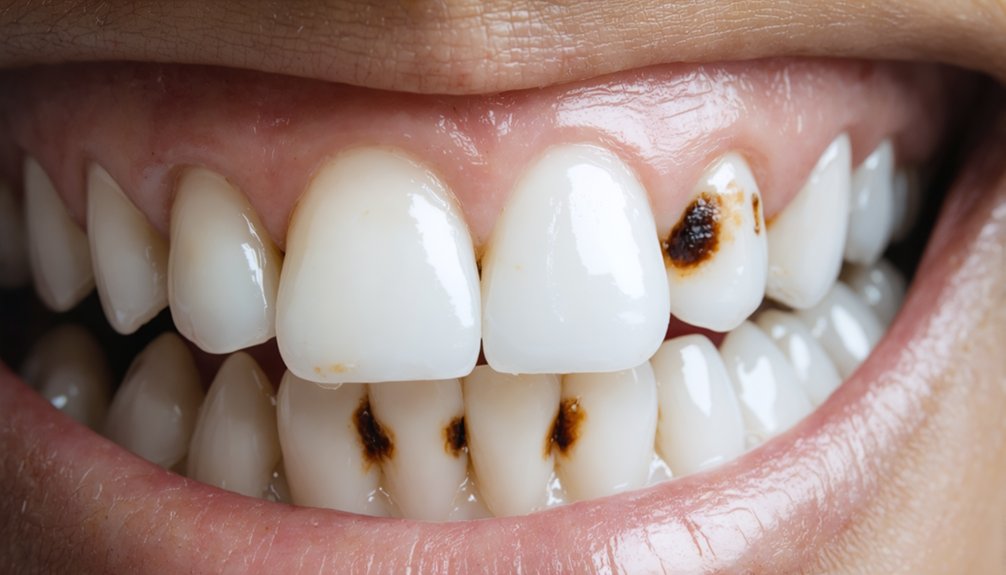
Whitening products can reduce some dark spots on teeth, but their effectiveness depends on whether the discoloration is extrinsic or intrinsic. Over-the-counter whitening strips and peroxide-based gels target surface stains from coffee, tea, or tobacco. They won’t penetrate intrinsic discoloration caused by tetracycline, trauma, or fluorosis.
For those cases, you’ll need professional intervention. Enamel remineralization products containing fluoride or hydroxyapatite can strengthen compromised enamel and reduce minor surface irregularities that trap pigments, but they don’t function as whitening agents.
When staining is severe or structurally embedded, dental veneers offer a reliable solution by masking discoloration entirely with a porcelain or composite layer. Before using any whitening product, identify the stain type—applying whitening agents to decay-related dark spots can worsen the underlying condition.
Why Some Teeth Are More Prone to Dark Spots
Your susceptibility to dark spots isn’t purely a matter of habit—genetics and enamel quality play a significant role in how your teeth absorb and retain pigments.
If you inherited thinner enamel or structural defects, your teeth expose more of the underlying dentin, making discoloration more likely and more visible.
Layered on top of that biological baseline, your lifestyle choices—tobacco use, dietary habits, and oral hygiene practices—either compound or mitigate the risk your genetics already established.
Genetic and Enamel Factors
Genetics plays a direct role in determining enamel thickness, mineral density, and baseline tooth color, which means some people are structurally more vulnerable to dark spots regardless of their oral hygiene habits.
Genetic predisposition affects how well your enamel resists pigment absorption, acid erosion, and structural breakdown. Weaker enamel strength creates a surface that stains faster and holds discoloration longer.
Three inherited factors that increase your risk:
- Thin or hypomineralized enamel allows pigments to penetrate more deeply into dentin.
- Naturally darker dentin shows through translucent enamel, amplifying discoloration.
- Inherited enamel defects such as amelogenesis imperfecta compromise structural integrity from the start.
Understanding your genetic baseline helps you implement targeted prevention strategies rather than reactive ones.
Lifestyle and Hygiene Risks
While genetics establishes your baseline vulnerability, your daily habits determine how quickly and severely dark spots develop.
Your dietary habits directly influence stain accumulation — frequent consumption of coffee, tea, red wine, cola, and dark-pigmented foods deposits chromogens onto enamel repeatedly throughout the day.
Tobacco use compounds this markedly, introducing tar and nicotine that penetrate enamel and resist standard cleaning.
Inadequate oral hygiene accelerates the process further. When you don’t brush and floss consistently, plaque accumulates, traps pigments, and eventually mineralizes into tartar — a hardened deposit that professional instruments must remove.
Tartar itself darkens over time and creates additional surface area for stain retention.
You’re not powerless here. Modifying these controllable variables considerably reduces your risk, regardless of your genetic predisposition.
Frequently Asked Questions
Can Dark Spots on Teeth Indicate an Underlying Systemic Health Condition?
Yes, your dental discoloration can signal systemic health issues. Conditions like celiac disease, liver disease, calcium deficiency, and metabolic disorders actively cause tooth discoloration. You should pursue professional evaluation to rule out these underlying contributors promptly.
Are Dark Spots on Baby Teeth a Sign of Concern for Permanent Teeth?
60% of childhood cavities go undetected early. Baby tooth discoloration and teething stains don’t directly harm permanent teeth, but they signal oral hygiene gaps you must address now to protect developing dentition underneath.
Can Certain Medications Cause Dark Spots to Appear on Adult Teeth?
Yes, certain medications can cause tooth discoloration in adults. Tetracycline-class antibiotics are known medication side effects that produce intrinsic dark staining. You’ll need professional evaluation to determine your treatment options for addressing this discoloration effectively.
Do Dental X-Rays Help Detect Dark Spots Not Visible to the Eye?
Yes, dental X-rays can detect teeth discoloration and decay hidden beneath enamel. X-ray detection reveals cavities, internal damage, and structural changes you can’t see, giving you precise control over early intervention before dark spots worsen.
Can Dark Spots Return After Professional Treatment Removes Them Completely?
Yes, dark spots are a revolving door—they’ll return without discipline. You must limit staining foods, avoid tobacco, and maintain hygiene. Cosmetic whitening offers no permanence, and natural remedies won’t prevent recurrence without consistent professional care.
References
- https://my.clevelandclinic.org/health/symptoms/10958-tooth-discoloration
- https://mypenndentist.org/dental-tips/2024/01/09/what-to-do-about-black-dots-on-teeth/
- https://www.colgate.com/en-my/oral-health/cavities/black-spot-on-tooth
- https://dentaldepot.net/why-do-i-have-a-dark-spot-on-my-tooth/
- https://iodentistry.com/what-are-black-spots-on-teeth/
- https://pacificnorthwestdentist.com/causes-of-black-spots-on-teeth/
- https://www.brownroaddental.com/understanding-black-spots-on-teeth-causes-removal-prevention/
- https://www.healthline.com/health/black-dot-on-tooth
- https://topellicottcitydentists.com/blog/black-spots-on-teeth-10-surprising-causes-and-effective-treatment/
- https://www.medicalnewstoday.com/articles/321480