Genetic tooth discoloration runs deeper than surface stains, which means you’ll need more than a whitening strip to fix it. In-office bleaching using high-concentration peroxide penetrates enamel and dentin for the fastest results. Custom dentist trays offer controlled, flexible whitening at home. OTC products work best as maintenance tools. Internal bleaching targets non-vital teeth from the inside. Veneers or bonding restore severely affected teeth when whitening fails. Keep going to discover which method fits your situation best.
Key Takeaways
- In-office bleaching uses high-concentration peroxide to penetrate enamel and dentin, making it the most effective option for hereditary discoloration.
- Custom dentist trays offer controlled home whitening with lower peroxide concentrations, reducing sensitivity while effectively treating milder genetic stains.
- Internal bleaching targets discoloration inside non-vital, root-treated teeth by placing bleaching agents directly within the pulp chamber.
- OTC whitening products have minimal impact on genetic stains and work best as maintenance tools after professional treatment.
- Porcelain veneers or dental bonding are recommended when whitening fails or structural enamel defects prevent effective peroxide penetration.
Why In-Office Bleaching Works Best for Genetic Tooth Discoloration
When genetic discoloration stems from conditions like dentinogenesis imperfecta or amelogenesis imperfecta, the staining originates within the tooth’s enamel or dentin—making it largely unreachable by store-bought products.
Intrinsic staining driven by genetic factors demands a stronger, more targeted approach, and that’s exactly what in-office bleaching delivers.
Dentist-administered treatments like Zoom Whitening, Opalescence Boost, and laser-assisted bleaching use high-concentration peroxide agents that penetrate deeper into compromised tooth structure.
You’ll see faster, more measurable results than any OTC strip or toothpaste can produce.
Because your dentist controls concentration, application time, and gum protection, you’re also minimizing unnecessary risk.
For severe hereditary discoloration that resists surface-level intervention, professional in-office bleaching gives you the most direct, controlled path to a visibly improved smile.
Custom Dentist Trays: Slower Than In-Office but Still Effective
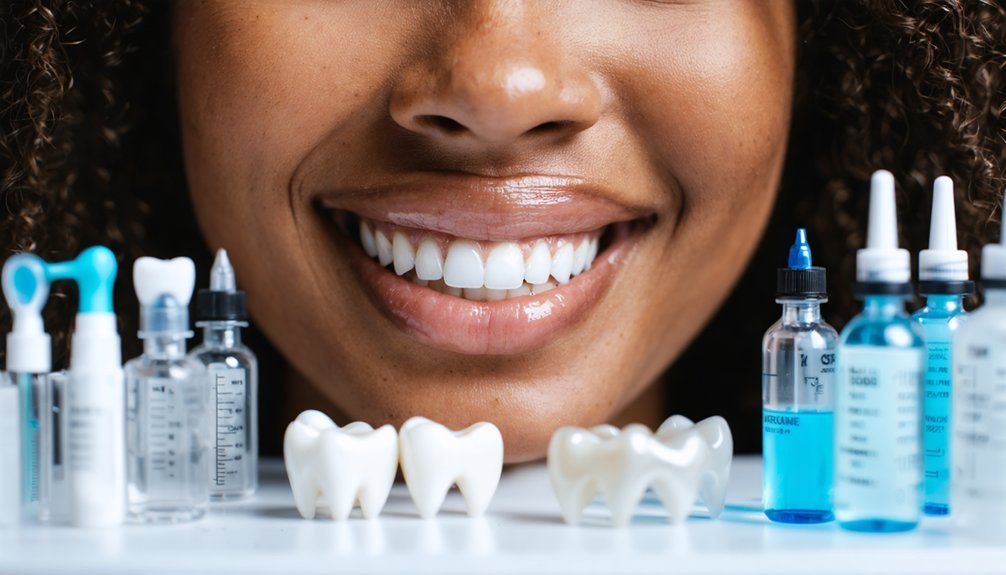
In-office bleaching delivers the fastest results, but it’s not the only professional-grade option worth considering. Custom dentist trays give you a controlled, flexible approach to home whitening that store-bought strips simply can’t match. Because tray customization guarantees a precise fit, you’ll minimize gum exposure and maximize peroxide contact with each tooth surface.
Your dentist typically prescribes low-concentration hydrogen peroxide or carbamide peroxide gel, which you’ll apply on a schedule tailored to your staining severity. This slower delivery actually reduces sensitivity compared to in-office treatment—a meaningful advantage if you have reactive teeth.
For milder intrinsic discoloration, custom trays may be your primary solution. After in-office treatment, they’re the most effective maintenance tool available, preserving your results through consistent, dentist-directed home whitening sessions.
Can OTC Whitening Products Help Genetic Stains?
Over-the-counter whitening products—strips, toothpaste, and mouthwash—can contribute to a broader whitening plan, but they’re rarely sufficient as standalone treatments for genetic staining. These products work primarily on surface stains caused by food, beverages, or plaque—not the intrinsic discoloration embedded within enamel or dentin.
Whitening toothpaste offers the safest, most consistent daily use, but its effect on hereditary staining is minimal. Strips deliver moderate results yet risk gum irritation if misapplied. Mouthwash produces the slowest, most modest change overall.
Whitening toothpaste is safest for daily use, strips offer moderate results, and mouthwash delivers the least noticeable change.
If you’re pursuing natural whitening improvements, OTC options work best as maintenance tools after professional treatment—not as your primary strategy. For genetic discoloration, relying solely on store-bought products means accepting limited, often disappointing outcomes.
Professional intervention remains the more effective, controlled approach.
Internal Bleaching for Genetic Stains in Root-Treated Teeth
Teeth that have undergone root canal treatment present a unique whitening challenge—conventional bleaching applied to the outer surface simply can’t penetrate deeply enough to address discoloration locked inside a non-vital tooth.
Internal bleaching solves this by placing bleaching agents—typically carbamide peroxide, hydrogen peroxide, or sodium perborate—directly inside the pulp chamber, targeting the stain at its source.
Because the tooth’s nerve is no longer active, tooth sensitivity isn’t a concern during this procedure, giving you a controlled, targeted treatment without discomfort.
Your dentist seals the agent inside the chamber for several days, then evaluates results and repeats as needed.
For genetically stained, root-treated teeth that won’t respond to external whitening, internal bleaching delivers measurable improvement where surface treatments simply fail.
When Genetic Stains Need Veneers Instead of Whitening
Sometimes whitening simply isn’t enough—and with genetic stains tied to conditions like amelogenesis imperfecta or dentinogenesis imperfecta, that limitation becomes especially relevant. When enamel defects compromise both structure and color, peroxide-based treatments can’t penetrate or correct the underlying problem effectively.
That’s when porcelain veneers become your strongest option. They physically mask severe hereditary discoloration while restoring a uniform, natural appearance—something bleaching can’t reliably deliver with compromised enamel.
For less extensive cases, dental bonding offers a more conservative alternative, reshaping and covering affected surfaces without full veneer coverage.
Your dentist will assess enamel integrity, stain depth, and structural damage before recommending either path. If whitening has already failed or your enamel is markedly defective, restorative intervention isn’t a compromise—it’s the clinically sound decision.
Frequently Asked Questions
Can Genetic Tooth Discoloration Worsen or Darken Further Over Time?
Yes, genetic factors can cause your tooth color changes to worsen over time. You’ll notice deeper discoloration as enamel thins or dentin shifts, making early professional intervention essential to maintain control over progression.
Is Genetic Tooth Discoloration Different From Stains Caused by Coffee or Tobacco?
Yes, genetic tooth discoloration differs markedly from coffee or tobacco stains. Your natural pigmentation forms intrinsically within enamel or dentin through genetic inheritance, making it far harder to treat than surface extrinsic stains standard whitening products easily address.
Are Children With Hereditary Tooth Discoloration Candidates for Whitening Treatments?
Just as timing shapes outcomes, age shapes your child’s options. Children aren’t typically candidates for bleaching, but you can explore child-friendly options like improved hygiene and natural remedies until professional treatment becomes developmentally appropriate.
How Many Whitening Sessions Are Typically Needed for Genetic Discoloration Results?
You’ll typically need 3–6 professional sessions for genetic discoloration, though severity varies. Natural remedies and alternative treatments won’t suffice here—your dentist controls the protocol, adjusting sessions based on your intrinsic stain’s response to bleaching.
Does Dental Insurance Ever Cover Whitening Treatments for Hereditary Tooth Discoloration?
Most dental policies don’t cover whitening, even for hereditary discoloration, due to strict coverage limitations classifying it as cosmetic. You’ll want to verify your plan directly, as exceptions occasionally exist for documented medical necessity.
References
- https://pmc.ncbi.nlm.nih.gov/articles/PMC4058574/
- https://www.northeastdentalarts.com/blog/what-is-the-least-damaging-way-to-whiten-your-teeth/
- https://www.ada.org/resources/ada-library/oral-health-topics/whitening
- https://perrydentalhealth.com/what-is-the-best-way-to-whiten-my-teeth/
- https://www.healthpartners.com/blog/safe-teeth-whitening/
- https://clubwhitesmile.com/genetic-tooth-discoloration-whitening/
- https://riverwalkdental.ca/can-teeth-that-are-genetically-yellow-be-whitened/
- https://pmc.ncbi.nlm.nih.gov/articles/PMC9790475/
- https://scienceofbiogenetics.com/articles/how-to-whiten-yellow-teeth-caused-by-genetic-factors
- https://clubwhitesmile.com/whitening-treatments-for-genetically-stained-teeth/