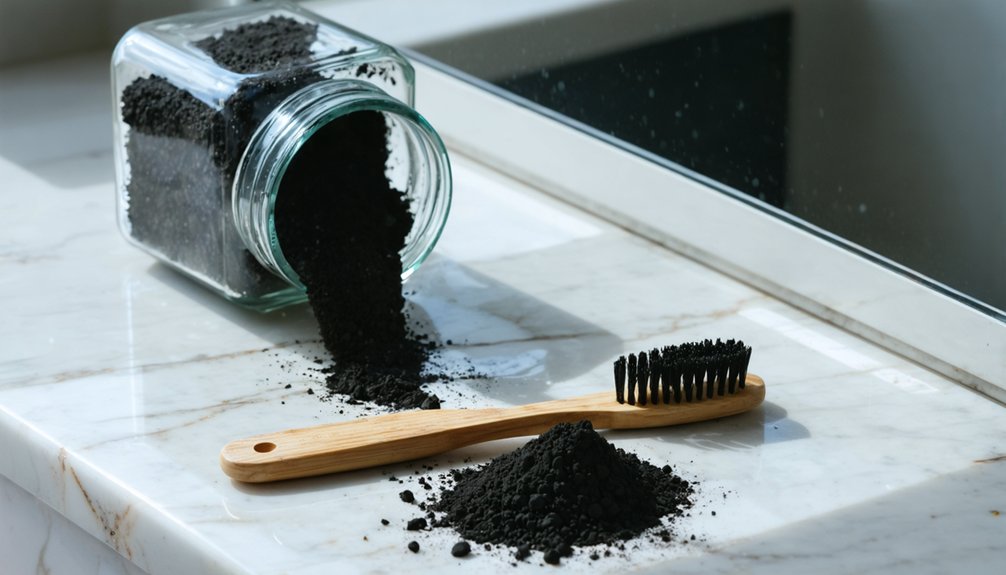
Charcoal toothpaste can scrub away surface stains from coffee, tobacco, and food, but it won’t bleach your teeth the way peroxide does. It works mechanically, not chemically, so it can’t change your teeth’s internal color. Clinical evidence doesn’t support it as a replacement for proven whitening methods. It’s also more abrasive than regular toothpaste, which puts your enamel at risk. If you want the full picture, there’s a lot more to uncover.
Key Takeaways
- Charcoal toothpaste removes surface stains through abrasion but cannot bleach or change the internal color of teeth.
- Clinical evidence shows charcoal does not whiten teeth more effectively than regular toothpaste.
- Peroxide-based whitening products outperform charcoal by penetrating enamel to deliver lasting, measurable whitening results.
- Daily charcoal use risks irreversible enamel erosion, potentially exposing yellow dentin and increasing tooth sensitivity.
- Many charcoal toothpastes lack fluoride, raising decay risk while offering minimal whitening benefits over proven alternatives.
Does Charcoal Toothpaste Actually Whiten Teeth?
Although charcoal toothpaste has surged in popularity as a whitening solution, the clinical evidence doesn’t support those claims. You might expect notable cosmetic benefits from this trendy natural remedy, but research tells a different story.
Charcoal toothpaste is trending as a whitening solution — but the clinical evidence simply doesn’t back it up.
Systematic reviews and randomized clinical trials consistently show charcoal-based products don’t whiten teeth better than regular toothpaste and perform considerably worse than peroxide-based alternatives.
What charcoal can do is remove some surface stains from coffee, food, or tobacco. That’s extrinsic stain removal, not true whitening of your tooth’s internal color. You’re not changing actual tooth shade; you’re scrubbing away deposits.
With only limited clinical data available and medium-high risk of bias across existing studies, the evidence doesn’t justify replacing proven whitening methods with charcoal-based natural remedies.
Why Does Charcoal Remove Stains at All?
Activated charcoal removes surface stains primarily because of its high surface area and adsorptive properties, which allow it to bind loosely to organic compounds like coffee pigments and tobacco residues on enamel. This natural stain removal mechanism works mechanically, not chemically.
Charcoal doesn’t bleach or alter your tooth’s internal color; it lifts discoloration sitting on the enamel surface. Think of it as surface stain cleaning through physical contact rather than a whitening reaction.
The mild abrasiveness also contributes, physically scrubbing away deposits during brushing. However, that same abrasiveness raises legitimate concerns about enamel wear with repeated use.
You’re fundamentally trading short-term stain removal for potential long-term structural risk. Understanding this distinction helps you make a more informed decision about whether charcoal fits into your oral care routine.
How Abrasive Is Charcoal Toothpaste for Your Enamel?
When you brush with charcoal toothpaste, you’re exposing your enamel to a material most studies classify as having higher abrasive potential than conventional toothpaste. Lab testing has confirmed that activated charcoal powder increases surface roughness, altering the enamel surface at a structural level.
Daily use raises legitimate enamel erosion concerns, particularly because enamel doesn’t regenerate once it’s lost. Harvard Health specifically cautions against daily use for this reason.
As enamel thins, the underlying dentin becomes more visible, which can actually make your teeth appear more yellow over time—the opposite of your goal.
If you choose to use charcoal toothpaste, limiting frequency reduces cumulative abrasion risk. Understanding this mechanism lets you make a controlled, informed decision rather than relying on marketing claims.
How Does Charcoal Toothpaste Compare to Peroxide Whitening?
If you’re comparing charcoal toothpaste to peroxide-based whitening, the clinical evidence clearly favors peroxide. Despite aggressive market marketing around ingredient purity and natural formulas, charcoal products consistently underperform in controlled trials.
Clinical evidence clearly favors peroxide over charcoal toothpaste, which consistently underperforms despite marketing around natural ingredients.
A randomized clinical study ranked outcomes this way:
- Carbamide peroxide: Highest whitening effectiveness and user satisfaction
- Standard toothpaste: Comparable or superior to charcoal for routine maintenance
- Charcoal toothpaste: Minimal, largely unsatisfactory whitening results
- Charcoal powder: Increased surface roughness without meaningful color improvement
Peroxide penetrates enamel to address intrinsic tooth color. Charcoal only removes surface stains through abrasion.
If you want measurable, lasting results, peroxide-based options—particularly those supervised by a dental professional—give you evidence-backed control over your outcomes. Charcoal doesn’t offer a comparable mechanism or clinical track record.
Is Charcoal Toothpaste Safe Enough to Use Daily?
Daily use of charcoal toothpaste raises legitimate safety concerns that the current evidence doesn’t resolve in its favor. Studies confirm it’s more abrasive than standard toothpaste, meaning repeated use risks wearing down your enamel. Once enamel erodes, your teeth can appear more yellow as the underlying dentin becomes exposed — the opposite of your whitening goal.
Sensitivity is another documented side effect, and most charcoal formulas lack fluoride, leaving you more vulnerable to decay. Regulatory concerns persist because charcoal toothpastes face minimal oversight compared to clinically tested alternatives.
Even the environmental impact of sourcing and processing activated charcoal adds a layer of scrutiny worth considering.
Current evidence doesn’t support daily use. At most, treat it as an occasional stain-removal tool, not a routine dental care product.
Frequently Asked Questions
Can Charcoal Toothpaste Worsen Existing Tooth Sensitivity or Nerve Pain?
Yes, charcoal toothpaste can turn your sensitivity into an inferno. Its abrasiveness wears down tooth enamel, exposes nerve endings, and causes gum irritation — worsening existing pain. You’d protect yourself better by avoiding daily use.
Are Some Charcoal Toothpaste Brands Safer or Less Abrasive Than Others?
Yes, some brands use finer-grain charcoal or natural ingredients that reduce abrasiveness, but you can’t fully trust marketing claims. Check the RDA value, consider environmental impact, and consult your dentist before choosing any charcoal product.
Does Charcoal Toothpaste Interact Negatively With Dental Crowns or Veneers?
Charcoal toothpaste can compromise dental material compatibility, scratching porcelain surfaces and weakening porcelain bond issues over time. You’re risking costly restorations by using it daily. Evidence strongly supports avoiding charcoal toothpaste around crowns and veneers entirely.
Can Children or Teenagers Safely Use Charcoal Toothpaste Occasionally?
You shouldn’t let children or teenagers use charcoal toothpaste. It’s too abrasive for developing enamel, lacks fluoride critical for children’s safety and teen dental health, and evidence doesn’t support its benefits outweighing these real risks.
Do Dentists Ever Recommend Charcoal Toothpaste for Specific Dental Situations?
Most dentists don’t recommend charcoal toothpaste, even as natural remedies or alternative whitening options. Evidence shows it’s too abrasive, lacks fluoride, and underperforms versus proven treatments—so you’re better off choosing clinically supported whitening methods instead.
References
- https://pubmed.ncbi.nlm.nih.gov/36183933/
- https://www.webmd.com/oral-health/what-to-know-about-activated-charcoal-whitening
- https://www.reddit.com/r/beauty/comments/auw7dk/have_any_of_you_ever_tried_the_charcoal_teeth/
- https://www.colgate.com/en-sa/oral-health/teeth-whitening/does-charcoal-teeth-whitening-work
- https://www.sciencedirect.com/science/article/abs/pii/S0300571224000472
- https://pmc.ncbi.nlm.nih.gov/articles/PMC10351494/
- https://www.healthline.com/health/dental-and-oral-health/charcoal-toothpaste
- https://penndentalmedicine.org/blog/does-charcoal-toothpaste-work/
- https://www.opelikadentalassociates.com/post/is-activated-charcoal-effective-for-teeth-whitening
- https://www.health.harvard.edu/healthy-aging-and-longevity/is-charcoal-toothpaste-safe-for-my-teeth