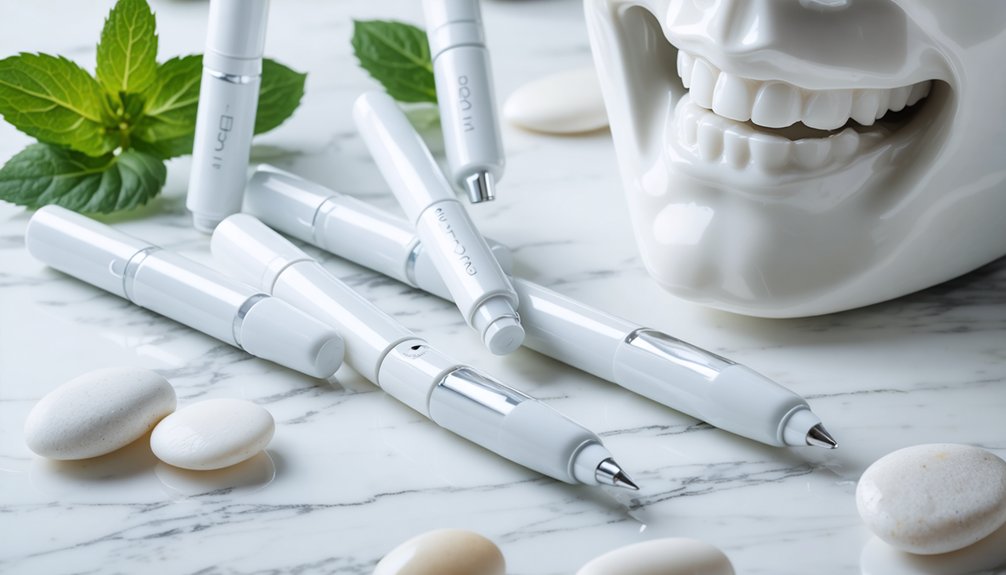
Enamel-safe whitening pens with 6–9% hydrogen peroxide deliver 2–3 measurable shade improvements without compromising your tooth structure. You’ll want formulas that include hydroxyapatite and pH-balanced carriers, since these ingredients actively reinforce enamel while reducing sensitivity. Top performers like Snow Diamond Series and Colgate Optic White have clinical documentation supporting their safety profiles. Applying a thin, even layer five times weekly maximizes results. The full breakdown of ranked pens, concentration comparisons, and application techniques is ahead.
Key Takeaways
- Snow Diamond Series (9% hydrogen peroxide, hydroxyapatite) delivers 2–3 shade improvements with low enamel degradation, priced at $25–$30.
- Enamel-safe formulas should contain 6–9% hydrogen peroxide, hydroxyapatite, and pH-balanced carriers to prevent enamel softening.
- Colgate Optic White Pen offers clinically documented shade gains with a vegan, enamel-safe formulation at mid-range pricing.
- Apply a thin gel layer on clean, dry teeth, avoid gum contact, and limit use to five times weekly.
- Concentrations exceeding 15% hydrogen peroxide increase sensitivity and enamel degradation risk, requiring clinical oversight for safe use.
How Many Shades Can Enamel-Safe Whitening Pens Realistically Deliver?
How many shades whiter can an enamel-safe whitening pen realistically make your teeth? Based on clinical data, premium pens deliver 2–3 shade improvements per treatment cycle, while budget options yield minimal visible results. Your outcomes depend heavily on formula concentration, application consistency, and baseline tooth color.
User experiences confirm that spot treatment produces 1–3 shade gains lasting 2–3 days, with full whitening duration spanning 3–6 weeks before yellowing returns.
Laboratory testing validates significant performance variation across brands, so your product selection directly controls your results.
To maximize shade improvement, you’ll need to apply thin gel layers, wait 60 seconds for drying, and maintain application frequency under five times weekly.
Overuse doesn’t accelerate results—it increases sensitivity risk without proportional whitening benefit.
Does Higher Hydrogen Peroxide Damage Your Enamel?
When you use a whitening pen, the hydrogen peroxide concentration directly determines your enamel risk level.
Clinical studies confirm that at-home formulas staying within the 12–15% maximum limit pose minimal structural damage to enamel when you follow recommended usage frequency.
Exceeding that threshold or applying the gel more than five times weekly accelerates sensitivity and compromises enamel integrity over time.
Hydrogen Peroxide Enamel Risks
Higher hydrogen peroxide concentrations don’t automatically damage enamel, but overuse beyond recommended frequencies does raise your risk of sensitivity and structural wear.
Clinical data confirms that staying within the 6–12% hydrogen peroxide range and limiting whitening frequency to under five sessions weekly keeps enamel erosion risk minimal. When you exceed those thresholds, the oxidative process penetrates deeper than the stain layer, weakening the enamel matrix over repeated cycles.
You’re in control of this outcome. Monitoring your whitening frequency and respecting gel contact time prevents cumulative damage.
Studies show 18–24% of users develop temporary sensitivity, typically from ignoring application limits rather than from the peroxide itself. Precision in your routine—not avoidance of the product—is what protects your enamel long-term.
Safe Concentration Limits
Safe concentration limits define where effective whitening ends and enamel risk begins. You control outcomes by selecting formulas within clinically validated ranges that balance whitening effectiveness against tissue safety.
Current evidence establishes three critical thresholds:
- 6–9% Hydrogen Peroxide — ideal for spot treatment; delivers 1–3 shade gains with minimal sensitivity risk.
- 12–15% Hydrogen Peroxide — maximum at-home limit; effective but increases sensitivity probability to 18–24% of users.
- Above 15% — clinical-only territory; enamel degradation risk rises sharply without professional monitoring.
Consumer preferences increasingly favor mid-range concentrations paired with hydroxyapatite, which actively remineralizes enamel during treatment.
You shouldn’t assume higher concentration automatically means better results — precision dosing within safe limits consistently outperforms aggressive formulations in long-term shade retention and structural integrity.
What Makes a Teeth Whitening Pen Genuinely Enamel-Safe?
When evaluating a teeth whitening pen’s enamel safety, you should confirm that its formula stays within the clinically established hydrogen peroxide limit of 12–15% for at-home use.
Premium formulations include hydroxyapatite, which actively reinforces enamel structure and reduces sensitivity risk during repeated applications.
You’ll also want to verify that the product has undergone laboratory testing, since performance and safety profiles vary considerably across brands.
Enamel-Safe Formula Criteria
Not every pen labeled “enamel-safe” meets the same standard, so understanding what that claim actually requires helps you make an informed choice.
When evaluating whitening pen ingredients, three formula criteria separate genuine protection from marketing language:
- Hydrogen peroxide concentration stays within the 6–9% range for spot treatment, minimizing structural enamel disruption.
- Hydroxyapatite inclusion in premium formulas actively remineralizes enamel during whitening cycles, counteracting peroxide-related mineral loss.
- pH-balanced carriers prevent acidic gel from softening enamel on contact.
You’ll want to verify these enamel safe ingredients appear on the label before purchasing.
Carbamide peroxide offers a slower-release alternative if you’re managing sensitivity alongside whitening.
Without these criteria confirmed, “enamel-safe” remains an unsubstantiated claim rather than a clinically supported standard.
Hydrogen Peroxide Safety Limits
Understanding enamel-safe formula criteria sets the foundation, but hydrogen peroxide concentration is where safety limits become measurable. At-home whitening pens typically contain 6–9% hydrogen peroxide for spot treatment, with regulatory caps reaching 12–15% before clinical oversight becomes necessary.
You should verify ingredient transparency on every product label before use—concentration levels directly determine your sensitivity risk and enamel exposure.
Approximately 18–24% of users experience temporary sensitivity, a rate that climbs considerably when concentrations exceed recommended thresholds. Safety regulations exist precisely to keep enamel degradation risk minimal under standard use.
Carbamide peroxide offers a slower-release alternative if you’re managing sensitivity concerns without sacrificing efficacy. Knowing exactly what percentage you’re applying gives you measurable control over both your whitening outcome and your long-term enamel integrity.
Best Enamel-Safe Whitening Pens for Sensitive Teeth
Choosing an enamel-safe whitening pen for sensitive teeth requires understanding how active ingredients interact with tooth structure. Carbamide peroxide releases slowly, reducing irritation while maintaining whitening effectiveness. Hydroxyapatite reinforces enamel between sessions, making it clinically preferable for reactive dentition.
Prioritize these three formulation criteria:
- Carbamide or low-concentration hydrogen peroxide (6–9%) minimizes sensitivity without sacrificing measurable shade improvement.
- Hydroxyapatite inclusion, as seen in Snow’s Diamond Series, actively remineralizes enamel during treatment cycles.
- Urea peroxide formulations target gum-sensitive users with moderate but consistent whitening effectiveness.
You should apply thin gel layers and wait 60 seconds before any contact. Overuse beyond five weekly applications compromises enamel integrity, negating your whitening gains entirely.
Snow, Colgate, AuraGlow, and Opalescence Pens Compared
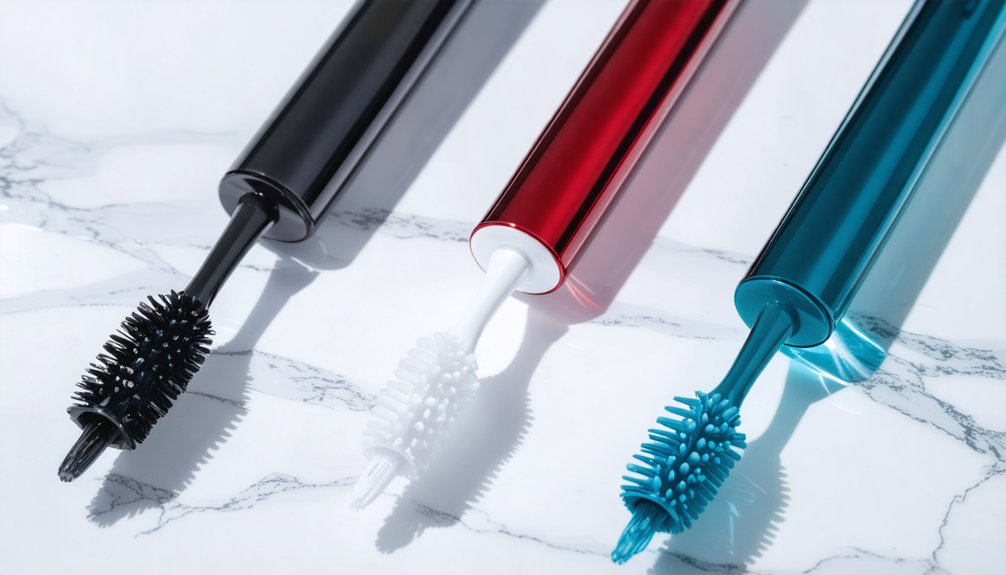
When comparing Snow’s Diamond Series, Colgate Optic White, AuraGlow Extra Strength, and Opalescence Go, you’ll find meaningful differences in formulation, sensitivity management, and delivery format that directly affect outcomes.
Snow pen benefits include hydroxyapatite integration, which actively reduces sensitivity while reinforcing enamel during treatment cycles.
Colgate effectiveness stems from its enamel-safe, vegan formulation, delivering consistent results without harsh chemical byproducts.
In an AuraGlow comparison, its non-sensitizing marketing claim holds merit for users with moderate sensitivity concerns, though shade gains remain incremental.
Opalescence value stands out through its gel-filled tray system, offering two strength levels that let you calibrate treatment intensity precisely.
Each pen targets distinct user profiles. Your choice should align with sensitivity thresholds, preferred delivery format, and desired shade improvement speed rather than brand recognition alone.
Top Enamel-Safe Teeth Whitening Pens Ranked by Performance
Ranking enamel-safe whitening pens by performance requires evaluating hydrogen peroxide concentration, hydroxyapatite inclusion, and documented shade improvement rates—not marketing claims alone.
You’ll find the top three performers consistently deliver measurable whitening effectiveness with controlled sensitivity management.
- Snow Diamond Series – Combines 9% hydrogen peroxide with hydroxyapatite, achieving 2–3 shade improvements per cycle while minimizing enamel degradation.
- Colgate Optic White Pen – Delivers an enamel-safe, vegan formulation with clinically documented shade gains and low sensitivity rates.
- AuraGlow Extra Strength – Marketed specifically for sensitivity management, offering moderate whitening effectiveness without compromising enamel integrity.
Each pen’s performance depends on application consistency, gel contact time, and adherence to frequency limits under five uses weekly.
The Right Way to Apply an Enamel-Safe Whitening Pen
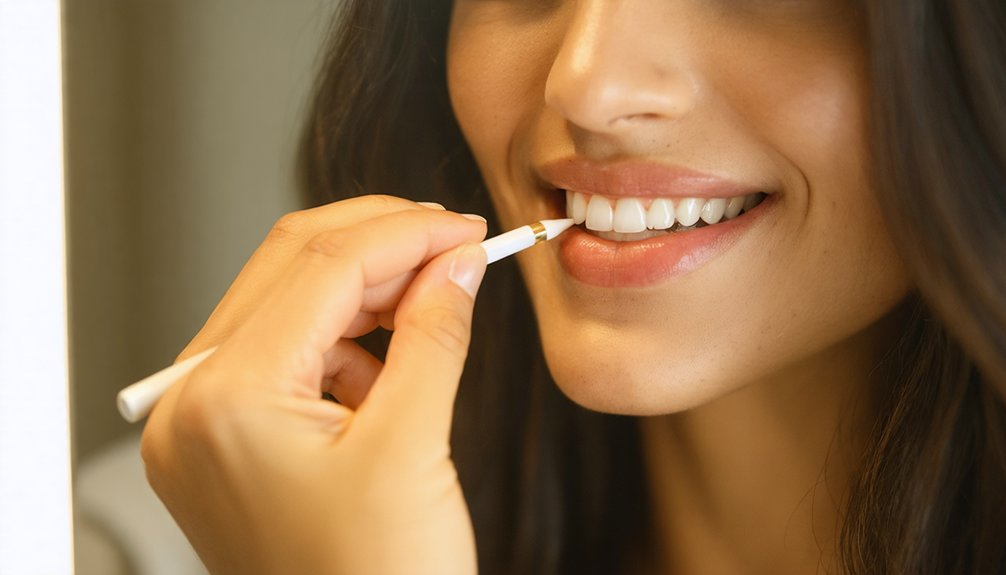
Applying an enamel-safe whitening pen correctly determines whether you achieve consistent shade gains or risk unnecessary sensitivity.
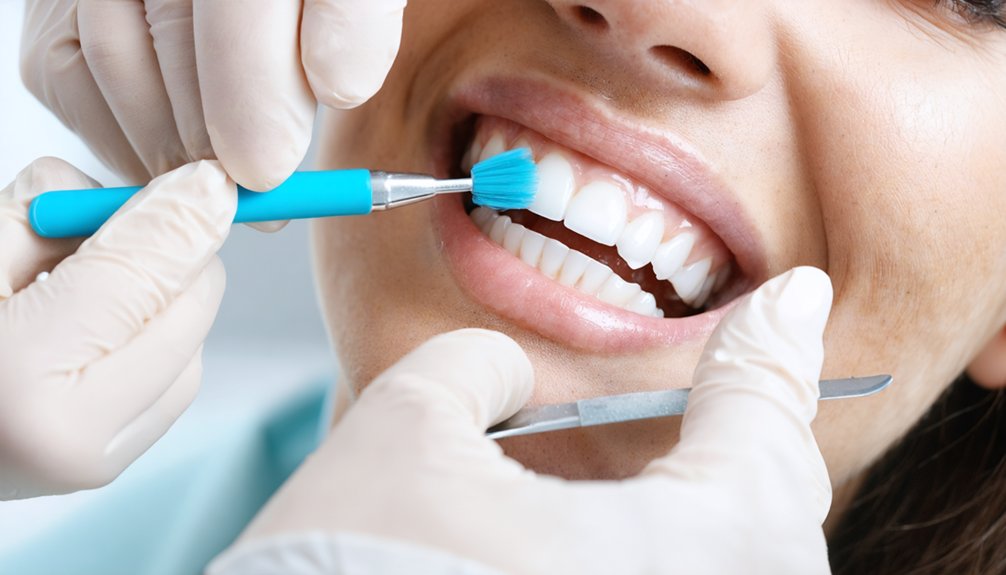
Start with clean, dry teeth. Moisture prevents proper gel adhesion, reducing efficacy. Apply a thin, even layer directly onto each tooth’s surface, avoiding gum contact—improper technique accounts for most of the 8% gum irritation rate reported clinically.
Follow these application tips for ideal timing: wait 60 seconds post-application for complete gel drying before closing your mouth. Avoid eating, drinking, or rinsing immediately afterward. Use the pen no more than five times weekly to stay within safe enamel-exposure limits.
Setting a timer controls gel contact duration precisely. Consistent adherence to this protocol delivers the 2–3 shade improvements premium pens are clinically documented to achieve per treatment cycle.
How to Prevent Gum Irritation When Using Whitening Pens
Gum irritation, which affects roughly 8% of whitening pen users, is largely preventable through precise application technique.
You’ll minimize gum contact risk by controlling exactly where the gel lands. Follow these gum care application tips:
- Apply thin layers directly onto enamel surfaces, keeping the brush tip 1–2 mm away from the gumline.
- Wait the full 60 seconds for the gel to dry completely before closing your mouth or speaking.
- Avoid overapplying—excess gel migrates toward soft tissue, increasing irritation risk.
You’re maintaining control when you treat each tooth individually rather than sweeping broadly across your smile.
Treating each tooth individually keeps you in control and reduces the risk of gel spreading where it shouldn’t.
Consistent precision during every session keeps your gum tissue protected while still delivering the shade results you’re targeting.
Best Enamel-Safe Whitening Pens at Every Price Point
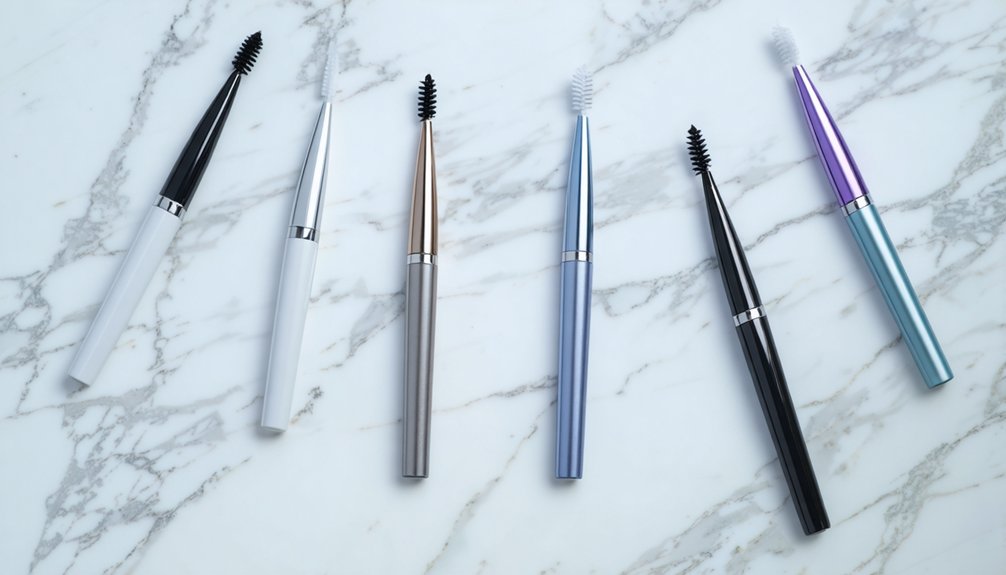
Finding an enamel-safe whitening pen doesn’t require a premium budget—effective options exist across every price tier. Your selection should hinge on whitening pen ingredients, application precision, and verified safety data.
At the premium tier ($25–$30), Snow’s Diamond Series incorporates hydroxyapatite alongside hydrogen peroxide, directly supporting enamel remineralization while delivering 2–3 shade improvements per cycle.
Colgate Optic White offers a vegan, enamel-safe formulation at mid-range pricing, balancing user experience with clinical reliability.
Budget options ($15–$20) like AuraGlow Extra Strength market themselves as non-sensitizing, though laboratory testing confirms performance variation across brands—expect minimal shade gains comparatively.
Regardless of price point, you’ll achieve excellent results by applying thin gel layers, waiting 60 seconds before drying, and maintaining use under five weekly applications to avoid enamel compromise.
Frequently Asked Questions
Can Pregnant Women Safely Use Enamel-Safe Teeth Whitening Pens?
Absolutely avoid them during pregnancy—it’s the safest decision you’ll ever make. Safety concerns demand thorough ingredient analysis, as hydrogen peroxide effects on fetal development aren’t fully studied. You should consult your doctor before using any whitening products.
How Should Whitening Pens Be Stored to Maintain Gel Effectiveness?
Store your whitening pen upright in cool, dry conditions away from direct sunlight. You’ll maximize gel longevity by avoiding heat exposure. Ideal storage conditions preserve hydrogen peroxide stability, ensuring consistent whitening efficacy throughout your treatment cycle.
Do Whitening Pens Work Effectively on Dental Crowns or Veneers?
Whitening pens don’t alter crown compatibility or veneer color—peroxide won’t penetrate artificial materials. In effectiveness comparison testing, you’ll notice uneven results since only natural enamel responds, leaving restorations visibly mismatched against whitened surrounding teeth.
Can Children or Teenagers Use Enamel-Safe Whitening Pens Safely?
You shouldn’t let children use whitening pens without consulting a dentist first. Safety guidelines typically enforce strict age restrictions, as developing enamel remains vulnerable. Clinical evidence confirms adult supervision and professional clearance are essential before teenagers attempt any whitening treatment.
How Long Should Users Wait Between Separate Whitening Pen Cycles?
Wait 3–6 weeks between whitening cycles to preserve enamel sensitivity thresholds and consolidate whitening results. You’re allowing enamel recovery time, minimizing sensitivity risk, and ensuring each cycle delivers measurable, controlled shade improvements without compromising structural integrity.
References
- https://thecommonmom.com/best-whitening-pen-for-teeth/
- https://dentistdecoded.com/articles/best-teeth-whitening-pens/
- https://www.youtube.com/watch?v=GX6IKLkrODw
- https://www.healthline.com/healthy/10-best-teeth-whitening-pens
- https://www.healthinsiders.com/best-teeth-whitening-pens
- https://www.target.com/s/top+rated+teeth+whitening+pens
- https://www.tribecasmiles.com/best-professional-whitening-pens-2026
- https://www.goodhousekeeping.com/health-products/g46052491/best-teeth-whitening-pens/
- https://www.merakk.com/blogs/news/teeth-whitening-pens
- https://oneclearwinner.co.uk/product/teeth-whitening-pens-reviews/