Wear time depends on your gel’s concentration. A 10% carbamide peroxide gel works best worn 8–10 hours overnight, while a 35% gel needs only 30–60 minutes daily. Exceeding the recommended time won’t speed up your results—it’ll increase your risk of sensitivity and gum irritation. The gel reaches a saturation point where it simply stops working. Stick to your concentration’s guideline, stay consistent, and you’ll find everything you need to maximize your whitening outcome ahead.
Key Takeaways
- Wear time depends on gel concentration: 45% carbamide peroxide needs only 15–30 minutes, while 10% can be worn overnight.
- Exceeding recommended wear times increases tooth sensitivity and gum irritation without producing faster whitening results.
- Significant whitening typically becomes visible after one to two weeks of consistent daily tray use.
- Beginners should start with low-concentration gels and limit initial sessions to 30–60 minutes once daily.
- Skipping consecutive days undermines cumulative exposure, so consistency is essential for achieving the best whitening results.
Whitening Tray Wear Times by Gel Concentration
The concentration of your whitening gel directly determines how long you should wear your trays. Higher concentrations deliver faster gel effectiveness but require shorter wear duration to prevent sensitivity. Lower concentrations work more gradually, allowing extended wear without irritation.
Follow these evidence-based guidelines:
- 45% carbamide peroxide: 15–30 minutes once daily
- 35% carbamide peroxide: 30–60 minutes once daily
- 20% carbamide peroxide: 2–4 hours once daily
- 15% carbamide peroxide: 4–6 hours once daily
- 10% carbamide peroxide: 8–10 hours or overnight
Exceeding these time frames won’t accelerate your results — it’ll increase your risk of gum irritation and tooth sensitivity.
Matching wear duration precisely to your gel’s concentration keeps you in control of both your comfort and your outcome.
Why Wearing Trays Longer Doesn’t Always Mean Whiter Teeth
While it may seem logical that more time in the tray equals more whitening, the gel’s active ingredient has a saturation point beyond which it stops working — and can start causing harm.
Once the peroxide breaks down completely, continued wear only exposes your teeth and gums to unnecessary stress. This is where sensitivity management becomes critical — exceeding recommended wear times increases nerve irritation and gum inflammation without delivering additional whitening benefit.
Worn-out gel doesn’t whiten — it irritates. Sensitivity spikes when wear time exceeds what the formula can actually deliver.
Your results depend more on proper gel selection and consistent application than on extended sessions. Choosing the right concentration for your schedule and sticking to its prescribed duration gives you predictable, controlled outcomes.
More time doesn’t accelerate results; it just raises your risk of discomfort and temporary enamel vulnerability.
Can You Wear Whitening Trays Overnight?
Wearing whitening trays overnight is safe only if your gel is specifically formulated for extended use, typically at a low concentration of 3–10% carbamide peroxide.
Higher-concentration gels worn during sleep increase your risk of gum irritation and tooth sensitivity, making overnight use inappropriate for most standard whitening products.
If your dentist or product instructions confirm overnight compatibility, you can wear the trays for 8–10 hours without compromising safety or effectiveness.
Overnight Wear Safety Considerations
Sleeping with whitening trays in your mouth is only safe when you’re using a low-concentration gel specifically formulated for extended wear. Gels at 10% carbamide peroxide or lower support overnight safety because their milder formulation minimizes tissue exposure risks during prolonged contact.
Tray comfort also matters greatly. Ill-fitting trays increase the likelihood of gel leakage onto gum tissue, causing irritation or chemical burns even with low-concentration formulas. Before committing to overnight use, confirm your trays fit precisely and seal properly.
Higher-concentration gels—anything above 15%—require strict time limits and should never be worn while sleeping. Exceeding recommended wear times doesn’t accelerate results; it elevates sensitivity and tissue damage risk.
Follow your gel’s specific guidelines and consult your dentist before starting overnight protocols.
Low-Concentration Gel Recommendations
Low-concentration gels make overnight wear practical and safe when you choose the right formula. Gels ranging from 3–10% carbamide peroxide allow 4–8 hours of contact time, making them ideal for sleep-time application. Their milder action reduces the risk of sensitivity, giving you greater control over your whitening experience.
Effective sensitivity management starts with gel selection. You’ll want to verify that your chosen product explicitly supports extended wear before committing to overnight use.
Gels at 10% carbamide peroxide are commonly formulated for 8–10 hour sessions, while anything above that concentration typically requires shorter wear windows. If you notice gum irritation or tooth sensitivity, reduce wear time immediately.
Matching concentration to session length guarantees you achieve gradual, consistent brightening without compromising comfort or safety.
How Long Until Whitening Trays Show Results?
You’ll typically notice initial brightening within the first few days of consistent use, with more significant whitening visible after one to two weeks.
Full results generally emerge over a two-to-four-week treatment period, though some cases involving deeper stains may require longer.
How quickly you see progress depends on factors like gel concentration, stain severity, and how strictly you follow the recommended wear schedule.
Initial Results Timeline
When can you expect to see results from whitening trays? Most users notice early whitening signs within the first three to seven days of consistent use.
Your initial results expectations should account for stain severity—surface stains respond faster, while deeper discoloration requires more time.
By day 14, you’ll typically see notable lightening, with full results appearing between weeks two and four. Darker stains may extend this timeline to several months of regular treatment.
Your gel concentration directly influences how quickly changes appear. Higher concentrations produce faster visible shifts, while lower concentrations deliver gradual, subtler brightening.
Consistency matters more than intensity—skipping sessions delays your progress considerably. Track changes weekly against a shade guide to accurately measure your improvement and adjust your protocol accordingly.
Full Treatment Duration
Beyond those early milestones, understanding the full treatment arc helps you set realistic expectations and stay consistent. Most people complete their whitening cycle within two to four weeks, though stain severity directly influences how long you’ll need to commit.
Surface stains typically resolve faster, while deeper, years-long discoloration may extend your timeline to several months.
Treatment consistency is non-negotiable here. Skipping sessions disrupts the gradual oxidation process, reducing overall effectiveness and prolonging your results.
Most protocols target a 28-day window as the benchmark for full color transformation. You control the outcome by adhering to your prescribed wear schedule without deviation.
Track your shade progression weekly so you can adjust duration or frequency based on actual, measurable changes rather than assumption.
Factors Affecting Speed
Several variables determine how quickly your whitening trays deliver visible results, and understanding them helps you calibrate expectations accurately. Your baseline tooth shade, stain type, and enamel porosity all influence whitening effectiveness factors greatly.
Extrinsic stains from coffee or tobacco respond faster than intrinsic discoloration embedded within dentin.
Gel concentration plays an equally decisive role. Higher percentages accelerate results but demand shorter wear sessions to prevent sensitivity.
Your gel application techniques matter too—overfilling trays wastes product and increases gum exposure, while underfilling reduces contact time and diminishes outcomes.
Consistency compounds these variables. Irregular sessions slow progress considerably.
Age, existing restorations, and medication history also affect how your enamel absorbs and responds to the bleaching agent throughout your treatment timeline.
Signs You’re Wearing Your Whitening Trays Too Long
Recognizing the warning signs of overuse can help you avoid unnecessary discomfort and protect your enamel. If you’re experiencing sharp sensitivity to hot or cold temperatures, that’s one of the clearest sensitivity signs that you’ve exceeded your recommended wear time.
Additional discomfort indicators include gum redness, irritation along the gum line, or a burning sensation during tray use.
White spots appearing on your teeth signal enamel dehydration from prolonged exposure. If you notice any of these symptoms, reduce your session length immediately and allow 24-48 hours before resuming treatment.
Persistent discomfort warrants a pause of several days. Overuse doesn’t accelerate results—it only increases damage risk. Always prioritize your protocol’s recommended duration over the temptation to wear trays longer.
How to Adjust Wear Time When Your Teeth Feel Sensitive
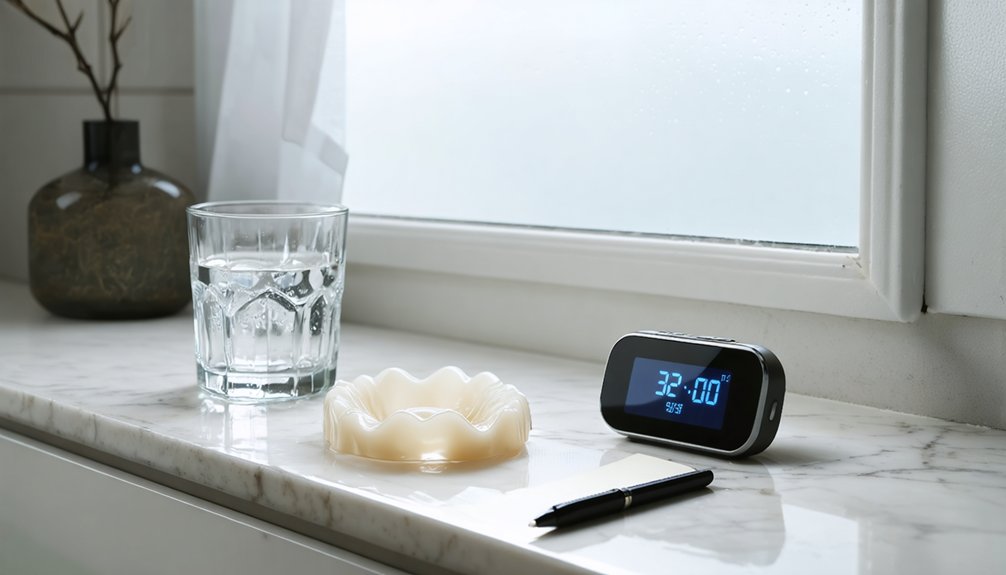
Sensitivity is your body’s way of signaling that your whitening protocol needs adjustment. Don’t ignore it—respond strategically with these sensitivity management steps:
- Reduce wear time by 15–30 minutes per session until discomfort subsides.
- Switch to a lower concentration gel—dropping from 20% to 10% carbamide peroxide lets you extend sessions without increased irritation.
- Space out sessions by skipping a day between gel application cycles to allow enamel recovery.
- Use desensitizing toothpaste containing potassium nitrate before and after each session to calm nerve response.
Once sensitivity resolves, gradually reintroduce your original protocol.
You control the pace—consistent, measured adjustments will still deliver results without compromising comfort.
Where to Start If You’ve Never Used Whitening Trays Before
Starting with 3 simple habits sets first-time tray users up for long-term success: choose a low-concentration gel (10% carbamide peroxide or below), limit your initial sessions to 30–60 minutes once daily, and monitor how your teeth and gums respond before increasing either duration or concentration.
For first time users, these whitening tray basics matter because your teeth need time to acclimate. A 10% carbamide peroxide gel worn for 8–10 hours overnight is an option, but starting shorter gives you control over early sensitivity signals.
Track your response daily. If you notice no irritation after 3–5 sessions, you can gradually extend wear time or step up concentration. Results typically appear within 1–2 weeks when you follow a consistent, measured protocol from the start.
The Best Daily Whitening Tray Schedule for Faster Results
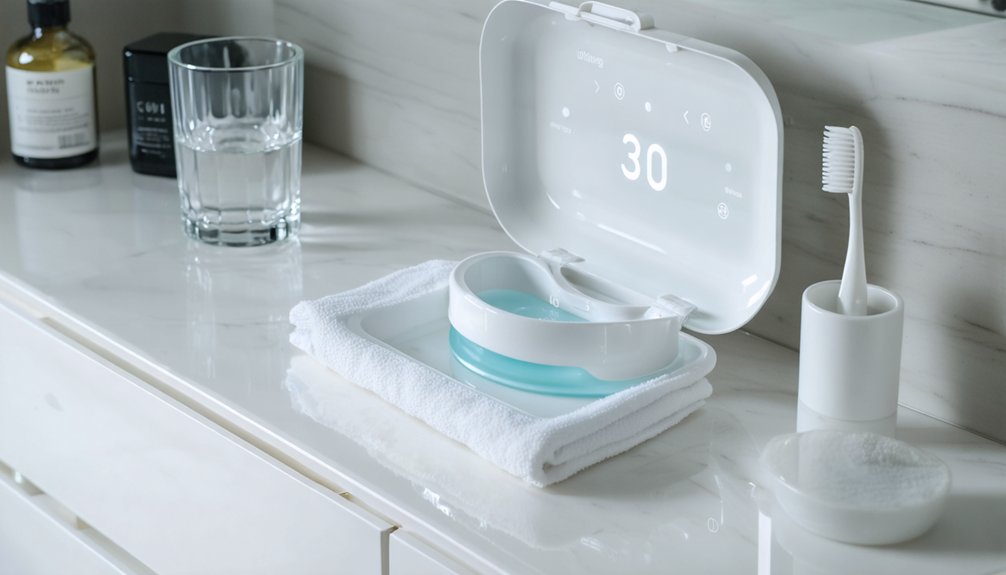
Faster whitening results come down to one thing: consistency with the right schedule. Your ideal schedule depends on your gel’s concentration, but structure accelerates outcomes regardless.
Follow this daily wear framework for faster results:
- Morning or evening — Pick one consistent time and stick to it daily.
- Match wear time to concentration — 20–30% gels: 15–30 minutes; 10–20% gels: 1–2 hours.
- Track your sessions — Log each session to maintain a 14–28 day treatment cycle.
- Don’t double sessions — More exposure doesn’t mean faster results; it means more sensitivity.
You’re in control of your timeline. Respecting concentration-specific limits while staying consistent gives you measurable progress within one to two weeks without unnecessary discomfort.
Wear Time Mistakes That Stall Your Results
Even the most consistent whitening routine stalls when wear time mistakes go uncorrected. One of the most common misconceptions is that longer wear time always produces faster results. Exceeding recommended durations with high-concentration gels increases sensitivity without improving outcomes.
Conversely, cutting sessions short with lower concentrations prevents the gel from completing its oxidation cycle. You’re also undermining your results if you skip consecutive days, since whitening compounds require cumulative exposure to break down deep stains.
Using the wrong concentration for your schedule compounds these errors further. Don’t assume that more is better—precision matters.
Follow the manufacturer’s wear time guidelines based on your specific gel percentage, track your sessions consistently, and adjust only when sensitivity signals warrant it.
Frequently Asked Questions
Can I Eat or Drink Immediately After Removing My Whitening Trays?
Like a freshly painted wall, your teeth need time to set — don’t eat or drink immediately after removing your trays. Prioritize whitening tray maintenance and post-treatment care by waiting at least 30 minutes first.
How Should I Store My Whitening Trays When Not in Use?
Store your whitening trays in their provided case after rinsing them with cool water. Proper storage and consistent tray maintenance extend their lifespan, keeping them hygienic and ready for your next whitening session.
Are Whitening Trays Safe to Use With Dental Crowns or Veneers?
Whitening trays won’t alter your crowns or veneers due to crown compatibility limitations—they don’t respond to peroxide. You’ll notice uneven whitening effectiveness since natural teeth brighten while restorations remain unchanged, potentially creating visible color mismatches.
How Do I Clean My Whitening Trays Properly After Each Session?
Rinse your trays with cold water—never hot, or they’ll warp beyond recognition! For tray maintenance tips, brush gently with a soft toothbrush. Avoid harsh whitening product recommendations or soaps that’ll destroy tray integrity permanently.
Can Whitening Trays Be Used Alongside Other Dental Treatments Simultaneously?
You can use whitening trays alongside other dental treatments, but you’ll want to confirm whitening tray compatibility with your dentist first, as simultaneous treatment effects may interfere with orthodontics, fillings, or active restorative procedures.
References
- https://ryanmccalldds.com/blog/a-comprehensive-guide-to-take-home-dental-whitening-trays
- https://www.youtube.com/watch?v=N1_1g96zVrs
- https://keltydental.co.uk/how-long-should-i-wear-the-whitening-trays-everyday/
- https://www.bumblekidspd.com/do-you-know-how-long-should-you-wear-teeth-whitening-trays/
- https://www.kirklanddentalexcellence.com/blog/cosmetic-dentist/teeth-whitening-trays-work/
- https://progressivedentalny.com/aftercare-instructions/custom-bleaching-trays/
- https://www.lighthousedentalcentre.com/blog/teeth-whitening-guide-for-take-home-trays
- https://www.foothillfamilydentists.com/blog/how-long-should-you-wear-teeth-whitening-trays-from-a-dentist/