The best DIY teeth whitening kits use clinically proven peroxide-based formulas rather than natural remedies. Top options include Opalescence Go, Crest 3D Whitestrips Vivid Plus, Snow Whitening Kit, MySmile, and AuraGlow. You’ll get the most reliable results from hydrogen peroxide or carbamide peroxide products in strip or tray formats. Higher concentrations work faster but increase sensitivity risk. Choosing the right kit for your needs requires understanding what’s actually in these formulas and how each format performs.
Key Takeaways
- Opalescence Go, Crest 3D Whitestrips Vivid Plus, Snow Whitening Kit, MySmile, and AuraGlow rank among the best DIY whitening kits available.
- Peroxide-based strips and trays outperform natural remedies, with hydrogen peroxide and carbamide peroxide being the most clinically proven ingredients.
- Strips are cost-effective and easy to use, while trays offer stronger gel contact for more intensive whitening results.
- Higher peroxide concentrations increase sensitivity risk, so lower concentrations and remineralizing gels are recommended for sensitive teeth.
- Choosing the right format depends on your budget, lifestyle habits, and sensitivity tolerance for consistent, effective results.
The Best DIY Teeth Whitening Kits Right Now
Whether you’re chasing a brighter smile or maintaining recent dental work, the DIY whitening kit you choose matters more than most product marketing lets on. Whitening myths circulate freely, so understanding what actually works protects both your results and your enamel.
Current top-performing kits include:
- Opalescence Go – gel-filled trays in two peroxide strengths, Forbes-recommended
- Crest 3D Whitestrips Vivid Plus – claims 8 levels whiter in 12 days, strip-based ease
- Snow Whitening Kit – premium, low-sensitivity formula
- MySmile Whitening Kit – ranked best overall in 2026 guides
- AuraGlow Kit – budget-accessible LED system
Your dental hygiene baseline affects how any kit performs. Hydrogen peroxide and carbamide peroxide remain the only at-home ingredients with consistent evidence behind them. Choose accordingly.
Which DIY Whitening Kit Type Actually Works Best?
Knowing which kits perform best is only half the equation—understanding *why* one format outperforms another helps you make a smarter, safer choice. Peroxide-based strips and tray systems consistently outperform natural remedies like charcoal or oil pulling because they contain clinically recognized active ingredients—hydrogen peroxide or carbamide peroxide—that penetrate enamel to break down stains.
LED kits add an accelerant, though evidence on light-enhancement benefits remains mixed. Strips offer ease and consistency, making them reliable for most users. Trays provide stronger gel contact but carry higher sensitivity risk if fit is poor.
Before committing to any intensive format, a professional consultation helps you identify enamel vulnerabilities or underlying discoloration that no DIY kit can safely address. Format choice should follow your specific dental profile, not marketing claims.
Hydrogen Peroxide vs. Carbamide Peroxide: What’s Actually in Your Kit
Most DIY whitening kits rely on one of two active ingredients—hydrogen peroxide or carbamide peroxide—and understanding the difference helps you assess both the strength and the risk of what you’re applying to your teeth.
Carbamide peroxide breaks down into hydrogen peroxide upon contact, releasing it more slowly. Hydrogen peroxide acts faster but increases sensitivity risk at higher concentrations. Unlike unproven natural remedies or alternative ingredients, both compounds carry clinical evidence supporting visible whitening.
Before choosing, consider what you’re actually risking:
- Higher peroxide concentrations can compromise enamel integrity with repeated misuse
- Alternative ingredients lacking clinical backing won’t deliver measurable results
- Natural remedies may feel safer but often provide no verified whitening mechanism
Control starts with reading your kit’s label and understanding exactly what’s inside.
Strip, Tray, or Pen: Which Format Fits Your Routine and Budget
Once you know what’s in your kit, the next question is how you’ll actually use it—because the format you choose directly affects consistency, comfort, and cost.
Strips are the easiest to integrate into daily personal care routines and tend to win on cost comparison against tray-based systems.
Pens offer portability for quick touch-ups but deliver weaker, less consistent gel contact.
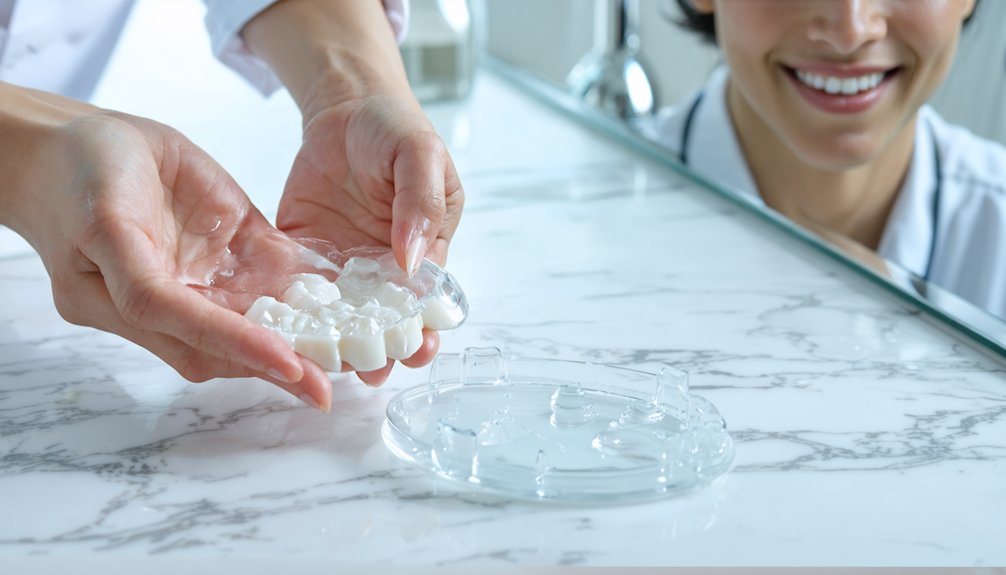
Trays provide stronger coverage and suit intensive whitening goals, though fit and peroxide concentration directly influence sensitivity risk.
If you skip treatments because the format feels inconvenient, results will suffer regardless of ingredient strength.
Match the format to your actual habits—not your ideal ones.
Budget matters, but choosing the cheapest option with a format you won’t use consistently is the costlier mistake.
Will It Hurt? What to Expect If You Have Sensitive Teeth
Sensitivity is the most common side effect you’ll encounter with peroxide-based whitening kits, and the risk scales with concentration. Higher peroxide levels and longer whitening duration both increase the likelihood of nerve irritation and gum discomfort. You’re not powerless here—ingredient choices and usage habits directly control your risk.
Watch for these warning signs that signal you should stop or reduce treatment:
- Shooting tooth pain during or after application indicates nerve exposure or enamel compromise
- Gum blanching or burning signals direct peroxide contact with soft tissue
- Lingering sensitivity concerns beyond 48 hours suggest the formula is too aggressive for your enamel
Opt for lower peroxide concentrations, remineralizing gel formulas, or peroxide-free strips if you experience any of these reactions.
Frequently Asked Questions
How Long Do DIY Teeth Whitening Results Typically Last After Treatment?
Your DIY whitening results typically last three to six months. You’ll maintain stain removal longer by avoiding staining foods. Watch for tooth sensitivity, as it’s a cautionary sign you shouldn’t ignore between treatment cycles.
Can DIY Whitening Kits Damage Existing Dental Work Like Crowns or Veneers?
DIY whitening kits won’t whiten crowns or veneers, and you risk creating uneven color contrast. You’ll also trigger dental sensitivity and potential enamel erosion on surrounding natural teeth, so consult your dentist before proceeding.
Are DIY Teeth Whitening Kits Safe to Use During Pregnancy?
During this delicate season, you’ll want to pause whitening routines. Risks involved with peroxide absorption remain understudied in pregnancy. Follow safety precautions by consulting your obstetrician before using any DIY kit to protect both you and your baby.
How Often Should You Repeat a DIY Whitening Kit Treatment Cycle?
You should repeat a DIY whitening cycle every three to six months. Always review ingredient safety before restarting, and factor in cost comparison when choosing a formula that won’t compromise enamel between treatment cycles.
Can Teens or Children Safely Use At-Home Teeth Whitening Kits?
Over 60% of dentists advise against at-home kits for under-18s. You’re risking teeth sensitivity on developing enamel, and the effectiveness of remedies drops markedly — consult your dentist before attempting any whitening treatment.
References
- https://www.forbes.com/sites/forbes-personal-shopper/article/best-teeth-whitening-kit/
- https://www.amazon.com/Best-Sellers-Teeth-Whitening-Kits/zgbs/hpc/21193191011
- https://mysmilesteeth.com/blogs/mysmiles-blog/best-at-home-teeth-whitening-kits
- https://www.reddit.com/r/BuyItForLife/comments/1le9zs4/what_is_the_best_teeth_whitening_kit/
- https://www.sandiegoartofdentistry.com/blog/what-is-the-best-teeth-whitening-method/
- https://wellwhisk.com/best-diy-teeth-whitening/
- https://wellfizz.com/best-diy-teeth-whitening/
- https://www.elle.com/uk/beauty/body-and-physical-health/g31737/teeth-whitening-kit-you-can-do-at-home/
- https://www.marieclaire.com/beauty/g17983519/best-at-home-teeth-whitening-products/
- https://www.cosmopolitan.com/style-beauty/beauty/a71283722/best-at-home-teeth-whitenening/