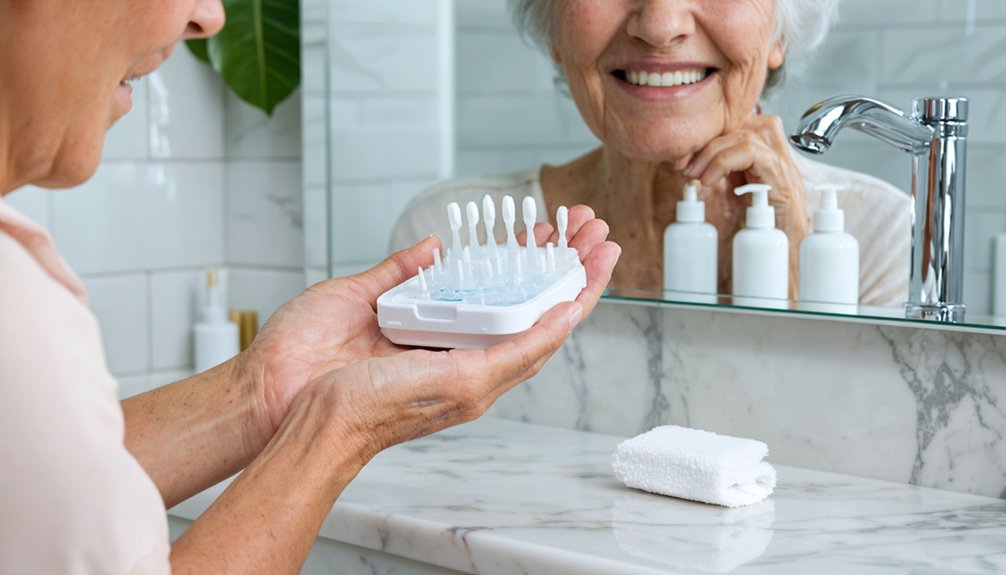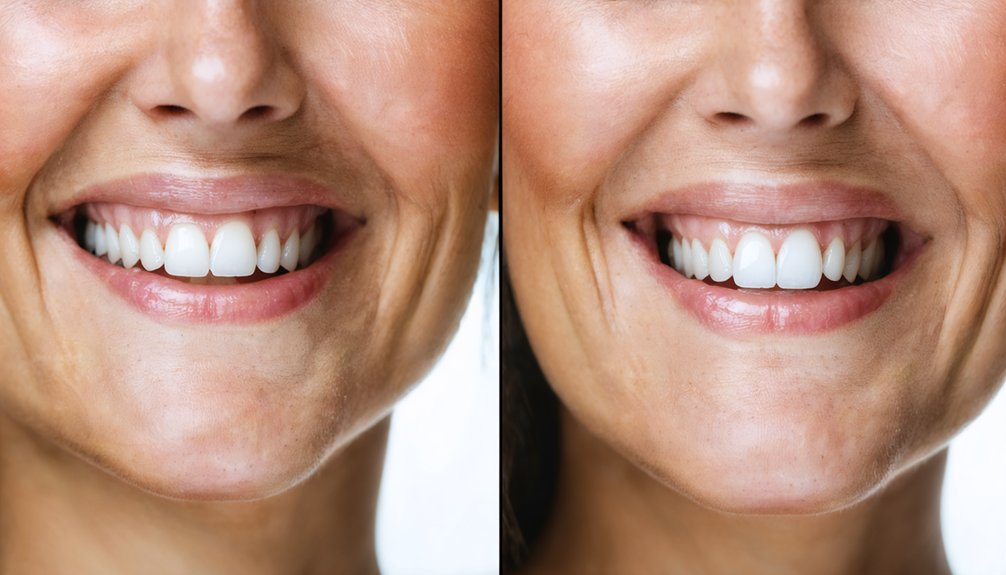
The best dentist-approved whitening treatments for aging teeth range from in-office laser whitening and Zoom whitening to custom trays and low-concentration strips designed for sensitive enamel. As your enamel thins with age, treatment selection matters more than ever for both safety and results. Options like 10% carbamide peroxide and ADA-accepted formulations can deliver two to eight shades of improvement. Each treatment ahead is broken down so you can find the right fit.
Key Takeaways
- In-office laser whitening removes up to eight shades in one 45-minute session, making it highly effective for age-related stains.
- Zoom whitening targets deep intrinsic stains using hydrogen peroxide gel activated by LED light in a single session.
- Custom tray treatments using 10% carbamide peroxide offer a dentist-approved, cost-effective balance between in-office and OTC options.
- Crest 3D Whitestrips with 3% hydrogen peroxide are ADA-approved and formulated specifically to minimize sensitivity in aging teeth.
- Lower peroxide concentrations like 10% carbamide or 3% hydrogen peroxide are safer for aging, sensitivity-prone teeth with thinning enamel.
In-Office Laser Whitening for Aging Teeth
As teeth age, enamel thins and stains accumulate deeper within the tooth structure, making in-office laser whitening one of the most effective interventions available.
Concentrated hydrogen peroxide, activated by a targeted light source, penetrates intrinsic staining and can remove up to eight shades in a single 45-minute session. The laser whitening benefits extend beyond aesthetics—you’re achieving precise, controlled results under professional supervision, reducing the guesswork of at-home alternatives.
If you’re managing aging tooth sensitivity, your dentist applies a protective shield to minimize gum irritation while the peroxide works efficiently.
One visit delivers results lasting one to five years, contingent on your dietary habits. For aging teeth requiring meaningful correction, in-office laser whitening offers the most clinically reliable outcome available.
Zoom Whitening for Deep Stains on Aging Teeth
While laser whitening excels at general stain removal, Zoom whitening addresses a more specific challenge—deep intrinsic staining that’s resisted other treatments.
Zoom techniques combine a custom hydrogen peroxide gel with concentrated LED light activation, targeting the aging effects that accumulate within enamel over decades.
Zoom’s hydrogen peroxide gel, activated by concentrated LED light, targets decades of enamel aging with precision.
You can expect meaningful whitening expectations to be met within a single 45-minute session, as the light-activated gel penetrates enamel to lift embedded stains.
Treatment safety remains well-documented, with your dentist applying protective barriers to shield gum tissue throughout the procedure.
If sensitivity management concerns you, discuss pre-treatment fluoride applications with your provider.
Zoom’s precision makes it a clinically sound choice for maintaining dental health while achieving measurable, lasting stain removal results tailored to aging teeth.
Power Bleaching: Is One Visit Enough for Older Adults?
Power bleaching works by applying a high-concentration hydrogen peroxide solution to your teeth, with a dental professional activating the gel to achieve dramatic whitening results in a single hour-plus visit.
After just one session, you can expect significant stain removal, though aging teeth may respond differently due to increased enamel porosity and heightened sensitivity.
If you have older teeth, you’ll want to consult your dentist beforehand, as custom-fitted trays and protective shields can minimize gum irritation and reduce the risk of post-treatment sensitivity.
How Power Bleaching Works
For older adults considering a faster path to a brighter smile, power bleaching offers dramatic results in a single visit by using high-concentration hydrogen peroxide solutions applied directly to the teeth.
Your dentist applies the concentrated gel, which penetrates enamel to break down deep-set stains accumulated over decades. A protective shield guards your gums throughout the process, reducing irritation risks associated with aging tooth sensitivity.
Power bleaching techniques typically require one hour or more, delivering visibly dramatic whitening that at-home options can’t match in speed.
Because aging teeth often experience heightened sensitivity, your dentist may adjust gel concentration or application time to protect your comfort.
You’ll leave with results that can last one to five years, depending on your dietary and lifestyle habits.
Results After One Visit
After a single power bleaching session, you can expect results that are both immediate and measurable. Most patients achieve significant shade improvement within one hour, making this one of the most efficient whitening techniques available for aging aesthetics.
High-concentration hydrogen peroxide penetrates deeply, targeting both extrinsic and intrinsic staining that accumulates over decades.
You’ll leave the office with visibly brighter teeth, often lightened by several shades. Results typically last one to five years, depending on your dietary habits and oral hygiene consistency.
However, older adults with existing restorations should note that power bleaching won’t alter the color of crowns or fillings. Consulting your dentist beforehand guarantees you set realistic expectations and coordinate any necessary cosmetic adjustments for uniform, lasting results.
Aging Teeth Special Considerations
As you age, your tooth enamel thins and becomes more porous, which affects how uniformly power bleaching penetrates during a single session.
Age-related stains tend to accumulate within deeper dentin layers, not just on the surface, making one-visit results less predictable for older adults than for younger patients.
High-concentration hydrogen peroxide reaches those deeper layers, but structural changes in aging enamel can slow absorption and increase sensitivity risk.
You may require a follow-up session or a supplemental at-home kit to achieve your target shade.
Dentists typically assess enamel integrity and stain depth before recommending power bleaching for older adults.
Understanding these variables lets you set accurate expectations and choose a protocol that balances effective whitening with the structural limitations your teeth present.
How Long Do Whitening Results Last as You Age?
As you age, the longevity of your whitening results depends heavily on the treatment type—professional in-office bleaching can last up to 5 years, while OTC strips and toothpastes require more frequent reapplication.
Your natural aging process accelerates enamel thinning and dentin darkening, which can diminish whitening outcomes faster than in younger patients.
To maintain results longer, you’ll need to limit staining foods and beverages, practice consistent oral hygiene, and schedule periodic touch-up treatments with your dentist.
Results By Treatment Type
While no whitening treatment delivers permanent results, how long your results last depends heavily on the method you choose. In-office procedures like laser and power bleaching offer the most durable outcomes, lasting one to five years.
Dentist-supplied at-home kits deliver reliable, gradual whitening that you can repeat as needed. OTC strips and gels typically require more frequent reapplication, while whitening toothpastes and mouthwashes only maintain existing brightness rather than extend it.
Despite common whitening myths, no method produces lifelong results regardless of treatment costs. Your habits, diet, and aging enamel all accelerate staining over time. Tobacco use, coffee, and wine consistently shorten results across every category.
Choosing the right method means balancing cost, convenience, and how aggressively you want to manage long-term discoloration.
Aging Effects On Whitening
Aging introduces a biological variable that no whitening treatment can fully offset. As enamel thinning progresses, the darker dentin beneath becomes increasingly visible, compounding aging discoloration beyond what peroxide alone can reverse.
Your results will diminish faster the older your teeth are structurally.
Key factors that accelerate whitening fade with age:
- Thinner enamel absorbs staining compounds more readily, shortening result longevity
- Dentin darkens intrinsically over decades, limiting achievable brightness regardless of treatment strength
- Reduced saliva production in older adults accelerates surface staining between treatments
- Existing restorations don’t respond to whitening, creating uneven color contrast as natural teeth brighten
Professional in-office treatments remain your most controlled option, delivering results lasting one to five years when you maintain consistent dietary and oral hygiene habits.
Maintaining Results Longer
Whitening results don’t last indefinitely, and how long they hold depends heavily on your age, treatment type, and daily habits.
Professional treatments can maintain brightness for one to five years, while OTC strips typically fade within months. Your lifestyle adjustments directly determine longevity.
Avoid staining agents like coffee, red wine, and tobacco, which accelerate discoloration, particularly in older enamel that’s more porous.
Incorporate whitening maintenance tips such as using peroxide-based mouthwash between treatments, brushing with an ADA-approved whitening toothpaste daily, and scheduling periodic touch-up sessions with dentist-supplied custom trays.
Rinsing with water immediately after consuming staining foods also limits pigment absorption.
You control how long your results last by staying consistent with protective habits and monitoring changes proactively.
Custom Tray Treatments Your Dentist Sends Home
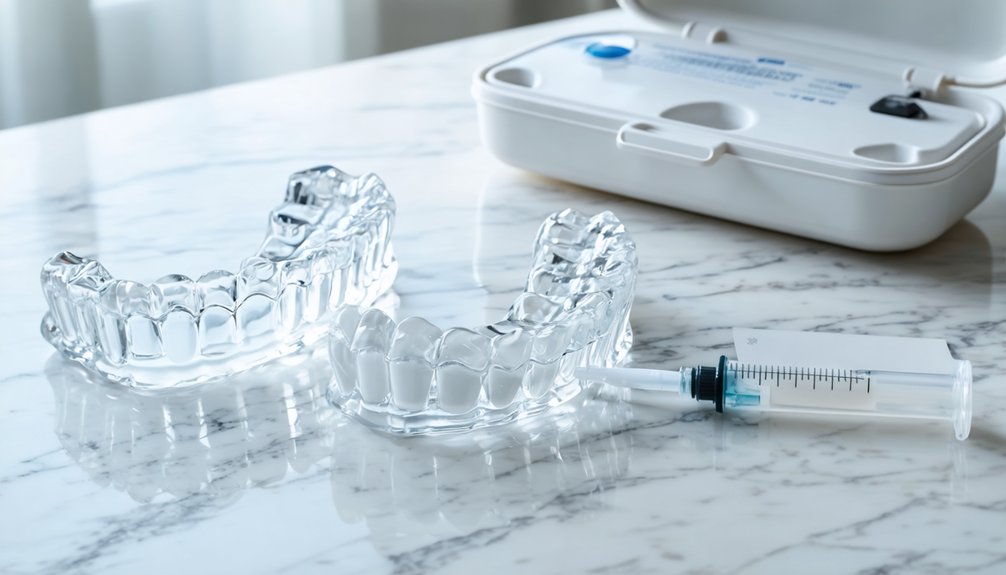
Custom tray treatments from your dentist offer a reliable middle ground between in-office procedures and over-the-counter products. Following dentist recommendations, you’ll use custom tray benefits to apply 10% carbamide peroxide gel for 15–20 minutes daily over 5–10 days, achieving gradual, controlled whitening.
Key advantages include:
- Precise fit minimizes gel contact with gums, reducing irritation risks
- ADA-accepted formulations confirm safety without damaging existing fillings after extended use
- Flexible scheduling lets you whiten on your own timeline without repeated office visits
- Cost efficiency keeps expenses between $25–$65 while delivering clinically reliable results
You control the pace and intensity of treatment.
Custom trays outperform standard OTC strips by ensuring consistent gel coverage across all tooth surfaces, maximizing stain removal effectively.
Which Peroxide Strength Works Best for Aging or Sensitive Teeth?
When your teeth are more sensitive or aging has thinned your enamel, peroxide concentration becomes a critical variable in safe whitening. You’ll want to start at the lower end of the spectrum.
Products containing 10% carbamide peroxide or 3% hydrogen peroxide deliver effective stain removal without overwhelming aging enamel. Dentists recommend these concentrations specifically for patients experiencing sensitivity or enamel wear, as higher concentrations accelerate mineral loss and trigger nerve irritation.
Opalescence Go at 10% hydrogen peroxide is a clinically validated option for sensitive teeth. If you’re managing significant discoloration, your dentist can incrementally adjust peroxide concentration under monitored conditions, balancing efficacy with protection.
Choosing the correct strength isn’t guesswork—it’s a calculated decision that protects your enamel while still delivering measurable whitening results.
Is Opalescence Go Right for Sensitive Aging Teeth?
For sensitive or aging teeth, Opalescence Go delivers a clinically sound whitening option that balances efficacy with tolerability. Its prefilled trays contain 10% hydrogen peroxide, a concentration validated by the ADA for safe home use. You get controlled whitening without risking excessive enamel exposure.
Key Opalescence benefits addressing sensitivity concerns include:
- Low peroxide concentration minimizes nerve irritation common in aging teeth
- Prefilled tray design guarantees consistent gel distribution, reducing uneven exposure
- Flexible wear schedule lets you adjust session frequency based on your sensitivity threshold
- Clinically tested formula confirms no long-term damage to enamel or restorations after extended use
If sensitivity is your primary concern, Opalescence Go gives you measurable results without compromising your comfort or dental integrity.
Best Whitening Strips for Older Adults
If you’re an older adult seeking effective whitening strips, Crest 3D Whitestrips with lower peroxide concentrations (3% hydrogen peroxide) offer a safer option that reduces the risk of sensitivity while still lifting surface stains.
You should look for ADA-approved strips, as these confirm both safety and effectiveness without risking enamel damage, particularly important if your teeth have become more porous or sensitive with age.
With consistent use over two weeks, you can expect noticeable improvements in brightness, though results will be more gradual and moderate compared to professional in-office treatments.
Top Strip Recommendations
Choosing the right whitening strips as an older adult means prioritizing both effectiveness and enamel safety.
Don’t let whitening myths mislead you—modern strips are formulated specifically for aging teeth without compromising structural integrity.
- Crest 3D Whitestrips: Peroxide-based gel on flexible strips lifts years of stains for approximately $41
- Professional Express White with LED: Delivers noticeable brightness improvements within two weeks using targeted light activation
- ADA-approved 10% carbamide peroxide strips: Clinically confirmed safe for long-term use, showing no filling damage after 10 years
- Low-concentration 3% hydrogen peroxide strips: Recommended specifically for sensitive teeth common in older adults
Select strips carrying the ADA Seal of Acceptance—you’ll confirm both safety and verified whitening efficacy before committing to any product.
Sensitivity Considerations For Seniors
Sensitivity is a defining concern once you’ve narrowed your strip options, particularly for older adults whose enamel has naturally thinned over decades of use.
Age-related changes reduce enamel’s protective capacity, making high-concentration peroxide formulations more likely to trigger discomfort or gum irritation. Effective sensitivity management starts with selecting strips containing 3% hydrogen peroxide rather than stronger concentrations.
You should also limit application frequency to every other day rather than daily, reducing cumulative peroxide exposure. Opalescence and Crest Whitestrips Gentle Routine are clinically formulated for compromised enamel.
If sensitivity persists, applying a potassium nitrate toothpaste before and after each session helps desensitize nerve endings. Consulting your dentist before beginning any strip regimen guarantees your specific enamel condition and existing restorations aren’t inadvertently damaged.
Expected Whitening Results
While strip-based whitening delivers measurable improvements, results for older adults typically fall within a narrower range than those achievable through professional in-office treatments.
Whitening expectations must account for aging effects, including deeper intrinsic staining and enamel thinning that reduce peroxide penetration.
You can realistically expect:
- 2–4 shade improvements with consistent OTC strip use over two weeks
- Extrinsic stains from coffee, tea, and wine respond most predictably to peroxide-based strips
- Intrinsic staining common in aging teeth requires higher-concentration professional treatments for visible results
- Maintenance applications every 3–6 months help sustain brightness, as aging teeth restain faster
Understanding these parameters lets you select treatments aligned with achievable outcomes rather than idealized marketing claims.
Do Whitening Toothpastes Actually Work on Aging Teeth?
As you age, your teeth naturally darken due to enamel thinning and dentin accumulation, which raises a fair question: can whitening toothpastes actually reverse this process? The short answer is partially.
Whitening toothpastes work by removing surface-level, age-related stains through mild abrasives and low-concentration peroxide, but they can’t penetrate deep into compromised tooth enamel to address intrinsic discoloration.
Brands like Sensodyne, Crest, and Colgate offer ADA-accepted formulas that safely lift extrinsic stains without accelerating enamel wear.
You’ll notice gradual brightness with consistent daily use, but don’t expect dramatic shade changes.
For aging teeth where discoloration stems from structural changes rather than surface buildup, whitening toothpastes serve better as maintenance tools than primary treatments.
What Natural Remedies Can and Can’t Do for Aging Teeth
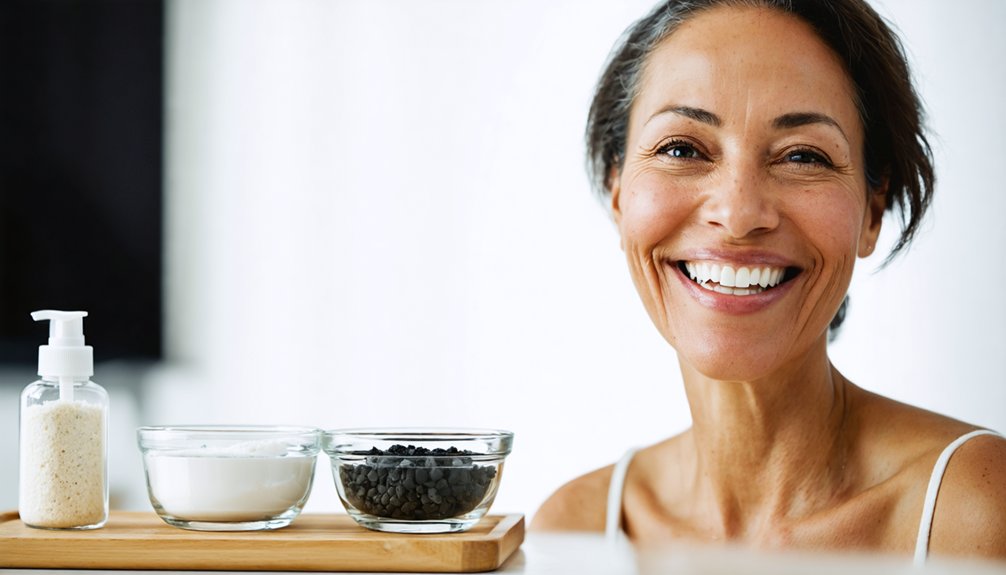
Natural remedies like baking soda, activated charcoal, and coconut oil pulling often appear as budget-friendly alternatives to clinical whitening, but their effectiveness on aging teeth is limited. You won’t achieve long-term results with these methods, particularly against intrinsic staining common in older enamel.
- Baking soda removes surface stains mildly but won’t penetrate deeper discoloration.
- Charcoal effectiveness is overstated; it’s abrasive and poses enamel safety concerns with regular use.
- Oil pulling with essential oils may reduce bacteria but produces no measurable whitening.
- Sensitivity risks increase when hydrogen peroxide home rinses are overused without professional guidance.
Natural whitening options work best as maintenance tools, not primary treatments. For meaningful, controlled results on aging teeth, clinical methods remain your most evidence-backed choice.
Frequently Asked Questions
Can Whitening Treatments Work on Dental Crowns or Veneers?
Over 15 million crowns are placed yearly—yet crowns whitening isn’t possible. Whitening treatments don’t alter crowns or veneers. For veneers maintenance, you’ll need professional cleaning and replacement to match your naturally whitened surrounding teeth.
How Often Should Aging Adults Repeat Whitening Treatments Annually?
You should repeat whitening treatments once or twice annually, adjusting whitening frequency based on aging factors like diet and habits. Professional results last one to five years, so you’re in control of maintaining your ideal shade.
Does Aging Enamel Respond Differently to Peroxide Than Younger Teeth?
Like a thinning shield, your aging enamel’s reduced thickness absorbs peroxide concentration more rapidly, increasing sensitivity risk. You’ll need lower-strength formulas to maintain control over safe, effective whitening results without compromising structural integrity.
Are Whitening Treatments Covered by Dental Insurance for Older Adults?
Dental insurance typically won’t cover whitening treatments, as they’re classified as cosmetic. You’ll pay out-of-pocket, so prioritize whitening safety by choosing ADA-approved options. Confirm insurance coverage details directly with your provider before proceeding.
Can Gum Recession in Older Adults Increase Whitening Sensitivity Risks?
Yes, gum recession exposes vulnerable root surfaces, heightening your sensitivity risks during whitening. You’ll need to prioritize gum health before treatment and implement sensitivity management strategies, like lower peroxide concentrations or custom trays, to minimize discomfort effectively.
References
- https://www.forbes.com/sites/forbes-personal-shopper/article/best-teeth-whitening-kit/
- https://www.health.com/condition/oral-health/teeth-whitening-kits
- https://www.healthline.com/health/dental-and-oral-health/best-teeth-whitening
- https://www.aarp.org/health/conditions-treatments/teeth-whitening/
- https://gorgeoussmilesdental.com/blog/best-teeth-whitening-treatments-recommended-by-dentists/
- https://www.yahoo.com/lifestyle/articles/10-dentist-approved-strips-teeth-175300534.html
- https://www.womenshealthmag.com/beauty/g19965831/effective-teeth-whitening-treatments/
- https://www.goodhousekeeping.com/health-products/g28723133/best-at-home-teeth-whitening-products/
- https://www.vogue.com/article/best-teeth-whitening-kits
- https://www.dentaly.org/us/teeth-whitening/