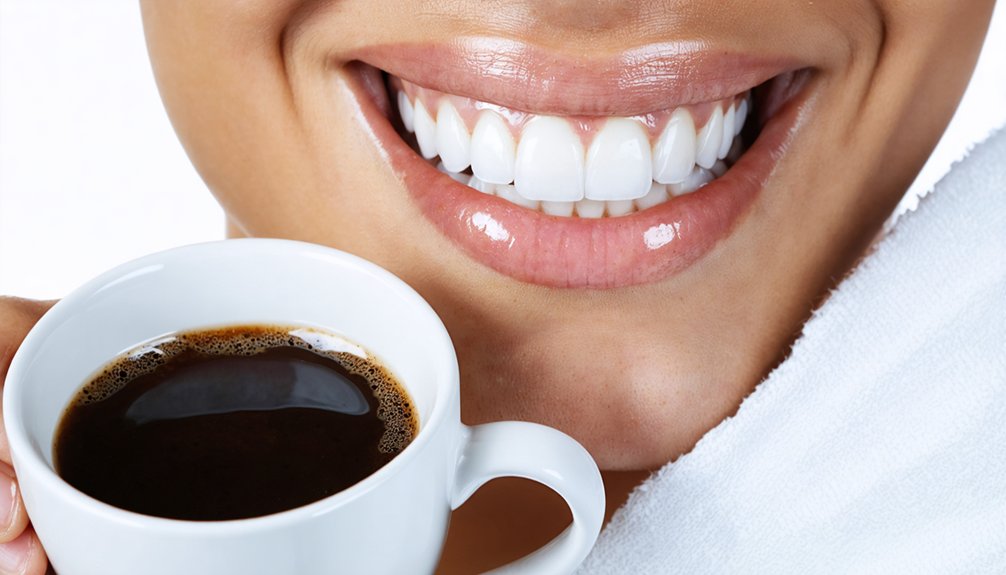
Coffee stain removal brightens your teeth by dismantling pigment compounds called chromogens before they migrate deeper into your enamel’s porous structure. Agents like hydrogen peroxide break molecular bonds within dark pigments, while baking soda and activated charcoal physically scrub or adsorb surface stains. Acting quickly after coffee consumption limits how far chromogens penetrate. Understanding which agents work, how often you can safely use them, and when diet or professional care matters most helps you protect your smile long-term.
Key Takeaways
- Coffee stains embed dark chromogens into enamel pores, and removing them restores the tooth’s naturally lighter underlying surface.
- Removal agents like hydrogen peroxide break down pigment bonds, neutralizing discoloration at a molecular level.
- Activated charcoal and baking soda physically lift surface pigments before they migrate deeper into enamel.
- Acting quickly after coffee consumption limits chromogen penetration, making removal more effective and brightening more noticeable.
- Consistent, safe application of removal methods over weeks progressively reduces stain buildup, revealing brighter enamel.
Which Natural Agents Actually Break Down Coffee Stains?
Several natural agents work through distinct mechanisms to break down and lift coffee stains from enamel.
You can use hydrogen peroxide for peroxide oxidation, a process that breaks molecular bonds within dark chromogens, effectively neutralizing pigments at a chemical level. Dilute it to a 50/50 ratio with water before rinsing to protect soft tissues.
Activated charcoal works through charcoal adsorption, binding tannins directly to its porous surface so rinsing physically removes them.
Baking soda functions as a mild abrasive, scrubbing surface pigments without compromising enamel integrity.
Each agent targets the outer enamel layer where stains adhere before penetrating deeper.
Understanding how each mechanism operates lets you select the most appropriate method for your specific staining pattern and sensitivity level.
How Coffee Stains Penetrate Enamel at the Microscopic Level
When coffee contacts your teeth, its acidic components temporarily soften enamel, widening the microscopic gaps that make up its porous structure. This increased enamel porosity accelerates chromogen diffusion, allowing dark pigments to embed before your mouth’s pH normalizes.
Coffee’s acidity temporarily softens enamel, accelerating pigment diffusion before your mouth’s pH can neutralize the damage.
Understanding this process helps you intervene effectively.
Stain progression follows a predictable sequence:
- Acidic exposure softens the enamel surface, expanding microscopic entry points for pigments.
- Chromogen diffusion drives coffee pigments inward, shifting tooth color from light yellow toward deep brown.
- Repeated exposure hardens embedded pigments, making removal increasingly difficult over time.
Removal agents work by targeting the outer enamel layer before stains migrate deeper. Acting quickly after coffee consumption—rinsing immediately or brushing 30 minutes later—directly limits how far chromogens penetrate.
How Often Can You Use Each Coffee Stain Removal Method Safely?
Knowing how stains penetrate enamel makes it clear that removal frequency matters just as much as the method itself.
Each method carries distinct frequency guidelines you must follow to protect enamel integrity. Use baking soda and activated charcoal no more than twice weekly, as overuse causes surface abrasion.
Apply diluted hydrogen peroxide rinses within the same timing intervals—one to two times per week—to prevent soft tissue irritation.
Oil pulling tolerates more frequent use, up to daily, since it poses minimal abrasion risk.
Apple cider vinegar demands the strictest limits; restrict it to once weekly to avoid acid-driven erosion.
Rinsing with water after every coffee sits outside these restrictions entirely and remains safe without limitation.
Consistency within these boundaries, sustained over several weeks, produces visible brightening safely.
Do Dietary Habits Prevent Coffee Stains Before They Form?
Dietary habits let you intercept coffee stains before removal methods become necessary. Strategic choices reduce tannin adhesion at the source, giving you measurable control over pigment accumulation.
Three evidence-based dietary interventions work preventively:
- Drink timing: Consume coffee within a condensed window rather than sipping continuously, minimizing prolonged enamel exposure to chromogens.
- Saliva stimulation: Eat crunchy vegetables like carrots or celery after coffee to mechanically scrub enamel and activate saliva production, which naturally neutralizes acids.
- Straw use and milk addition: A straw limits direct surface contact, while adding milk binds tannins before they reach enamel.
Alternating water between sips further flushes pigments before they settle. These habits compound over time, reducing how aggressively you’ll need removal methods later.
When Should You See a Dentist Instead of Treating Stains at Home?
Home remedies work well for surface-level pigmentation, but they can’t address everything. If you notice persistent discoloration after several weeks of consistent home treatment, it’s time to seek professional consultation. Dentists access higher peroxide concentrations and ultrasonic scaling tools that remove deep-set stains embedded beneath the enamel’s surface layer—results no kitchen remedy can replicate.
You should also see a dentist if you experience sudden sensitivity, gum irritation, or unusual darkening unrelated to dietary habits. These symptoms may signal underlying decay or enamel erosion rather than simple staining. Attempting to self-treat structural issues with abrasive agents worsens damage. Knowing when home methods have reached their limit isn’t a setback—it’s a strategic decision that protects your long-term dental health.
Frequently Asked Questions
What Dilution Ratio Makes Hydrogen Peroxide Safe for Mouth Rinsing?
You’ll want to follow dilution guidelines by mixing hydrogen peroxide at a 50/50 ratio with water. This respects concentration limits, protecting your soft tissues from chemical burns while still effectively supporting safe, brightening mouth rinse use.
How Long Does Oil Pulling Need to Last for Effective Results?
You’ll need to commit to 15–20 minutes of coconut swishing or sesame duration per session. Oil pulling’s frequency timing demands continuous movement between teeth to effectively lift bacterial load and trapped coffee pigments.
Can Adding Milk to Coffee Reduce Its Staining Potential on Teeth?
Even if you doubt it works, picture tannins locked away harmlessly: adding milk to your coffee enables milk interaction that binds staining compounds, actively reducing enamel protection risks and lowering pigment adherence markedly.
How Do Professional Dental Cleanings Differ From Home Whitening Methods?
Professional in-office cleanings use ultrasonic scaling and high-concentration peroxide that you can’t replicate at home. Your at-home care offers gradual brightening, but it won’t match the deep-set stain removal that dental professionals achieve.
How Many Weeks of Consistent Treatment Produce Visible Whitening Results?
Want real results? You’ll see gradual improvement after 2–4 weeks of daily consistency. Stick to your routine, and your teeth will visibly brighten as repeated applications clear accumulated pigments layer by layer.
References
- https://dentistinmanvel.com/goodbye-to-coffee-stains-8-effective-methods-to-brighten-your-smile/
- https://www.brownroaddental.com/ways-to-remove-coffee-stains-from-your-teeth/
- https://www.mindbodygreen.com/articles/coffee-lovers-listen-up-dentist-approved-tips-for-brighter-smile-bye-bye-coffee-stains
- https://www.teethtalkgirl.com/dental-health/how-to-remove-coffee-stains-on-teeth/
- https://www.youtube.com/watch?v=yEgTYV_r_Yg
- https://www.youtube.com/watch?v=CaZIcZEnrkY
- https://www.wickerparkdentalgroup.com/ways-to-remove-coffee-stains-from-your-teeth/
- https://www.southanchoragedental.com/blog/how-to-get-rid-of-coffee-stains-on-teeth-your-guide-to-a-brighter-smile/
- https://www.lighthousedentalcentre.com/blog/how-to-eliminate-coffee-stains-on-teeth
- https://www.goodrx.com/conditions/dental-care/remove-coffee-stains-teeth